Models of Reality, Other Worlds, Deep Fakes, Simulations, Robots & State of the Internet in 2021.
Beyond reality...
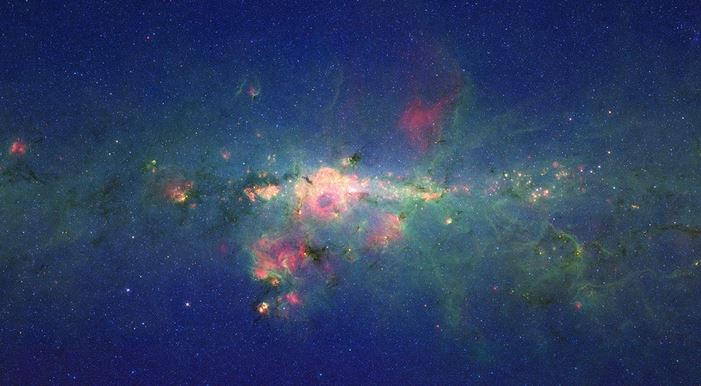
Could 2021 be the year of a new theory of Gravity?
Well, perhaps, see more here.
And while we all wait (for a new theory about reality and spacetime),
take a look at some new deepfake videos, here.
SOTA AI February 2021.
Or take a look at the ''state of internet'', here. (Graphics cards, SSD disks, speed).
And wonder what realityreally is...
And where we are all headed...
For more, see my recent AI questionnaire, here.
(About what students find interesting/most relevant, when it comes to AI).
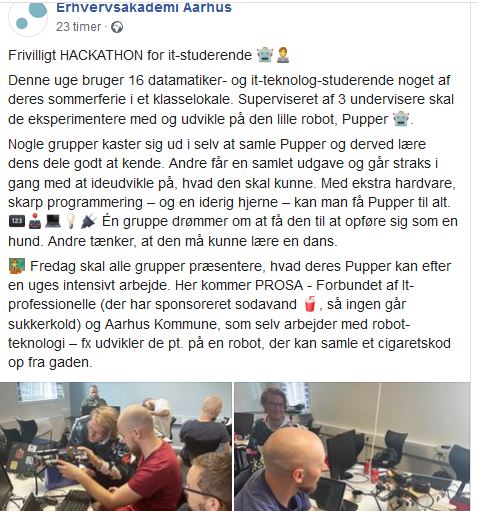
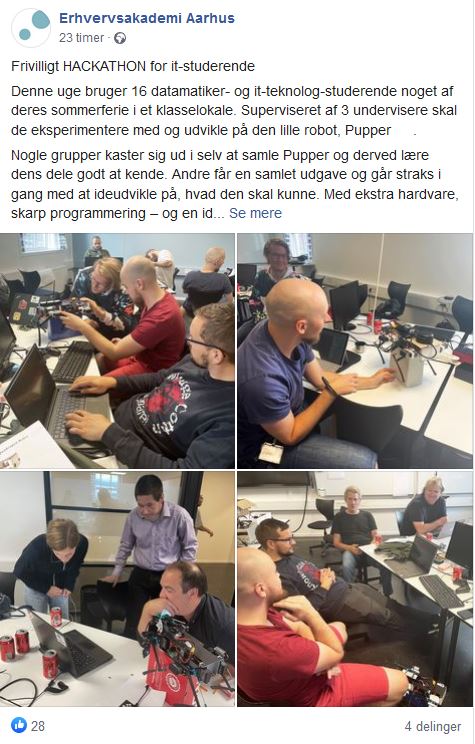
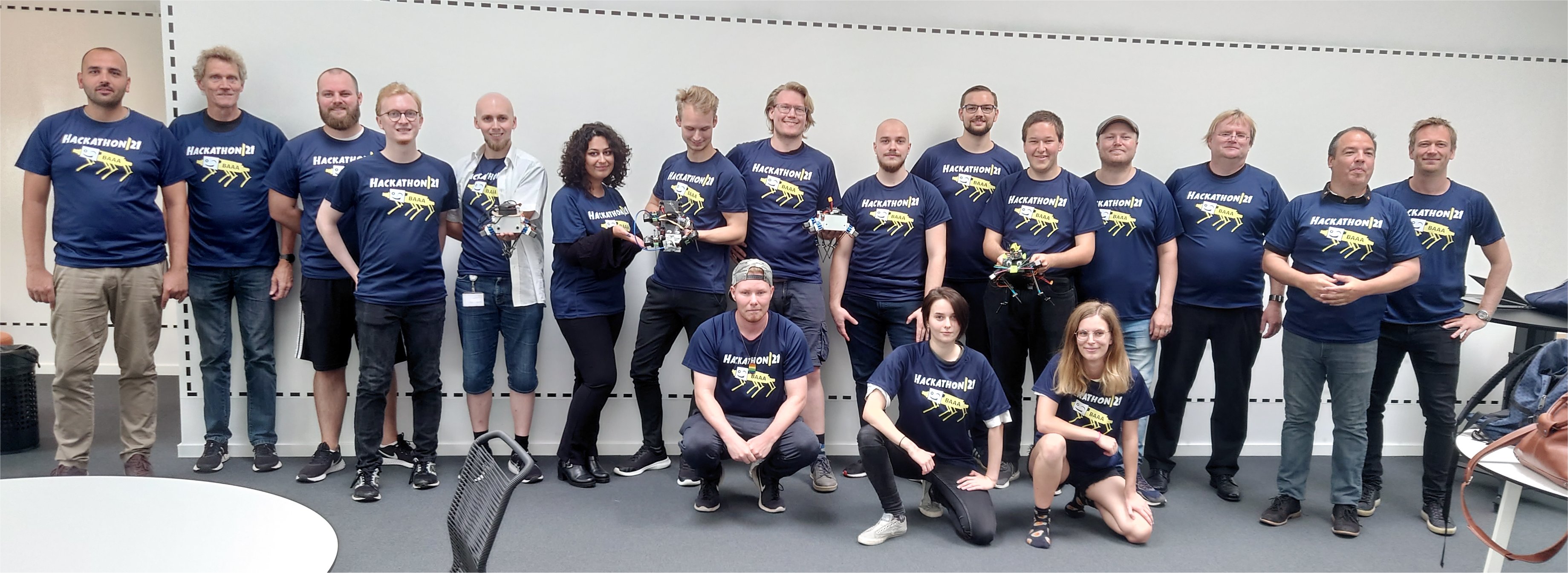
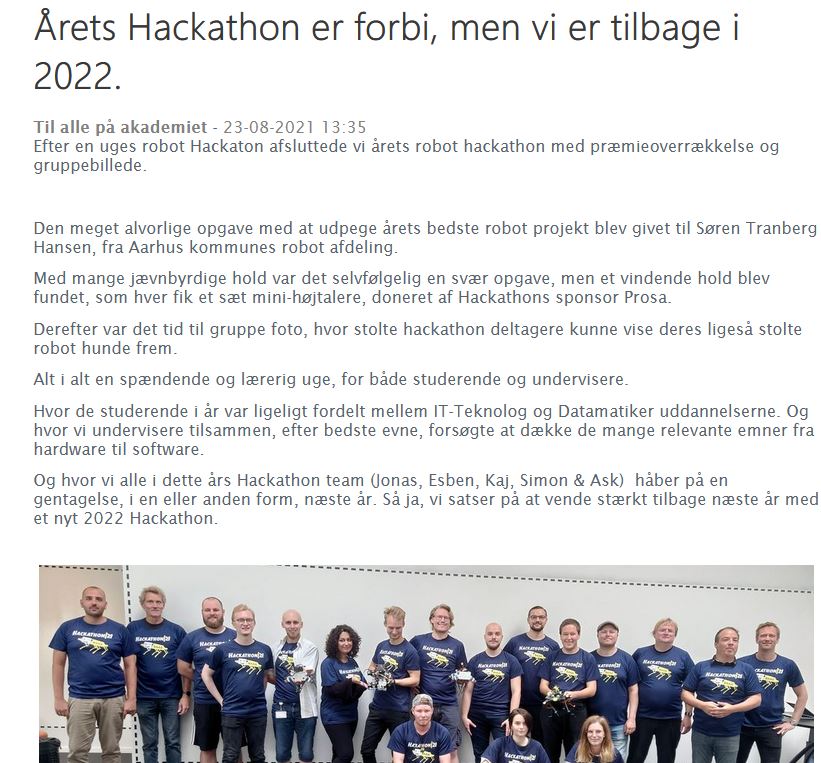
In August 9-13, 2021, it was time for the 1st Eaaa Robot Hackathon.
Where students worked on the Stanford Pupper Robot
(Helping the small, quadruped robots to navigate our rather confusing world).
See more, here
Who knows, some day we, ourselves, might be able to model more (of the world, out there...).
E.g. see more from my Vrije Universiteit Amsterdam (Summer School) course on temporal causal modelling, here.
Difficult. Sure.
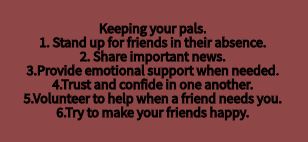
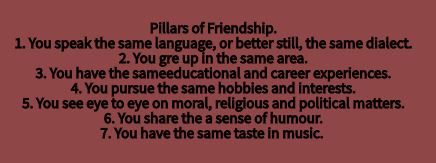
Need some friends to help you with it all?
Well, let evolutionary psychologist Robin Dunbar
tell you more about what friendship really is, here.
Finally, could we be wrong about what it is really like out there?
Could our models be all wrong?
Well, perhaps. Certainly, complex, large organizations
sometimes get it all wrong. See here.
Maybe, we also get it all wrong, sometimes?
Beyond Space-Time.
According to the physicist Erik Verlinde we need a new theory of Gravity:
Currently, we need to postulate dark matter and energy in order to account for the speeds of a number of cosmic objects.
A new theory of emergent gravity might give us a better way to explain such phenomenons.
Ever since the surprise discovery in 1998 that the expansion of the universe is accelerating, cosmologists have included a repulsive dark energy in their model of cosmic evolution. But its nature remains a mystery. The simplest possibility is that dark energy is the “cosmological constant” — the energy of space itself, with a constant density everywhere. But what if the amount of dark energy in the universe isn’t constant
[1].
Which is why we need the Euclid mission, ''a space mission to map the Dark Universe''.
The Euclid mission aims at understanding why the expansion of the Universe is accelerating and what is the nature of the source responsible for this acceleration which physicists refer to as dark energy. Dark energy represents around 75% of the energy content of the Universe today, and together with dark matter it dominates the Universes’ matter-energy content. Both are mysterious and of unknown nature but control the past, present and future evolution of Universe [2].
Stuart Clark writes in NewScientist (November 28th, 2020)
When we measure the rate at which the universe is expanding,
we get different results depending on whether we extrapolate from the early universe
or look at exploding stars in nearby galaxies.
The discrepancy means that everything is speeding apart more quickly than we expect [3].
According to Clark this is no small thing:
''The universe is expanding too fast, and that could rewrite cosmology''.
Small discrepancies might lead to completely new theories.
Indeed, it was tiny inconsistencies, in things such as as the orbit of the
planet Mercury, that originally gave us general relativity.
Some cosmologists think that a new theory of ''modified gravity'' might do the trick:
In place of dark matter, they’re substituting a subtly modified force of gravity. But attempts to translate their rough idea into precise mathematical language have always run afoul of at least one key observation. Some of their formulations get galaxies right; some get the contortion of light rays right [4].
According to the authors of one of these theories:
''It might point the way to something even more successful''.
Well, well, will be interesting to follow.
Still, eventually we (i.e. Euclid) probably need to get up there (in space) in order to learn the full story...
See my report on ''Raptor Aborts'' here.
Who knows, some day (in some distant future) we might come a little
closer to understanding what Space-Timereally is.
And how it makes life, in all its fabulous forms, possible...
Perhaps...
Modelling Motivation and Lifestyle Changes for Diabetes.
Video from the Vrije Universiteit (Summer School) course: Human AI: Temporal-causal network models (in Matlab) for modelling,
simulation and analysis of adaptive human mental, social and health-related processes.
Our group presentation: HAI21 FA Group3: What Keeps You Going? Modelling Motivation and Lifestyle Change for Diabetes.
Call of Duty (for your smartphone), february 2021.
In order to start playing on the phone there was a 1.5 GB download, which would have made you rather
uncomfortable just a few years ago, but, apparently, not anymore.
And, reality, as of 2021, is, of course, something that
needs a fast internet in order to run, and exist...
An internet that can be found everywhere...
Indeed, interestingly, here in early 2021, it is often possible to find
mobile internet connections that are just as fast as average internet broadband connections.
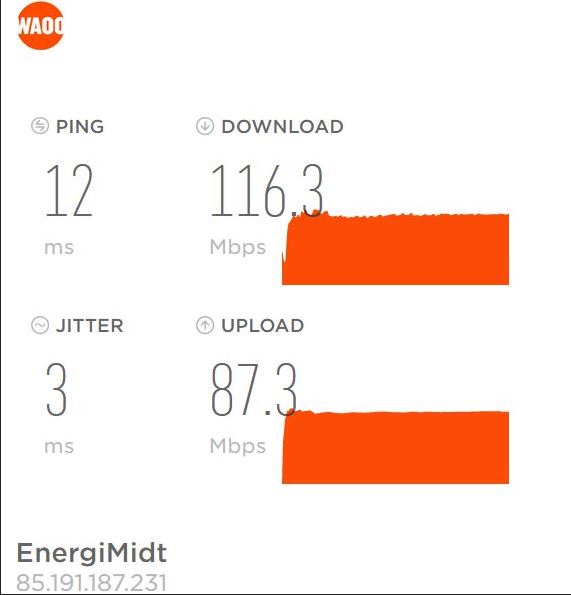
E.g. my mobile internet now appears to be faster
than a normal (2021) internet broadband connection (seen here below):
It should be noted though that there is way less ''jitter'' on the home broadband connection
than on my mobile internet, here in late 2020/early 2021.
For more about the development of the internet, and this site in particular,
see here.
Friends, Dunbars Number & Evolutionary Psychology.
Evolutionary psychologist Robin Dunbar has some interesting
thoughts about friendship in the March 6th 2021 issue of NewScientist.
According to evolutionary psychology, evolution shapes everything:
Hearts, lungs, livers, kidneys, immune systems etc. and even cognition.
And therefore also has something to say about how we form friendships...
Where Dunbar has suggested that the number 150 is
a cognitive limit to the number of people with whom one can maintain stable social relationships.
The socalled Dunbars Number.
In the March 6th NewScientist article, Dunbar applies his thoughts, about
friendships and social relationships, to our current situation in the middle of the Covid Pandemic.
Where he notes, that it is important to keep friendships ''well oiled''
and functional. Even in the middle of a pandemic.
If you see someone less often, whether deliberately or
by force of circumstance, that relationship will weaken.
All worth remembering, in the middle of a pandemic with rules about ''social distancing''.
The article sums it up like this:
Read more about Robin Dunbar and his thoughts about Evolutionary Psychology
in my 2011 ''Evolutionary Psychology'' article, here.
The NewScientist article: Friendship-ology.
March 6th 2021.
NewScientist.
Why things, sometimes, go wrong in organizations...
''Jytte Returns'' is another great book by Morten Münster.
Indeed, did you often wonder, why things (often) go wrong, or are delayed, in large organizations
working on large projects?
Well, then Morten Münsters book might be a good place to look for some answers...
Münster starts with the obvious observation, that
it is a problem, when we start a job, if we don't know
whether we can do the job or not...
The less knowledge people have about how to do something,
the easier it is (for them) to come up
with inflated assesments...
I.e.:
''Unskilled and unaware of it: How difficulties in recognizing one's own incompetence lead to inflated self-assessments
[6]''
People tend to hold overly favorable views of their abilities in many social and intellectual domains.
The authors suggest that this overestimation occurs, in part, because people who are unskilled
in these domains suffer a dual burden: Not only do these people reach erroneous conclusions
and make unfortunate choices, but their incompetence robs them of the metacognitive ability to realize it.
''Overconfidence among beginners: Is a little learning a dangerous thing?
[7]''
So, how to overcome overconfidence?
Münster suggests, that we should use ''murder boards'' and ''red teams''...
First we should estimate how it is all going to go.
We should come up with some numbers...
In Münsters words: ''Name 2 numbers where you are 90 % sure that the correct number will be
within these 2 numbers...''
''People will usually improve when they are asked to first consider the
low number and then carefully consider the high number''.
Next, we should put the right people on the team...
Obviously... But how can we find the right people?
Münster thinks we should consider how we would find people for a running team...
What would you do:
1. Invite candidates to the racetrack and see them run.
2. Invite candidates to an interview, and see if they sound quick when
we interview them about running.
[8].
And then we should, obviously, stop things that are headed in the wrong direction...
The sunk cost effect is manifested in a greater tendency to continue an endeavor once an investment in money, effort, or time has been made. Evidence that the psychological justification for this behavior is predicated on the desire not to appear wasteful is presented here [9].
Communication in an organization should be efficient.
Münster points to an Elon Musk email:
People are forced to talk to their manager who talks to their manager who talks to the manager in the other dept who talks to someone on his team. Then the info has to flow back the other way again. This is incredibly dumb. Any manager who allows this to happen, let alone encourages it, will soon find themselves working at another company. No kidding [10].
And meetings can, of course, also, often... be more efficient...
E.g. ''Time squandred away, giving status reports to other people, took
300.000 hours away a year in one organization [11]''.
Indeed, there are lots of things out there that can be improved.
And a great book from Münster, about how to get started on building a better world, out there...