I had the great pleasure of taking part in MLCon 2021 (The Conference for Machine Learning Innovation. December 7 - 8, 2021. Berlin).
Below you will find impressions from the conference, and links for further reading.

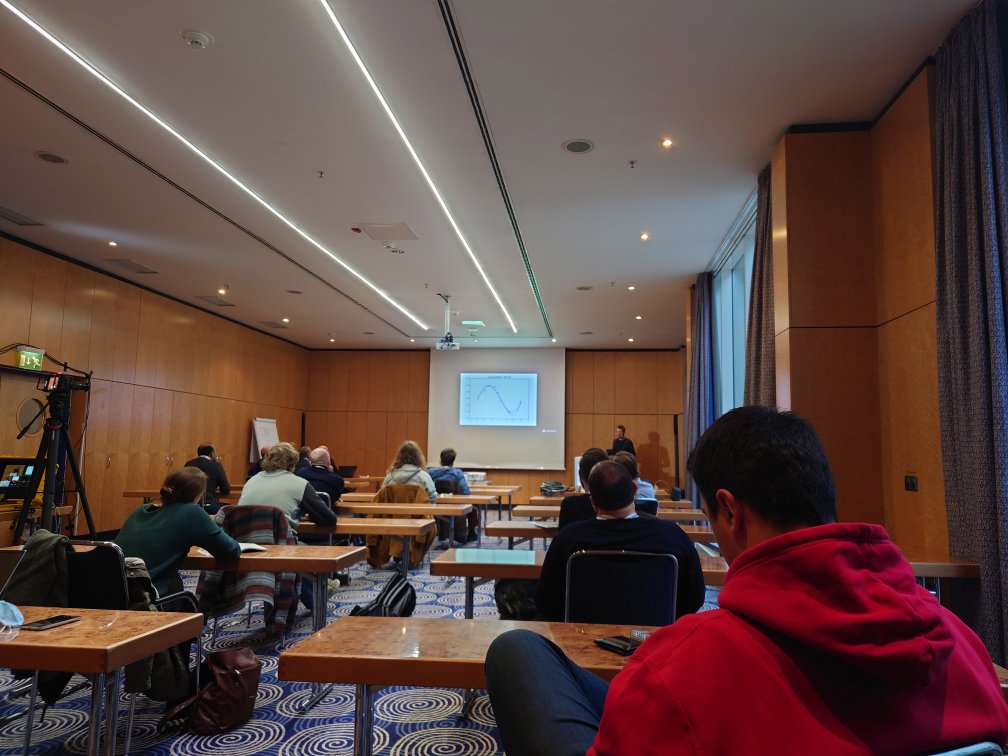
BERT is designed to help computers understand the meaning of ambiguous language in text by using surrounding text to establish context [1].and other, more advanced, language models, that begin to show, at least, some early signs of having learned some ''common sense'' during training. With more advanced models becoming available on the internet on a daily basis.
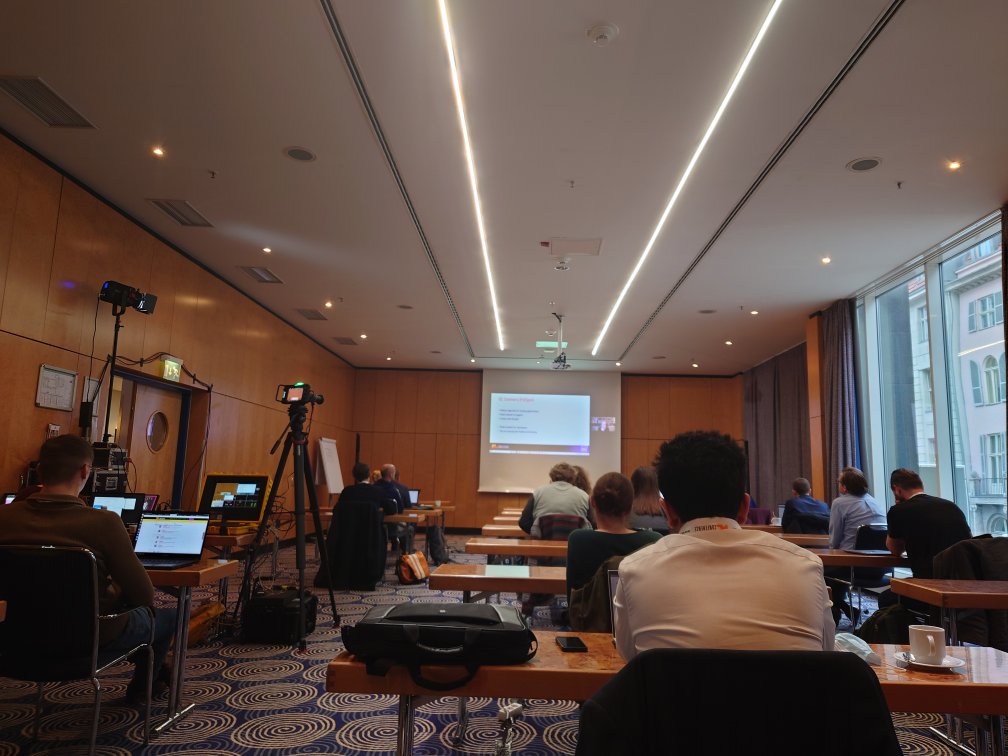
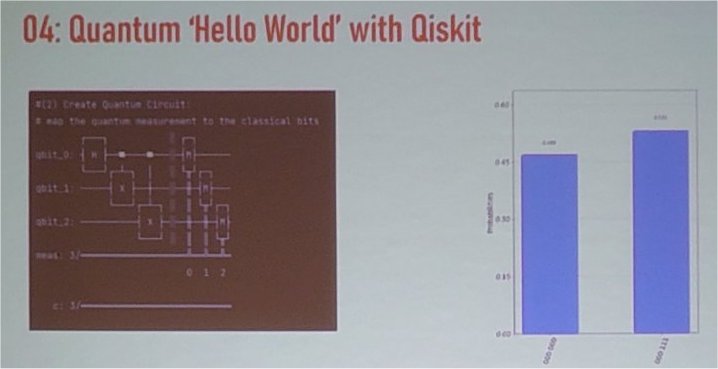
Qiskit accelerates the development of quantum applications by providing the complete set of tools needed for interacting with quantum systems and simulators.
Find anomalies and outliers, forecast based on trends, and identify areas of interest in your data with Elastic machine learning.And use Pachyderm to:
Continuously update data in the master branch of your repo, while experimenting with specific data commits in a separate branch or branches.Which, all in all, gave a lot of ideas on:
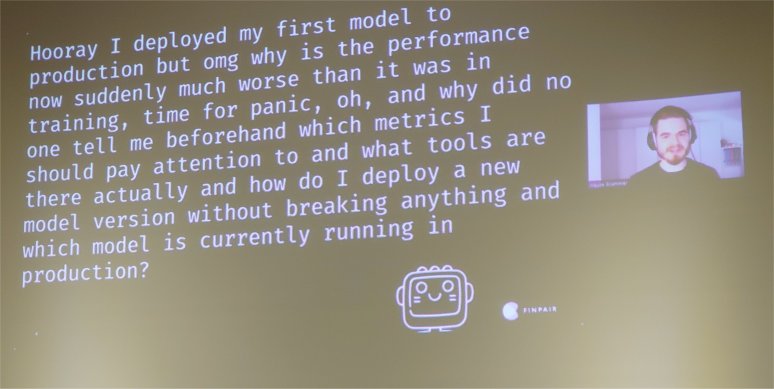
Monitoring machine learning models in production. Making sure that the model still delivers business valueAll, super useful stuff indeed.
- by detecting failure modes of the ML models before they turn into big disasters.

Research has shown that emotions play an integral role in decision making, cognition, perception, learning, and more.In education, people would like to be able to monitor whether the students are bored.
If we want our computers to be intelligent and be able to interact with us we need to ensure that they are able to recognize, understand and express emotions.
The challenge is that building an algorithm to detect someones emotions ignores cultural differences and other important factors [2].
Scientists have been trying for decades to codify the facial expressions linked to different emotions, and yet it’s never worked [2].Well, if only we had smarter computers then.
Then surely these computers would also be (should be?) able to decode facial expressions?
- The coffee test (be able to make coffee) [3].
- The robot college test (go to college for us).
- The employment test (do our, office, jobs for us).
- The Turing Test (talk about everything, like a person).
There is no good evidence that facial expressions reveal a persons feelings.According to Crawford, these technologies are not just technically imperfect, they are also based on questionable methodologies.
But big tech companies want you to believe otherwise [4].
Job applicants are judged unfairly because their facial expressions or vocal tones don’t match those of other employees. Students are flagged at school because their faces appear angry, and customers are questioned because their facial cues indicate they may be shoplifters.Indeed, emotions are not just bringing us together, they are also tearing us apart.
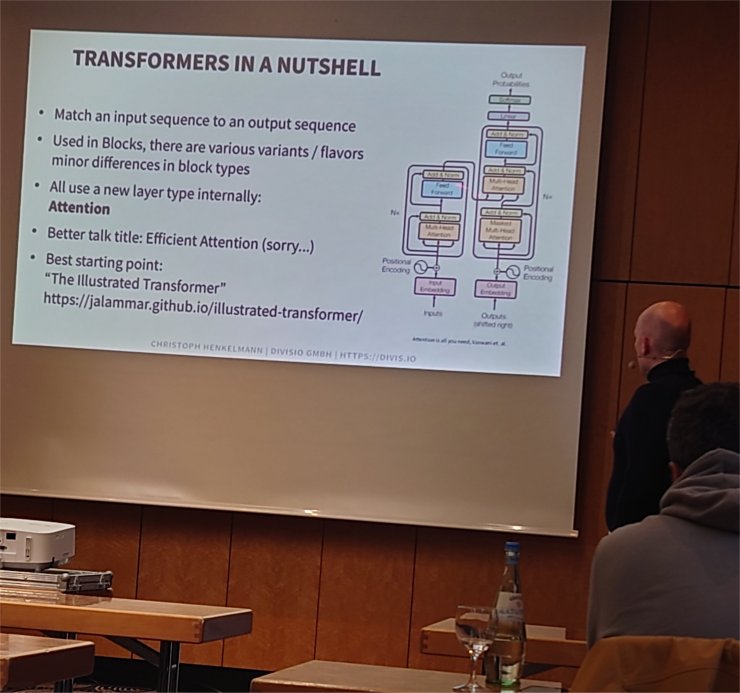
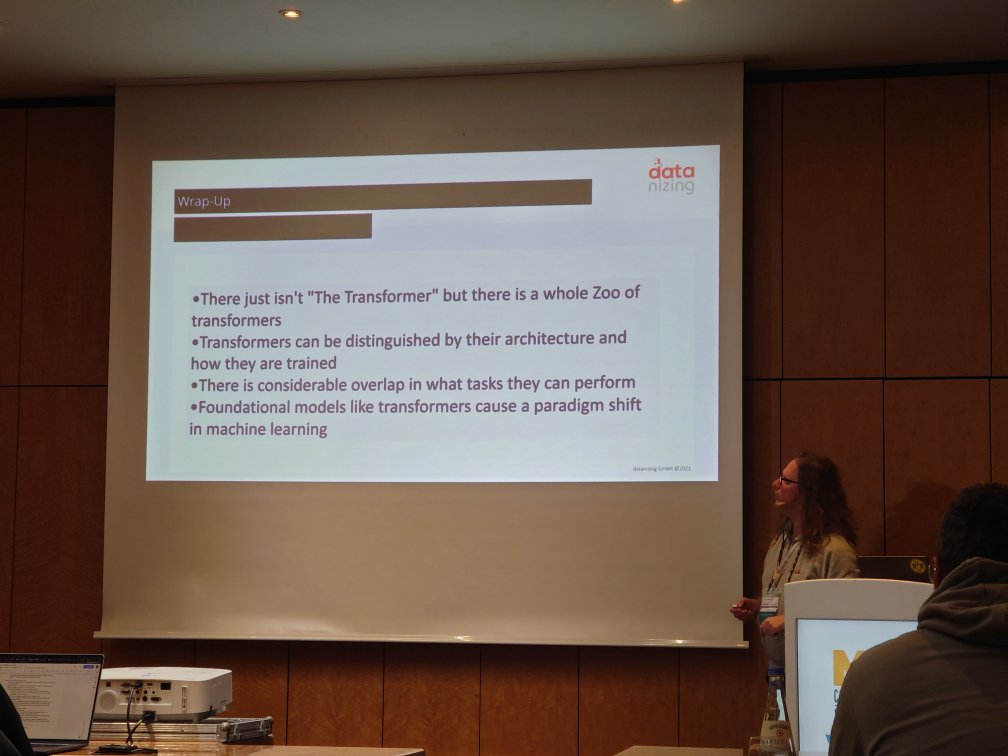
Transformers are the new go-to technology for Natural Language Processing (NLP).Here, in this talk we were then given a tour of recent research into efficient transformer layers, that works with smaller computation and/or memory requirements.
But, despite all their successes and widespread adoption, they have one major drawback:
Their computation and memory requirements grow quadratically with the input size.
So, training transformer models from scratch is a very resource-intensive task.
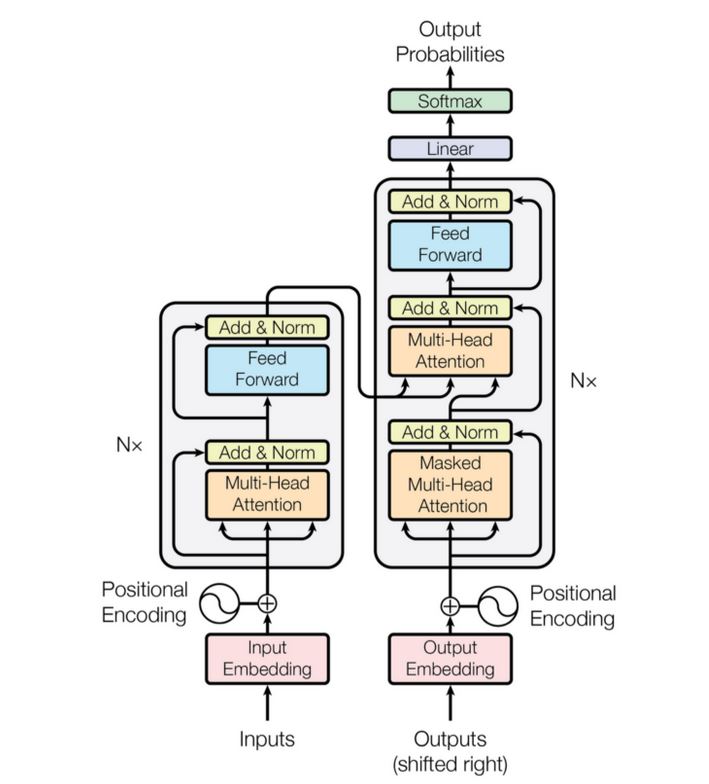

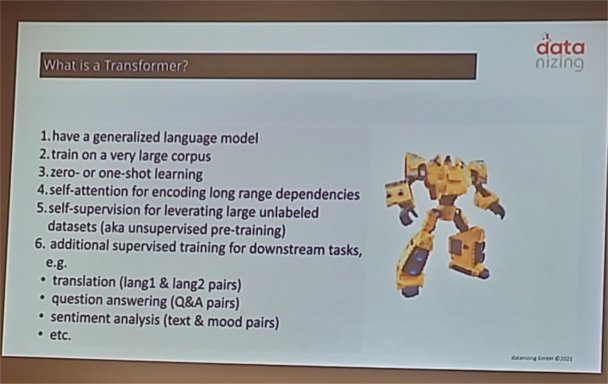
''Transformer-based'' language models have been at the core of the recent progress in Natural Language Processing (NLP).
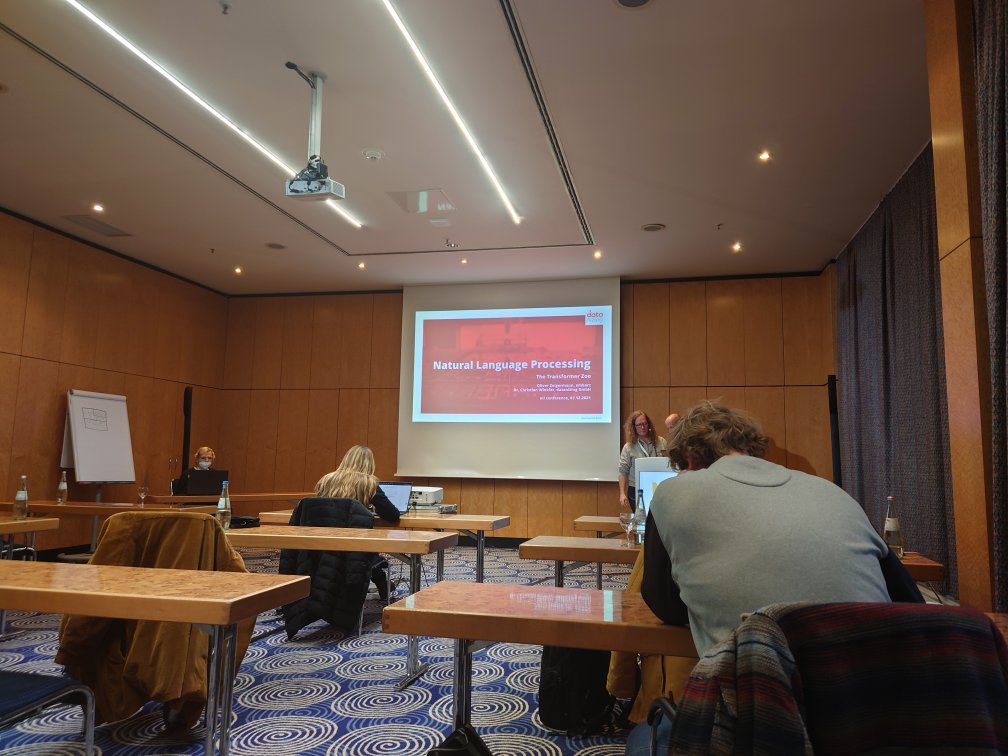
Starting with the original BERT, we here take a look at derivatives like RoBERTa and ALBERT, stressing the differences to systems like GPT-2 & GPT-3.
Finally, we show how the myriad of (fine-tuned) models available at Huggingface
can be used very easily in Jupyter notebooks to solve real-world problems in different industries.
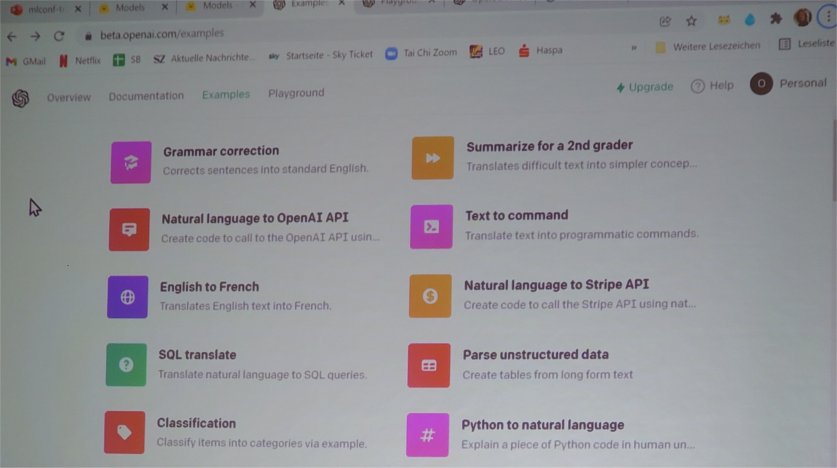
On Huggingface there are thousands of pretrained (transformer) models to perform tasks on different modalities such as text, vision, and audio.
These models can be applied on:
Text, for tasks like text classification, information extraction, question answering, summarization, translation, text generation, in over 100 languages [5].
Using libraries from the Hugging Face ecosystem. Transformers, Datasets, Tokenizers, and Accelerate. See here.Things like sentiment detection is pretty straight forward with models from Huggingface.
Through conversational user interfaces, machines can now speak, and understand human language.According to Tonge: ''Generation voice is here''.
Voicebots and chatbots are beginning to take service line calls, and answer chat messages - With deep integration into existing business software.
Indeed, whenever a significant volume of employees are doing repetitive communication tasks, or you need to provide 24/7 service 365 days a year, there might be a businesscase for using conversational user interfaces, aka. digital assistants, for automating such customer communication.
At VUI.agency, we create virtual assistants with charisma. Our uniquely skilled team of 40 top international talents covers everything from Conversational AI strategy, Voice UX, Assistant Persona Design, Conversation Design, and Voice Development.

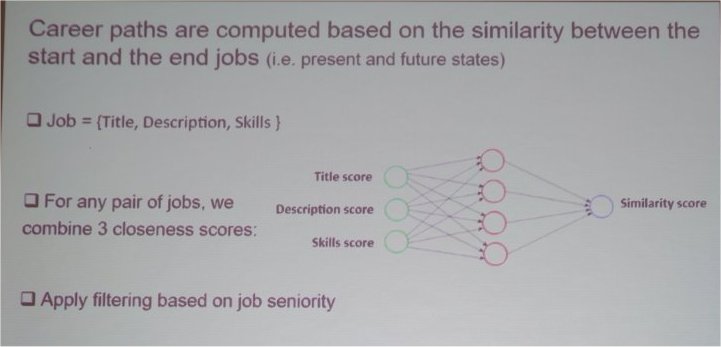
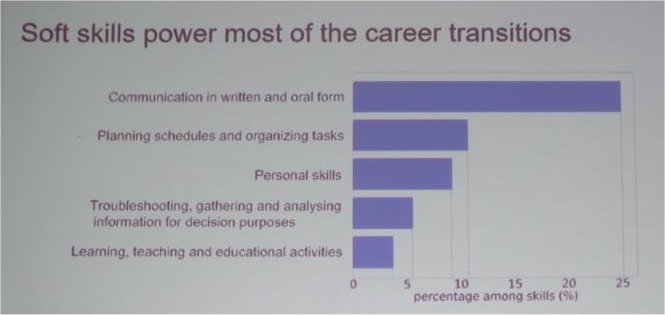
With thousands of job titles available, it is difficult for candidates to know what each role entitles and how well-suited they are for various positions.
Our research aims to break though this complexity and identify fitting career progressions for every job.
In the process, we use algorithms that find semantic similarity between job descriptions and skills required for the jobs.
Then we cluster jobs and skills in order to help map-out possible career progressions.











































DataScience & MachineLearning | 7th Aspects of NeuroScience | Ijcai 2018
Nasslli 2012 | WCE 2013 | CogSci 2013 | Aamas 2014 | Areadne 2014 | CogSci 2014
About www.simonlaub.net | Site Index | Post Index | NeuroSky | Connections | Future Minds | Mind Design | Contact Info
© December 2021 Simon Laub - www.simonlaub.dk - www.simonlaub.net - simonlaub.com
Original page design - December 10th 2021. Simon Laub - Aarhus, Denmark, Europe.