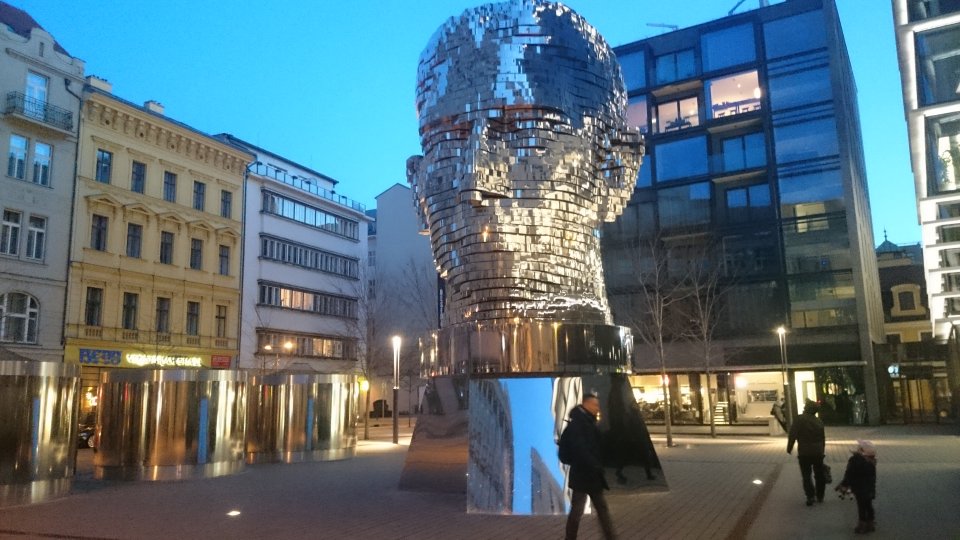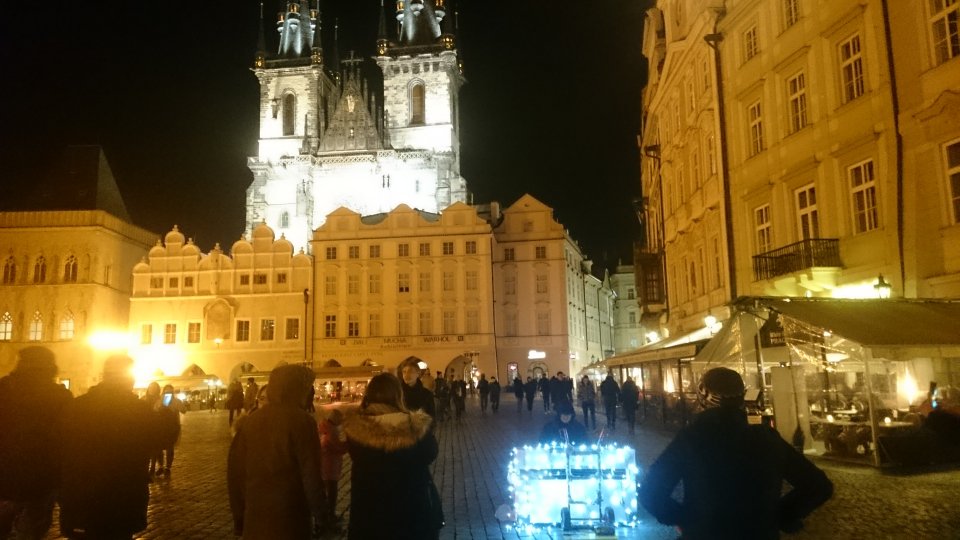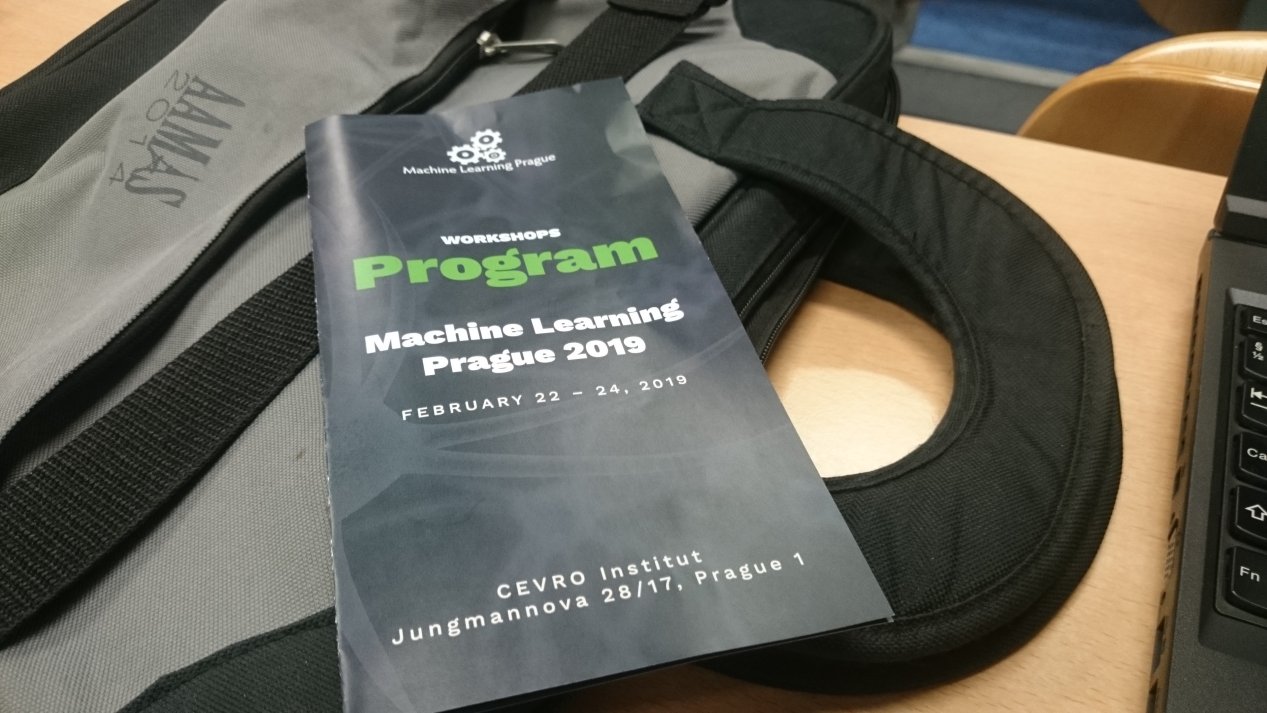
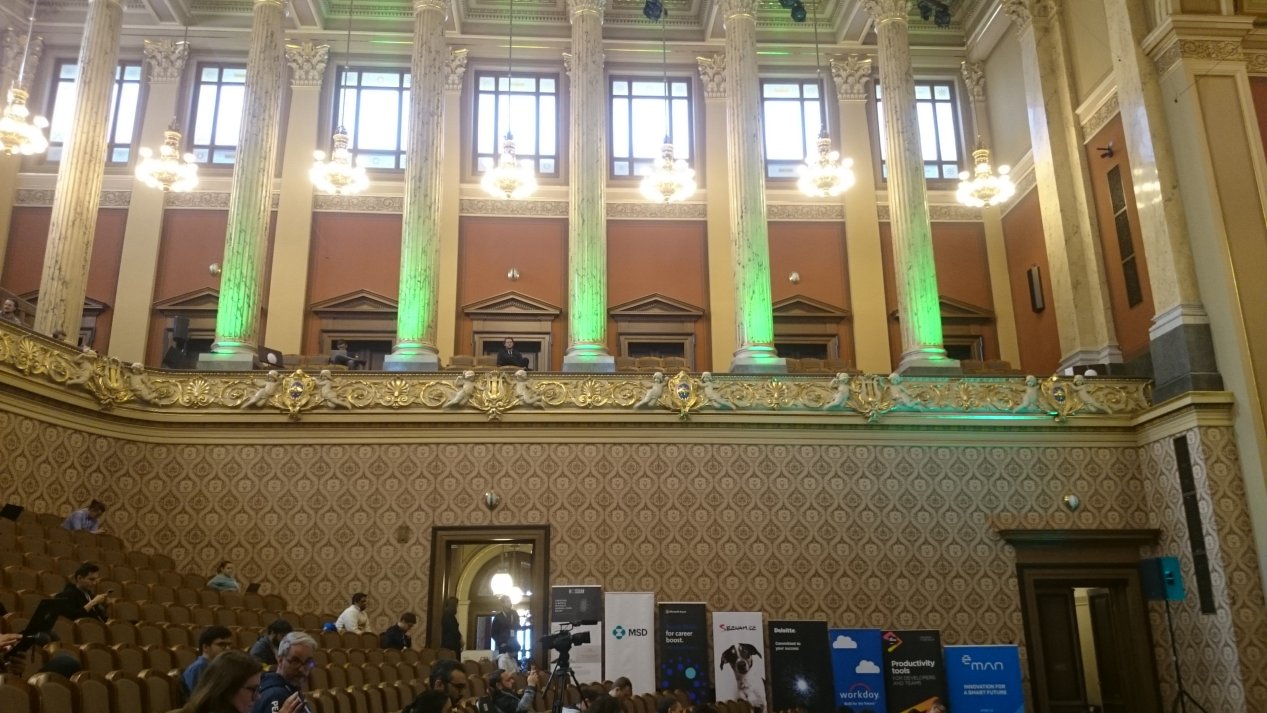
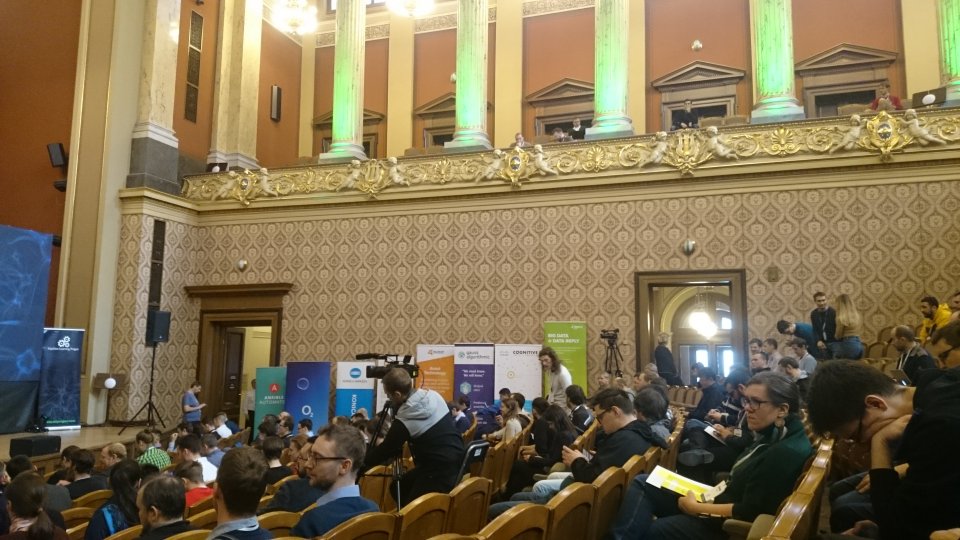
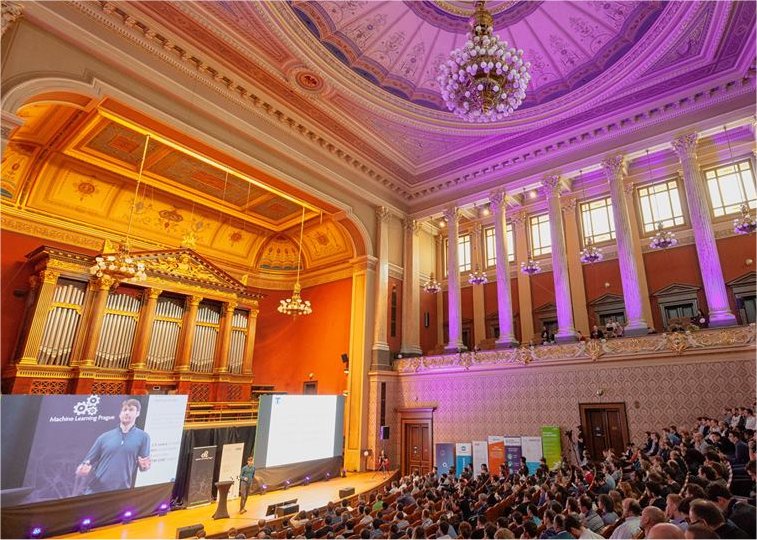
I had the great pleasure of taking part in ML Prague 2019 (The practical conference about ML, AI and Deep Learning applications. February 22 - 24, 2019. Prague).
Below you will find impressions from the conference, and links for further reading.

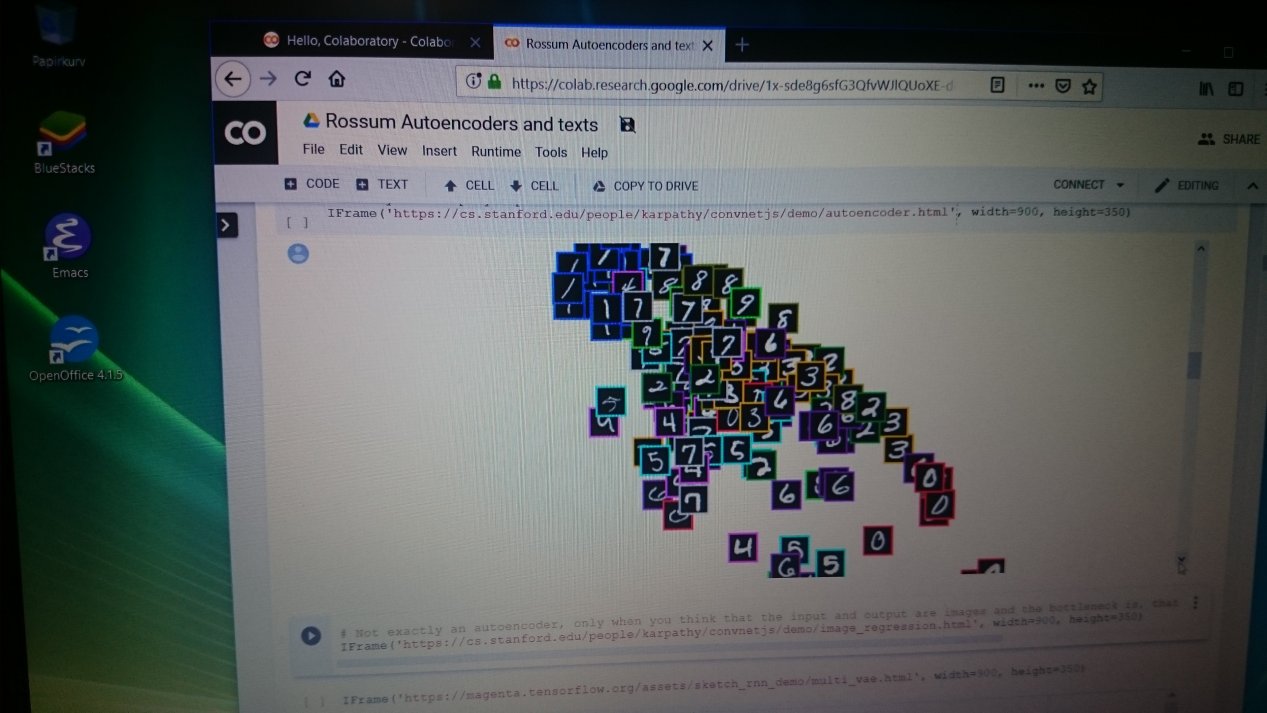
Word vectors are positioned in the vector space such that words that share common contexts in the corpus are located in close proximity to one another in the space.

The goal of the learning agent is to find a reward function from the expert demonstrations that could explain the expert behavior.(Not mentioned in the talk..., but clearly... A capability machines need, as AI reaches super-human levels..., and need to understand what humans want, and (hopefully) tries to work towards these goals.
Agents will often take long series of actions that generate negative utility for them in the moment in order to accomplish a long-term goal.(See: Thinking Wires by Johannes Heidecke).

Horovod, a component of Michelangelo, is an open source distributed training framework for TensorFlow and its goal is to make distributed Deep Learning fast and easy to use via ring-allreduce and requires only a few lines of modification to user code.Altogether, it was an excellent introduction on how to get started with these techniques.
Of course it's difficult. I like it that way.And screening of potential bank customers does indeed seem to be a difficult task.
We can help you level up your Financial Crime Compliance (FCC) capabilities by leveraging the very latest advances in Artificial Intelligence and Machine Learning to give you a single internal and external view of your customer's FCC risk that is continually updated.Interesting!
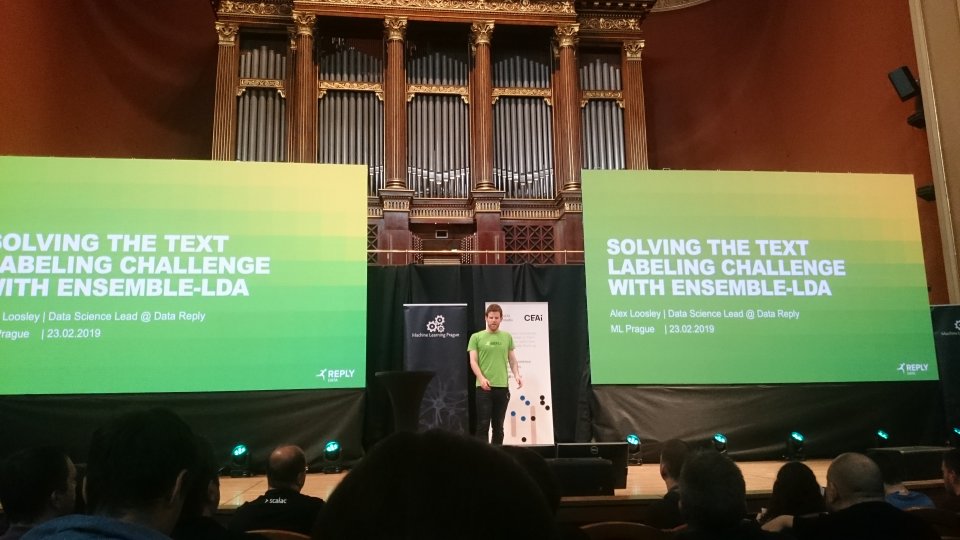
Gensim is a Python library for topic modelling, document indexing and similarity retrieval with large corpora. Target audience is the natural language processing (NLP) and information retrieval (IR) community.See:
Do: Semantic Text Embeddings (eLMo,Bert) -> Do: Text similarity (Word Mover Distance) -> Do: Document representation plotted in 2D (tSNE) -> Use: Nearest neighbor models (kNN).

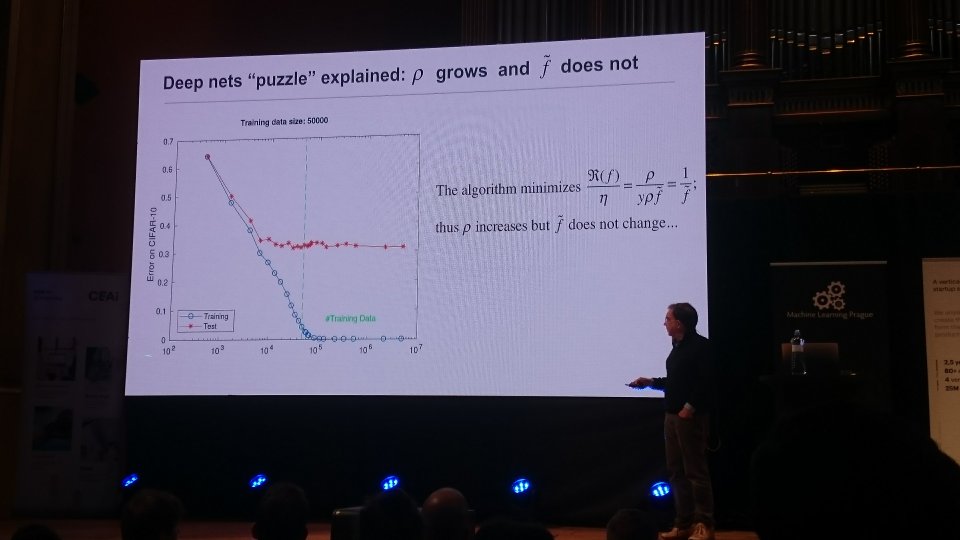

At the center for Brains and Machines:And posed the interesting question ''Why is there so little in terms of a theory explaining why deep networks work so well''.
We aim to make progress in understanding intelligence. We believe that the science of intelligence will enable better engineering of intelligence.
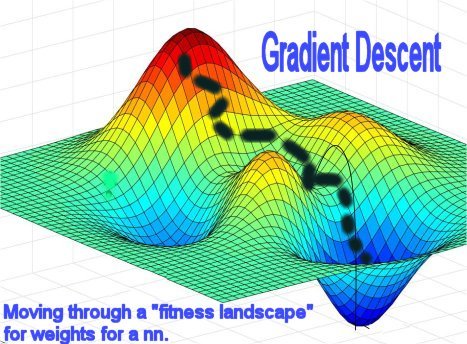
Evolution of Computer Science.Now, we are in the ''Machine Learning Phase'', where Deep Learning Networks learns based on labelled data.
- There were programmers.
- There are now labelers.
- There may be schools for bots.
PocketFlow is an open-source framework for compressing and accelerating deep learning models with minimal human effort ...AutoKeras is also pretty interesting:
Developers only need to specify the desired compression and/or acceleration ratios, and then PocketFlow will automatically choose proper hyper-parameters to generate a highly efficient compressed model for deployment.
The ultimate goal of AutoML is to provide easily accessible deep learning tools to domain experts with limited data science or machine learning background. Auto-Keras provides functions to automatically search for architecture and hyperparameters of deep learning models.Pretty easy to getting started with... (In AutoML you don't have any parameters, so everything is done automatically ...)
import autokeras as ak
clf = ak.ImageClassifier()
clf.fit(x_train, y_train)
results = clf.predict(x_test)
AdaNet (Adaptive Structural Learning of Artificial Neural Networks) builds on recent AutoML efforts to be fast and flexible while providing learning guarantees.See more about AdaNet here.


We train networks by simply showing them many examples of what we want them to learn, hoping they extract the essence of the matter at hand...When the neural nets have been trained, they then
...
Turns out that Neural networks that were trained to discriminate between different kinds of images have information inside them needed to generate images too...
Start with an existing image and give it to our neural net.See more here.
We ask the network: ''Whatever you see there, We want more of it!''. I.e. we ask the network to enhance whatever it detected (By gradually tweaking the image towards what the neural net detected ... and making sure that the picture still follow some basic image rules, such as that neighboring pixels need to be correlated...).
...
This creates a feedback loop: if a cloud looks a little bit like a bird, the network will make it look more like a bird.
This in turn will make the network recognize the bird even more strongly on the next pass and so forth.
If we apply the algorithm iteratively on its own outputs and apply some zooming after each iteration, we get an endless stream of new impressions, exploring the set of things the network knows about.
We can even start this process from a random-noise image, so that the result becomes purely the result of the neural network.

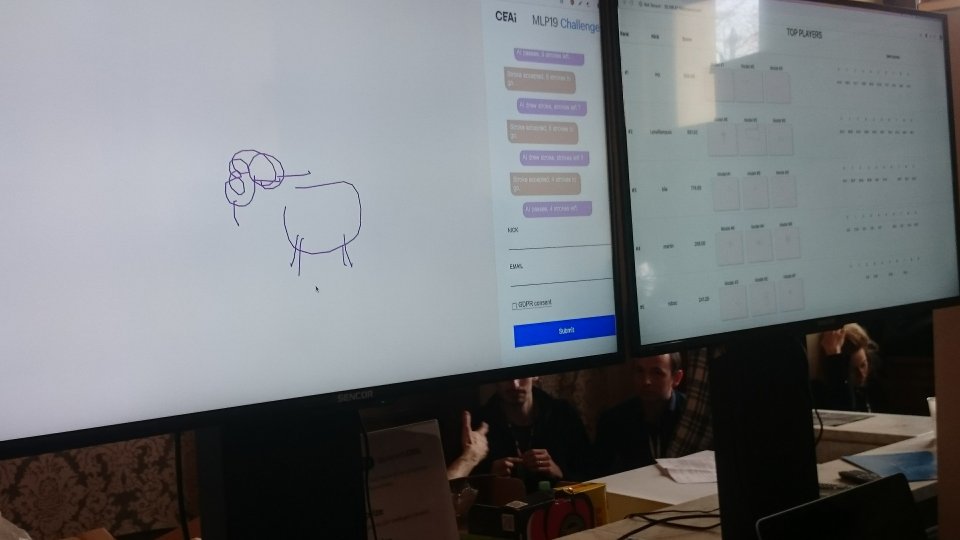
Peter sees the computer.According to Elliot, Roman Lipsky ''has a dialoque with the algorithm''. Well, don't know about that, but it looked interesting!
''But the machine only creates what humans have taught it to,''
says Peter.
''So do you,'' says Mummy.
an art and research project investigating the ethics, origins, and individual privacy implications of face recognition datasets created ''in the wild''.by Adam Harvey, who also has some great ''data pools'' on his website ...
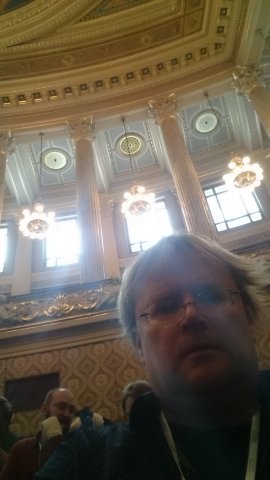

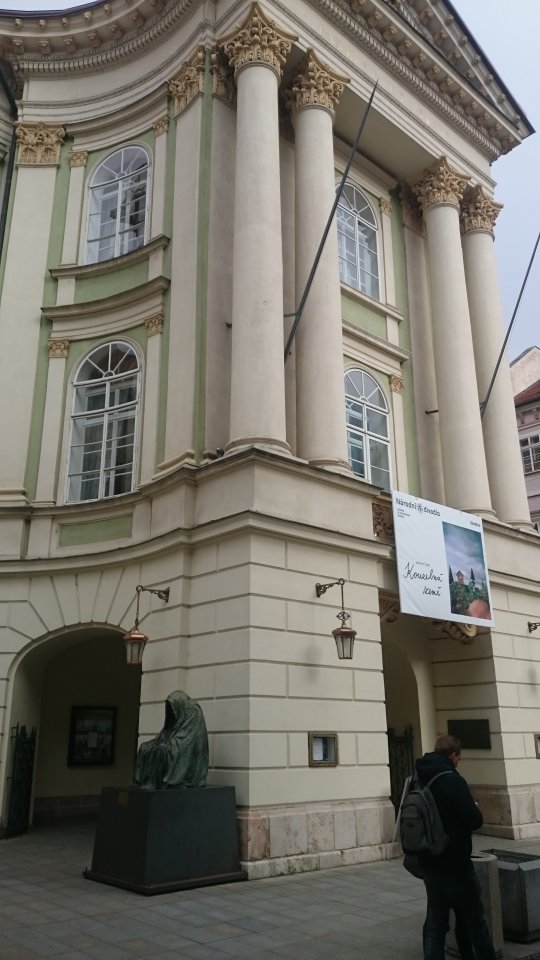
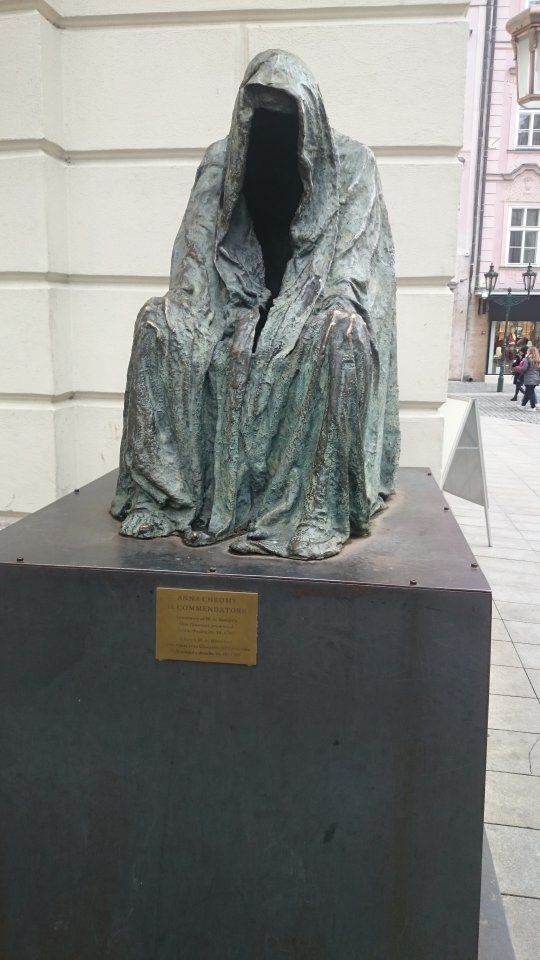
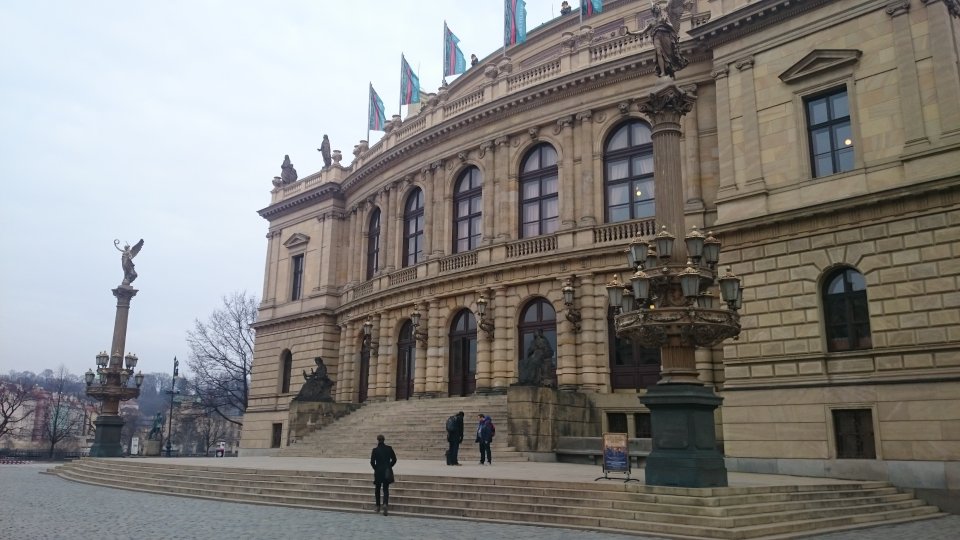
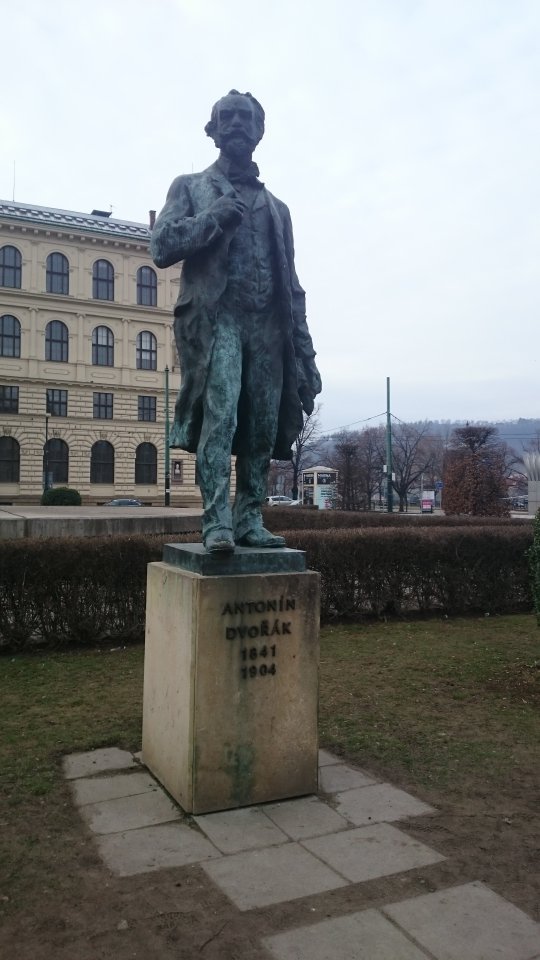
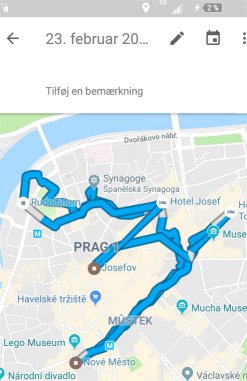
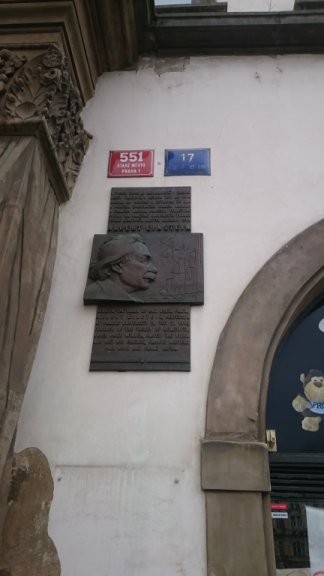
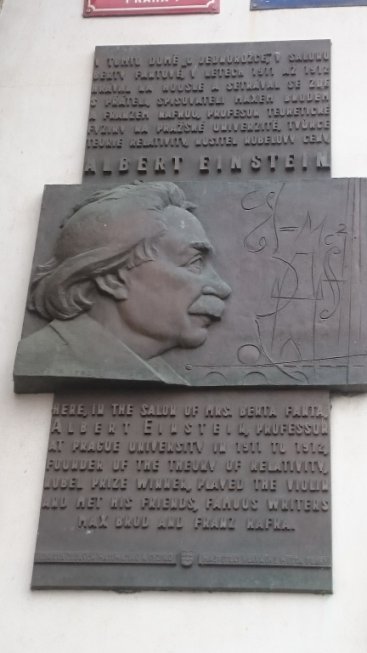
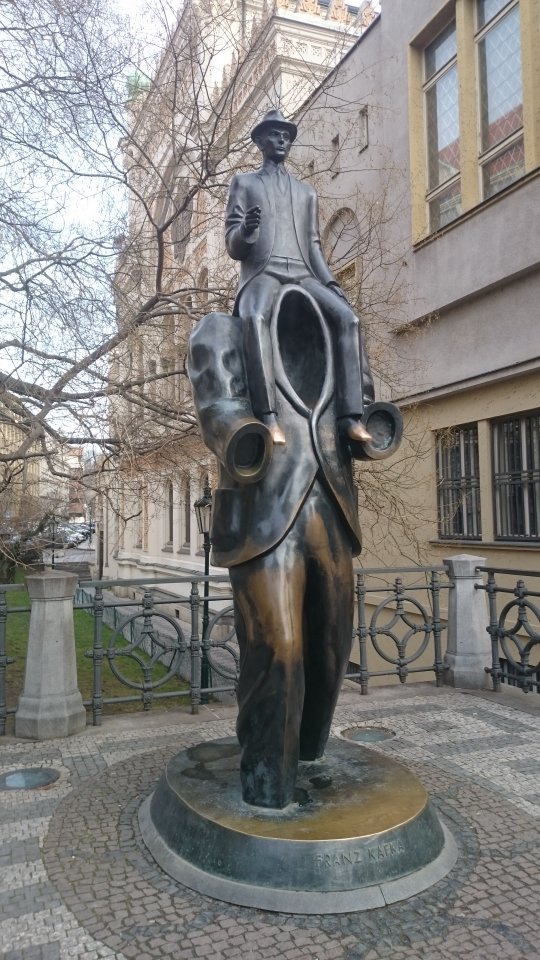
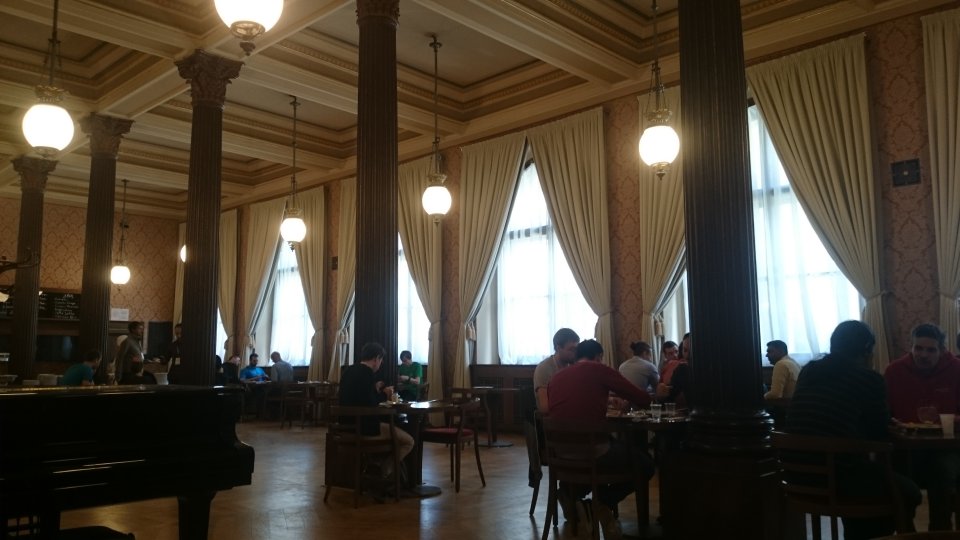
Here in the salon of Mrs. Berta Fanta, Albert Einstein, professor at Prague University in 1911 to 1912, founder of the Theory of Relativity, Nobel Prize winner, played the violin, and met his friends, famous writers Max Brod and Franz Kafka.