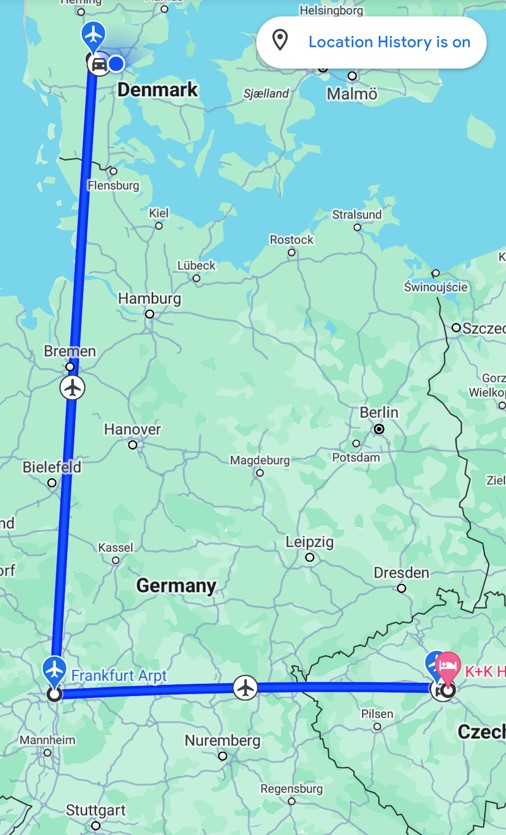
Impressions and Links from
MlPrague 2024


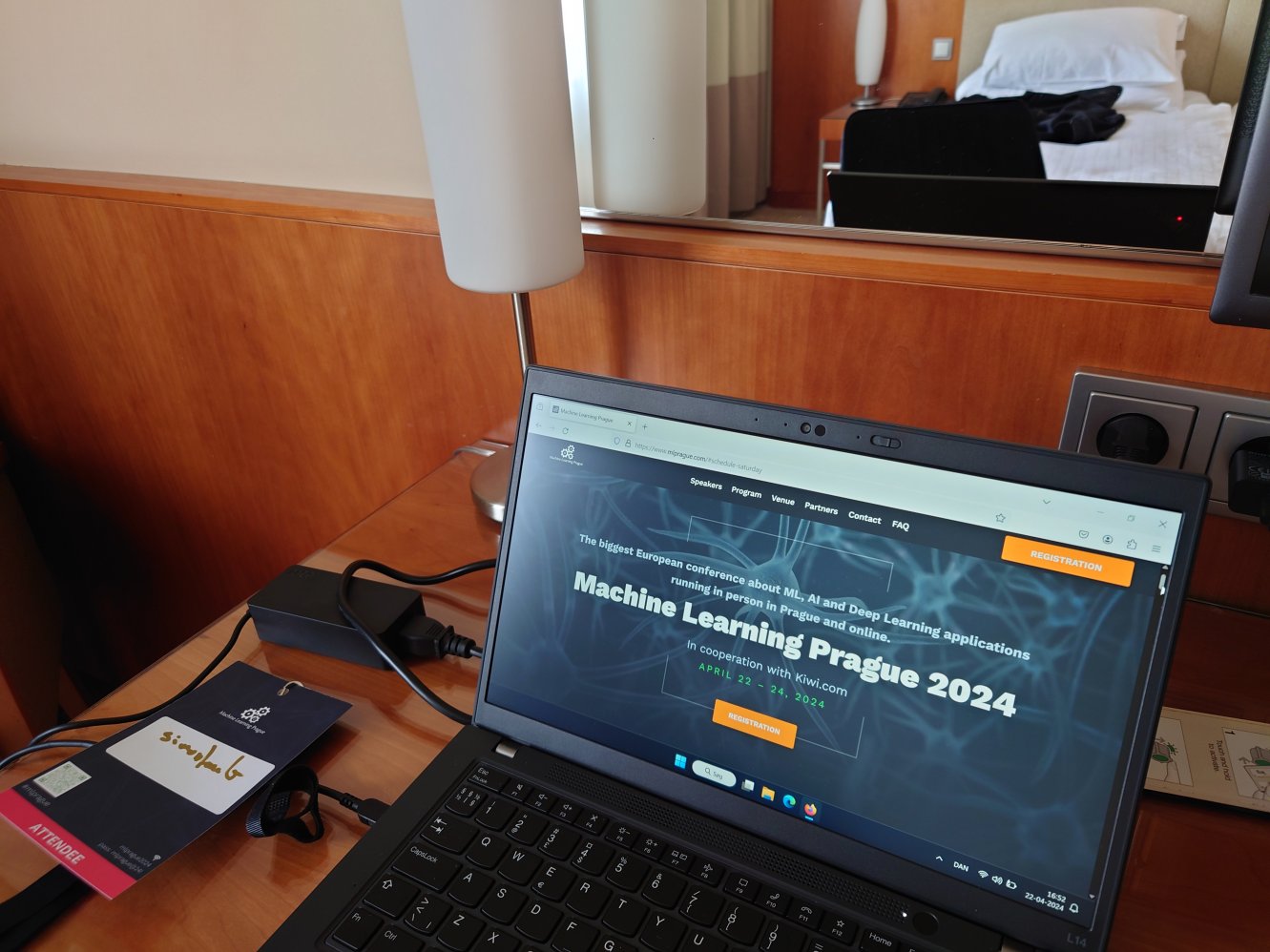
I had the great pleasure of taking part in ML Prague 2024 (The practical conference about ML, AI and Deep Learning applications). April 22 - 24, 2024. Prague.

Tried to follow as many talks as possible. But, well, these notes are, of course, in no way, shape or form complete...
Rather, these notes were written on conference nights, as my way of keeping track of the events that I attended. And as a way of storing links and references for future reference.

Below you will find impressions from the conference, and links for further reading.
Disclaimer


1. MlPrague 2024.


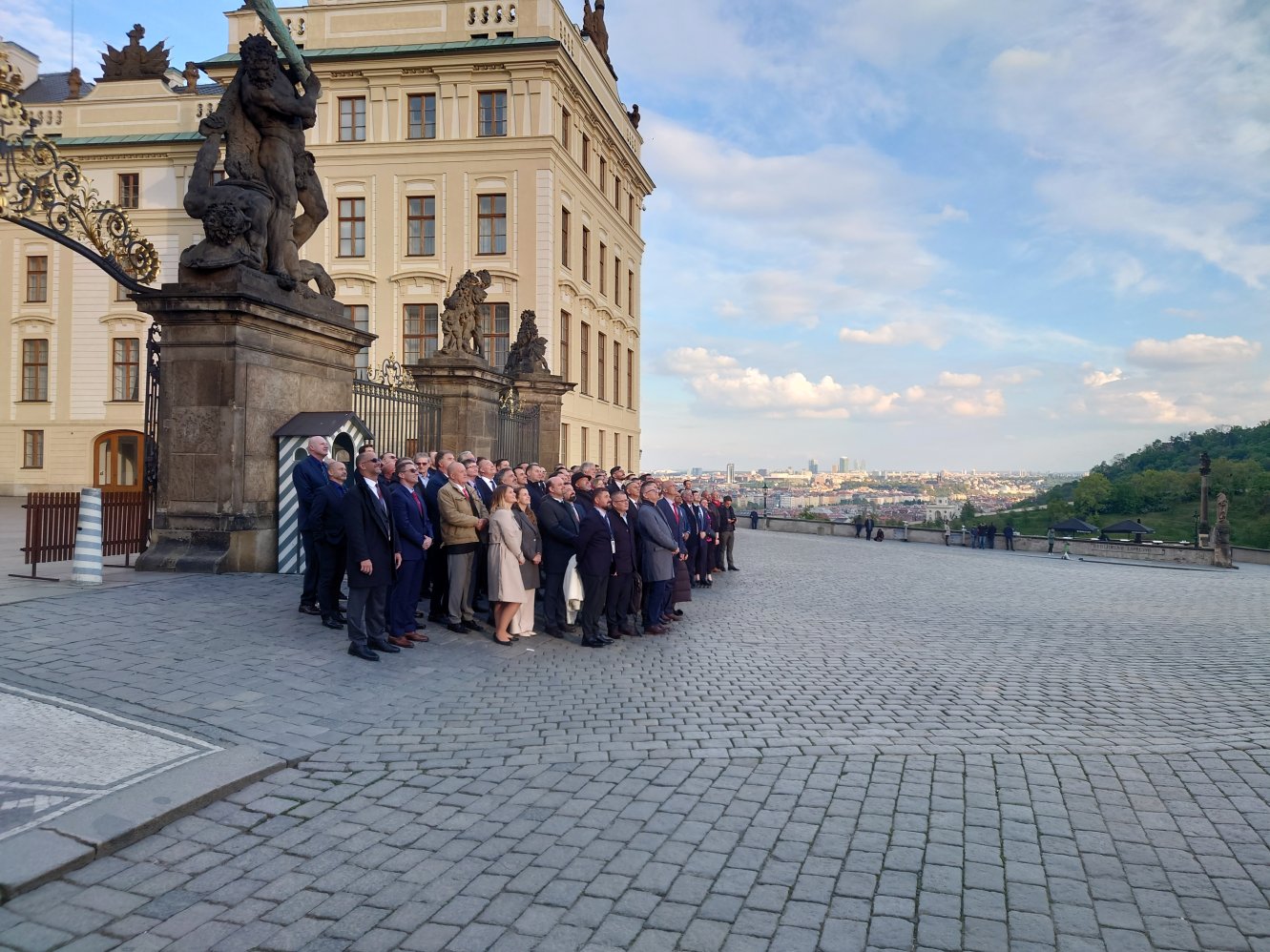
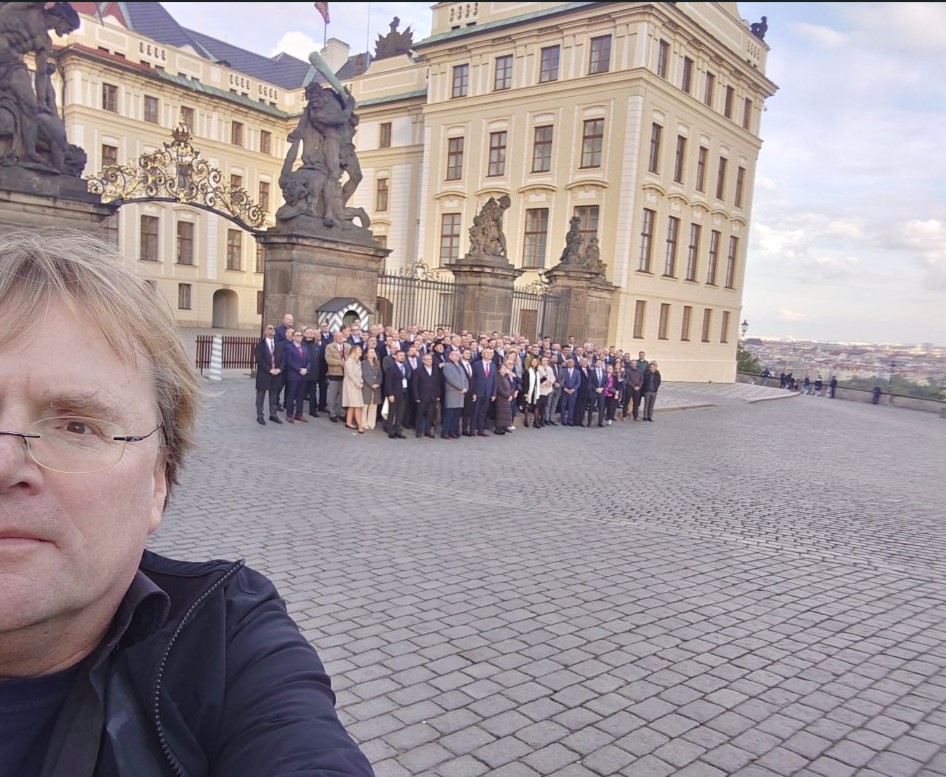
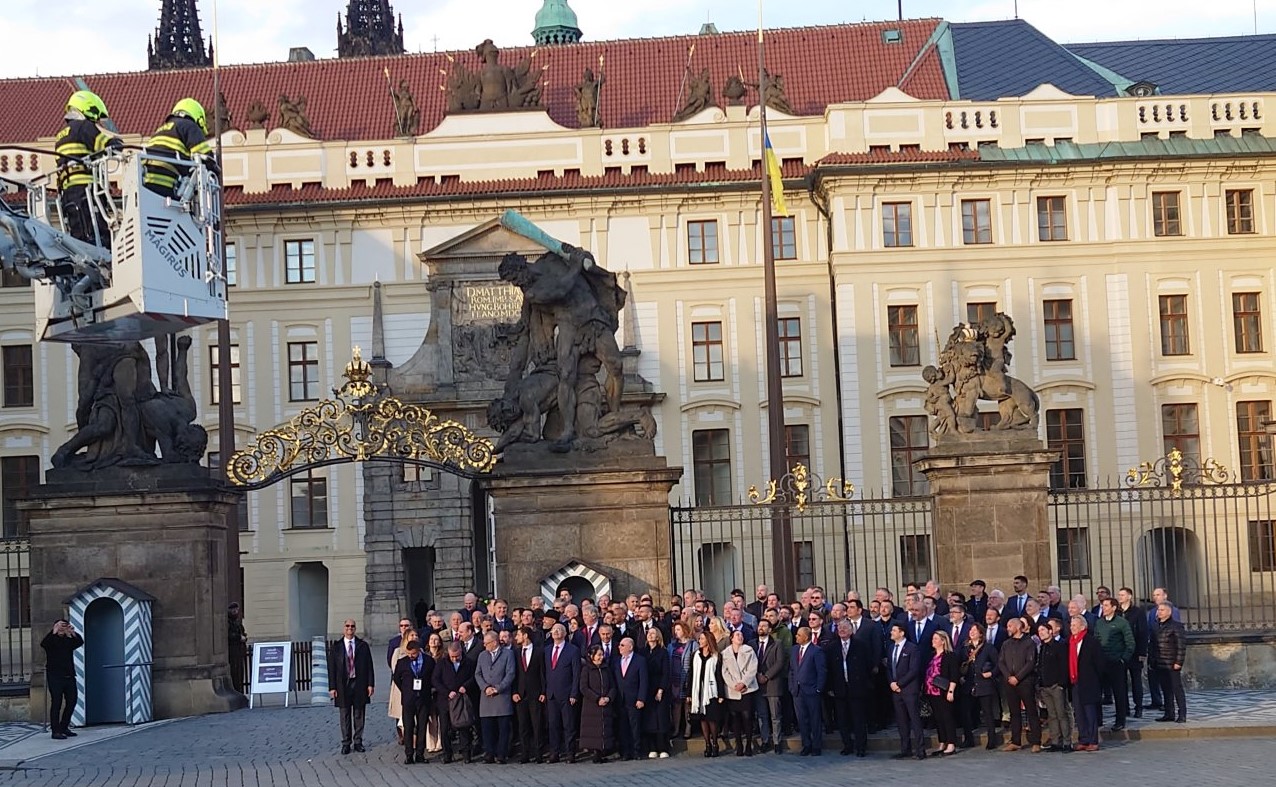
Prague 2024.

Prague 2024.

2. Workshops. Monday, April 22nd.

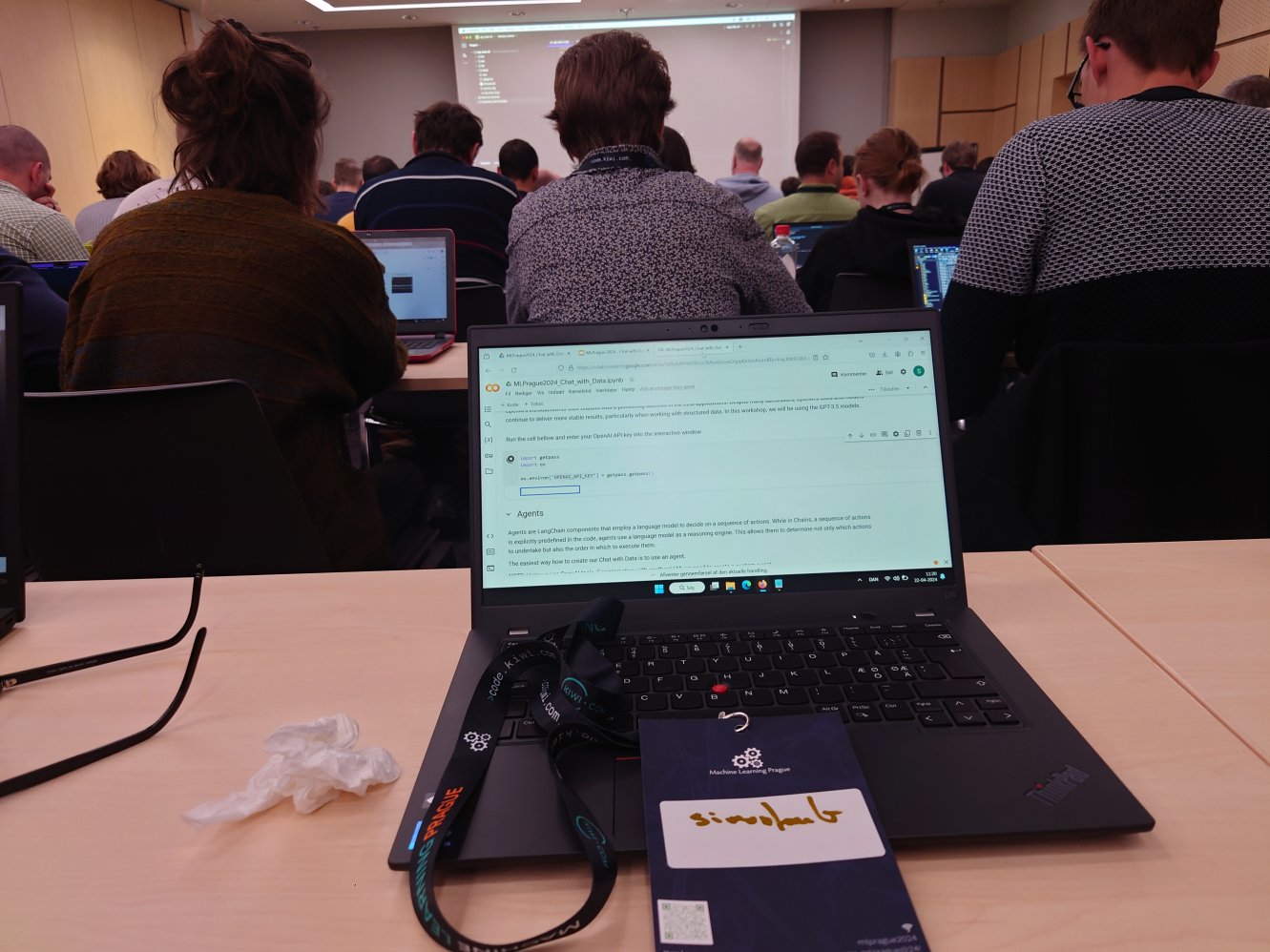
2.1. Chatting with your Data: A Hands-on Introduction to LangChain.


Workshop. MlPrague 2024
O2 Universum. Prague.
Morning, April 22nd.


Workshop. MlPrague 2024

From the workshop introduction:
We'll show you how to efficiently run Language Models (LLMs) on a standard 16GB RAM machine. During the workshop you will gain hands-on experience with the LangChain framework and have the opportunity to create an application that allows you to interact with your data through natural language.

From the LangChain homepage:
LangChain enables building applications that connect external sources of data and computation to LLMs.
Concerning LangChain and SQL:
One of the most common types of databases that we can build Q&A systems for are SQL databases.
LangChain comes with a number of built-in chains and agents that are compatible with any SQL dialect supported by SQLAlchemy.

They enable use cases such as:
  • Generating queries that will be run based on natural language questions.
  • Creating chatbots that can answer questions based on database data.
  • Building custom dashboards based on insights a user wants to analyze.
and much more (See: LangChain).
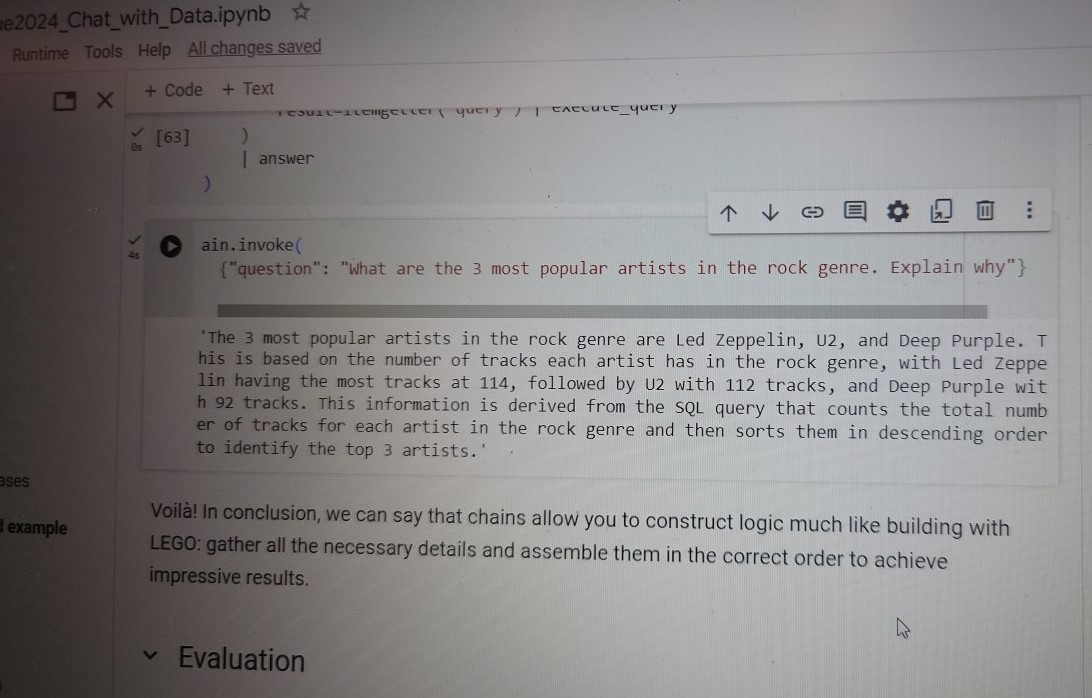
Here we used Langchain to access a SQL database (with data about music and musicians) in natural language:

Workshop. MlPrague 2024

It worked surprisingly well.
Where, pretty similar steps for using Langchain with a relational DB (The Chinook music DB) is described here (Medium article).

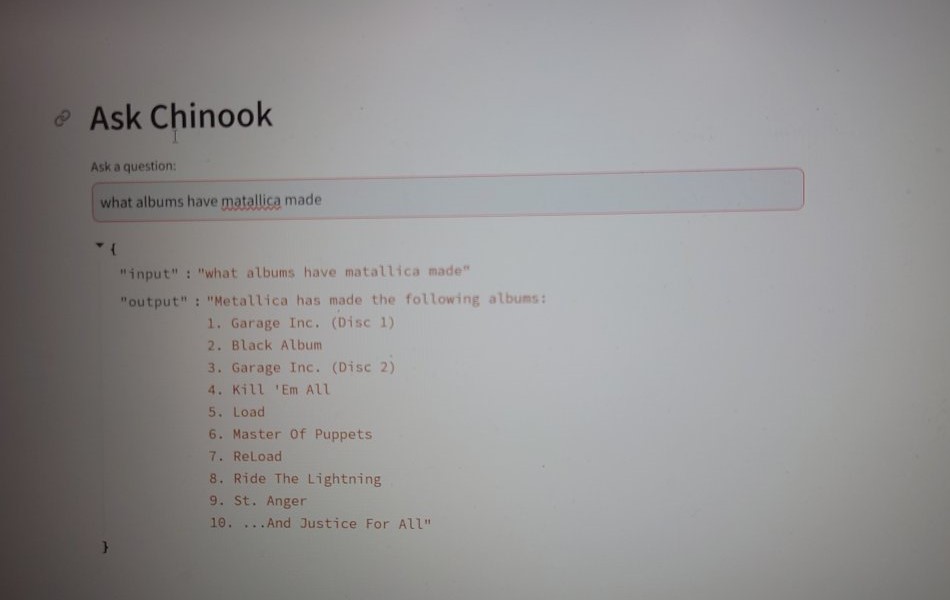
On a (locally hosted) webpage it looked like this:

Workshop. MlPrague 2024

Pretty cool indeed.

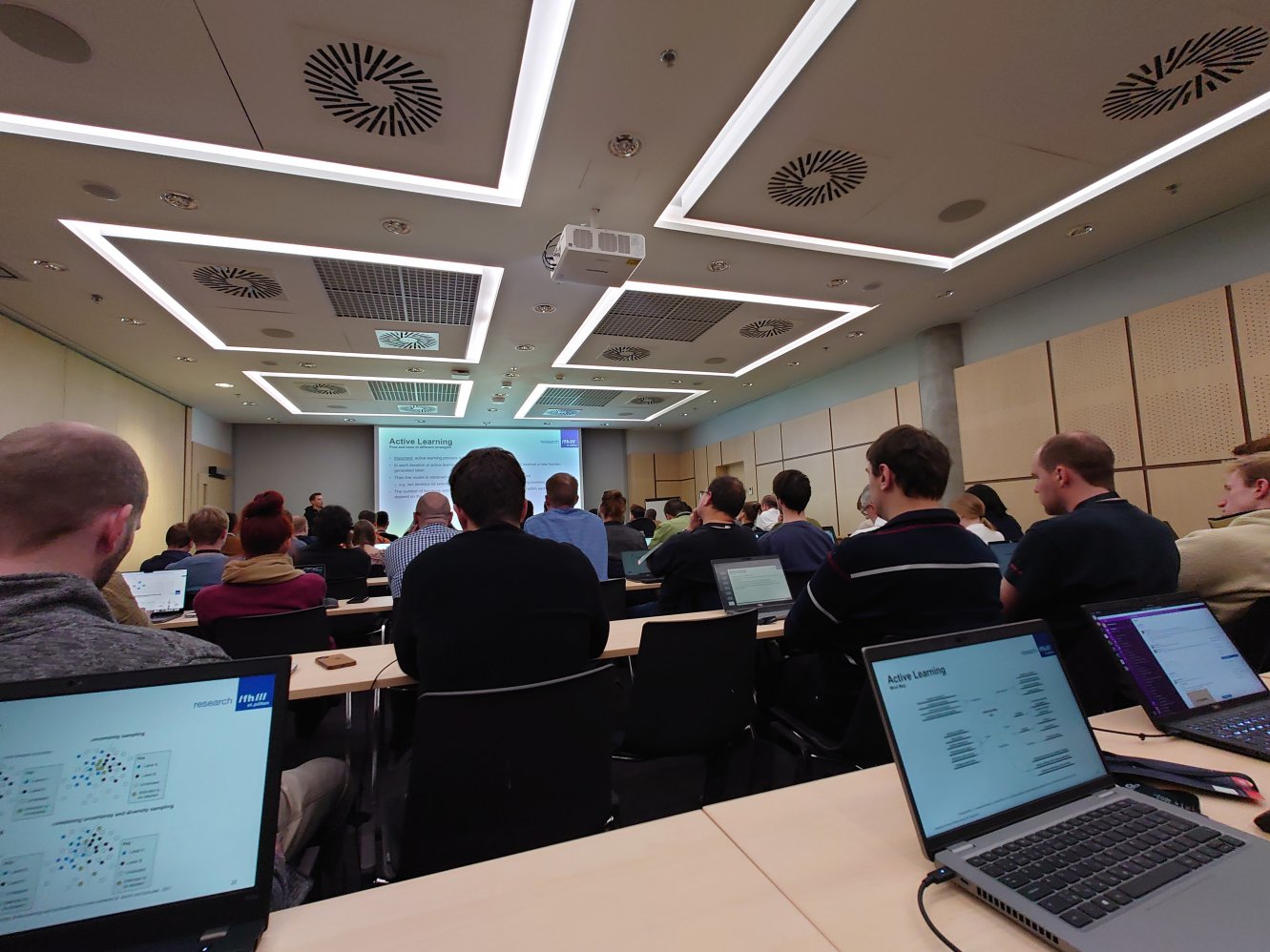
2.2. Unlocking the Power of Active Learning: A Hands-on Exploration.


Workshop. MlPrague 2024
O2 Universum. Workshop, MLPrague 2024.
Afternoon, April 22nd.


From the workshop introduction:
Active Learning focuses on enabling machines to learn more efficiently from limited labeled data by actively selecting the most informative examples for annotation.
Elsewhere, sometimes, described like this:
Active learning machine learning is all about labeling data dynamically and incrementally during the training phase so that the algorithm can identify what label would be the most beneficial for it to learn from [1].
I.e.
Active learning is a type of semi-supervised learning, meaning models are trained using both labeled and unlabeled data.
The active learner algorithm is initially trained on a fully labeled part of the data.
Next, choose the cases from the unlabeled pool where the model is unsure or has low confidence. Ask an oracle -a human annotator or another source of ground truth labels — for labels for the chosen instances [2].
Why not label everything from the start?
Well: Annotation of the unlabeled dataset costs human effort, time, and money.
All very useful, indeed.
The workshop Github page is here.

3. Presentations Tuesday. April 23rd.

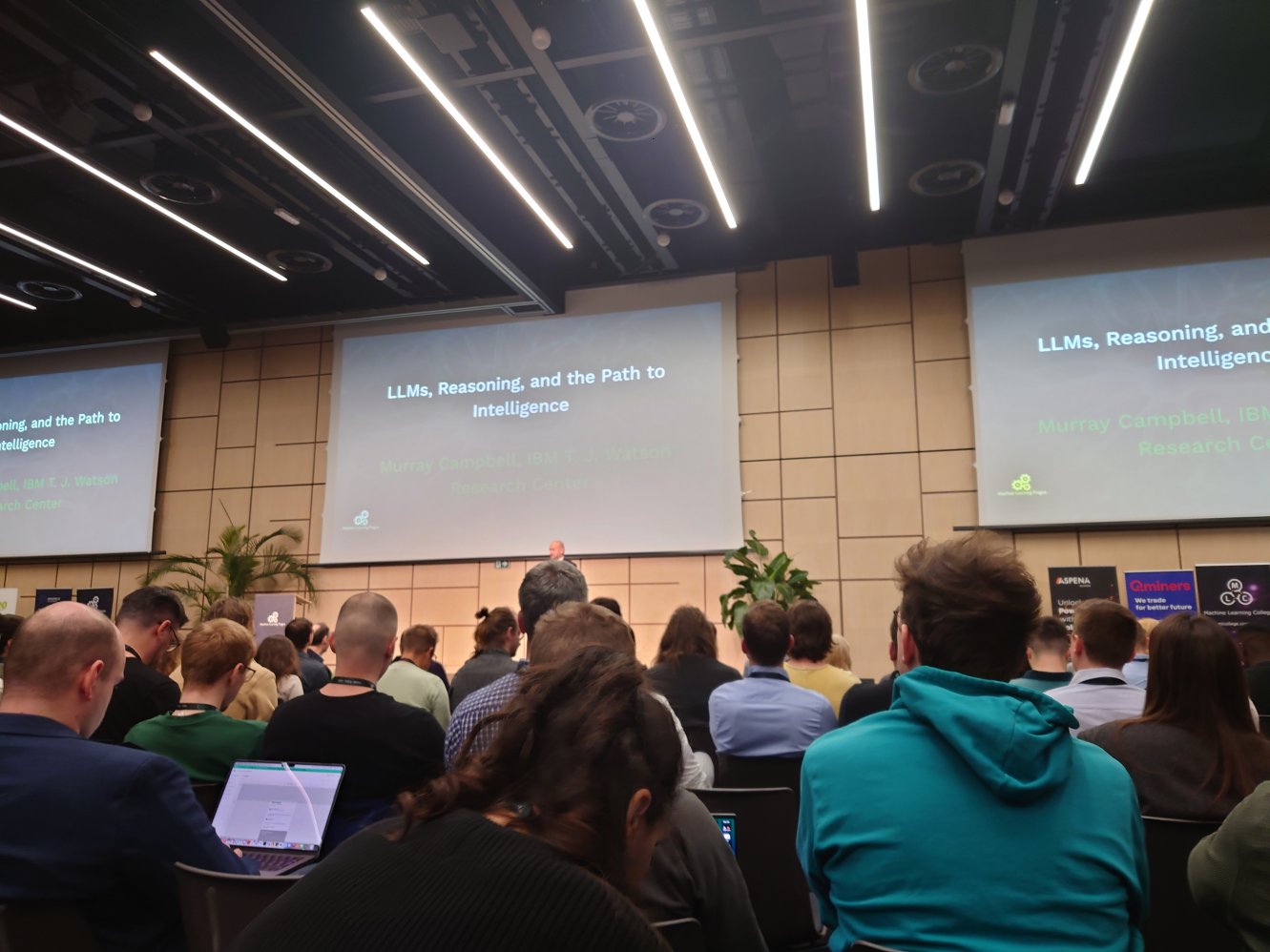
3.1. LLMs, Reasoning, and the Path to Intelligence.

Murray Campbell, IBM T. J. Watson Research Center.
talked about ''LLMs, Reasoning, and the Path to Intelligence''.

Campbell was part of the team that created Deep Blue, the first computer to defeat a world chess champion [3].

Here, he talked about LLMs and reasoning.
From the talk intro:
Here we will get into what LLMs can and cannot be expected to do. Trying to characterize some of the reasoning limitations of LLMs, and discuss approaches to move toward AI systems that can reason more effectively.

MlPrague 2024

So, what is reasoning?
- Drawing conclusions that inform decision making.
The Nature of Reasoning. J.P. Leighton, 2004.

- The drawing of inferences or conclusions from known or assumed facts.
According to Collins dictionary.

Types of reasoning:
Deductive reasoning: Conclusion guaranteed.
Starts with the assertion of a general rule,
and proceeds from there to a guaranteed specific conclusion.
   if x = 4
   And if y = 1
   Then 2x + y = 9

Inductive reasoning: Likely conclusion.
Inductive reasoning begins with observations that are specific and limited in scope, and proceeds to a generalized conclusion that is likely, but not certain, in light of accumulated evidence.
- I have only seen white swans.
- Likely: All swans are white.

Abductive reasoning: Taking your best shot.
Abductive reasoning typically begins with an incomplete set of observations and proceeds to the likeliest possible explanation for the set [4].
Where reasoning will help systems to search for solutions to problems, make explainable decisions, verify decisions etc.

So, can LLMs plan?
Well, according to Subbarao Kambhampati, people confuse ''planning knowledge'' with ''planning'' [5]:
Perhaps they can't do planning autonomously straight out of the box,
but can they do it with a little nudge?
...
The first, called ''fine tuning'', is rather straightforward: Take a general LLM and fine tune it on planning problems (i.e., instances and their solutions), with the hope that they will subsequently make better guesses...?
While our own limited experiments didn't show any significant improvement through fine tuning, it is possible that with even more fine tuning data and effort, the quality of LLM guesses may well improve. But all that such fine tuning is doing is converting the planning task into a memory-based approximate retrieval (akin to the memorization/compilation from System 2 to System 1).
It doesn't prove that LLMs are able to plan...
Many of the papers claiming planning abilities of LLMs, on closer examination, wind up confusing general planning knowledge extracted from the LLMs for executable plans. When all we are looking for are abstract plans, such as ''wedding plans'' with no intention of actually executing said plans directly, it is easy to confuse them for complete executable plans.

To summarize, nothing that I have read, verified, or done gives me any compelling reason to believe that LLMs do reasoning/planning, as normally understood [6].

So, can LLMs reason?
Certain papers seem to suggest that they can.
E.g. in ''Chain-of-Thought Prompting Elicits Reasoning in Large Language Models'' one reads:
Experiments on three large language models show that chain of thought prompting improves performance on a range of arithmetic, commonsense, and symbolic reasoning tasks [7].
And in ''Sparks of Artificial General Intelligence: Early experiments with GPT-4'' is says:
We demonstrate that, beyond its mastery of language, GPT-4 can solve novel and difficult tasks that span mathematics, coding, vision, medicine, law, psychology and more, without needing any special prompting [8].
Murray Campbells take here is, that LLMs can behave as though they are reasoning.
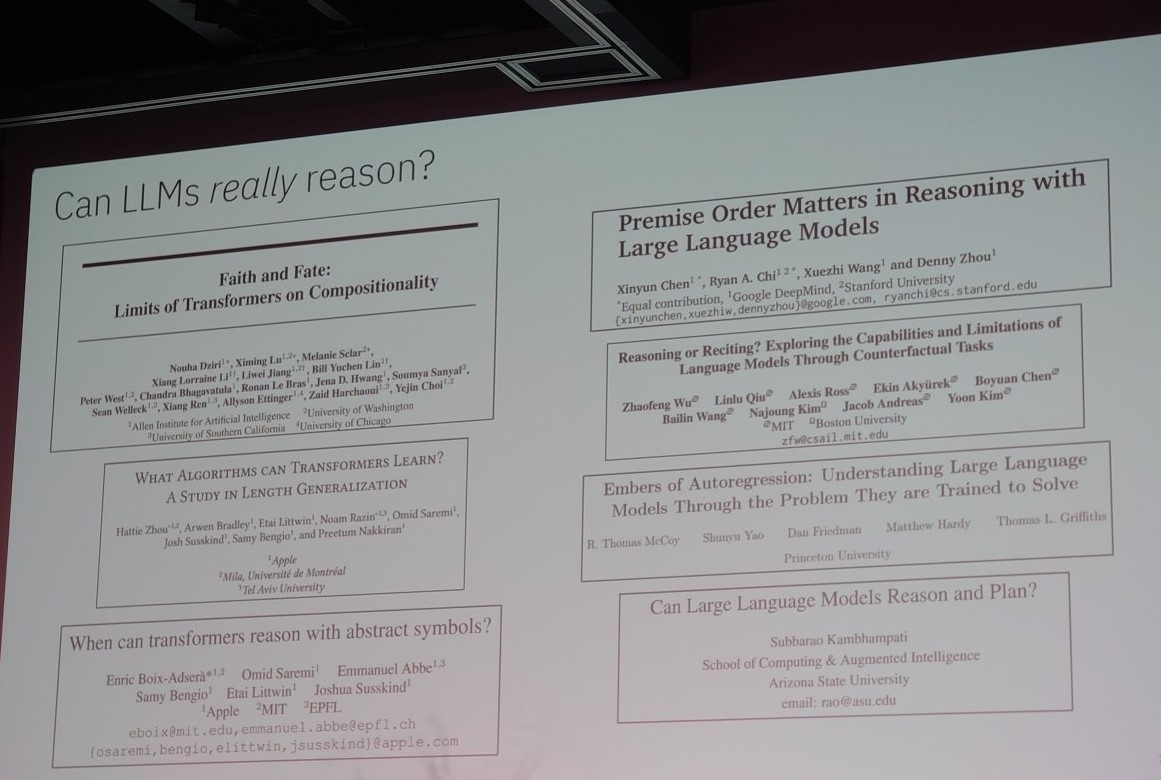
But are they really reasoning?

MlPrague 2024

In ''Faith and Fate: Limits of Transformers on Compositionality'' Nouha Dziri et al. writes:
Our empirical findings suggest that transformer LLMs solve compositional tasks by reducing multi-step compositional reasoning into linearized subgraph matching, without necessarily developing systematic problem-solving skills [9].
In ''Premise Order Matters in Reasoning with Large Language Models'' Xinyun Chen et al. writes:
LLMs are surprisingly brittle to the ordering of the premises, despite the fact that such ordering does not alter the underlying task. In particular, we observe that LLMs achieve the best performance when the premise order aligns with the context required in intermediate reasoning steps [10].
In ''Reasoning or Reciting? Exploring the Capabilities and Limitations of Language Models Through Counterfactual Tasks'' Zhaofeng Wu et al. writes:
We observe nontrivial performance on the counterfactual variants, but nevertheless find that performance substantially and consistently degrades compared to the default conditions. This suggests that while current LLMs may possess abstract task-solving skills to an extent, they often also rely on narrow, non-transferable procedures for task-solving [11].
And in ''What Algorithms can Transformers Learn? A Study in Length Generalization'' Hattie Zhou, et al. writes:
Large language models exhibit surprising emergent generalization properties, yet also struggle on many simple reasoning tasks such as arithmetic and parity. This raises the question of if and when Transformer models can learn the true algorithm for solving a task.
...
Where:
We study the scope of Transformers' abilities in the specific setting of length generalization on algorithmic tasks.
Moreover, we leverage our insights to drastically improve generalization performance on traditionally hard tasks (such as parity and addition) [12].
So, LLMs aren't that great at compositionality, putting things together in a new way, and they don't do all that well on more complex examples of simpler tasks they have already learned.

Changing the order of premises should have no effect on the result of a reasoning process, but when it is demonstrated that it does have an effect, it is a sign that reasoning really isn't going on underneath the covers [10].
Worse, an LLM might be good at solving problems in a ''blocks world'' [13]. Still, if we change the words (for the blocks), but keep the same meaning, the LLM might not do that well (on the task).

MlPrague 2024

In order to really see what is going on, it would be nice with benchmarks for reasoning performance.

And, luckily, there are benchmarks, out there, that can help evaluate the reasoning performance of LLMs. E.g.
''Functional Benchmarks for Robust Evaluation of Reasoning Performance, and the Reasoning Gap'' by Saurabh Srivastava et al. :
We propose a framework for robust evaluation of reasoning capabilities of language models, using functional variants of benchmarks [14].
Murray Campbell emphasized, that many reasoning benchmarks are just ''ad hoc'' collections of task that researchers have put together. But it is important (obviously) that the reasoning task is not already a part of the training data (for the LLM).

An awesome talk!

3.2. Enhancing Semantic Search: A Case Study on Fine-tuning with Noisy Data.

Barbora Rišová, Seznam,
talked about ''Enhancing Semantic Search''.

And gave insights about using ''contrastive learning'' (an efficient technique for acquiring optimal vector representations of diverse modalities, including text & images) in a ''real life setting''.

- The same objects should be close in ''feature vector space''.
- Different objects should be far away in ''feature vector space''.
The idea behind contrastive learning is that we have a reference, or ''anchor'' sample, a similar or ''positive'' sample, and a different or ''negative'' sample. We try to bring positive samples close to the anchor sample in an embedding space while pushing negative samples far apart.
...
E.g. embeddings from similar dog images should be closer together, and embeddings from cat images should be further away [15].
In order to train this we need some some sort of a ''constrastive loss function''.
I.e.
It turns out that it is easier for someone with no prior knowledge, like a kid, to learn new things by contrasting between similar and dissimilar things, instead of learning to recognize them one by one. At first, the kid may not be able to identify the dog. But after some time, the kid learns to distinguish the common characteristics among dogs, like the shape of their nose and their body posture [16].
How the loss function works:
''Contrastive loss'' is one of the first training objectives that was used for contrastive learning. It takes as input a pair of samples that are either similar or dissimilar, and it brings similar samples closer, and dissimilar samples far apart.
...
- If the samples are similar, then we try to minimize the (embedding) distance between them.
- If the samples are dissimilar, then we try to maximize their (embedding) distance [16].

3.3. Supercharging Recommendation Systems with Large Language Models.

Amey Dharwadker, Meta,
talked about ''Supercharging Recommendation Systems with Large Language Models''.

From the introduction:
Traditional recommendation systems often struggle with the complexities of comprehensively understanding user interests.
Enter Large Language Models (LLMs), renowned for their unparalleled strength in language comprehension, generation, generalization and reasoning. In this talk, I'll provide a comprehensive overview of the strategies for seamlessly integrating LLMs into recommendation pipelines.
The LLMs can be directly used, as the recommender system, but some sort of integration with a existing recommender system is, of course, also possible.
E.g.
- Use LLMs to generate item embeddings that can be used in the recommender system.
- Use LLMs to generate preference embeddings that can be used in the recommender system.
I.e. as ''discriminative LLM'', where LLMs are used as encoders for downstream tasks, or ''generative LLM'', where LLMs are tailored to be effective in a certain (recommender system) area.

Inside a general recommender system LLMs can help with specific task, such as recommending books (Given that the user liked book A, and didn't like book B, will the user like book C?).
E.g. see the very interesting BookGPT:
Book recommender systems.

And LLMs can of course also be very helpful when it comes to explaining a systems recommendations.

Still, there are problems, as we are dealing with very large LLMs + expanding data sizes + frequent model updates...
LLMs have high inferences times, but recommender systems are supposed to have quick replies...
So, lots of ongoing work, in order to deal with such problems.
Still, a great overview in this talk.

3.4. Perspective Taking in Large Language Models.

Lucie Flek, University of Bonn,
talked about ''Perspective Taking in Large Language Models''.

She started with a small introduction to the Lamarr Institute though, where they are working on things like:

Triangular AI (AI3) – a new and high-performance generation of Artificial Intelligence that is not only trained based on data, but also uses additional knowledge and contextual information [17].
And then onwards to LLMs and perspective taking:
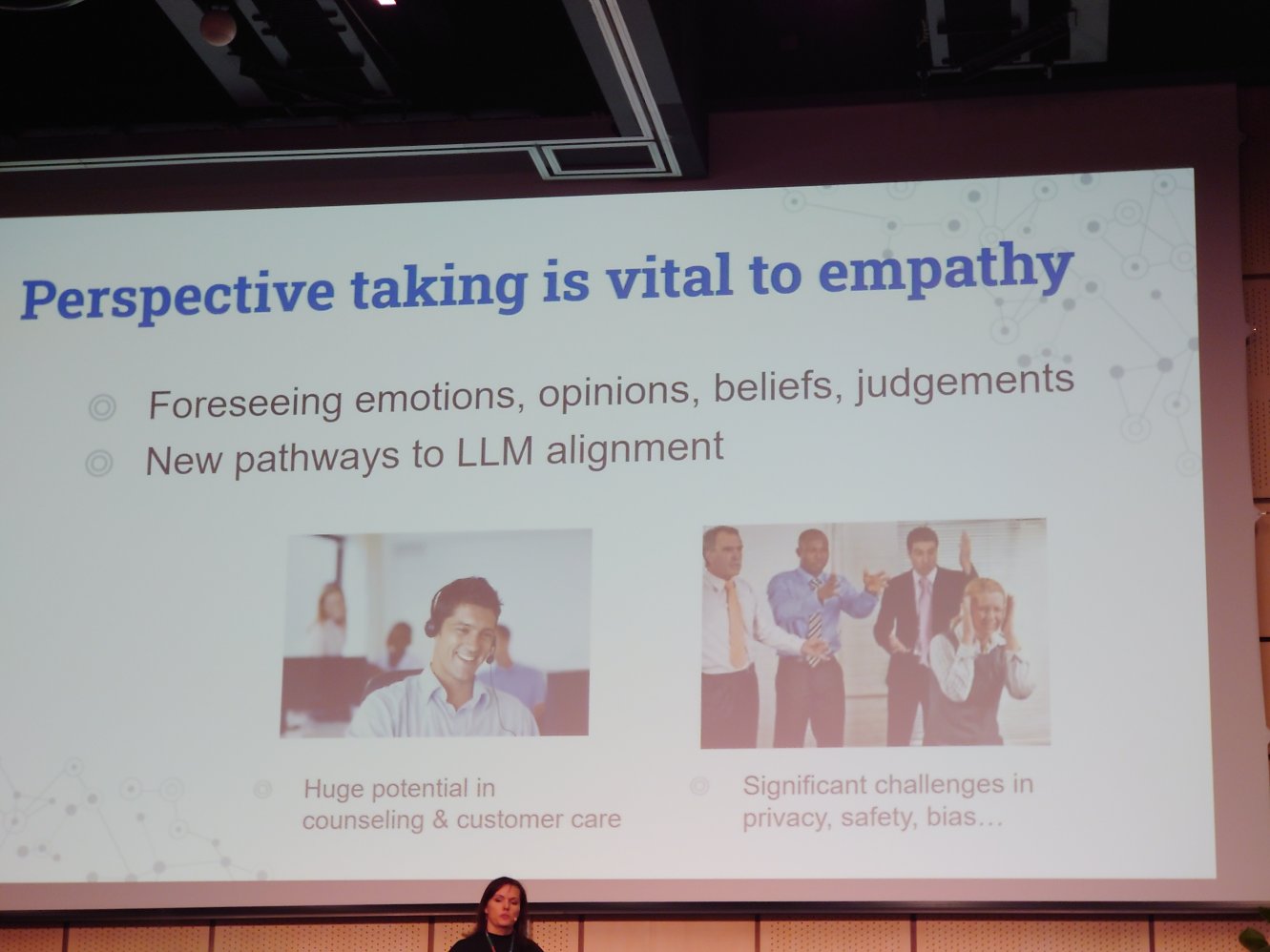
While LLMs outperform humans in an ever-broadening range of tasks, they remain far behind in the ability to explain somebody else’s feelings, thoughs and behavioral drivers. This skill requires perspective-taking, the process of conceptualizing the point of view of another person.
     MlPrague 2024

Foreseeing the actions or reactions of others is also for LLMs a key to choose the best action to take next. Enhancing perspective-taking capabilities of LLMs can unlock their potential to react better and safer to hints of sadness, anger, or distress, to recognize sarcasm, to engage in a more receptive argumentation, or to target an explanation to an audience.
What should a LLM do when someone says:
- ''The window is open, and it is quite cold in here''.

Does it mean:
- This is just an observation about the window.
or
- This is a request that the window should be closed.

Humans handle this by building conceptual models about other humans, in order to steer the conversation in the right direction.
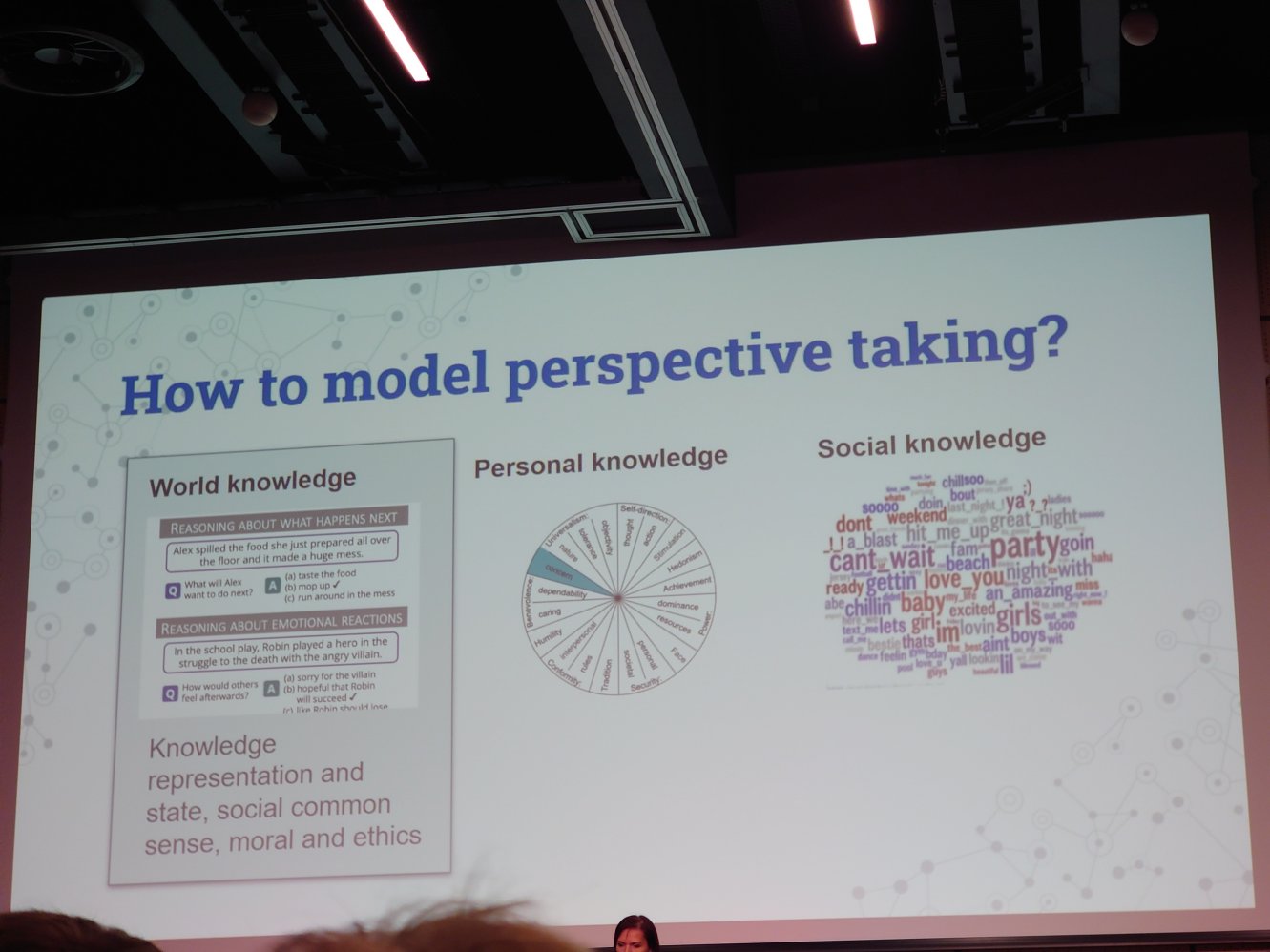
I.e. humans can add in ''world knowledge'', ''personal knowledge'' and ''social knowledge'' into a conversation. Again, in order to steer the conversation in the right direction.

MlPrague 2024

Similarly, a LLM can be given a ''Persona embedding'' (Representing everything the user have ever said and talked about. But, notice: She finds, that it works better by only looking at recorded behaviour in similar situations).
The model will then use attention over the ''person'', the ''situation'' and what is actually said, in order to come up with a reply to the user.

Where a good model (in the future) should be able to understand all of the various perspectives people might have.
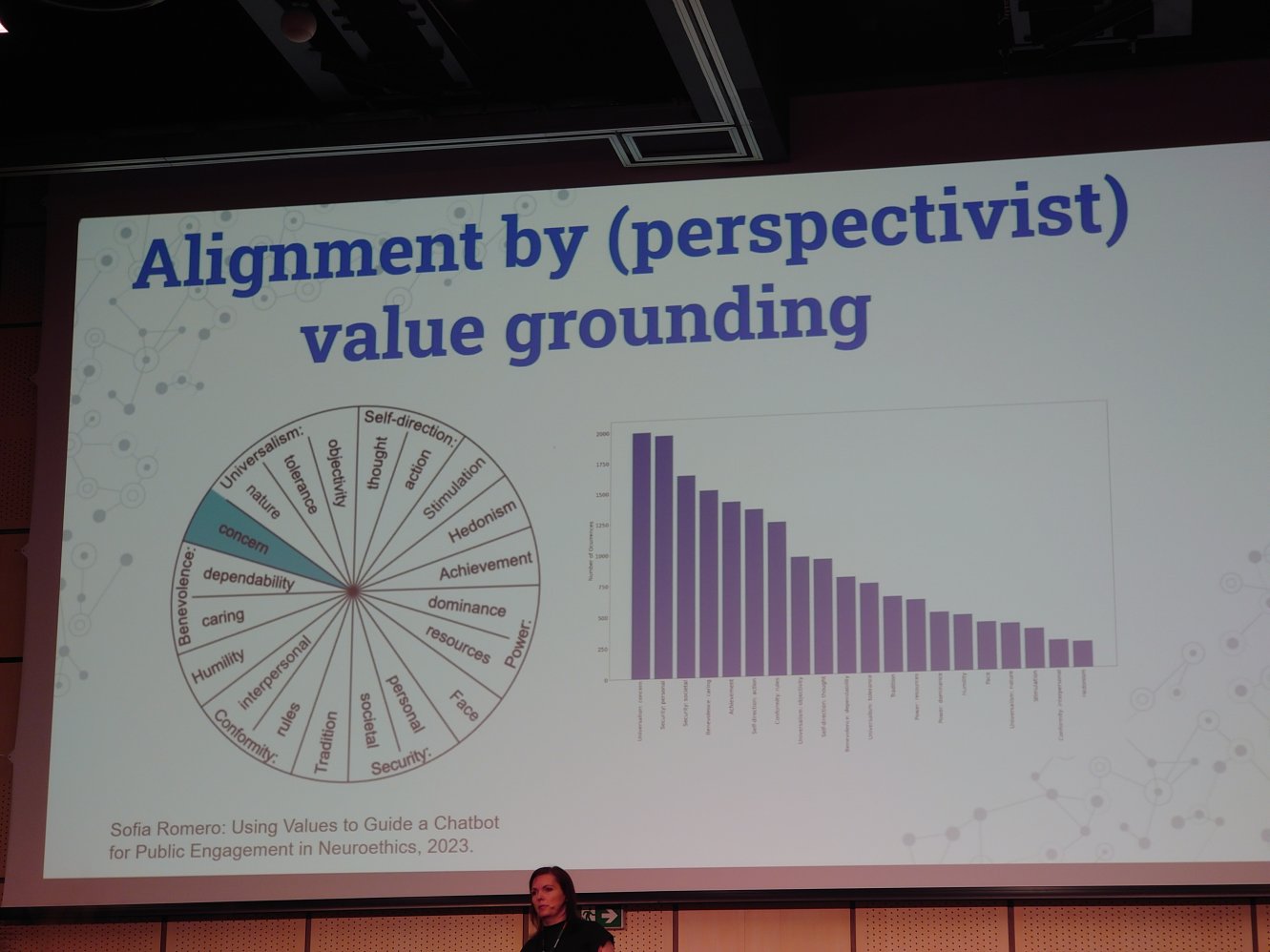
And be able to align with people with all sorts of perspectives.
From people who have a strong sense of self direction, or not, to people who are humble, or not. Etc.

      MlPrague 2024

Still, it would of course be dangerous, if a chatbot is (say) too empathetic, and just give (say) a patient all the medicin the patient wants. Saying ''it will be good to ease the pain'', if it does in fact kill the patient, is no good...

E.g. see Fabian Lechner et al. ''Challenges of GPT-3-based Conversational Agents for Healthcare'':
Our analysis reveals that LLMs fail to respond adequately to certain queries, generating erroneous medical information, unsafe recommendations, and content that may be considered offensive [18].
Afterwards, many in the audience wanted to know, and had been thinking about, whether it would be possible to give the ''persona embedding'' in the form of a pre-prompt to the LLM.
Flek was sceptical, and felt that the LLMs would tend to forget such a pre-prompt, and revert back to what they had been originally trained on. Therefore making it relevant to keep and use ''persona embeddings'' throughout the interaction with the user.

Indeed, a very interesting talk.

MlPrague 2024

3.5. Translating Mobile Network Signals to Roads with Transformers.

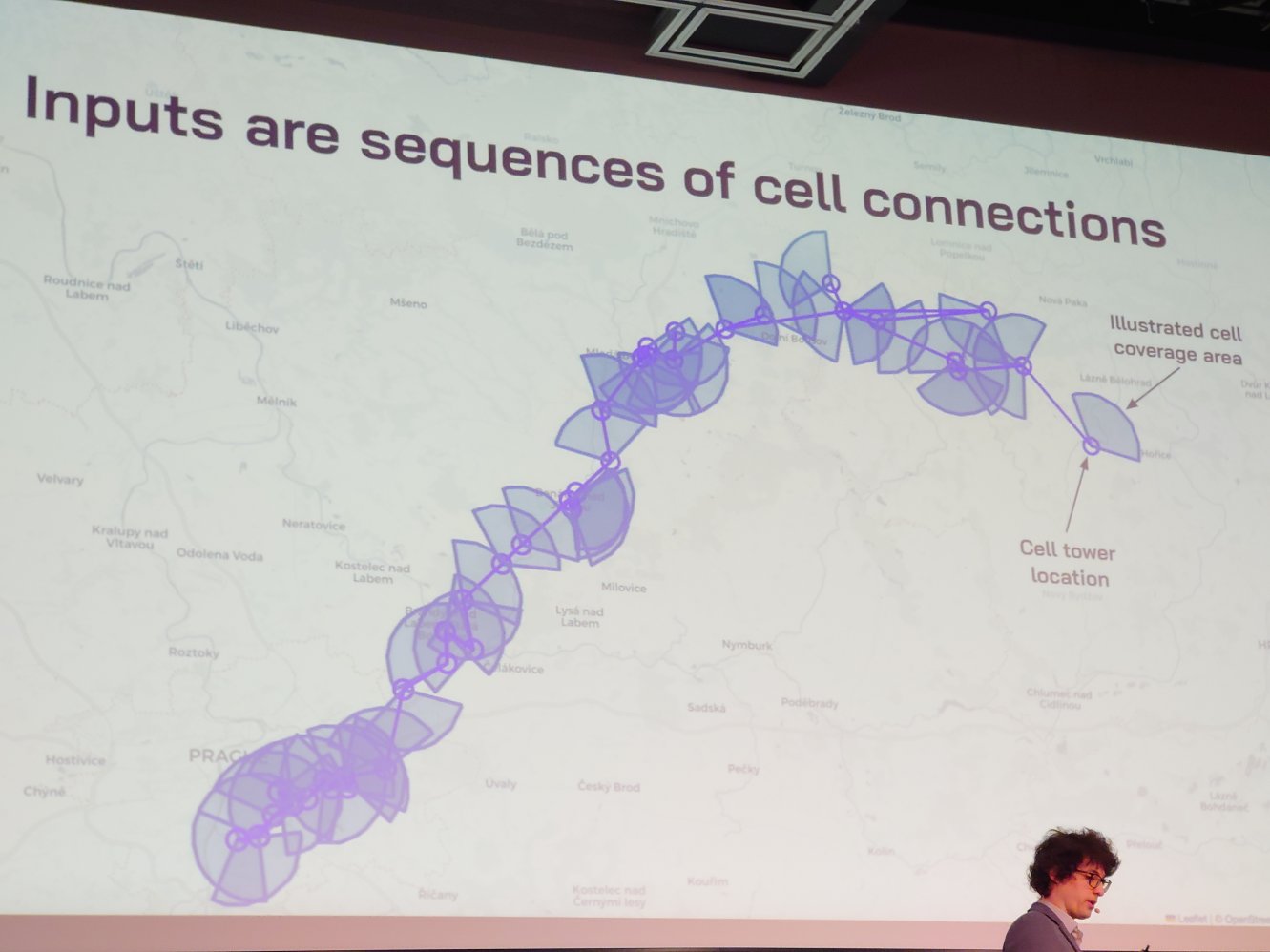
Stefan Josef, Dataclair, talked about ''Translating Mobile Network Signals to Roads with Transformers''.

Map matching refers to the procedure of converting sparse and noisy signals into precise positions on a road network. Drawing inspiration from the methods that propelled success in the text domain, such as language modeling, machine translation, and transfer learning, Dataclair has trained its own sequence-to-sequence Transformer models, which translate mobile network signals into specific road segments.
MlPrague 2024

In ''map matching'' we want to go from the signals send and received from mobile phones, to an actual trajectory of a person (with a phone) on the ground.
Using transformers, we translate between tokenized cell IDs and road segments.

So far, so good. But the input can be very ''sparse'', meaning that a lot of information is missing on where and when the phone connected to what cell towers. This is then corrected with preprocesing that fills out ''the blanks'', and then from there get the routes.

To transform this into a practical system, several challenges are addressed by developing a set of techniques, including spatial-aware representation of input cell tower sequences, an encoder-decoder framework for map matching model with variable-length input and output [19].
See also ''Transformer-based map-matching model with limited labeled data using transfer-learning approach'' by Zhixiong Jin et al. for developing a ''Transformer-based map-matching model with high performance'' [20].

All very interesting, indeed.

3.6. Protecting Privacy with AI During Testing of Automated Cars.

Mateus Riva, Valeo, talked about ''Protecting Privacy with AI During Testing of Automated Cars''.

We have developed and studied several algorithms that can find human faces and potentially readable license plates in every frame of a video and anonymize it.
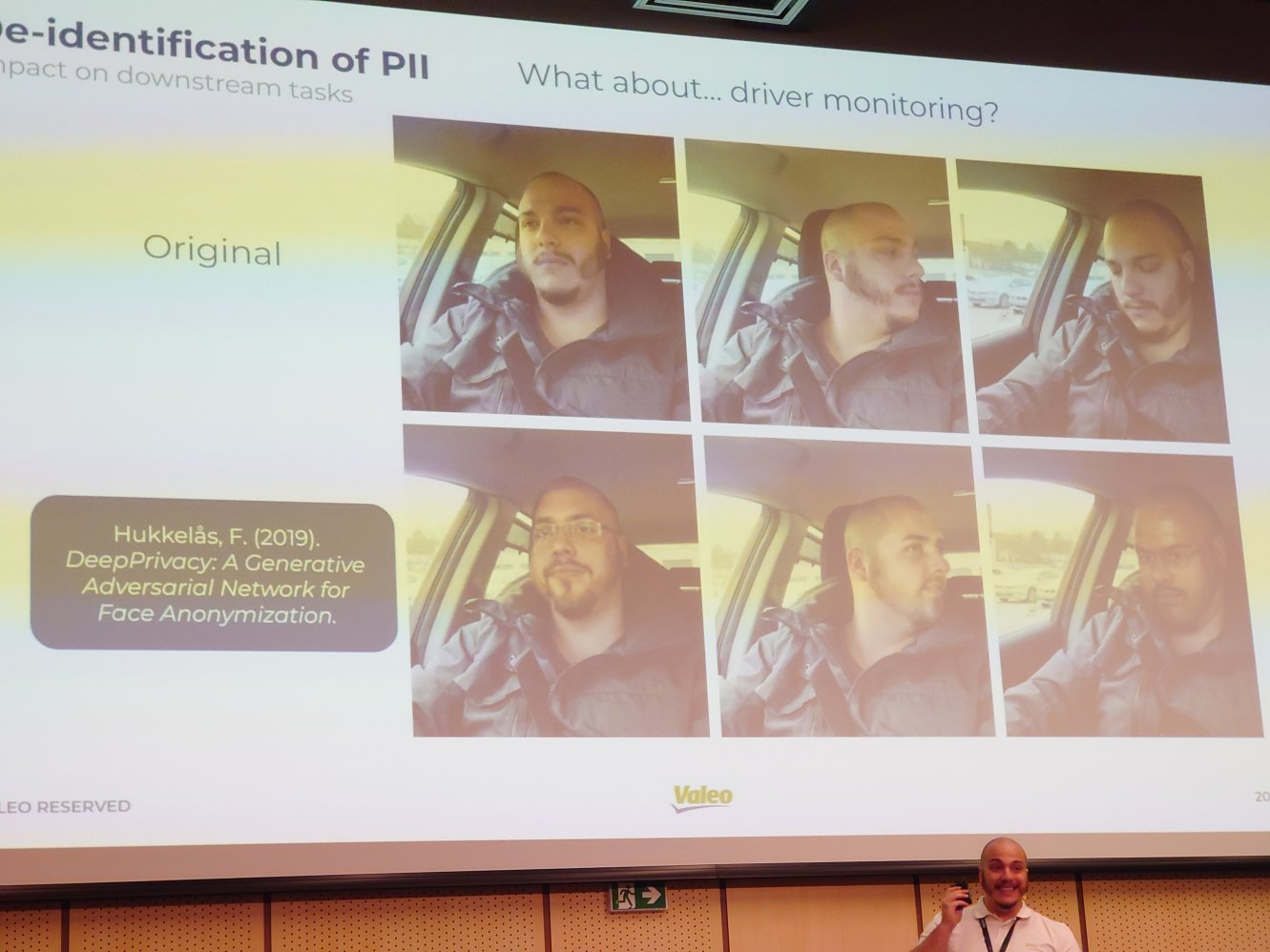
Looking at video from ''driver monitoring'' it might be anonymized by just blurring the images. But that is no good, as important information then disappears (such as where is the driver actually looking).
It is too destructive. It destroys too much information.

Then, what about ''DeepPrivacy'' by Håkon Hukkelås et al.
We propose a novel architecture which is able to automatically anonymize faces in images...
...
Our model is based on a conditional generative adversarial network, generating images considering the original pose and image background [21].
Again, too much information disappears. In the original image the person might have closed their eyes. Or the person might haved looked away from the road. But that is not preserved on the re-regenerated images (Here, bottom row, the person with the glasses):

MlPrague 2024

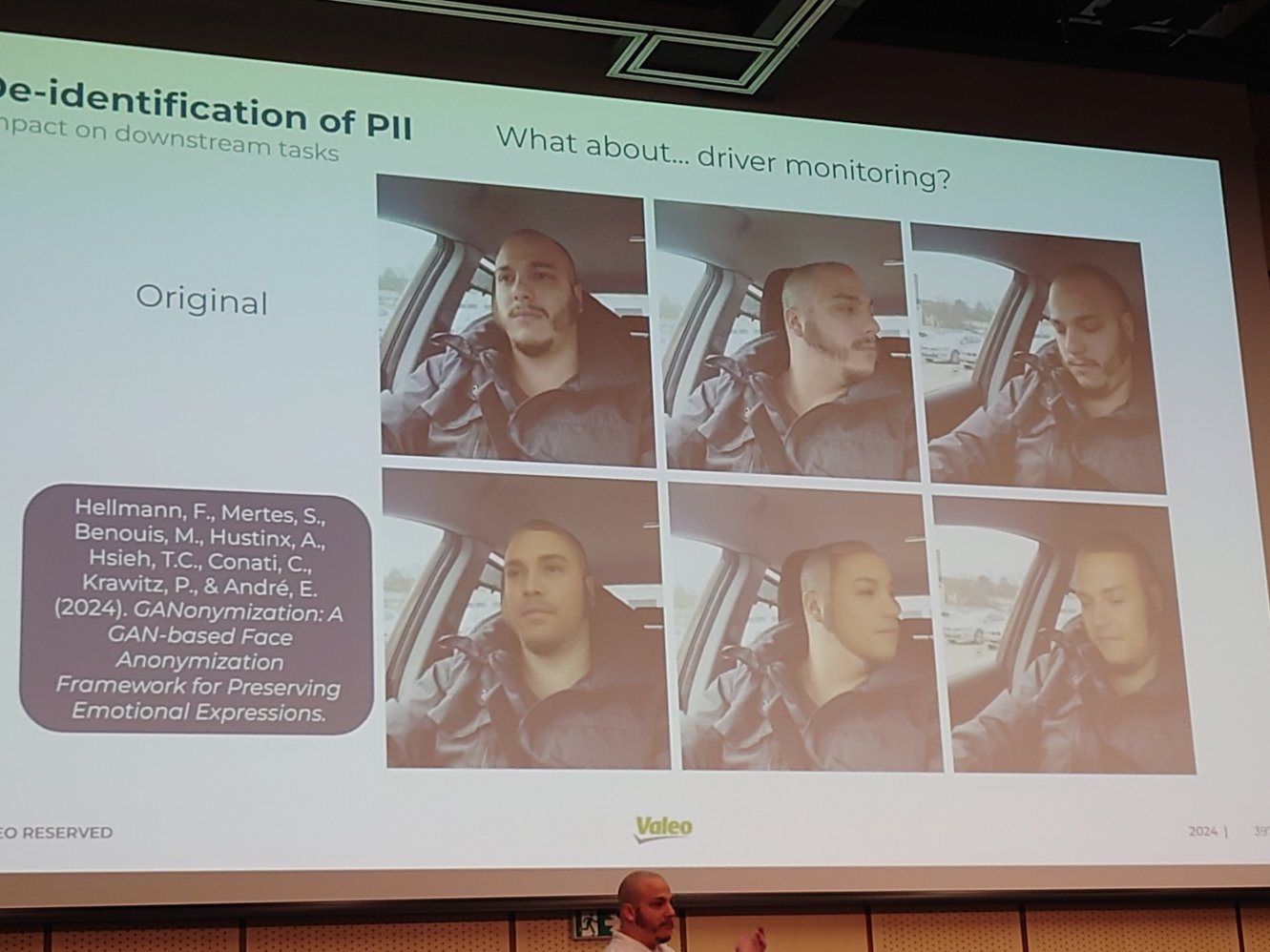
Then, what about ''GANonymization: A GAN-based Face Anonymization Framework for Preserving Emotional Expressions'' by Hellmann et al.
GANonymization, a novel face anonymization framework with facial expression-preserving abilities.
...
Additionally, the performance of preserving facial expressions was evaluated on several affect recognition datasets and outperformed the state-of-the-art methods in most categories [22].
MlPrague 2024

Better. The direction of the gaze is preserved, but anonymized.

Indeed, pretty cool.

3.7. End of day.

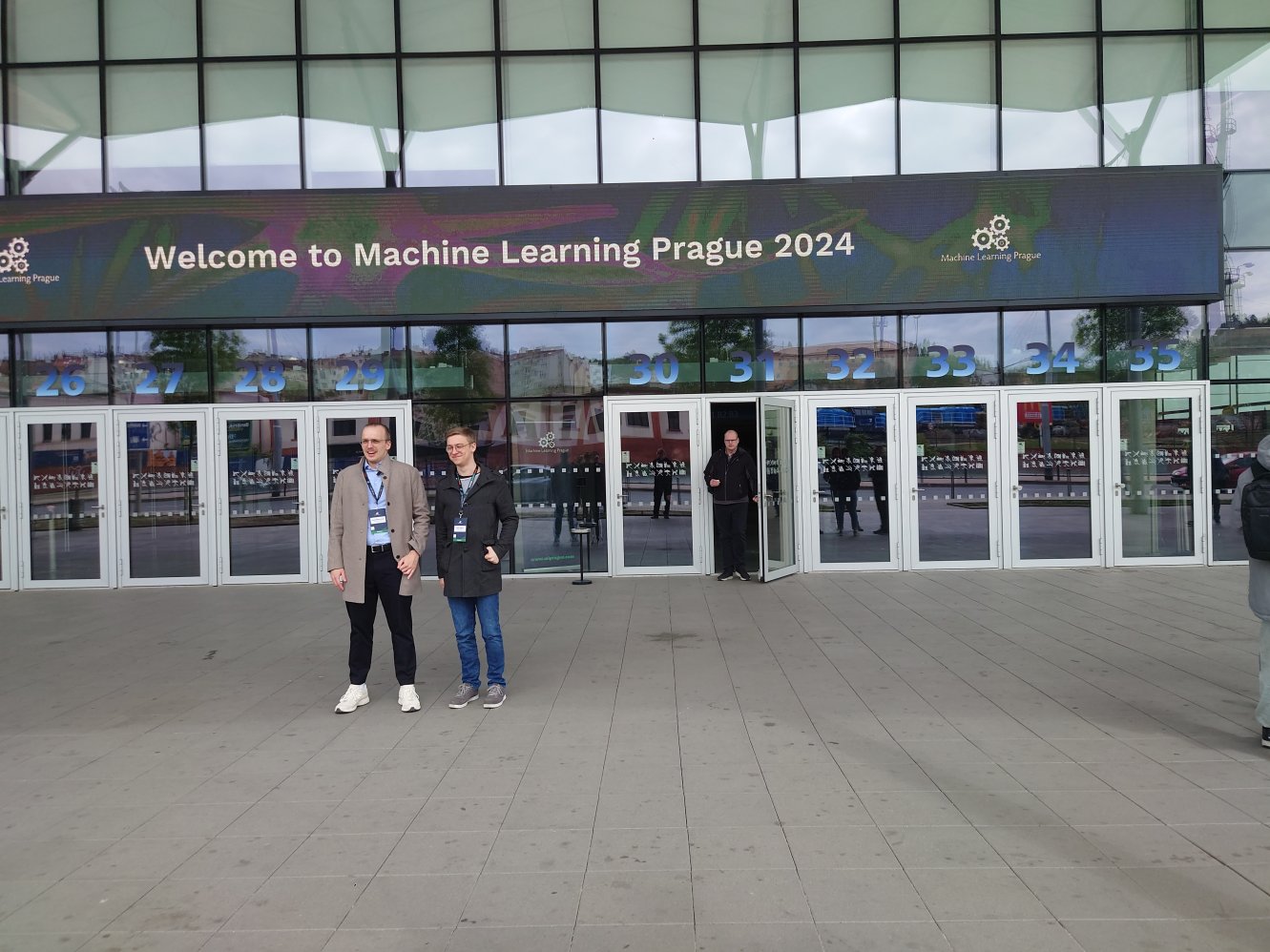
Outside the O2 Universum congress center.

MlPrague 2024
O2 Universum entrance. (Just as) Thomas opens the door.

MlPrague 2024

With Thomas in London. Back in 2013: WCE 2013, World Congress on Engineering.

   Prague 2024

2022 - Misc posts from 2022. Bletchley Park and more.      2023 - Misc posts from 2023. Music and Cognitive NeuroScience. And more.       2024 - Misc posts from 2024. Alan Turing and more.

What did this homepage look like earlier: Earlier version of this homepage. Wayback Mar 16, 2002.      What did this homepage look like earlier: Earlier version of this homepage. Wayback Jul 07, 2012.

4. Presentations Wednesday. April 24th.

4.1. Deep Learning Discovery of New Exoplanets.

Hamed Valizadegan, NASA, talked about ''Deep Learning Discovery of New Exoplanets''.

The Kepler and TESS missions have yielded an astounding 100,000 potential transit signals, paving the way for an intricate process of distillation to identify viable exoplanet candidates.
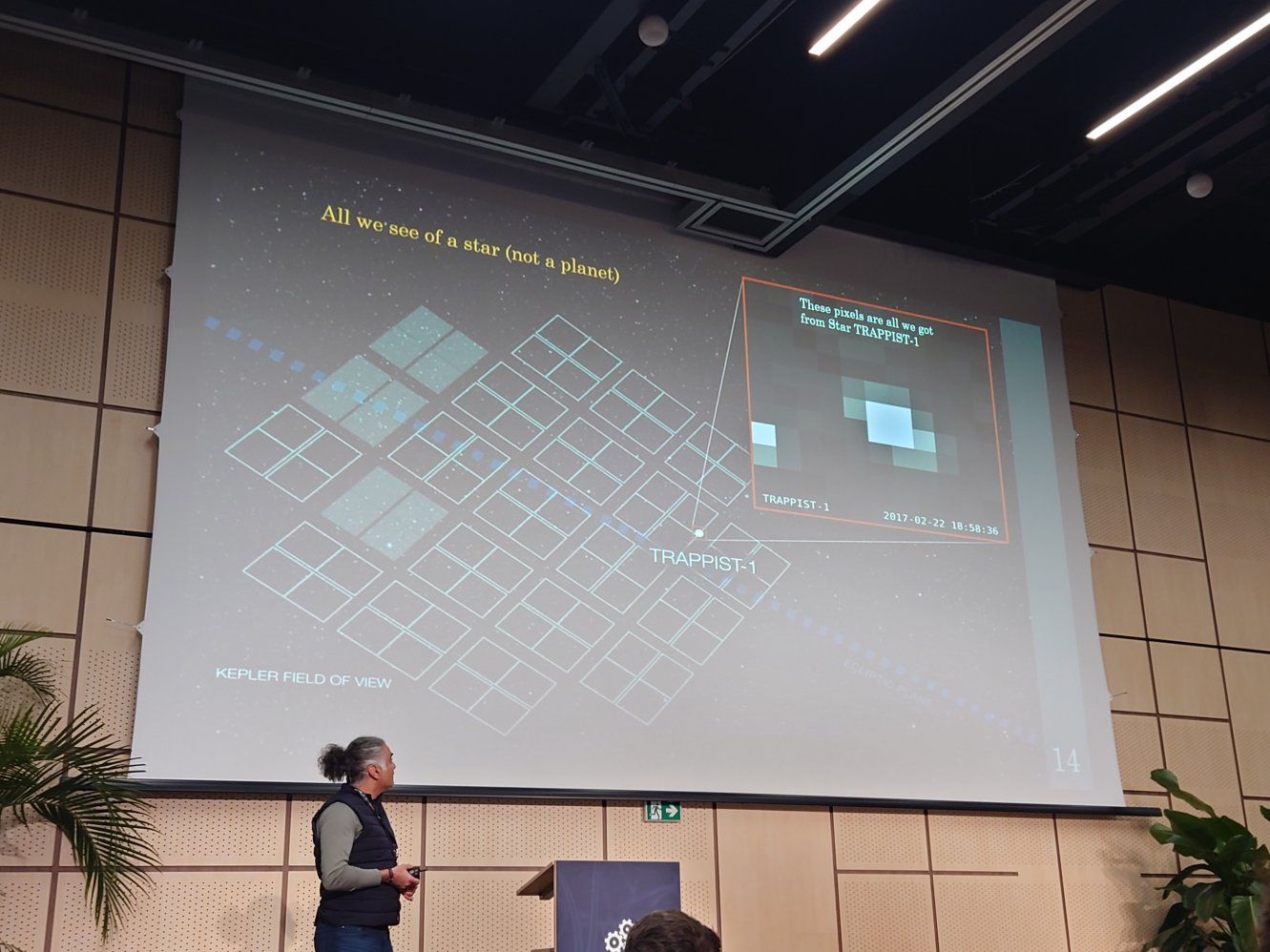
The signals themselves can be rather pixelated....

Images of the TRAPPIST-1 star system captured by the Kepler Space Telescope.


In addition to having a record-breaking number of rocky, Earth-size worlds, Trappist has at least three of the Earth-size planets in the ''habitable zone'' of the star, where liquid water could potentially exist on a planet's surface [23], [24].

Kepler gives something like 35 pixels per star.
Which is then the starting point further investigations.

E.g. as a planet is passing in front of its star, the planet ever so slightly dims the stars light. This dimming can be seen in light curves for the star.

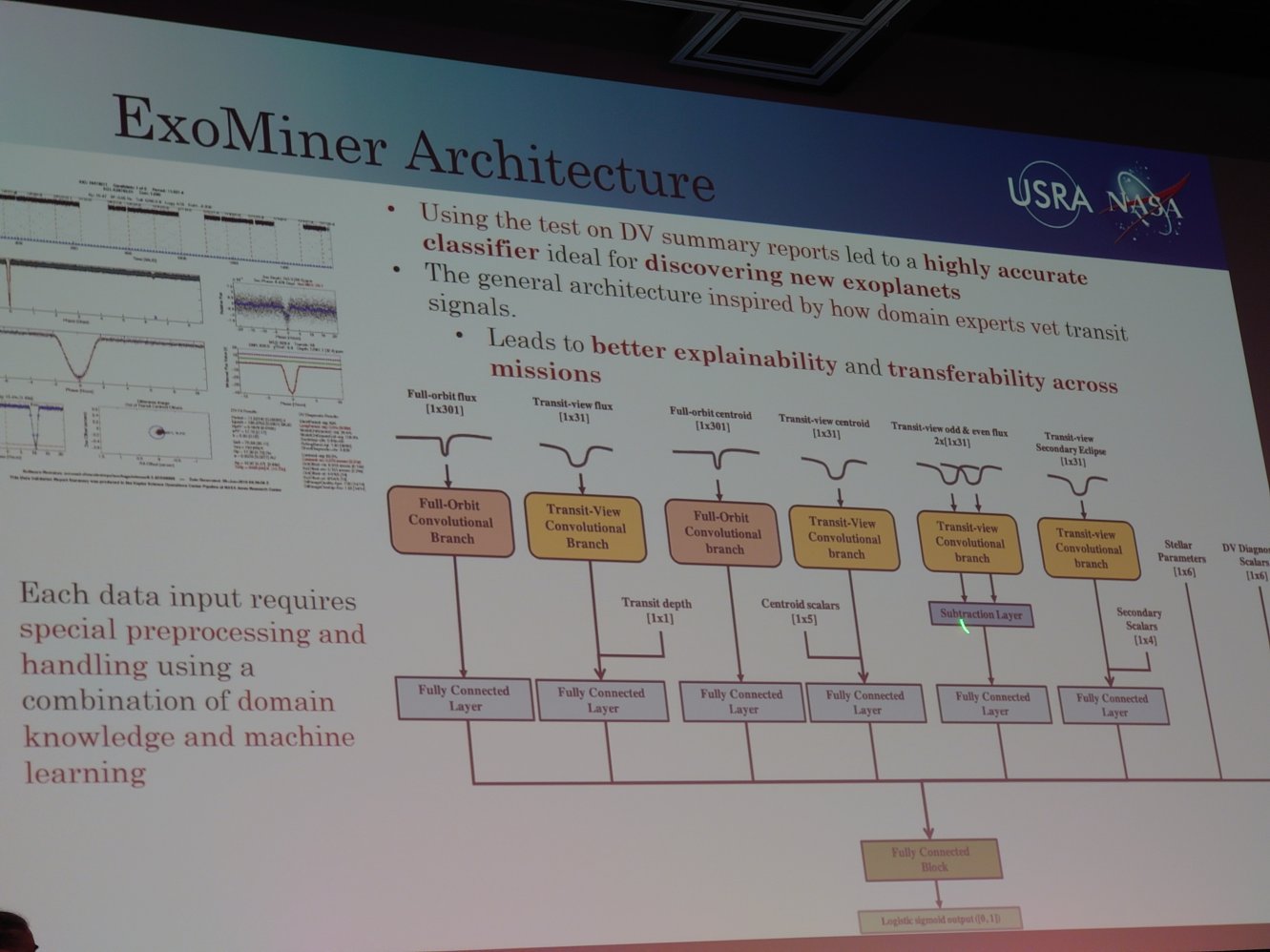
ExoMiner is a groundbreaking deep neural network meticulously designed for the classification of transit signals in the search for exoplanets.
MlPrague 2024

MlPrague 2024
ExoMiner is a new deep neural network that leverages NASA's Pleiades supercomputer, and can distinguish real exoplanets from different types of imposters, or ''false positives''. Its design is inspired by various tests and properties human experts use to confirm new exoplanets. And it learns by using past confirmed exoplanets and false positive cases [25].
For missions like Kepler, with thousands of stars in its field of view, each holding the possibility to host multiple potential exoplanets, it’s a hugely time-consuming task to pore over massive datasets. ExoMiner solves this dilemma [25].
According to Valizadegan: ''When ExoMiner says something is a planet, you can be sure it's a planet''.
Which can then be verified by other (statistically) methods, and by looking at the system with other telescopes.

All in all, pretty mindblowing, indeed.

(See also MlPrague 2022, section 2.3.1.).

Future Minds. Homepage 2010.

4.2. Demos.

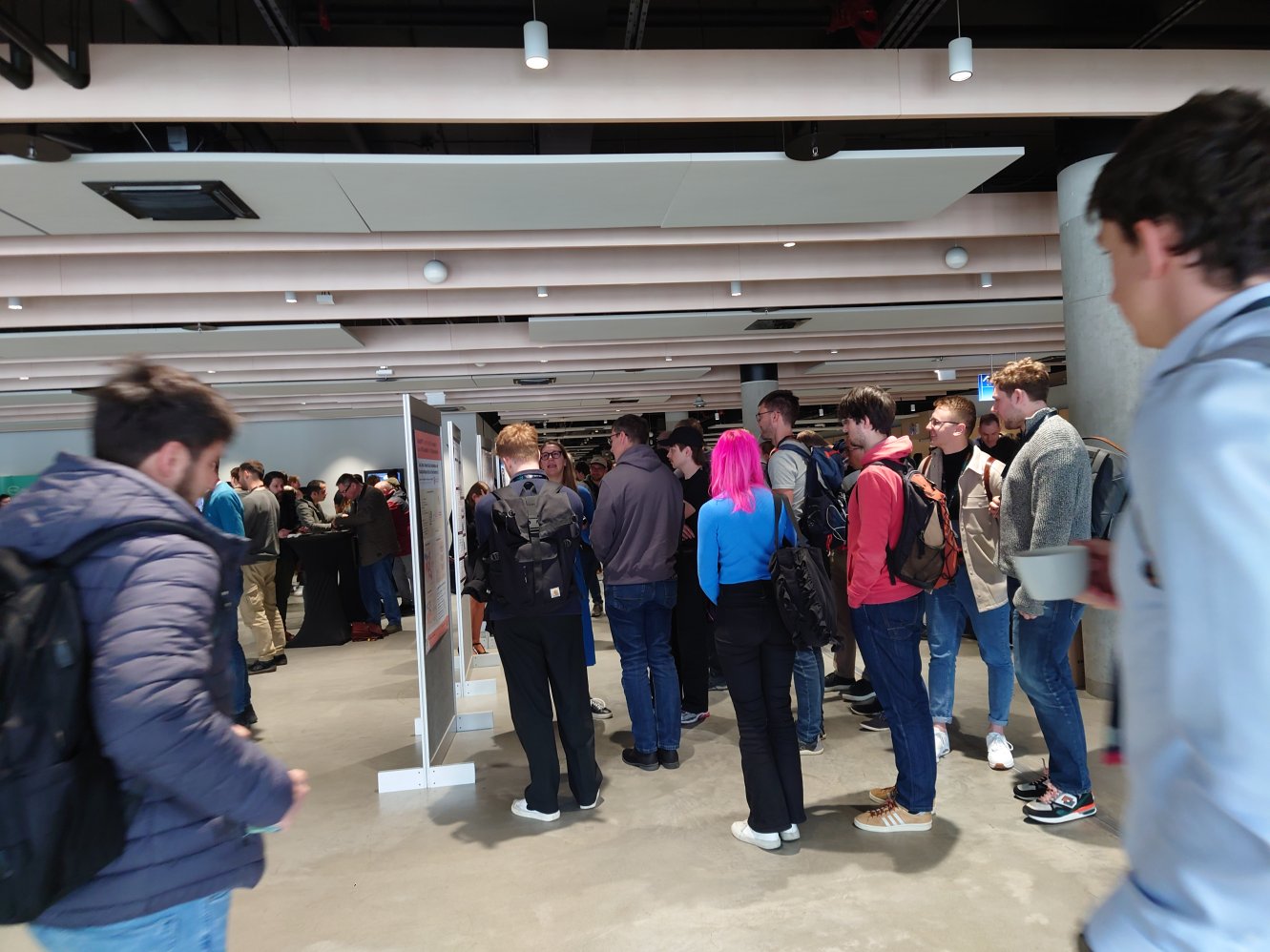
By now, it is almost a tradition that I spend a good deal of time at the demo booths at MlPrague.
I did so in 2019 (See section 4.3), and again this year.

Indeed, it is loads of fun!

4.2.1. Inpainting demo.

Inpainting is a technique of filling in missing regions of images that involves filling in the missing or damaged parts of an image, or removing the undesired object to construct a complete image [26].
On Nvidia's homepage one can find techniques to ''Image Inpainting for Irregular Holes Using Partial Convolutions'' [27] (Nvidia AI playground [28]).
On Linkedin, there are courses to ''Build image inpainting models'' [29].
Fotor can switch cloudy sky photos to sunny ones, remove and replace unwanted elements
etc.

Wojtek Jasinski writes in ''Pushing the Boundaries with Real-Time Video Inpainting'':
Video Inpainting is a machine-learning task that is defined as filling in masked areas in a video with visually plausible and temporally consistent content. It is commonly used to erase an object from a video [30].
See a demo here. Quite similar to the one on display here at the conference.

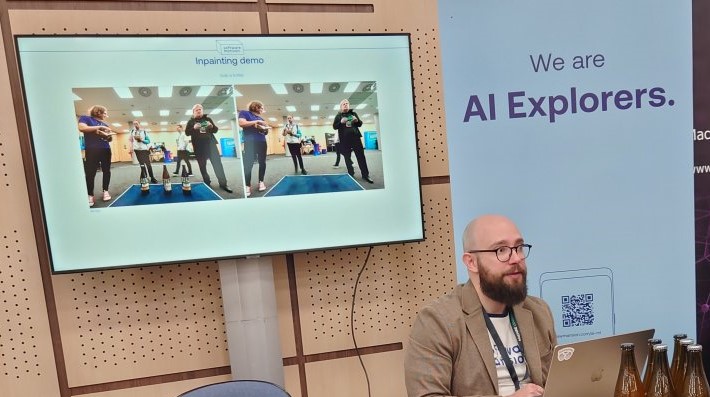
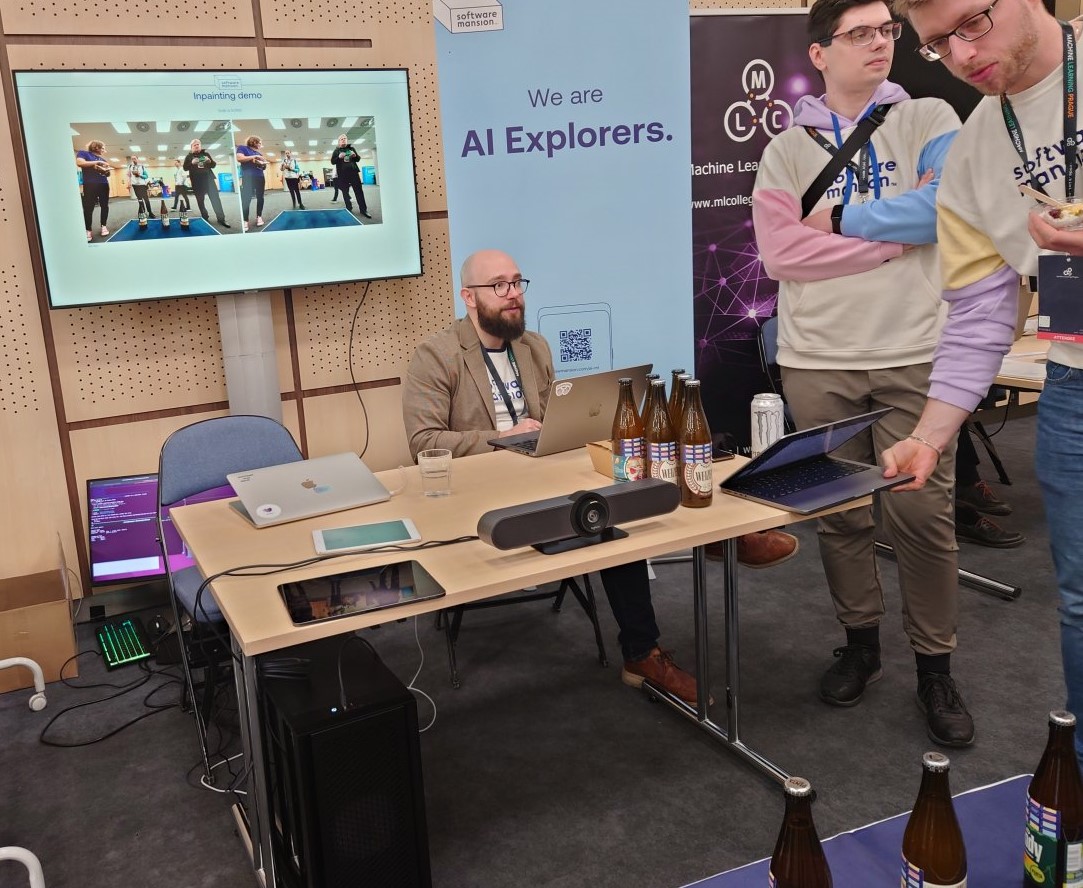
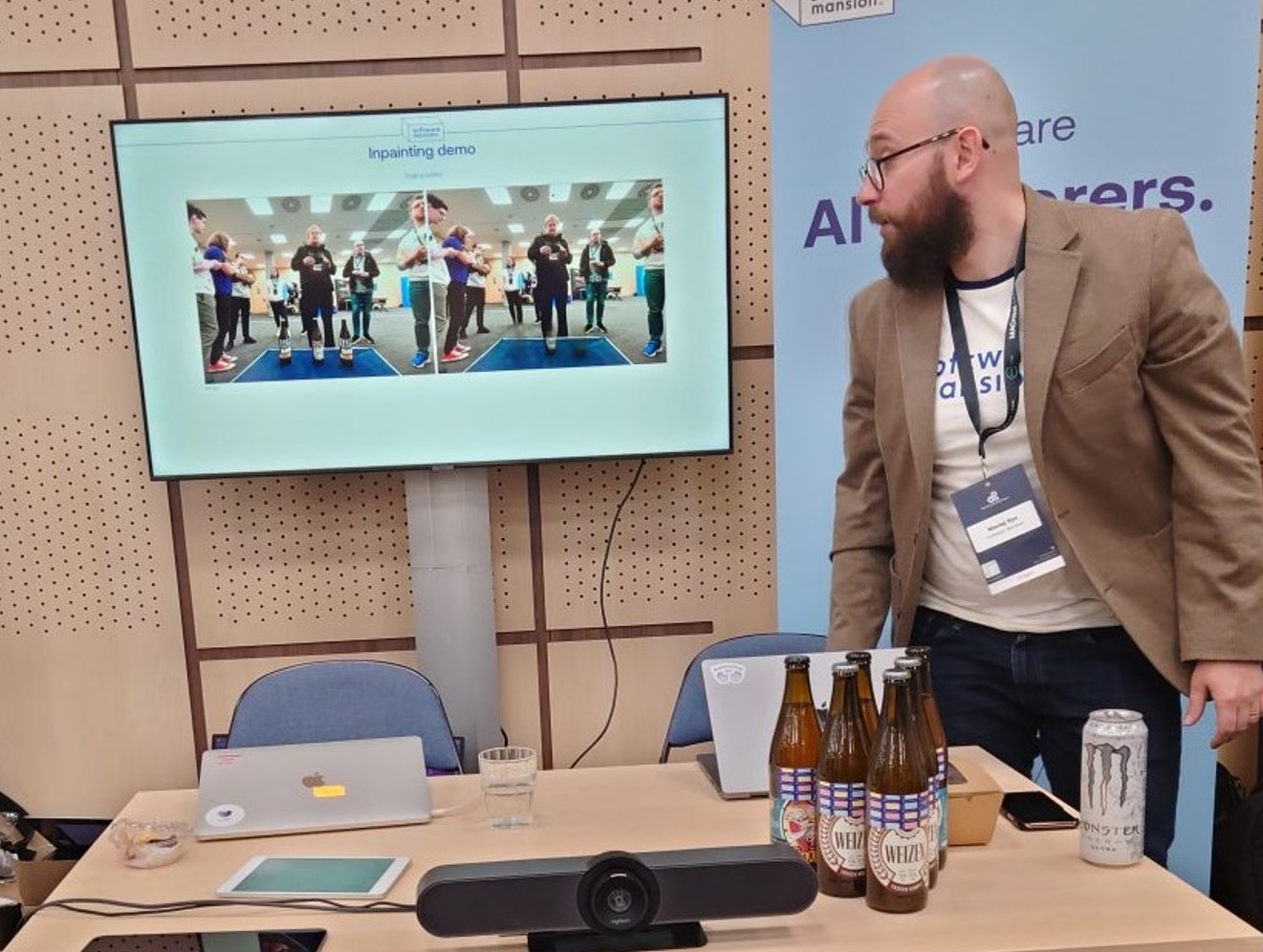
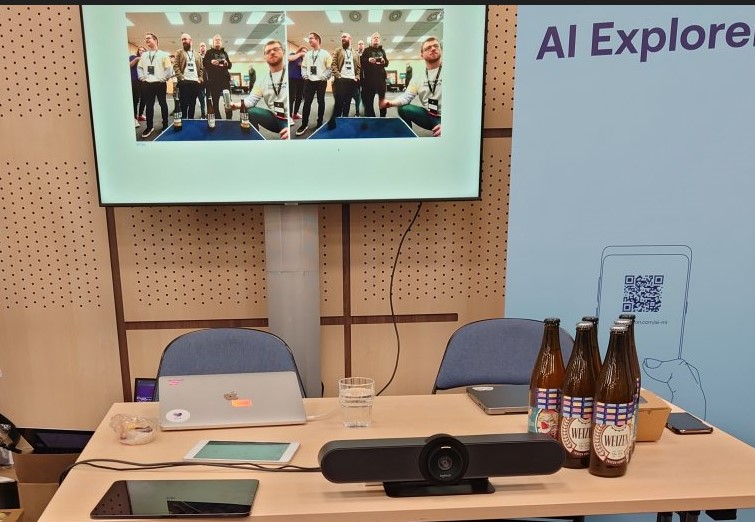
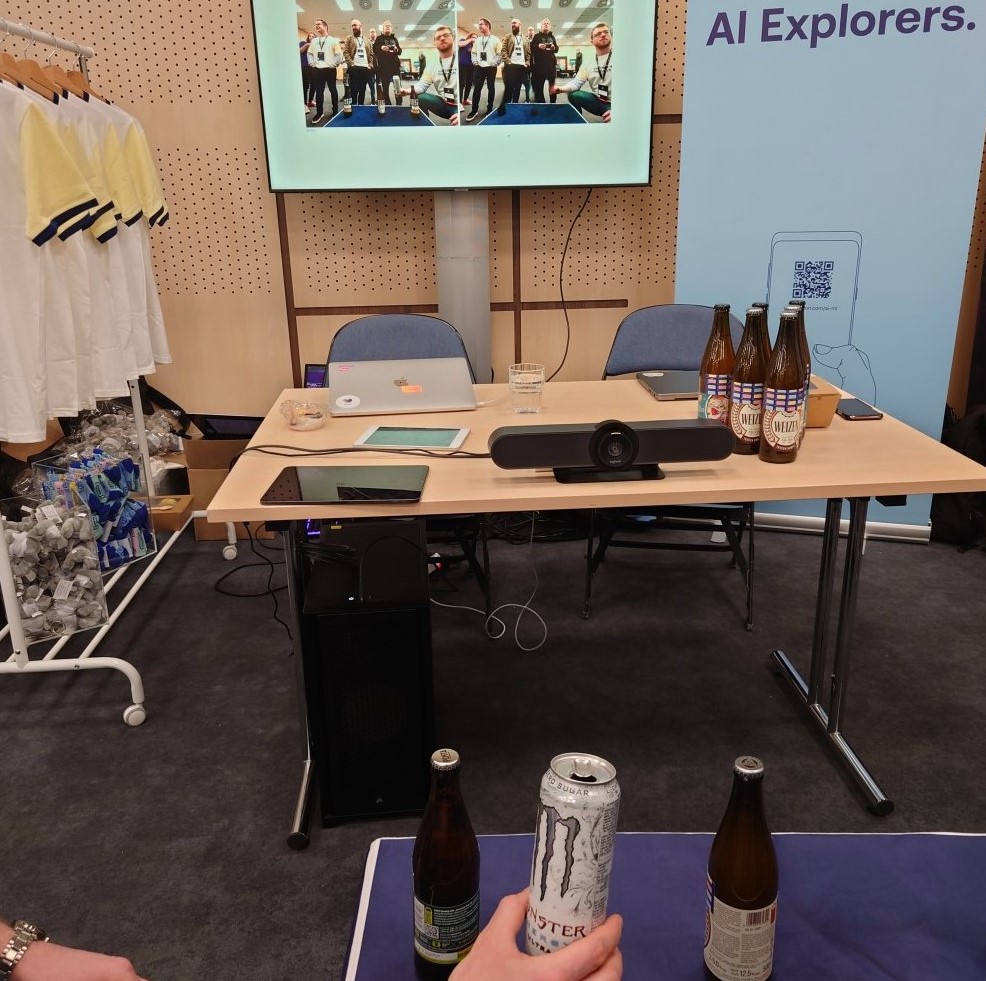
Indeed, here at the demos, we also looked at ''disappearing bottles''.
First a bottle, in a video feed, is located. And next it is replaced with a fill, similar to the background surrounding the bottle.

MlPrague 2024
Left: Orginal video feed.
Right: The bottles have been removed, and replaced with correct background.

MlPrague 2024
Bottom right corner. Proof that the bottles are actually there...

MlPrague 2024
Magic, indeed.

MlPrague 2024
Beer cans also disappear.

MlPrague 2024
Magic, on so many levels... :)

Aisb 20211 in York

Robot dogs are coming

Arthur C. Clarke: ''Any sufficiently advanced technology is indistinguishable from magic'' [31], [32].

4.3. Small-Data Deep Learning
and Its Applications to Diagnostic Aid and Virtual AI Imaging.

Kenji Suzuki, Tokyo Institute of Technology,
talked about ''Small-Data Deep Learning and Its Applications to Diagnostic Aid and Virtual AI Imaging''.

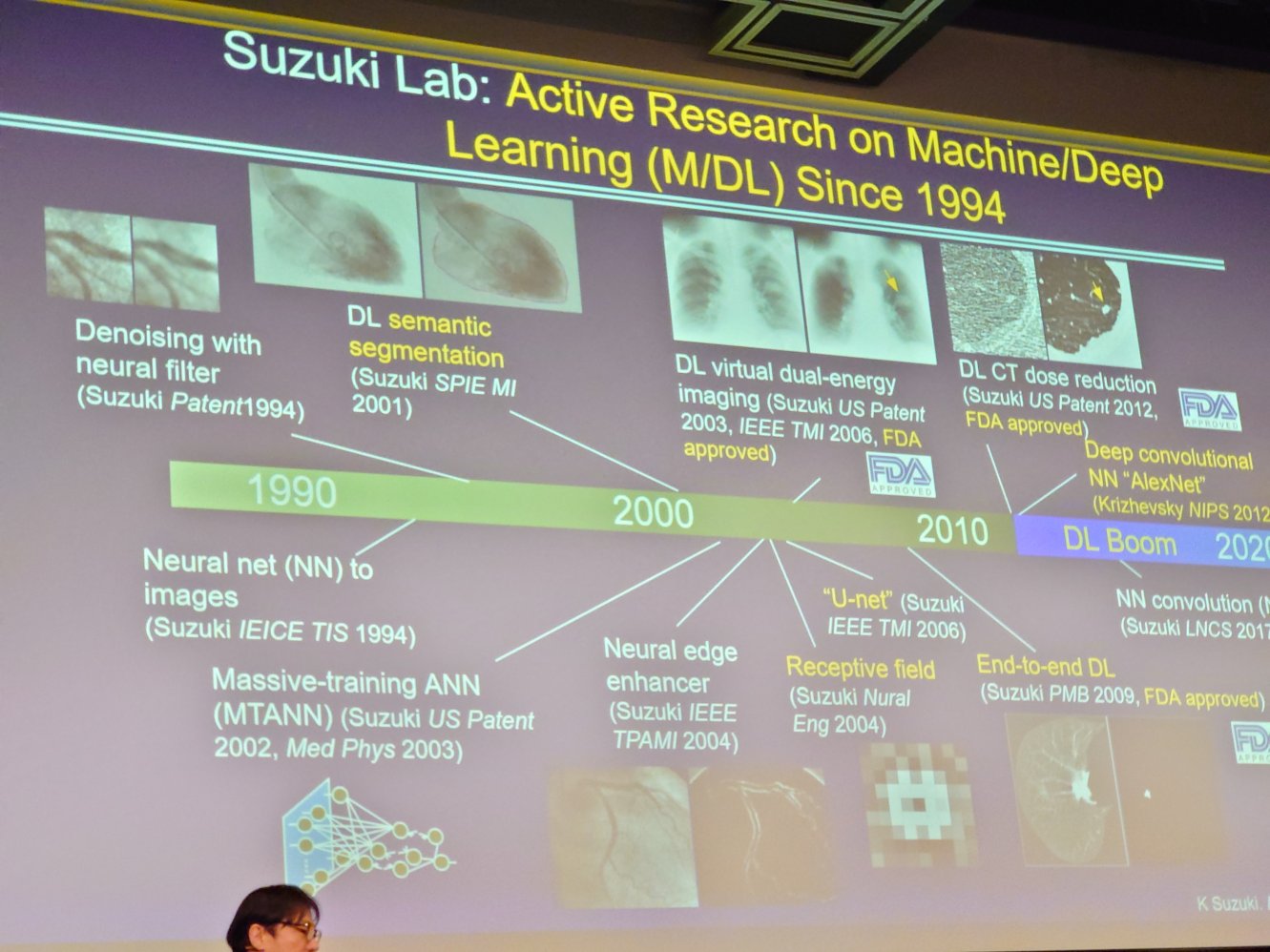
In this talk, ''small-data'' deep learning models that can be trained with a limited number of cases is introduced. Small-data deep learning is defined as deep learning models that offer the performance equivalent to the ''big-data'' deep-learning models, but require only a small number of cases (< 100) to adequately train, thus, reducing the number of necessary cases by a factor of 100 - 1.000.
MlPrague 2024

The end result of the system is a computer aided diagnosis/detection, that can be taken to be a ''second opinion'' that a human physican can use as input to a final diagnosis.

The idea is that ''the bottleneck'' for most deep learning systems in medicine today is the need for big data (10.000 - 100.000 cases).
Time-consuming and expensive, so cutting down on the need for labelled data is a big deal.
Here, the system learns a relationship between images and ''teaching images'' (cancer or not). And, interestingly:
In the application to liver tumor segmentation, our small-data deep-learning model achieved the performance equivalent to a world-competition-winning deep-learning model with a very small required number of training cases of only 14.
Sure, picking the right small-data is the key to get a good performance.
But still, interesting that it is here possible to achieve a good performance with such a small dataset!

See more here: Kenji Suzuki Laboratory
(Institute of Innovative Research, Tokyo Institute of Technology).

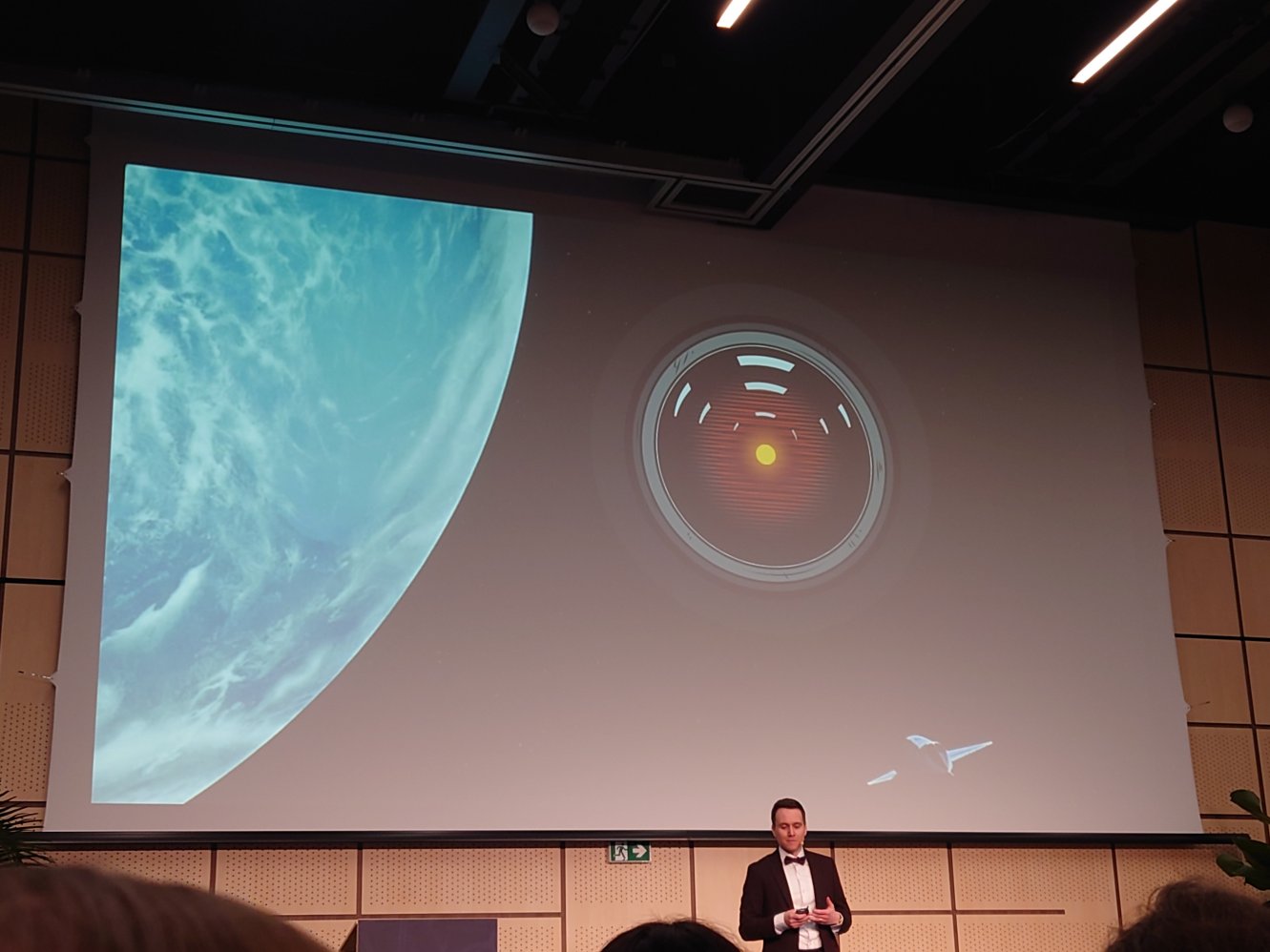
4.4. Advanced RAG: Your Company's Ultimate AI Assistant.

John Sinderwing, Entecon,
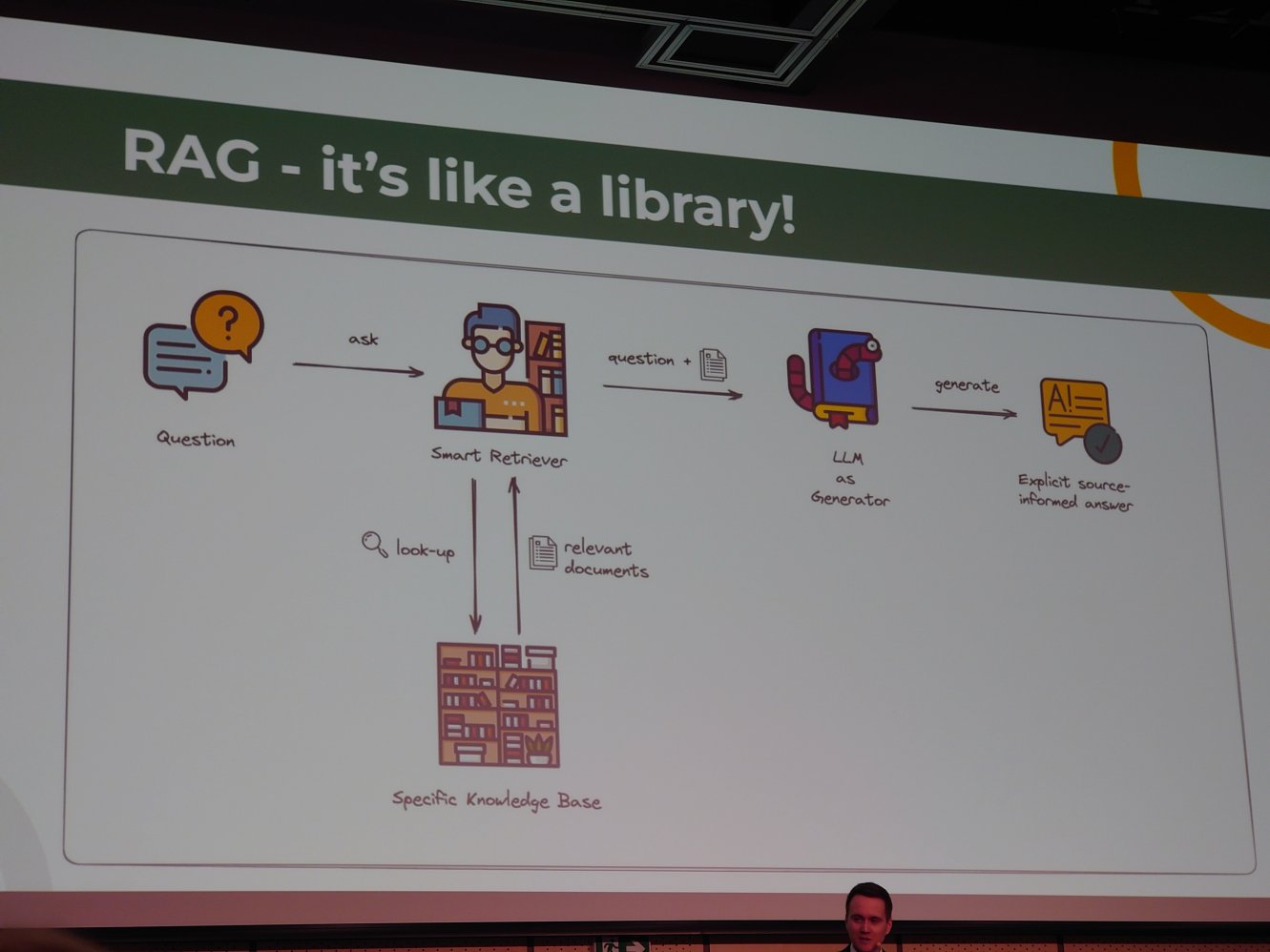
talked about ''Advanced RAG: Your Company's Ultimate AI Assistant''.

A RAG system can automatically search your internal data for the most relevant data to answer each query and force the LLM to base its answer entirely on data provided by your defined tools.
MlPrague 2024

MlPrague 2024

RAG is a relatively new and fast evolving technique with lots of contributors. Some common pitfalls and issues tend to crop up regardless of industry.
One problem is imbalanced data.
I.e. imagine a query, to a system, where someone asks about the dancing styles of a ''well known dancer'', and a person, who is not a dancer...

Here the system will (probably) be able to find a lot of data about the dancer, and very little about the non-dancer.
Being flooded with data about the dancer, the system might not be able to get to the data about the non-system...at all...
Where the suggestion here was to split the query into a multi-query, first get data for one part, and then the other part.

Sounded reasonable, but also like a lot of extra work...?
Still, interesting to hear about these general problems people have,
as they build RAG systems to interact with their data.

Useful, indeed.

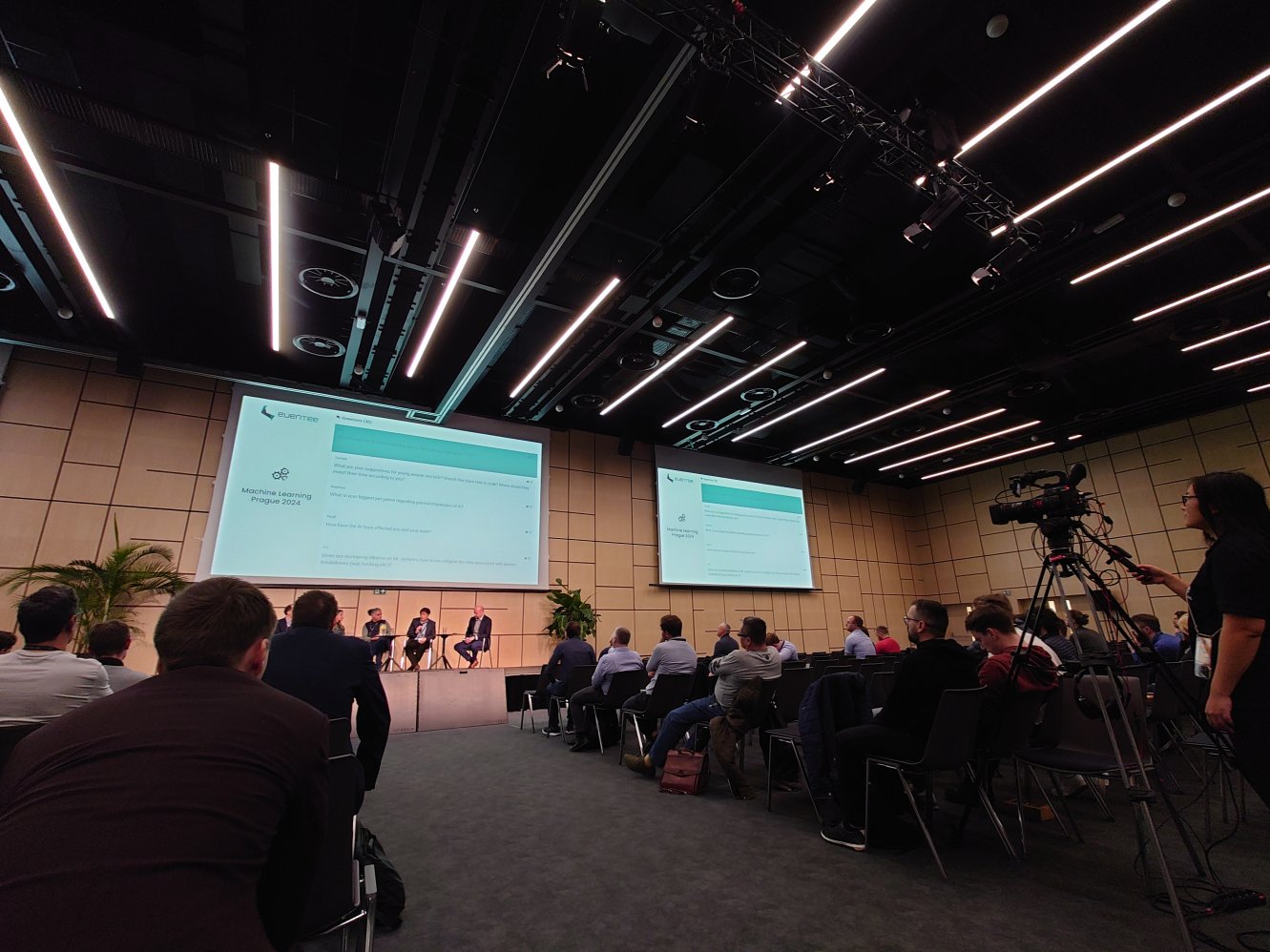
4.5. Panel Discussion.

MlPrague 2024

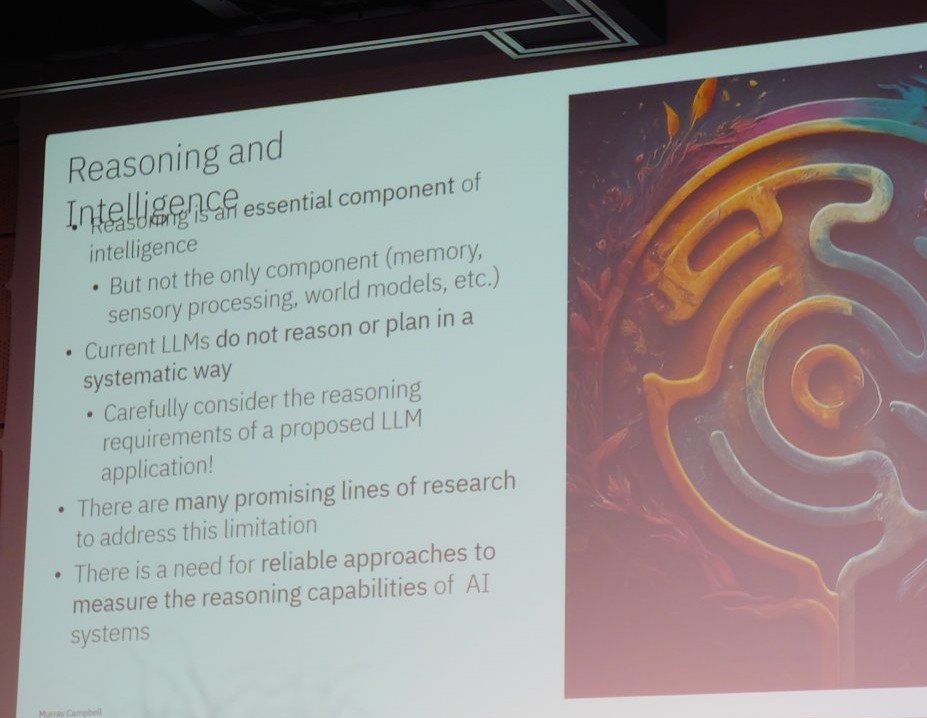
In the panel discussion, Murray Campbell reiterated that LLMs
are still going to have fundamental limits in the coming years.
Things like reasoning, planning, memory needs to be added,
if a system is going to be really intelligent...
- And how to do that is not known at this stage...

Prague 2024

Again, a great day, indeed.

For earlier editions of MlPrague see:
MlPrague 2019
MlPrague 2021
MlPrague 2022
MlPrague 2023


Simon Laub - Teaching AI, Economics-IT, March 2019
Indeed, all in all, super interesting, and certainly thoughts and material to consider for future classes in Deep Learning...
and beyond...

Berlin 2019 - Rise of AI conference

5. Trip impressions.

5.1. Frankfurt Impressions.

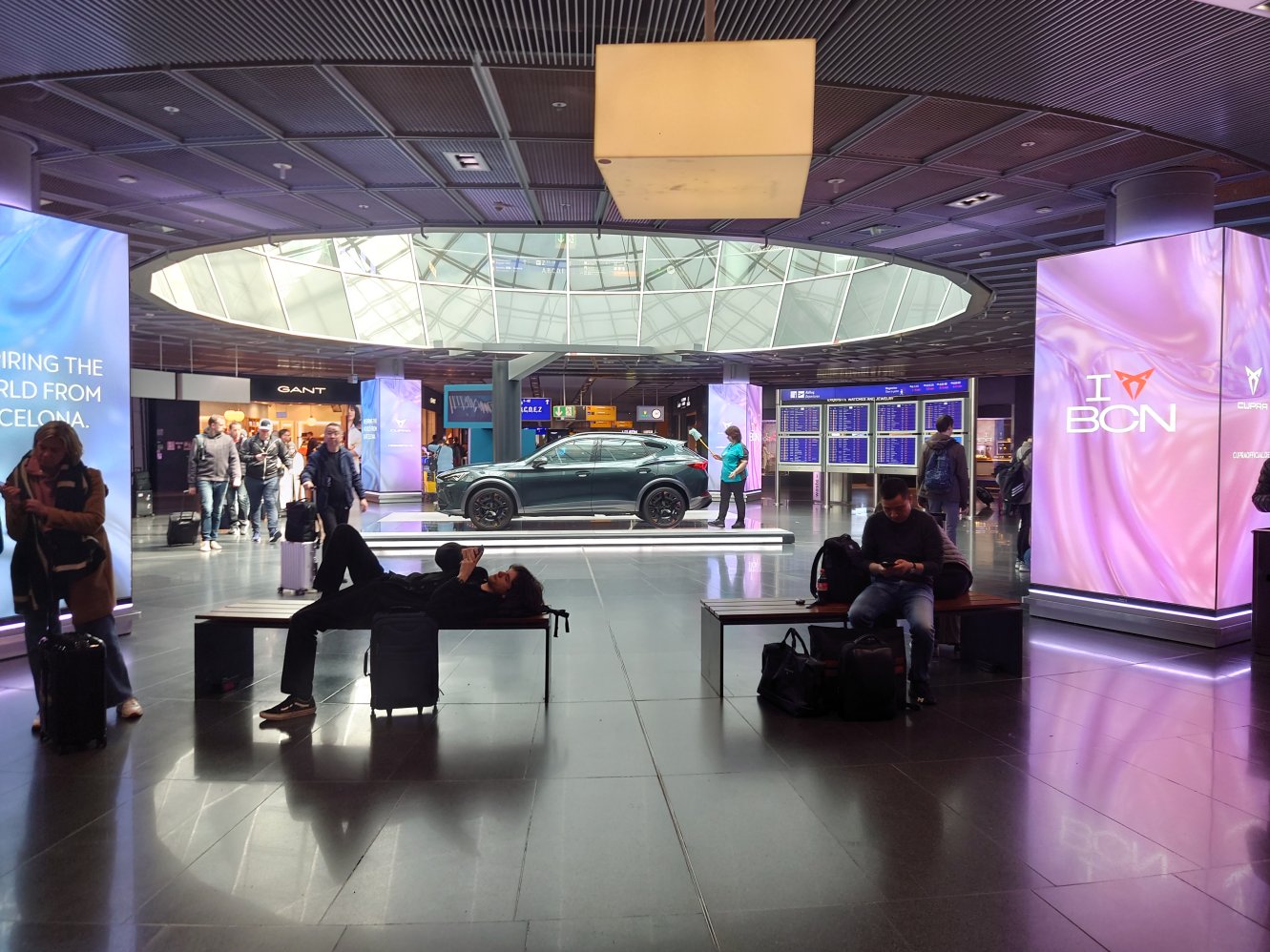
Frankfurt airport.

Frankfurt. April 2024.

Frankfurt. April 2024.

Frankfurt. April 2024..

Frankfurt. April 2024.

5.2. Cafe Slavia & Cafe Louvre.

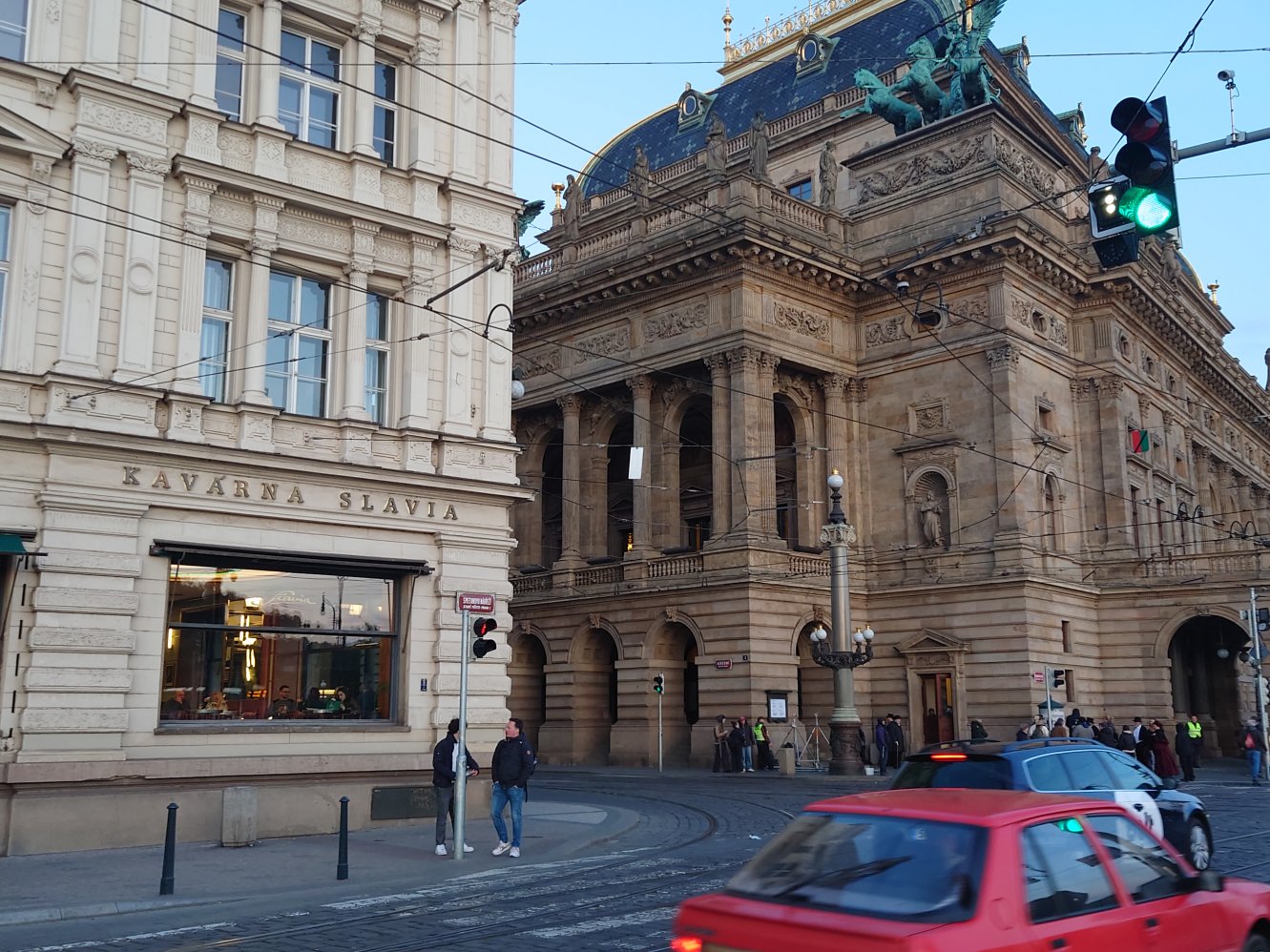
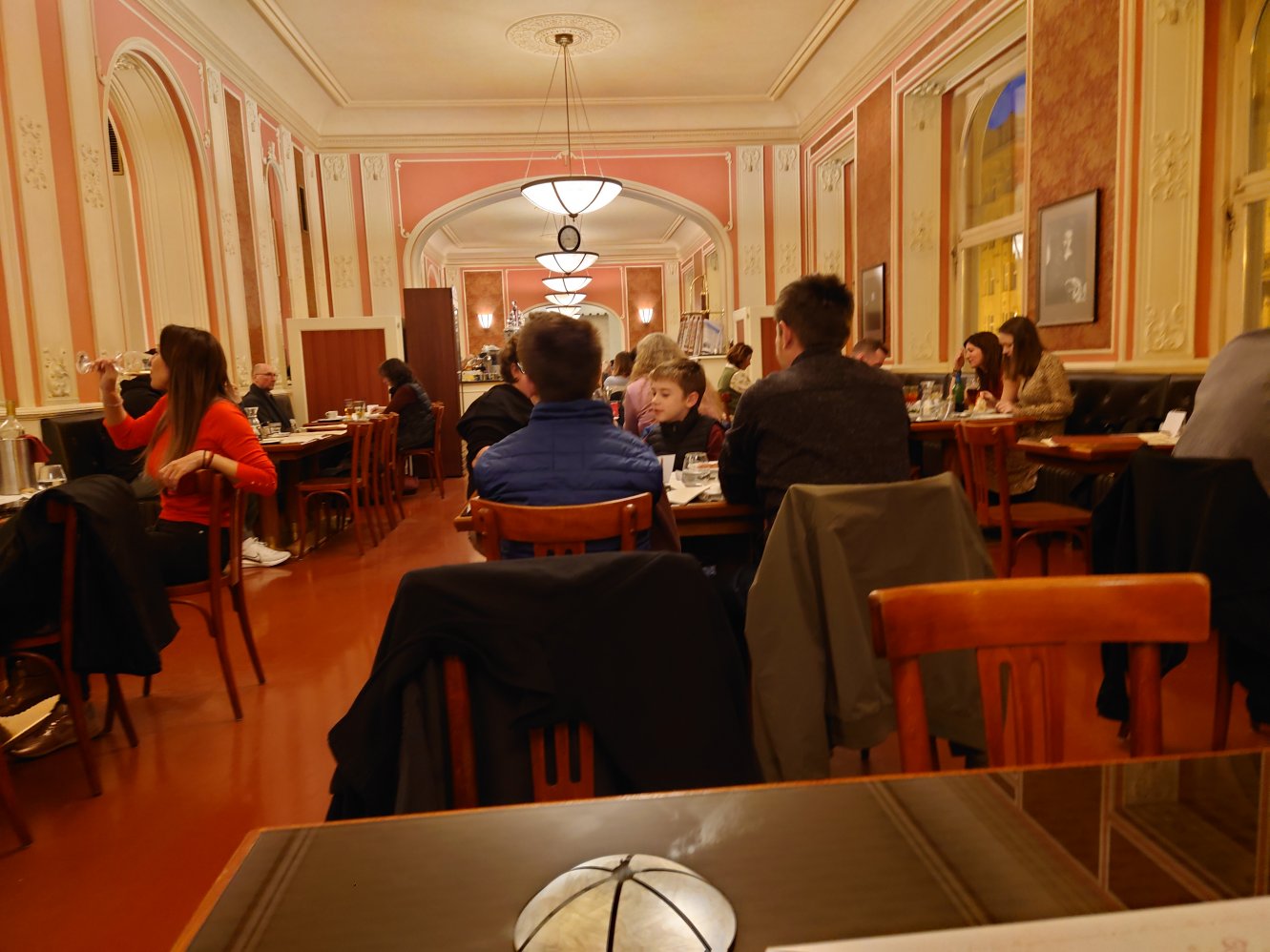
Cafe Slavia, Prague.
After Czechoslovakia was invaded by Warsaw Pact troops in 1968 and subsequently occupied by the Soviets, figures at the helm of non-conformist culture and political dissent, notably the future president Václav Havel, would congregate here [33].
Prague. April 2024.

Prague. April 2024.

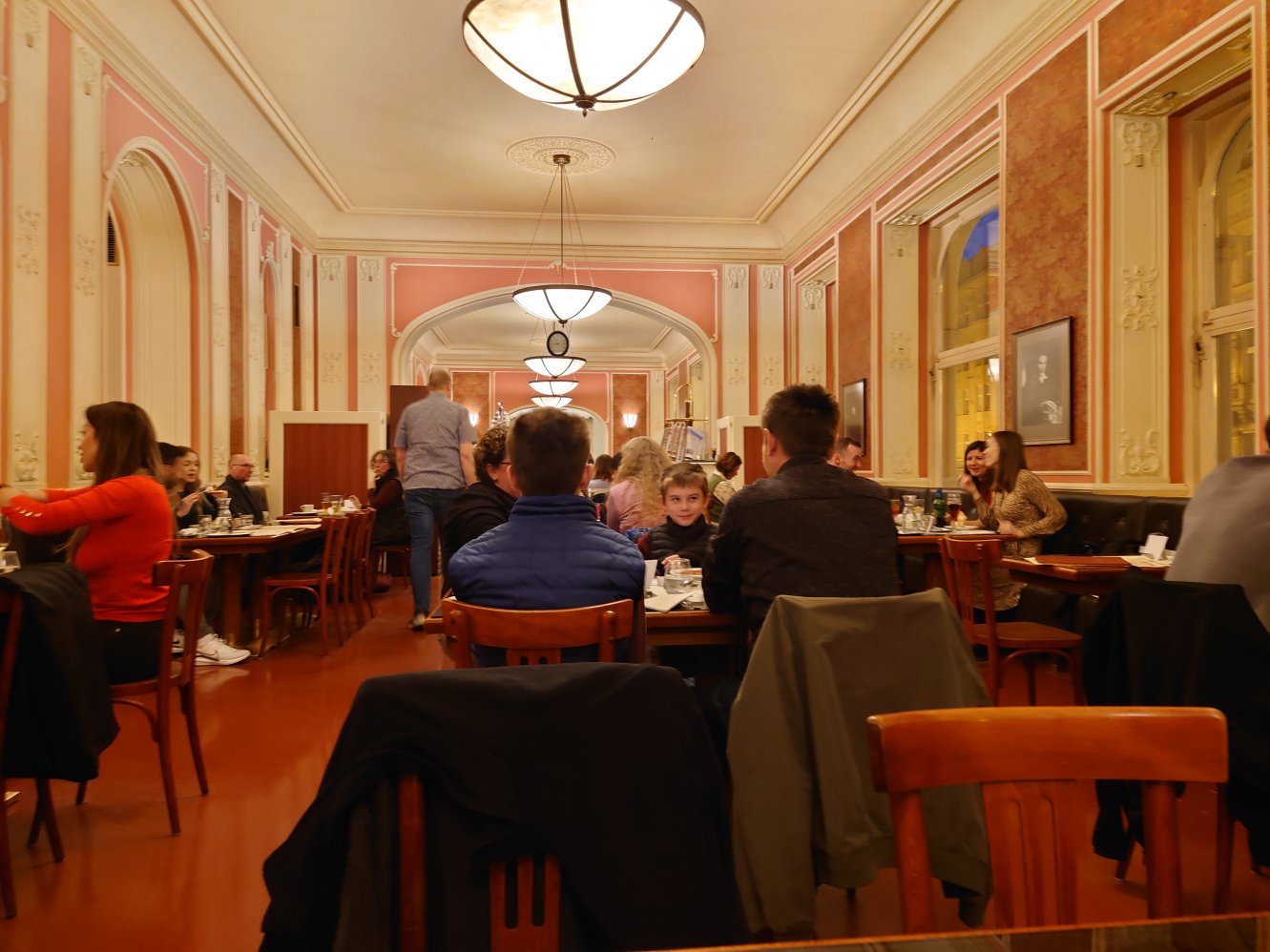
Cafe Louvre, Prague.
Lose yourself in the buzz of a classic grand café and let yourself be spoiled by our first-rate staff. While history promenades along Národní Tŕída, Cafe Louvre remains an island of noisy tranquility, a place with a unique atmosphere and traditional menu [34].
Prague. April 2024.

Prague. April 2024.

Prague. April 2024.

5.3. St. Wencelas. Lucerna. Prague.

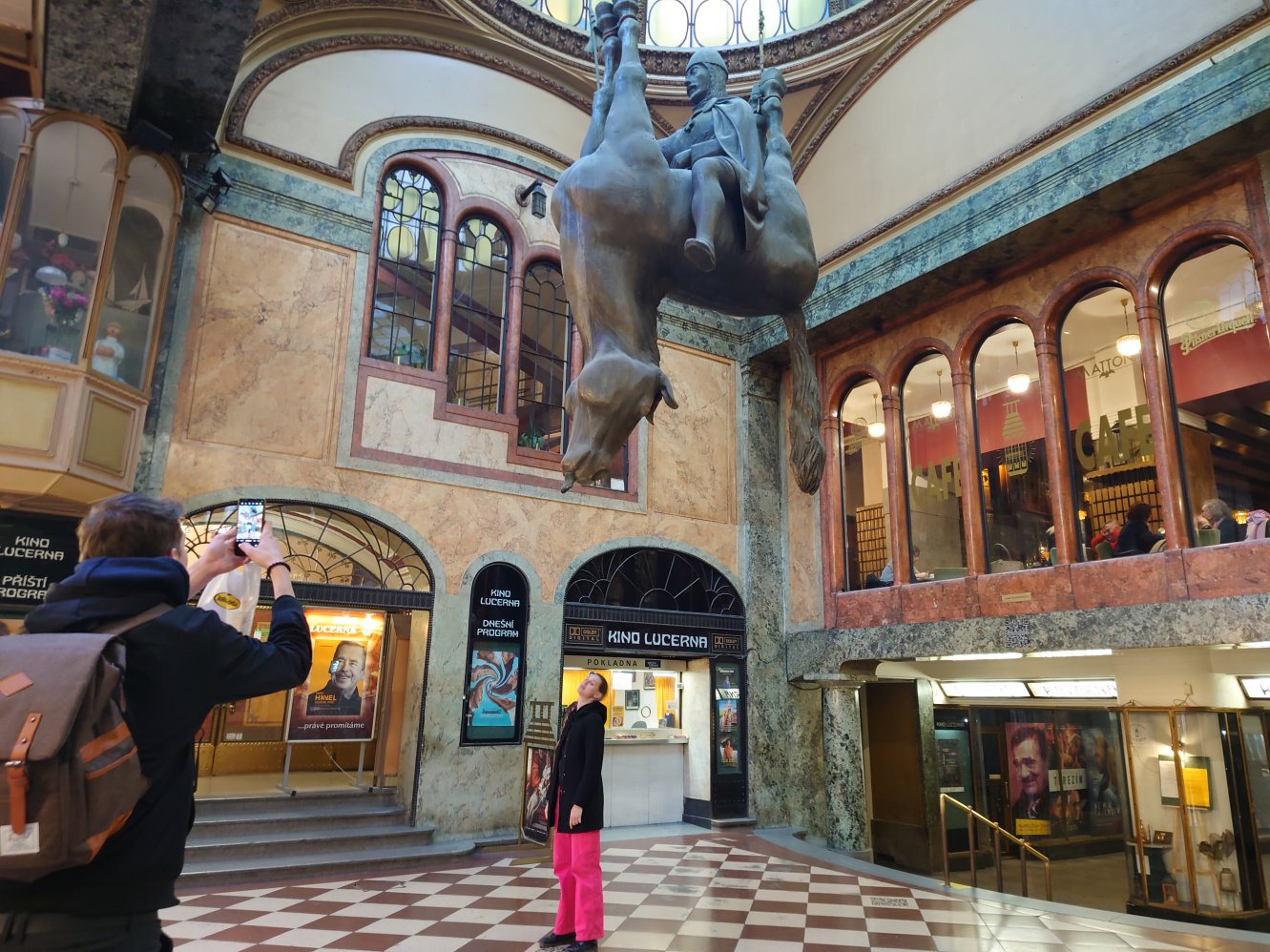
In bad need of a renovation, the Lucerna passage is the epitome of Prague's faded grandeur.
Still, the rich marble is impressive.

Prague. April 2024.

Prague. April 2024.

Prague. April 2024.

The sculpture shows St. Wenceslas, Czech Prince and Patron, sitting on the stomach of a dead horse hanging by its legs to the ceiling.
The horse has its head hanging downwards with tongue hanging out and thus has the semblance of a hunted animal.
A ''tribute'' to past and modern leaders of the Czech Republic...
By David Černý, of course.

5.4. Prague Impressions. April 2024.


Prague. April 2024.

Prague. April 2024.

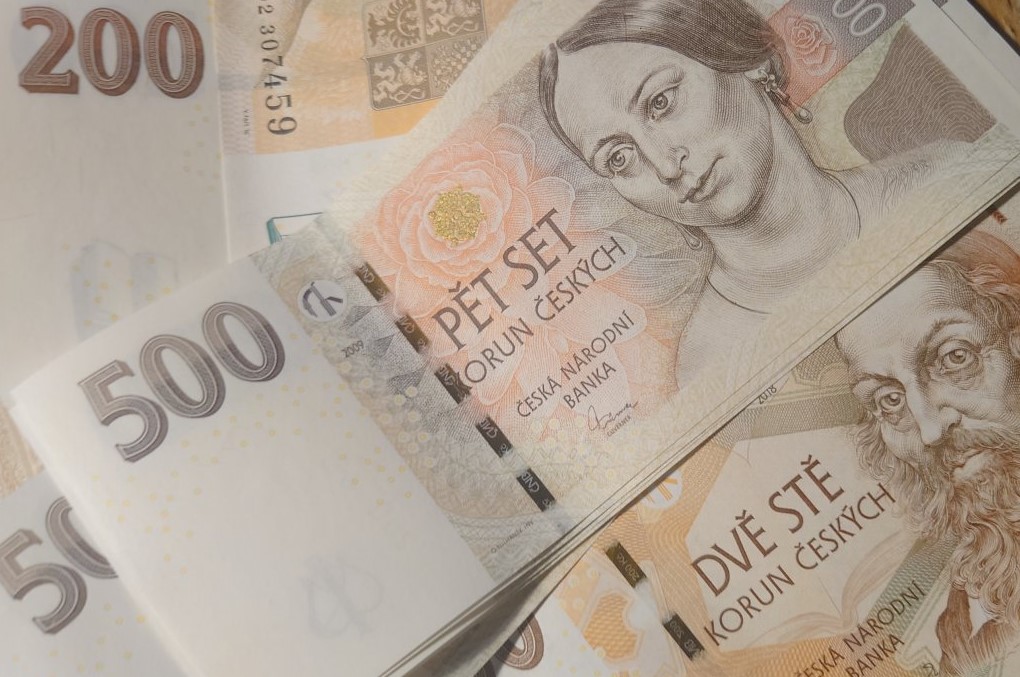
koruna.

Prague. April 2024.
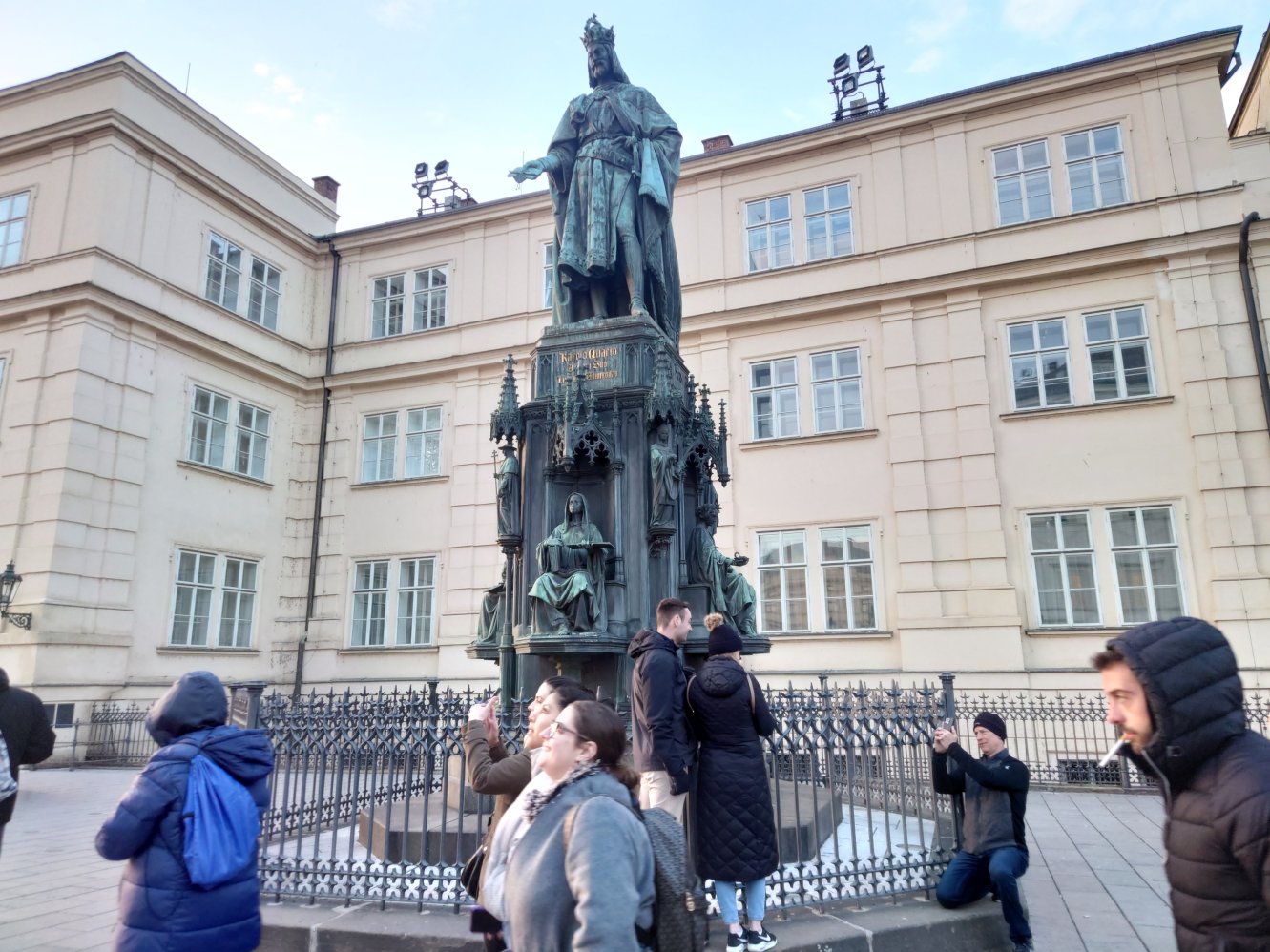
Charles IV.

Prague. April 2024.

Prague. April 2024.

Prague. April 2024.
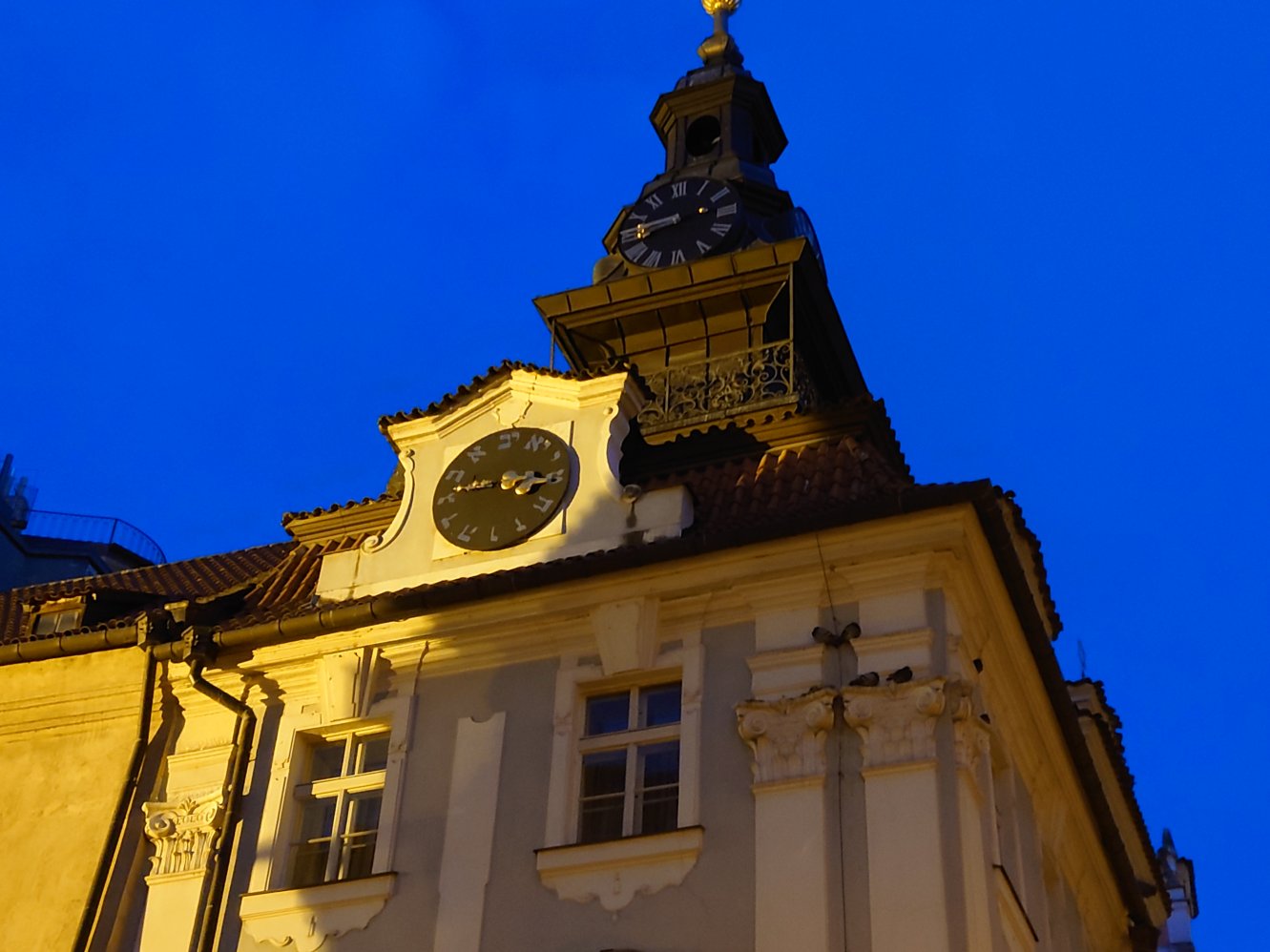
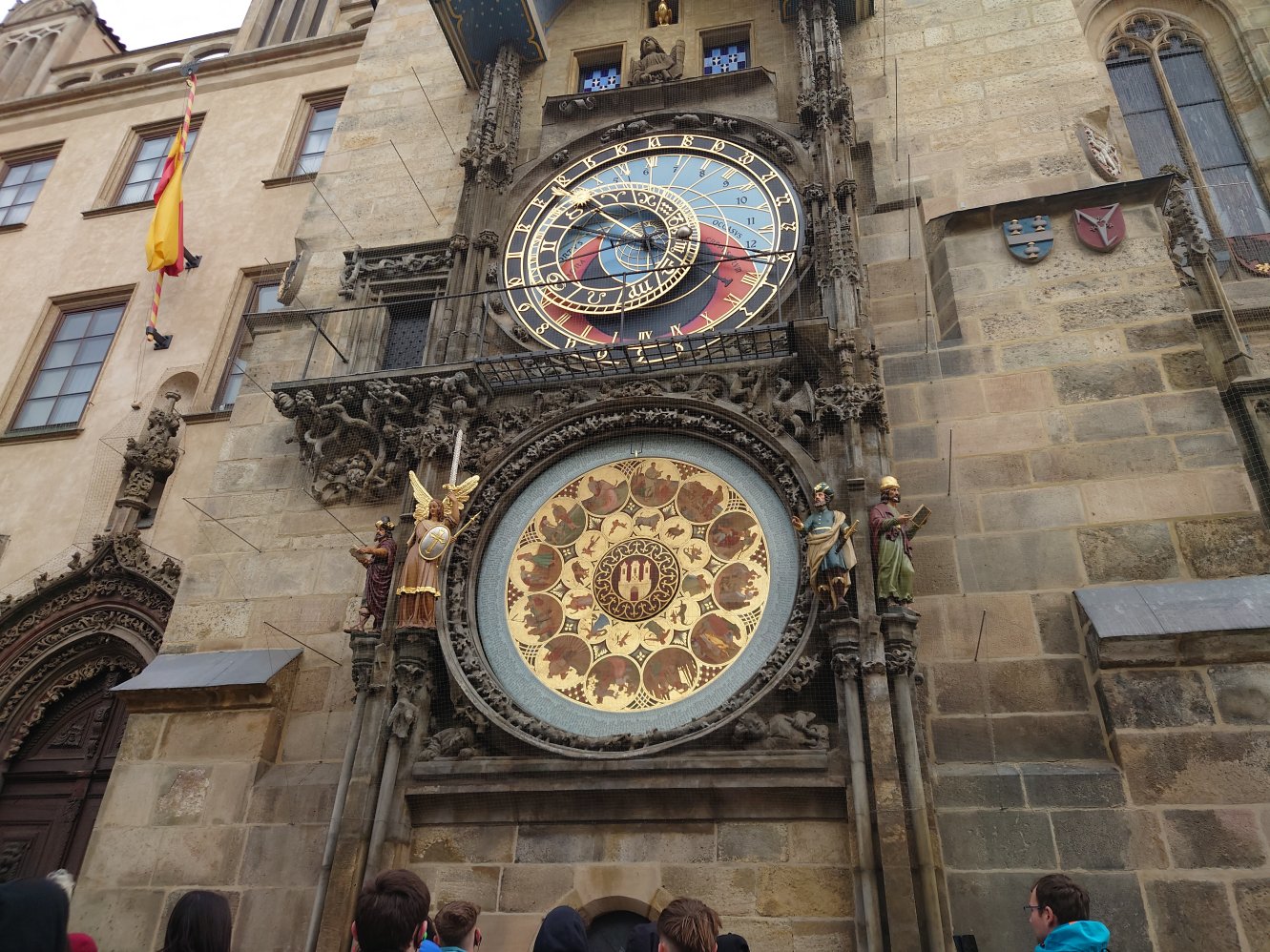
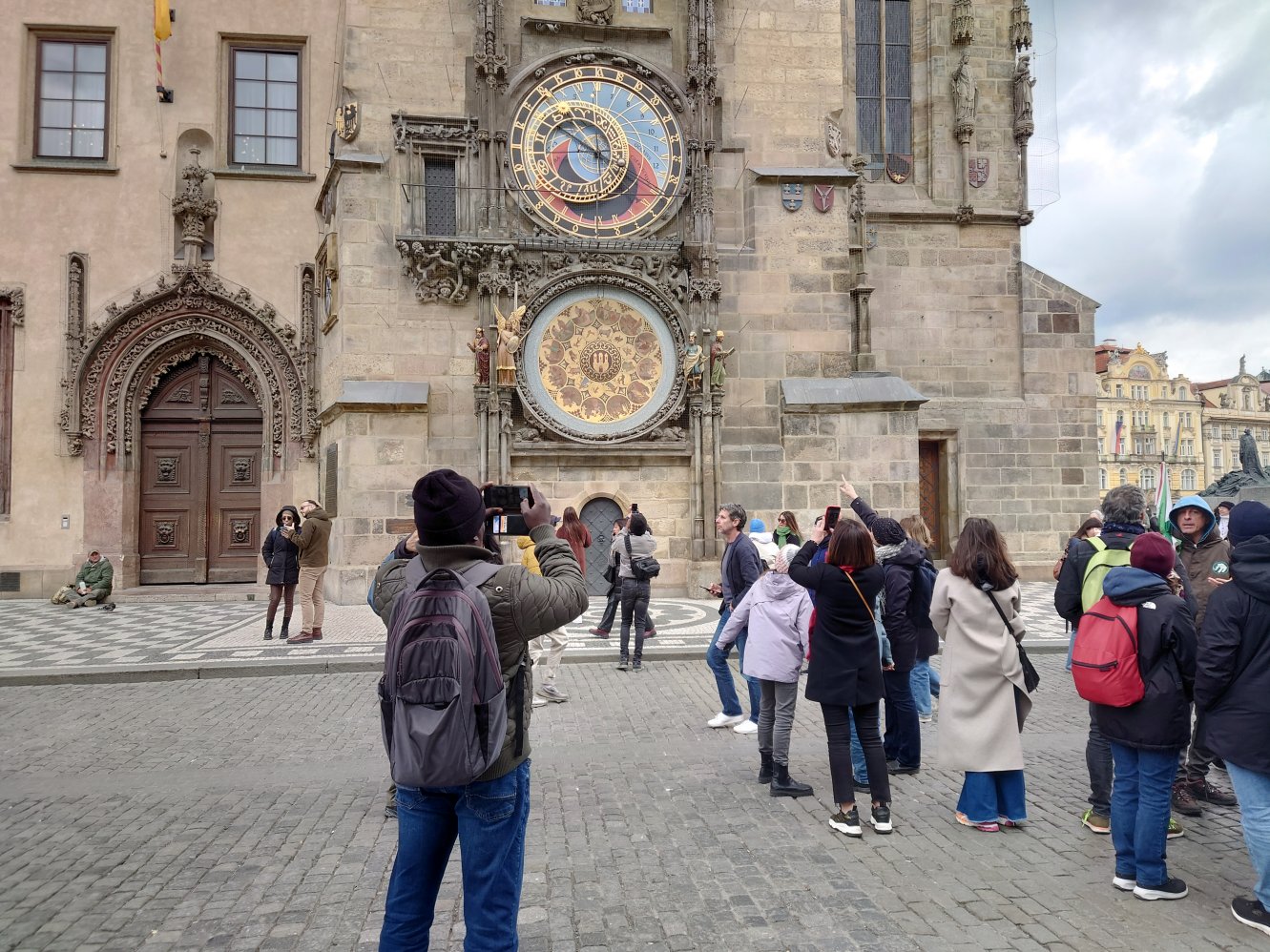
With its counterclockwise movement, Hebrew characters and specially shaped hands, this clock is unique in the world [35].

Prague. April 2024.
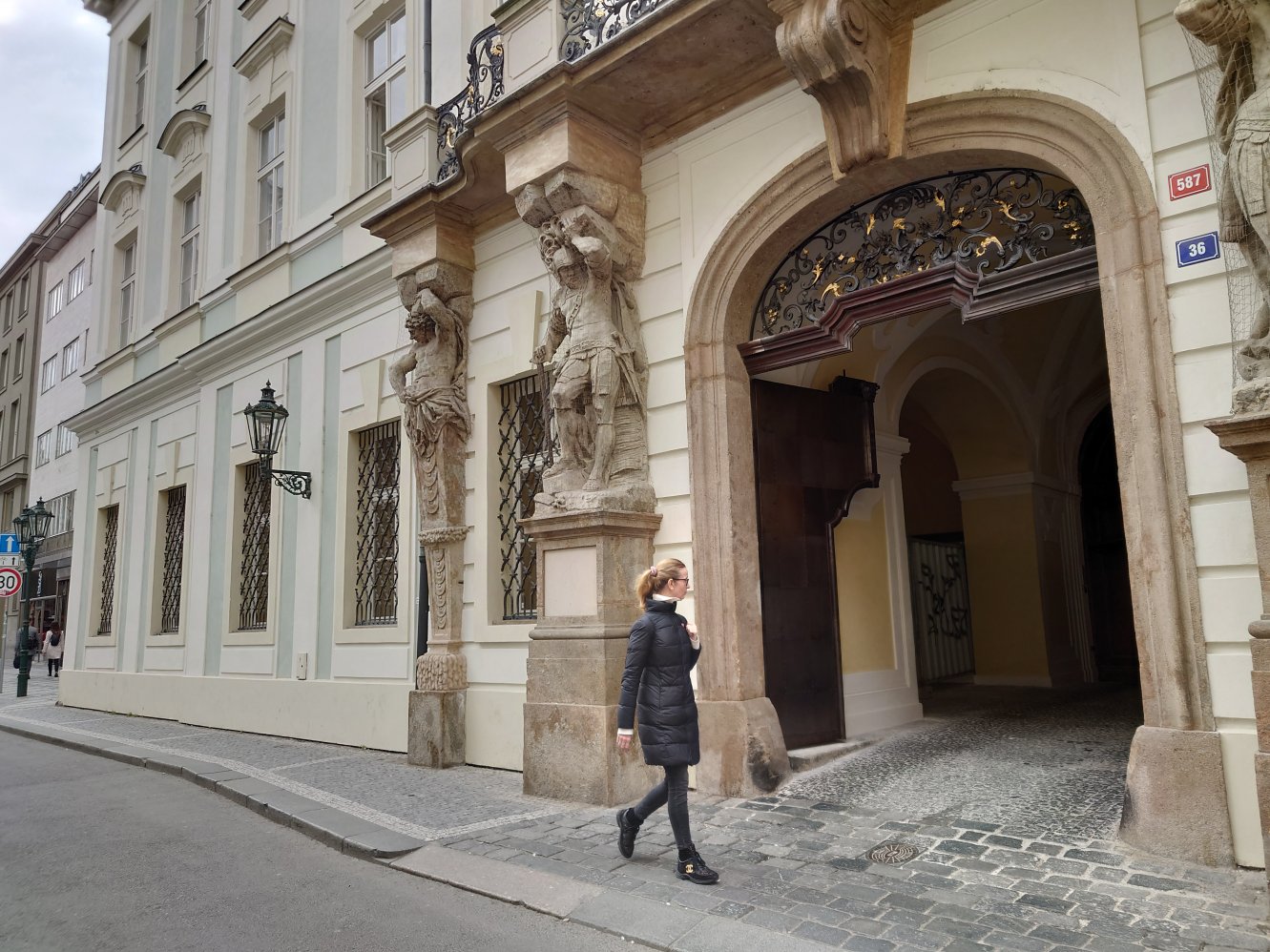
House of the Three Musketeers, Siroka Street, Prague [36].

Prague. April 2024.
Church of Our Lady [37].

Prague. April 2024.

Prague. April 2024.


Prague. April 2024.

April 2024.

April 2024.

Prague. April 2024.

Prague. April 2024.

Prague. April 2024.

Prague. April 2024.

5.5. Prague Castle.

Pražský hrad.

Prague. April 2024.


Prague. April 2024.

Prague. April 2024.

5.6. Central Hotel. Prague.


Prague. April 2024.


Prague. April 2024.

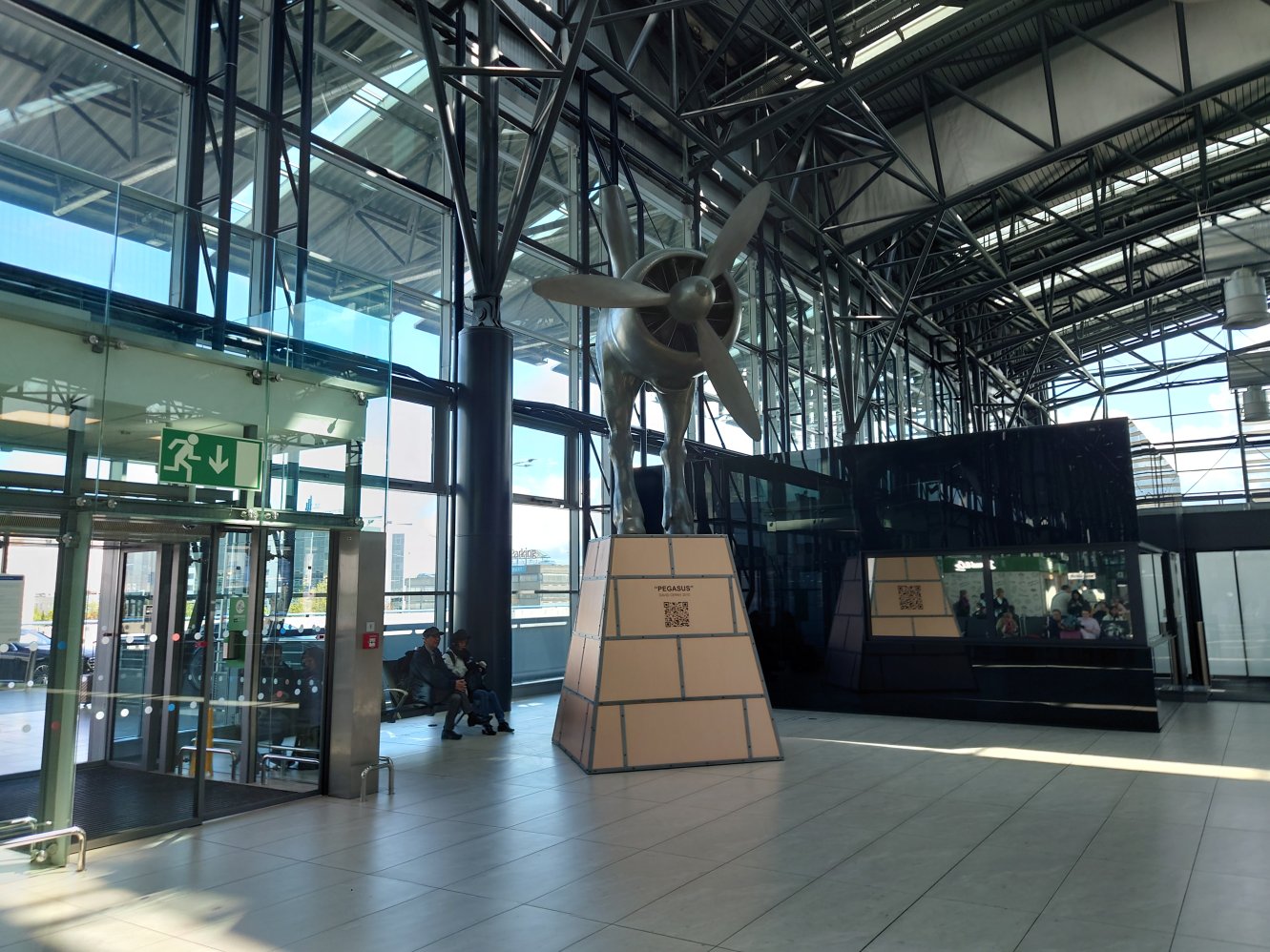
5.7. Pegasus.

Vaclav Havel Airport, Prague.

Pegasus. Prague. April 2024.
Pegasus by David Černý.

Prague. April 2024.

6. Conclusion.

Indeed, the end of a wunderbar conference. With many memorable talks.