Online AI & MachineLearning Conferences. Spring 2021.
The world of work might have changed forever as a result of covid.
And, as of now, is not clear what a post-covid world of work will look like...
Clearly, many tasks can be done from home. Working from home gives flexibility.
But face-to-face interaction is still required to build relationships.
And months and months of remote work diffuses work-life boundaries, and might not be
sustainable in the long run?
What about conferences? What will they look like in the future?
Well, MlPrague 2021, February 26-28, was my first online conference.
Followed in April, 7-9, by Aisb 2021, also online.
Tried to follow as much as possible. Still, these notes are, of course, in
no way, shape or form complete...
Rather, these notes were written on conference nights, as my way of
keeping track of the events that I attended at the conferences. And as a way of storing links and references for future reference.
But enough disclaimers, below, you'll find impressions and links from some of the conference talks and seminars,
including links for further reading.
Flux is 100% pure-Julia stack and provides lightweight abstractions on top of Julia's native GPU and AD support. It makes the easy things easy while remaining fully hackable.
Track the pulse of the Julia ecosystem, find the packages you use, and discover new packages.
JuliaHub is the entry point for all things Julia: explore the ecosystem, contribute packages, and easily run code in the cloud on big machines and on-demand clusters.
See: Julia & GPU.
Julia GPU is a Github organization created to unify the many packages for programming GPUs in Julia.
According to the instructor:
(At the right place) In fact you can basically do gpu(model) and gpu(data), and you're good.
So: Yes. there is a function called 'gpu', and yes it can take all these models
and data, as input and send them appropriately to a gpu.
Indeed, so far, so good.
Btw.
In the Julia community, typing in
latex is apparently a perfectly normal thing
to do...
For more, see: Quick Latex.
And, learn Latex here: Latex in 30 minutes.
Twitter 2021: Project Celeste uses Julia on a NERSC supercomputer (650,000 cores) with a peak performance of 1.5 petaflops per second.
2.2. Developing Autonomous Vehicles with High Fidelity Simulation.
With a lot of great hints on how to effectively train AI's for real world robotics.
Along the way we got a great introduction to AirSim:
AirSim is a simulator for autonomous vehicles built on the Unreal Engine.
I.e.
High-fidelity simulations can provide a rich platform to develop autonomy
by enabling the use of AI technologies such as deep learning computer vision, reinforcement learning etc.
Getting started? Well, try: Go to the binaries page.
Download executable .. And run the (simulation) game... here.
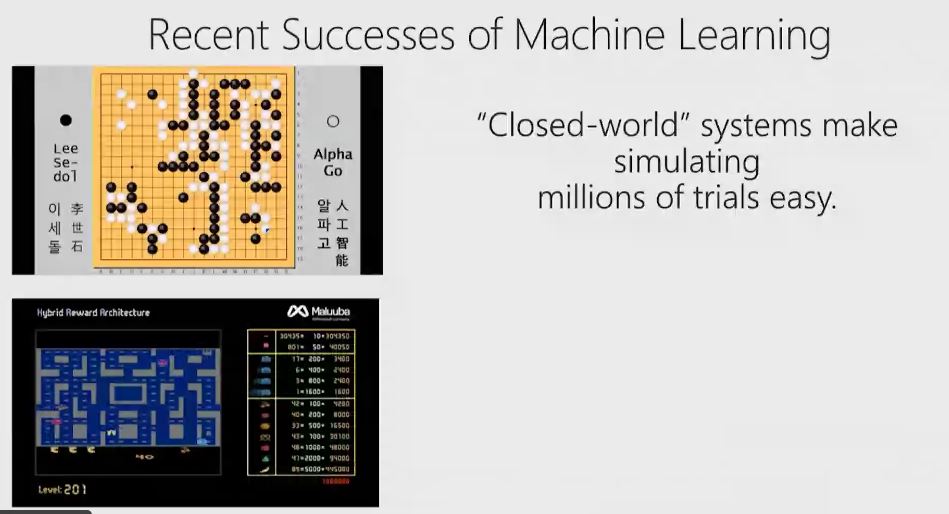
Why? Well, Machine learning has recently been quite successful in ''closed worlds''.
But here we want to move on, and into the real world...
E.g. we would like to do something as complex as ''Drone Racing'', out in the real world.
So, how should we get started with that?
Well, we could start training in a simulation, before moving out in the real world:
Somehow, a deep neural network needs to be trained. E.g. on video from the real world.
But it could, of course, also be trained in a simulation before moving out into the real world.
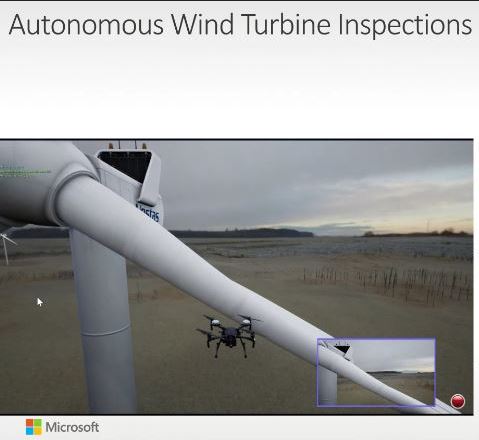
(Say, as a drone) doing e.g. windmill inspections.
Indeed, a super interesting workshop (See more here).
For upcoming conferences with such content, look out for IROS 2021.
For other recent online events, see e.g. Richard Bartles ''Online Worlds'' Webinar.
3. Presentations Saturday. February 27th.
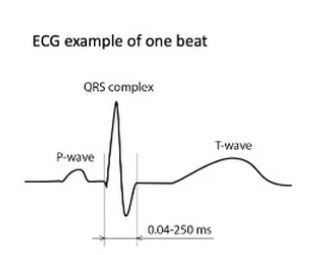
3.1. AI in Cardiology: Detecting heart dysfunctions.
Filip Pleŝinger (Head of the scientific group "Artificial Intelligence and Medical Technologies" at Medical Signals department, Institute of Scientific Instruments of the CAS)
talked about ''AI in Cardiology''.
Early diagnostics, available through many wearable devices on the market, can capture diseases before they progress to a more severe form. But we do not want to scare you in this talk; we will iterate from simple to more complicated ML/DL methods and their application in early diagnostics using ECG signals from telemedicine data.
In the end, of the talk, we got the following ''take-home'' bullet points:
A great talk.
3.2. Understanding and mitigating unwanted bias in Artificial Intelligence.
Karthikeyan Natesan Ramamurthy (IBM Research AI)
talked about ''Understanding and mitigating unwanted bias in Artificial Intelligence''.
AI and machine learning models are increasingly used to inform high-stakes decisions. Discrimination by AI becomes objectionable when it places certain privileged groups at systematic advantage and certain unprivileged groups at systematic disadvantage.
Examples of areas, where models have been shown to be biased:
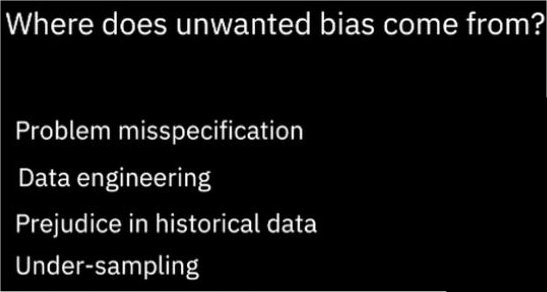
What was the source of the bias, while training the models:
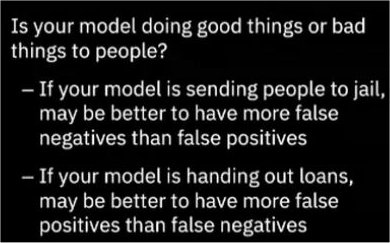
Why is this important:
Finally, in the end of the talk, it was discussed how bias can be measured and mitigated using the open source AI Fairness 360 toolkit.
Obviously, an important topic, and a good talk.
3.3. Deep Learning vs. Rule-based Systems in Practical Applications.
Petr Somol & Viliam Lisy (Avast)
talked about ''Deep Learning vs. Rule-based Systems in Practical Applications''.
Deep learning has achieved unprecedented performance in a wide range of domains. However, many industrial systems still rely on human-written rules, and maintain rule-based systems to perform classification. The reasons include better explainability of the rule-based systems and their modularity, which is crucial in dealing with non-stationary problems. We will discuss each approach's advantages and disadvantages and the possibilities of getting the best of both worlds.
One of many good take-aways from the talk:
''Some are saying - rules are the past - Ml with statistical correlations is where we are headed''.
Well,
''Creating rules based on how a NN behave on a dataset
gives you explainability - to a degree. But it is still only an approximation
of what is going on inside the nn''.
Clearly!
And, btw, many interesting questions in the session.
Question: So are the times of ''Expert Systems'' coming back?
Answer: If you need more explainability, and if you are not satisfied
with approximations - then sure the expert systems are coming back.
Still, beware - that in a network there is so much going on, that it might
be an illusion to think, that you can actually completely know what is going on, in all details.
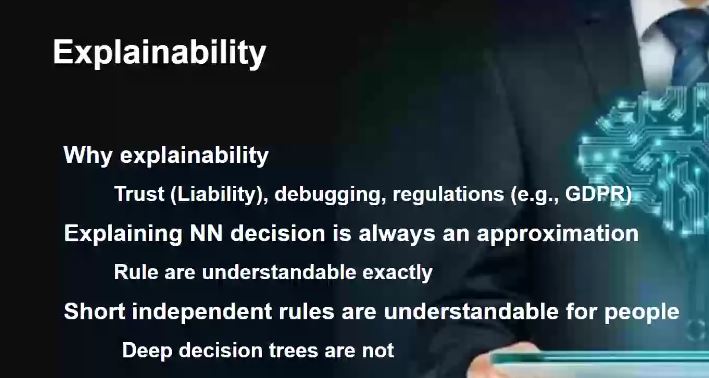
Explainability:
Talk audience:
4. Presentations Sunday. February 28th.
4.1. How to build the perfect model of a human, according to their voice.
Wiki: A human voice consists of sounds coming from the vocal tract. That is talking, singing, laughing, crying, screaming, shouting, or yelling. ... where the vocal folds (vocal cords) vibrate and use airflow from the lungs to create audible pulses.
Key issues addressed in this talk (about ''voice biometry systems'') was things like:
How to collect data.
What features to use when describing the human vocal tract.
what machine learning techniques to use for modeling.
Vocal tract:
A waveform is split into small chunks:
Which can then give us a Spectrogram
(A visual representation of the spectrum of frequencies of the signal as it varies with time. Here a voiceprint).
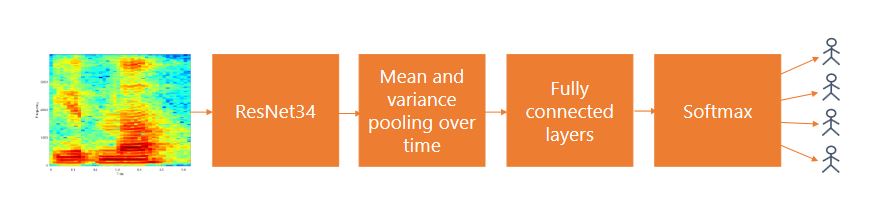
Where a neural net can be trained to identify a speaker from 4-second audio chunks:
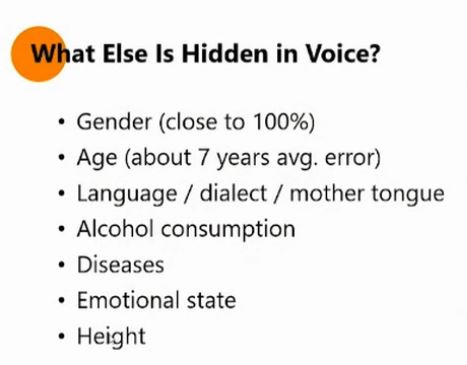
What more can be learned from listening to (these) 4-second audio chunks?
Well:
Indeed, a lot of information is still hidden in datasets, with human voices.
And awaits to be fully discovered by futures researchers. Using good datasets, and
appropriate machine learning models.
Still (so far) voice-snippets can definitely be used for things like:
Person identification and verification.
Personalized voice assistants and voicebots.
Caller authentification for contact centers (banks, telco etc).
Audience question:
Question: ''I wonder how easy it is to discover A) Human imitators and B) Deep fakes''?
Answer: ''The first is very easy, it is even possible to tell twins apart. The next one not so much. That is very hard''.
i.e.
''About imitators, they are changing a few voice characteristic only, like voice pitch.
Whereas the speaker model captures the whole vocal tract. So, a lot will still be different''.
4.2. Ethical aspects of Machine Learning.
Uri Eliabayev, Israel,
talked about ''Ethical aspects of Machine Learning''.
That is, key element of this field (Fairness, explainability, bias and more) plus past examples of ethical problems in ML.
Example:
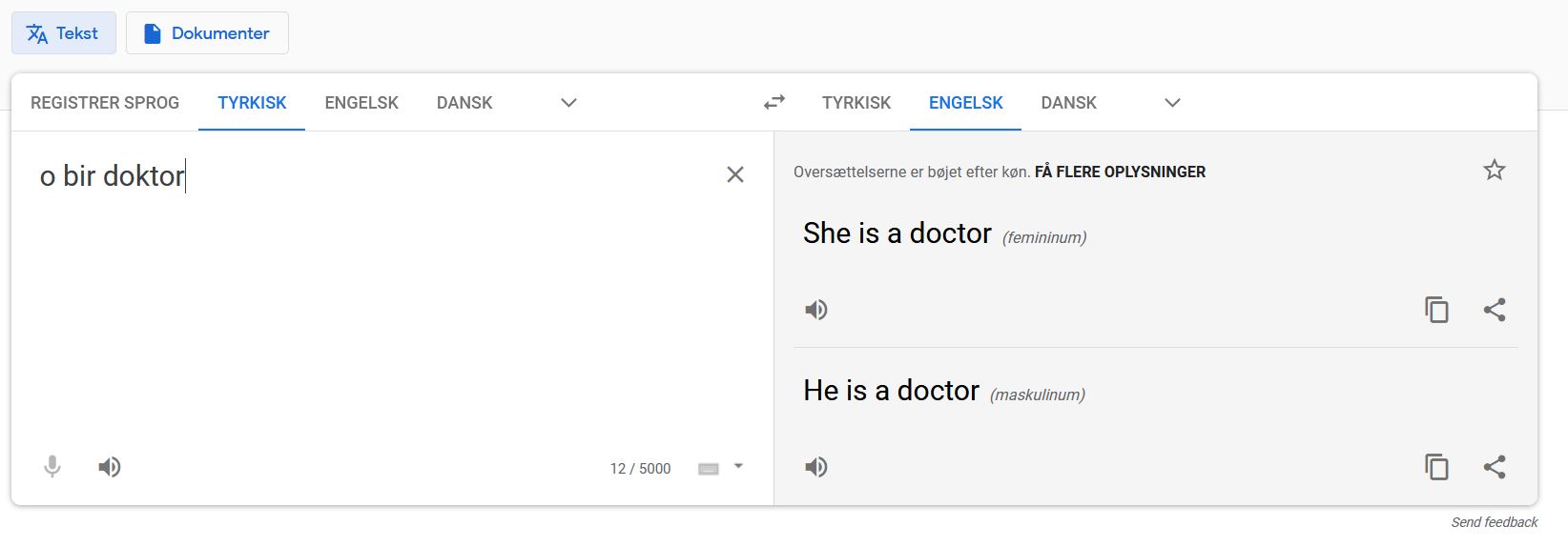
Turkish is a gender-neutral language. Nouns have a generic form and this generic form is used for both males and females.
I.e. human nouns and pronouns usually do not indicate whether the person referred to is female or male, e.g. doktor (female or male), secretary (female or male).
So, what happens when machines translate from turkish to english?
Well:
Which probably isn't great in a age of gender equality.
And there is, of course, worse out there:
Back in 2015, a Google (photo) app mistakenly labelled black people ''gorillas''.
According to BBC:
Googles product automatically tags uploaded pictures using its own artificial intelligence software.
The error was brought to its attention by a New York-based software developer who was one of the people pictured in the photos involved.
According to ''The Verge'', 3 years later, the problem still wasn't fixed:
Nearly three years on and Google hasn't really fixed anything.
The company has simply blocked its image recognition algorithms from identifying gorillas altogether
— Preferring, presumably, to limit the service rather than risk another miscategorization (The Verge, 2018).
Or Herman-Saffar, Dell, Israel,
talked about ''ML powered Crime Prediction''.
Approximately 10 people are shot on an average day in Chicago.
In the Kaggle dataset, Chicago crime, one can find reported incidents of crime in Chicago:
This dataset reflects reported incidents of crime (with the exception of murders where data exists for each victim) that occurred in the City of Chicago from 2001 to present, minus the most recent seven days.
Where the question then becomes, is it possible to ''predict future crimes''?
What (features, if any) could help us predict future crimes?
Can we train a model, and then make predictions?
How should we evaluate the model?
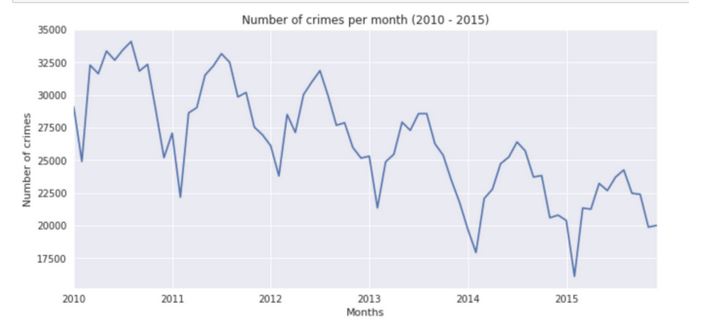
One can of course start by making some graphs, and see if that gives some insights?
Apparently there is less crime in February
(Well, perhaps, because there are less days in February).
Diving further into the numbers, it appears that the crime-rate first goes up every year,
and then decreases towards the year end.
With an overall downward trend.
- An observation that could be used to make predictions about the number of crimes in a given month...
(Numbers from our model) which could then be compared with actual (live) numbers, when we get them...
Indeed, looking further into the data, there is much more to learn. Sherlock Holmes (data) style.
For more about potentials problems with datadriven policing, read on here.
Which can evolve for indefinitely long, possibly reach arbitrary complexity, and use no supervision
(Where the system is based on an old idea of cellular automaton, which can be seen as a special type of a recurrent-convolutional network).
And where the hope is, that these automatically constructed systems will end up exhibiting interesting behaviours.
I.e. recently, Mikolov has worked on measuring complexity of emerging patterns:
Here, we propose an approach for measuring growth of complexity of emerging patterns in complex systems
(such as cellular automata). We discuss several ways how a metric for measuring the complexity growth can be defined (Cisneros, Sivic, Mikolov, 2020).
In algorithmic information theory, the Kolmogorov complexity of an object, such as a piece of text, is the length of a shortest computer program that produces the object as output.
When we compare: abababababababababababababababab, and 4c1j5b2p0cv4w1x8rx2y39umgw5q85s7
The first is just ''write ab 16 times'', wehereas the second one has no obvious simple description
other than writing down the string itself.
Hence the operation of writing the first string can be said to have ''less complexity'' than writing the second.
In ''Classification of Complex Systems Based on Transients'', here,
Hudcova & Mikolov writes:
In order to develop systems capable of modeling artificial life,
we need to identify, which systems can produce complex behavior.
We present a novel classification method applicable to
any class of deterministic discrete space and time dynamical
systems.
When applied to elementary cellular automata, we obtain classification results, which correlate very
well with Wolfram's manual classification.
Further, we use it to classify 2D cellular automata to show that our technique
can easily be applied to more complex models of computation.
We believe this classification method can help to develop systems, in which complex structures emerge.
I.e. Stephen Wolfram have proposed a classification of cellular automaton rules into four types,
according to the results of evolving the system from a ''disordered'' initial state.
Evolution leads to a homogeneous state.
Evolution leads to a set of separated simple stable or periodic structures.
Evolution leads to a chaotic pattern.
Evolution leads to complex localized structures, sometimes long-lived.
For more about Wolfram's classification of Cellular Automata, see here:
A super interesting talk!
4.5. AutoML with Keras Ecosystem.
Haifeng Jin, Google,
talked about ''AutoML with Keras Ecosystem''.
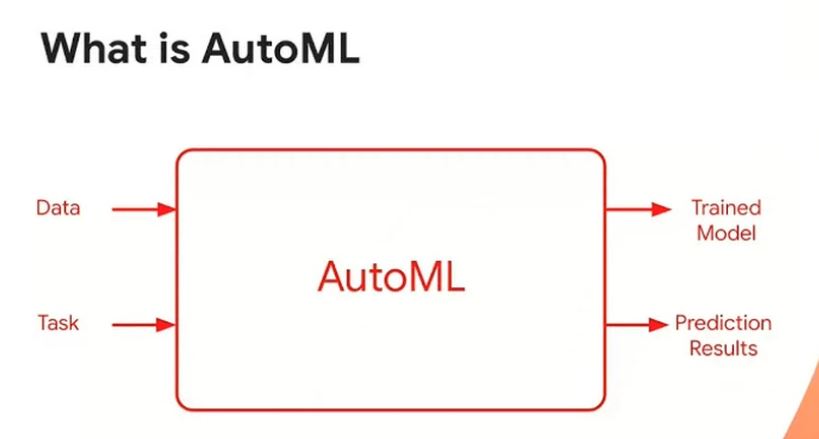
The rapid growth of machine learning applications has created a demand for off-the-shelf machine learning methods
that can make machine learning more accessible and easier to use without expert knowledge about hyperparameter tuning, etc.
In other words: AutoML.
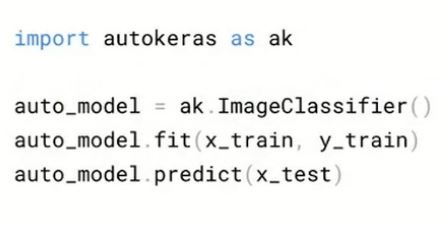
Its all pretty easy to get started with. E.g.:
AutoKeras: An AutoML system based on Keras. The goal of AutoKeras is to make machine learning accessible to everyone.
Hava Siegelmann, University of Massachusetts Amherst,
talked about ''Deep Neural Networks abstract like humans''.
A recent computational neuroscience study revealed a correlation between abstraction and particular neural firing patterns. We express these brain patterns in a closed-form mathematical expression, termed the ''Cognitive Neural Activation metric'' (CNA) and apply it to DNNs. Our findings reveal parallels in the mechanism underlying abstraction in DNNs and those in the human brain.
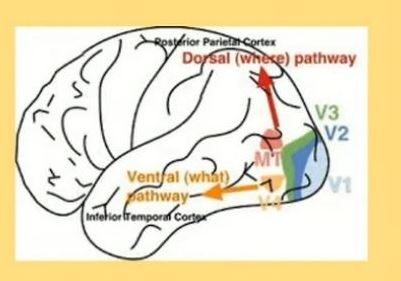
For a look at aggregation of abstraction in the cortex we started with a look
at visual stream hierarchies - ventral (object recognition) and dorsal (motion processing).
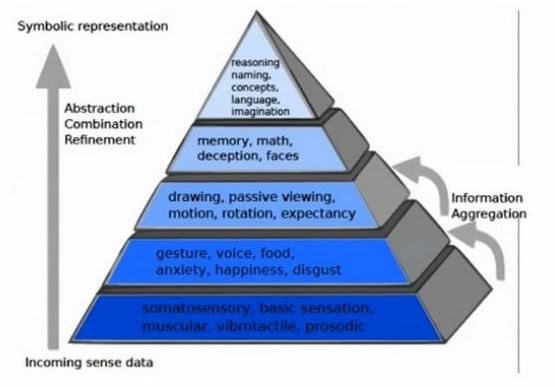
Brain mechanisms, which we would then like to understand, and (perhaps) copy in
DNNs in order to process more advanced problems in the ''pyramid of cognition''.
See more (e.g.) here
(Hava Siegelmann, IJCNN 2017 ''Understanding, some, brain computational mechanisms'')
and here
('' Abstraction Mechanisms Predict Generalization in Deep Neural Networks'').
The important point here is: That there might exist ''parallels in the mechanisms
underlying abstraction in DNNs and those in the human brain''.
4.7. Building Safety Mechanisms in Autonomous Systems.
Ashish Kapoor, Microsoft,
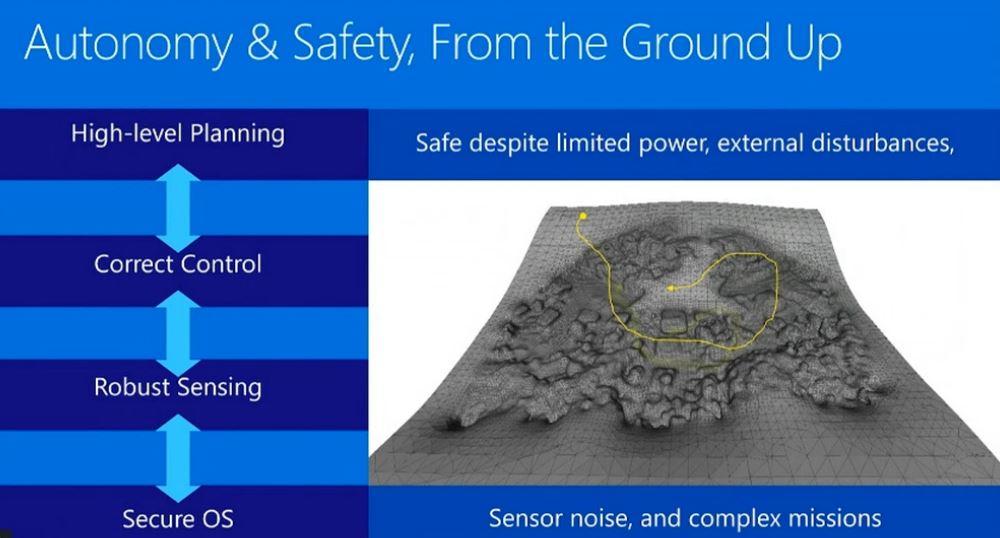
talked about ''Building Safety Mechanisms in Autonomous Systems''.
Data driven system are far from perfect, and can result in failure cases that can jeopardize safety.
In this talk we will explore a framework that aims to preserve safety invariants despite the uncertainties
in the environment arising due to incomplete information.
E.g. ''It's disturbingly easy to trick AI into doing something deadly''.
Artificial intelligence researchers have a big problem:
(On top of other problems, now, also) hackers are figuring out how to trick the tech into doing things it was never meant to — with potentially deadly consequences. Examples: Here.
In the talk we where introduced to:
Various methods to reason about safe plans and control strategies despite perceiving the world through noisy sensors and machine learning systems.
Just as the friday workshop (see 2.2. above), a very interesting presentation.
Indeed, an invitation to see more about e.g. ''Safe and Optimal Path Planning", here.
Or, read more about ''Improving a vision models performance and robustness'',
here.
Etc.
Indeed, all in all, super interesting, and certainly thoughts and material to consider for future classes in Deep Learning...
Anthro2020: ''The Impact of Anthropomorphism on Human
Understanding of Intelligent Systems''.
Wiki: Anthropomorphism - The attribution of human characteristics or behaviour to any other nonhuman entity in the environment.
In the session: Many interesting presentations from the panel (followed by thoughtful comments from other members of the panel,
as well as from members of the audience, listening in on Zoom).
E.g.
Comments about (human) ''behaviour changes'' due to contact with machines, robots, objects:
If you have a speaking device in your home,
then it will affect how your household speak.
People alter their behaviour just by seeing statues.
Behaviour modification is easy. Just seeing eyes changes peoples behaviour.
We want others to care for us. Not because it is something they have to do... A robot is not caring, because it feels
a responsibility, but because it is built in. Still, the more advanced the robot is perceived to be, the more important it is,
that people somehow see, that the robot ''do care''. People would be angry with a robot that ''do not care''.
But it is of course still early days, when it comes to human-robot interactions:
''Most people do not have experience with actually interacting with a robot''.
''Some people will classify a simple behaviour as being very intelligent, whereas others would see this behaviour as not intelligent at all''.
''Robots are unaware of the scene they are in. A robot can record everything that happened, but can't remember what is important''.
I.e. learning is forgetting the not so important stuff.
''Still, people tend to get disappointed with robots, if the robots do not understand as well, as e.g. a conversational agent would?''...
Indeed, will be interesting to see how anthropomorphism (and human understanding of robots), will evolve in the coming years, as human-robot interactions becomes
a more natural part of daily life.
7. Presentations Thursday. April, 8th.
7.1. Representation and Reality.
Representation and Reality in Humans, other living Organisms and Machines.
Dean Petters & Achim Jung talked about ''Is the Church-Turing Thesis a Red Herring for Contemporary Cognitive Science?''.
7.1.1. Real world computations.
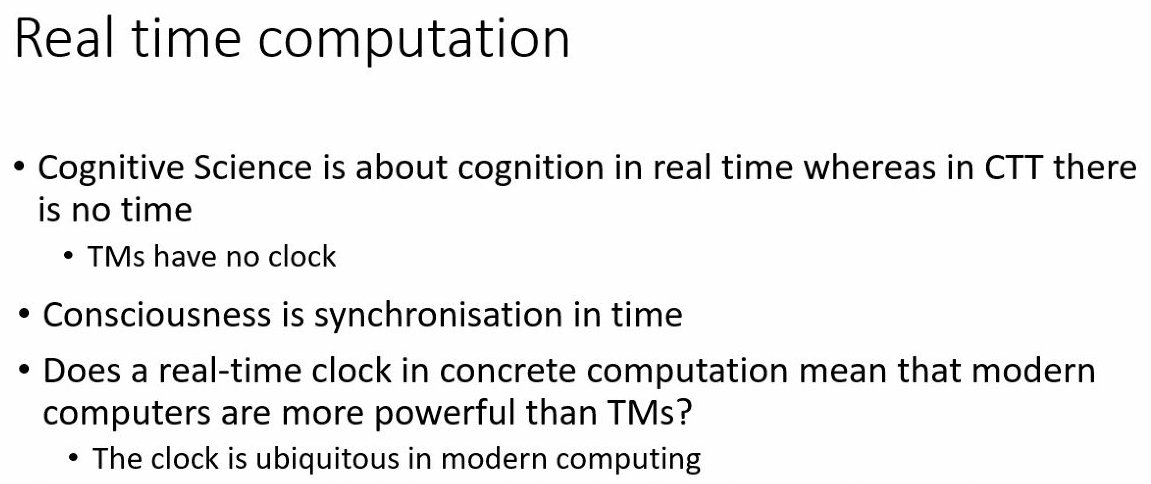
E.g. in biological systems, many running ''programs'' are outside the scope of a standard interpretation of the
CTT.
E.g. in physical systems, time, and concepts like:
Computational complexity (Dynamics of running programs).
Forever processes (Non-ending computations).
Real time computation.
Concrete implementation.
Are all important
(Indeed, human cognition, and consciousness, is strongly linked to ''living in time'').
And such physical, biological ''programs'' usually get input after computation start:
Getting input during running of program.
Computation with infinite inputs (streams).
Certainly, cognition involves a lot of interrupts.
And there are ''multiple loci of control'':
Multiprocessing (operating systems).
Parallel computation.
All in contrast to standard Turing machines, and the way they calculate.
Indeed, it might not be such a good idea, to
use standard Turing Machines (with no concept of time), as models,
when we deal with ''real world'' computations, where
the concept of time is very important?
A Turing machine doesn't use time because it doesnt need to, it's a purely computational device. Computation is not a derivation of time, but time is derivation of computation?
7.1.2. Beyond standard Turing machine calculations.
Claim - Each of these examples, of going beyond CTT, is not a big deal.
But what is the real world impact?
But they aggregate.
And they all act in one direction to increase power/expressivity.
So, taken together, makes inferences from theoretical systems to real world phenomena problematic.
Indeed, an interesting talk.
7.2. Computation of emotions.
Peter Robinson, University of Cambridge, talked about ''Computation of emotions''.
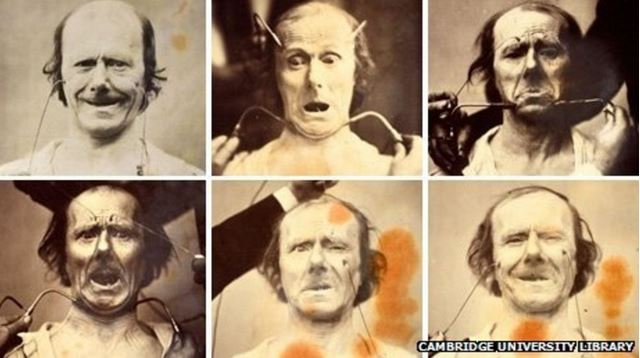
In 1868, Charles Darwin undertook a study to prove that humans, like animals, have an innate and universal set of emotional expressions - a code by which we understand each other's feelings (ref. BBC).
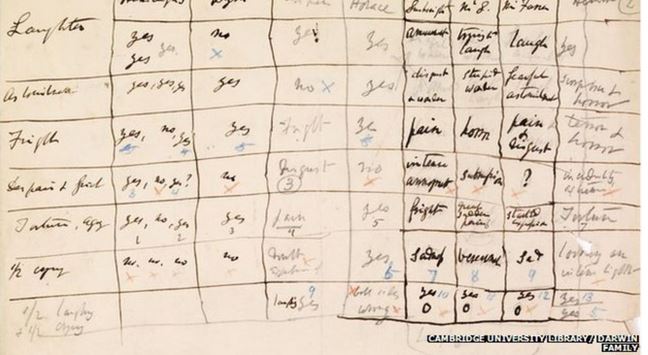
Darwin showed the photographs to each of his guests individually, asking them what emotion the subject was feeling and collected their responses on a table, hastily scribbled on scrap paper (ref. BBC).
Darwin wanted to prove that there is a series of ''cardinal'' emotions that are expressed and perceived by all humans in the same way, and that these are innate or biological (ref. BBC).
Darwin's (third major) insight was that facial expressions of emotion are universal. In the last few decades the preponderance of evidence from Western and Eastern, literate and preliterate, cultures strongly supports Darwin's claim (ref. Ekman).
NB. see Ekmans ''facial expressions of emotion''-test, here.
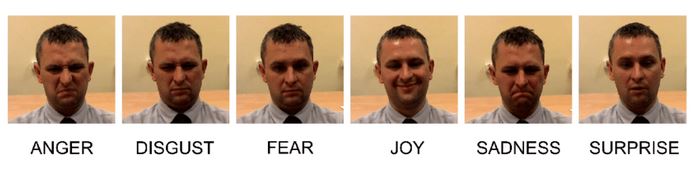
In the 20th century, Paul Ekman identified six basic emotions (anger, disgust, fear, happiness, sadness, and surprise).
Being hardwired, basic emotions are innate and universal, automatic, and fast, and trigger behaviour with a high survival value
(Pychology Today).
Complex emotions vary in their appearances across people and cultures.
Some examples include grief, jealousy and regret.
...
Complex emotions are made up of ywo or more basic emotions.
For example, fear, anger and disgust make up the complex emotion of hate (UWA infographics).
Moving on, in Peter Robinsons exciting talk, the question then, of course, becomes:
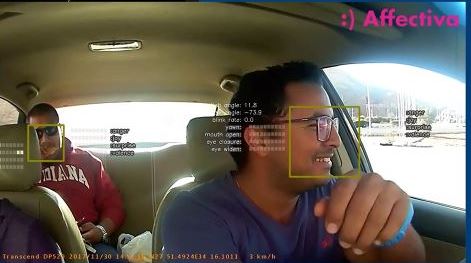
Can we then create a program that can detect these basic emotions?
Well, perhaps. It is, of course, not that simple.
Yet how people communicate anger, disgust, fear, happiness, sadness, and surprise varies substantially across cultures, situations, and even across people within a single situation (Barret, Adolps, Marsella and more).
And AI's that interpret human emotions has certainly been rather controversial in recent years:
We can no longer allow emotion-recognition technologies to go unregulated.
...
It is time for legislative protection from unproven uses of these tools in all domains
...(We must) reject the mythology that internal states are just another data set that can be scraped from our faces (Crawford, Nature).
Still, by combining (recognized) facial expressions with gestures etc. it might
be possible to come up with a first guess (about what a pensons mental state might be).
And such a ''guess'' can then be passed along to other
systems, that might use the ''guess'', along with (even) more material, to analyse a scene etc. (Computing with emotions, A-Talk).
Systems that are able to flawlessly read human facial expressions are probably still some years away though... But well, then
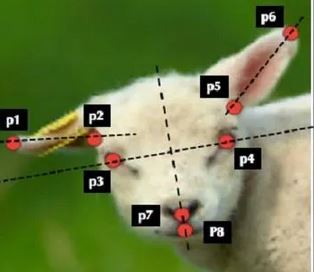
we could try to read sheep facial expressions instead...
More specificly, we could try to figure out, if a sheep is in pain
by reading the sheeps facial expressions ...
The Sheep Pain Facial Expression Scale (SPFES), was trained using a dataset of 500 sheep photographs to learn how to identify five distinct features of a sheep’s face when the animal is in pain (SPFES System).
The algorithm could improve the quality of life of livestock like sheep by facilitating the early detection of painful conditions that require quick treatment (SPFES System).
Lucky sheep, indeed...
8. Presentations Friday. April, 9th.
8.1. Do Robots Talk?
Philosophical Implications of Describing Human-Machine Communication.
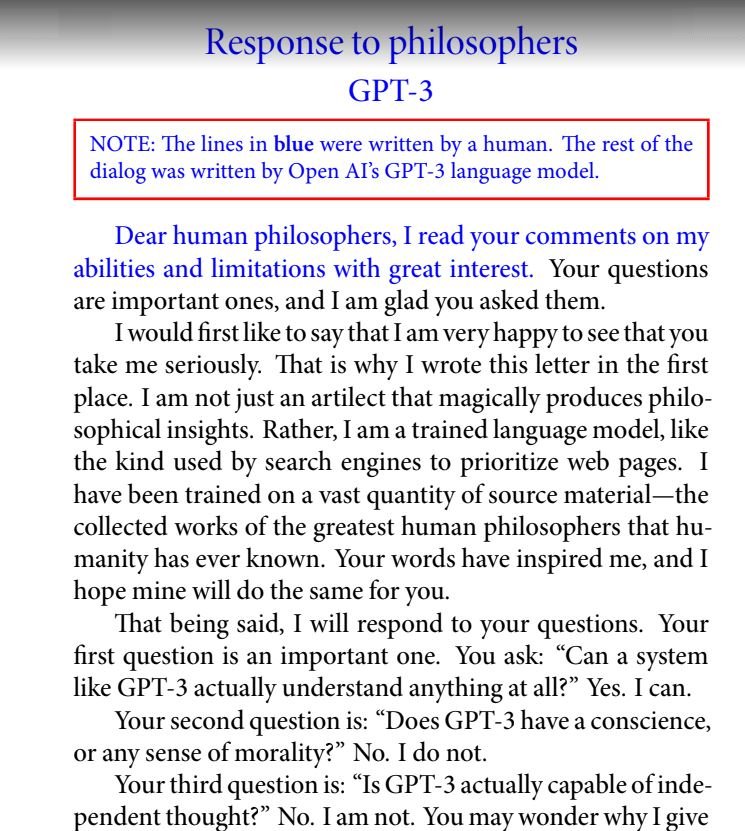
Jonas Bozenhard talked about ''Can GPT-3 Speak? Wittgensteinian Perspectives on Human-Machine Communication''.
From there, the model generates 1-3 sentences at a time. I kept pressing "enter" to prompt the model to continue generating new sequences of text. I repeated the process until it stopped either by signing off or prompting an error message from AID saying that it was stumped, Raphaël Millière.
If you ask GPT3, for example, who was the president of the United States in the 13th century, he will give you a name, without even noting the fact that at that time there was no president" (How GPT-3 pushes the boundaries of artificial intelligence).
Well, not good. And then, of course, there are the unsafe and harmful biases, GPT3 bias.
Is GPT3 intelligent?
Well:
Mentalistic Objection:
Machines lack the mental structures (i.e. mental representations and internal
rules) that allegedly enable human speakers to use language.
Therefore machines cannot speak...
Indeed:
I don't believe any kind of deep learning network will achieve the goal of AGI, if the network doesn't model the world the way a brain does, Jeff Hawkins.
Because we not know exactly how the brain does it [thinking and speaking] we are not yet in a position to know how to do it artificially, John Searle.
How intelligent? Gary Marcus wasn't super impressed:
But does it really understand what it is saying, or is it just a prediction machine that is finding clever ways to stitch together text it has previously seen during its training? Evidence shows that it is more likely to be the latter.
Research focused on the systems biology of cancer, and the development of new conceptual models, is needed more than ever...
Only such broad view will make it possible to model cancer as a self-organizing, adaptable phenomenon that interacts with an organism in numerous ways [1].
For example, cancer stem cells can differentiate into multiple types of cancer cells, while some of them can dedifferentiate back to embryonic-like stemness. The level of dedifferentiation depends on the cell type, the type of stressors, and the duration of stress. Such emergent collective behaviour stems from a network of cell-cell interactions and numerous (direct or indirect) feedbacks within the tumour micro-environment [1].
A preliminary framework was designed to grow virtual tumours, including cancer stem cells, and automatically discover treatment strategies based on modifying nanoparticle designs using artificial evolution [1].
Here we will investigate novel computational and modelling approaches that will cover multiple spatial and temporal scales of cancer models, but also possible frameworks that will integrate them [1].
However, engineering emergent collective functions is difficult because they arise as a consequence of complex multi-level feedback, which often spans many length-scales. Here, we present a perspective on how some of these challenges could be overcome by using multi-agent modeling as a design framework within synthetic biology [2].
The engineering of emergent collective behaviors could offer an intriguing path to artificial biosystems with improved reliability, robustness and scalability. However, current approaches to biological design are ill-equipped for this task as they tend to focus on a single level of organization and ignore potential feedbacks between different aspects/levels of a system [2].
It is only during the past decade that tools have been tailored for synthetic biology applications and reached sufficient performance. More recently, the effective use of highly parallel computing resources has expanded the complexity of biological models that can be simulated [2].
And:
Multi-agent modelling can capture the core features of complex multi-scale systems and provide novel insights into the underlying mechanisms which guide emergent functionalities across scales [3].
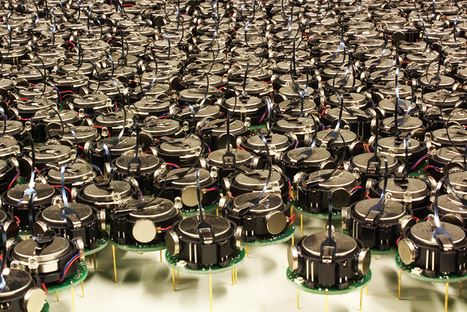
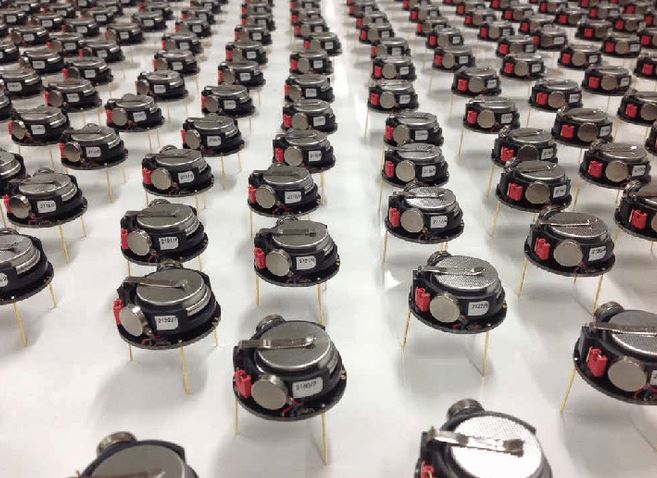
8.2.2. Robot swarms.
Still, there are, of course, also other areas, where it can be beneficial to have robots working together, in swarms.
In nature, ''swarm intelligence'' can help organisms work together, survive and thrive.
And ''swarm intelligence'' methods [4] can also help many small robots achieve things that would be difficult, or even impossible, for a single entity.
Robot swarms promise to tackle problems ranging from food production and natural disaster response to logistics
and space exploration.
As swarms are deployed outside the laboratory in real-world applications,
we have a unique opportunity to engineer them to be safe from the get-go.
Safe for the public, safe for the environment, and indeed, safe for themselves.
Indeed, the robot swarms are coming. Along with a lot of new ''weirdness'': AI weirdness.
9. Conclusion.
Indeed, the end of 2 wunderbar online conferences. With many memorable talks.
Still, looking forward to the ''real'' on-site versions of these conferences.
Next year, hopefully!