Impressions and Links from Accs8, Icaart 2022 & ''Brain 2022''.
Online AI, Cognition & MachineLearning Conferences. Spring 2022.
The world of work might have changed forever as a result of covid.
And, as of now, is not clear what a post-covid world of work will look like...
Clearly, many tasks can be done from home. Working from home gives flexibility.
But face-to-face interaction is still required to build relationships.
And months and months of remote work diffuses work-life boundaries, and might not be
sustainable in the long run?
What about conferences? What will they look like in the future?
Well, MlPrague 2021, February 26-28, was my first online conference.
Followed in April, 7-9, by Aisb 2021, also online.
Below follows impressions from Accs8, Icaart 2022 and ''The Brain Conference''.
All in the spring of 2022.
Tried to follow as much as possible. Still, these notes are, of course, in
no way, shape or form complete...
Rather, these notes were written on conference nights, as my way of
keeping track of the events that I attended at the conferences. And as a way of storing links and references for future reference.
But enough disclaimers, below, you'll find impressions and links from some of the conference talks and seminars,
including links for further reading.
Great stuff indeed.
1. Accs8 2022 (online).
ACCS8: 8th Annual Conference of Cognitive Science. Organized by the Amrita Mind-Brain Center, India.
20-22 Jan 2022.
1.1. Friday, January 21st.
1.1.1. Bottom-up and top-down strategies for multiscale brain modeling.
By Egidio D'Angelo. Brain and Behavioural Sciences, University of Pavia, Italy.
Followed a couple of Accs8 talks friday (On Zoom), and was especially fascinated by Egidio D'Angelo's keynote.
Various projects on the front of experimental research in cellular/molecular neuroscience, computational modelling and integrative brain functions in health and disease.
Supported by the Human Brain Project (EU) and the Brain Connectivity Center (University of Pavia).
D'Angelo started the talk by stating that the brain is a ''computational system''.
Which then necessarily must be followed by questions like:
What does the brain compute?
When is it activated? What does it compute? How does it operate?
How does it contribute to motor control and higher brain functions?
Moving towards an answer, D'Angelo think that we should begin by observing that
the brain is organized on many levels.
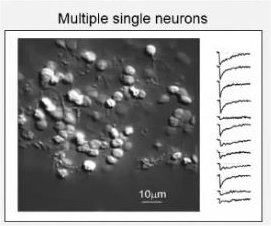
Molecules build cellular structures that give us neurons and glia cells.
Where the neurons then give rise to networks.
Leading, eventually, to the brain-areas that give us the computations that are important for brain functions.
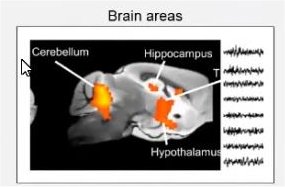
(In the brain) It is possible to measure activity from the different areas.
Which then lead to the question:
How can we connect these levels within one framework?
I.e. we need a model, that can help us understand how activity in single
cells add up to something more easily observed.
This (good) model will then allow us to go from the elementary causes to
the observed high level states.
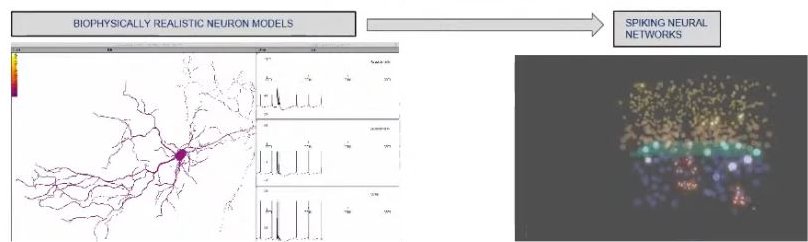
That is: From molecular properties, neuron electrophysiology
and neuron morphology, towards detailed neuron models. And then onwards to
simplified neuron models, spiking neural networks, and from
there on to brain theory, control systems etc.
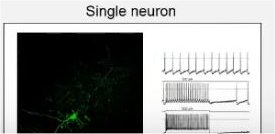
From single neuron modelling (Hodgkin–Huxley models of how action potentials in neurons are initiated and propagated)
all the way to models for whole brain areas.
(Measured) connectome maps (comprehensive maps of neural connections in the brain),
''wiring diagrams'' (How an organism's nervous system is made up of neurons which communicate through synapses),
can help guide, and validate, models that can be simulated in computers.
Allowing us to begin making detailed simulations of (many) neurons connected to (many) other neurons.
Indeed, so far, a simulation of 400.000 neurons has been achieved (as of 2021).
Still, with 65 million neurons in a mouse brain, complete simulations of (e.g.) a mouse brain is still some years out in the future
(Just as full scale simulations of human-sized brains are - As a human brain contains some 86 billion neurons).
The smaller models are still valuable though:
One can try out different values for model parameters like global coupling, local couling, local neuronal activity in the simulations.
And see what parameter values correspond to healthy biological networks, and what parameter
values give rise to less healthy network. All useful as we try to understand how the brain really works.
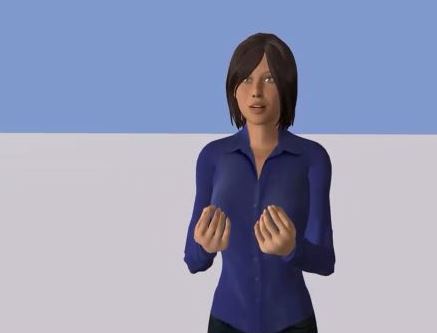
2.1.1. Interacting with Socially Interactive Agents.
Keynote. Catherine Pelachaud, University of Pierre and Marie Curie, France,
talked about ''Interacting with Socially Interactive Agents''.
(Future) Socially Interactive Agents should be build in such a way that they can be socially
aware, can interact with humans (in e.g. the Metaverse), and be able to adapt their agent behavior
in order to favor the users way of communicating (during the interaction).
Adaptation should be possible in different ways, on a linguistic
level (choice of vocabulary, grammatical style), using different behaviors
(change of posture), etc. Artificial agents should be able to use
a number of conversational strategies, and
synchronization mechanisms (e.g. imitate a smile).
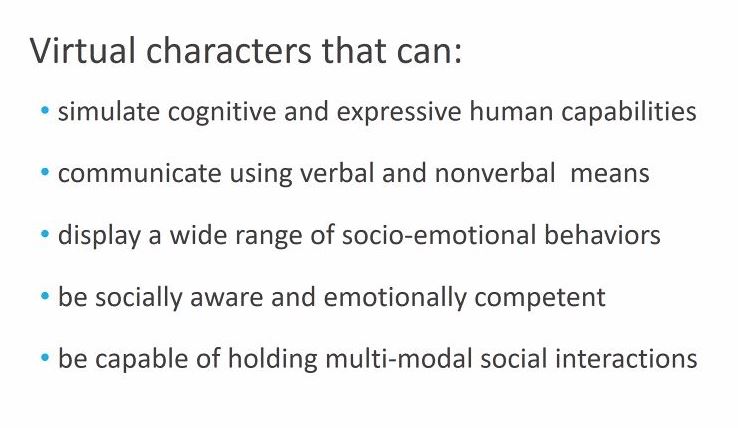
I.e. artificial agents (virtual characters), that we meet in the Metaverse and
other (artificial) environments, should be build in such a way that they have a wide variety of human cababilities...
For good and interesting user experiences we need:
Virtual agents should be able to understand human gestures.
Just as they should be able to make gestures. In order to emphasize conversational points,
and make conversations more engaging.
Furthermore: Virtual agents should also be able to understand and use laughter.
Indeed, laughter is an essential social signal in human to human communication,
across cultures and languages.
Where laughter can be used to convey many different functions.
Feedback to humorous stimuli.
Mask embarresment.
Reinforce bonding.
Social indicator of in-group belonging.
Speech regulator during conversation.
(Coming) virtual agents should also be able to use touch (in virtual worlds where this
is possible, e.g. with a VR-glove).
I.e. touch is an important modality in human-agent interaction.
As ''social touch'' can be used in many ways during a
conversation. A caress can convey comfort, a tap can attract a human’s
attention, etc.
Social touch can be used to:
Attract attention.
Manage turn taking.
Emotional emphasis.
Encourage.
Comfort. Calm.
So, a decision model should be developed in order to understand:
When an agent can touch a human.
What kind of touch should be used.
Indeed, a fascinating talk. Obviously, with much more to come in the coming years.
2.1.2. Quantifying Student Attention using Convolutional Neural Networks.
Andrea Coaja and Catalin Rusu, Babes-Bolyai University, Romania,
talked about ''Quantifying Student Attention using Convolutional Neural Networks''.
In this study, the authors:
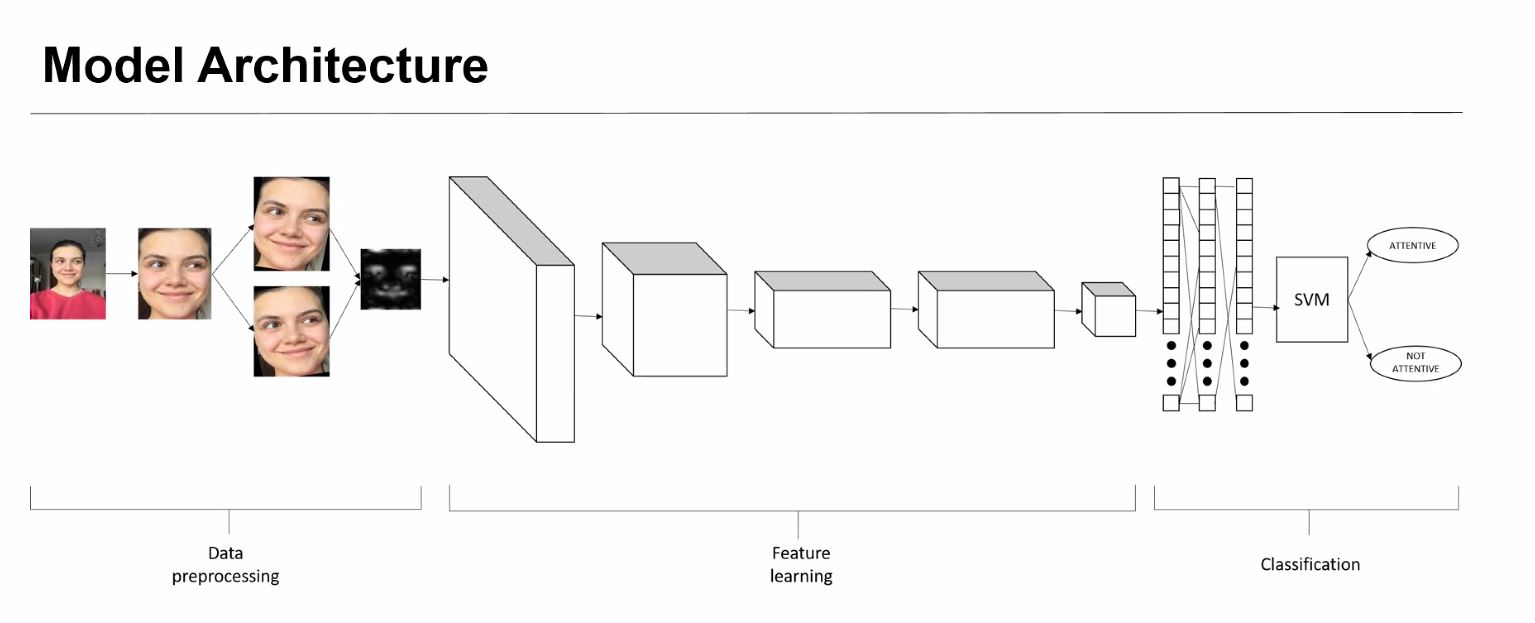
Propose a method for quantifying
student attention based on Gabor filters, a convolutional neural
network and a support vector machine (SVM). The first stage
uses a Gabor filter, which extracts intrinsic facial features. The
convolutional neural network processes this initial transformation
and in the last layer a SVM performs the classification.
Their convolutional neural model was trained on a dataset consisting of images from the
Karolinska Directed Emotional Faces dataset as well as (their own) material
(taken from online courses and volunteers).
Conclusion:
Very good classification results for data sets from real teaching scenarios.
The CNN model can classify with high accuracy attentive and non-attentive states (95% accuracy in one test).
Future steps:
Implement this attention detection system in actual online lecture settings. In
order to measure how student attention impact student (learning) performance.
Indeed, interesting, and a little bit intimidating, that such surveillance systems
become more and more integrated into our world.
2.2. Friday. February 4th.
2.2.1. Bio-Inspired AI for Autonomous Systems.
Keynote. Jan Seyler, Festo, Germany,
talked about ''Bio-Inspired AI for Autonomous Systems''.
From the introduction to the talk:
At Festo, our vision is to free humans from
harming tasks – these might be mentally (by being boring and
repetitive) or even physically harming.
For humans to naturally interact with machines, it is needed that
the machines can react to changing tasks and environments.
Here, AI-based solutions come into play and offer solutions.
(And) Mechanisms inspired by biology offer efficient solutions to many
questions arising in this field. This talk will show concrete
challenges from within the industrial automation and the solutions
Festo research came up with.
One can learn a lot from studying ants.
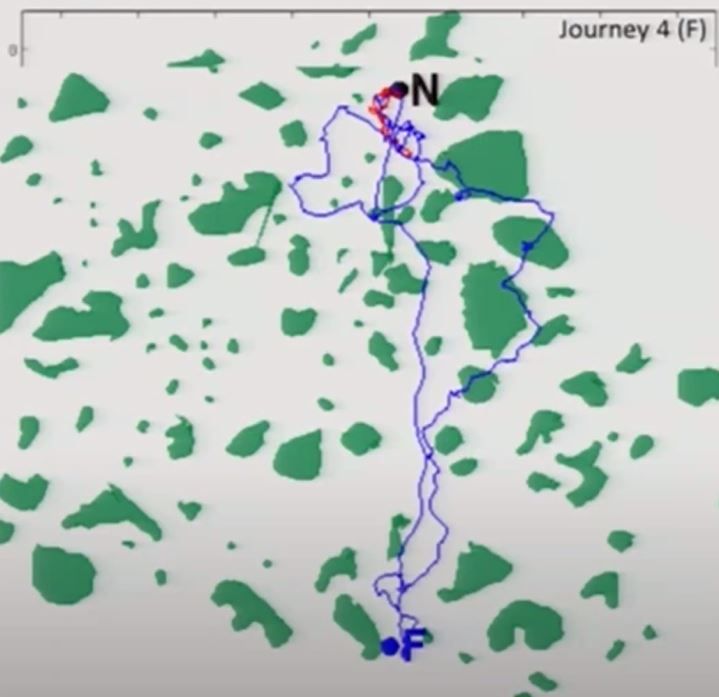
Ants can find their way home to their nest, even if they start out more than 1 km away from the nest.
According to Seyler, the ants not only create chemical trails from their nest to promising food source
(Where other ants can use their antennas to detect these pheromones and respond accordingly).
Ants can also monitor their trajectory in relation to a start location.
Estimating their current position relative to a starting point,
enabling a straight-line return (home vector).
Just as they can use visual memory to find their way home.
Remarkably, they can do this and many other things with a tiny brain, consisting
of only some 250.000 neurons.
Interestingly, ants can also work together, and solve complex tasks, by working as an overall networked system.
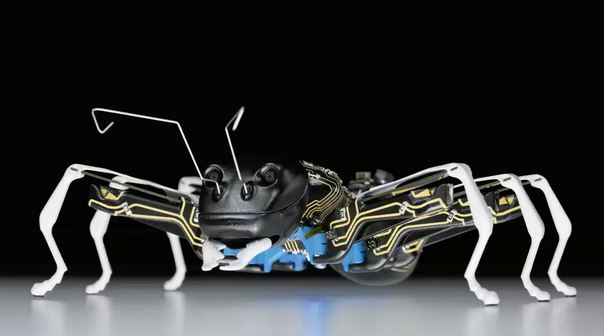
Where Festo's small, ant-like robot can simulate some of the mechanisms, and
help us learn more about how small autonomous systems can team up with other small autonomous systems,
and solve complex tasks together.
Festo's amazing autonomous birds, BionicSwift,
are good at avoiding obstacles. And therefore useful in the process of helping us to come up with
(autonomous) control mechanisms (other) robot systems can use to avoid obstacles, as they move around.
Wonderful stuff, and nice to know that you can actually buy Festo products
(Bionic Ants & Robotic Birds), and test it all out yourself (here,
Gizmodo).
Awesome, indeed.
And, an awesome talk, indeed.
2.3. Saturday. February 5th.
For ''on site'' versions of the Icaart conference:
See e.g. Icaart 2020.
2.3.1. Intelligent Diagnosis of Breast Cancer.
Nurduman Aidossov et al., Nazarbayev University, Kazakhstan,
talked about ''Intelligent Diagnosis of Breast Cancer with Thermograms using Convolutional Neural Networks''.
The authors write:
The main methods of breast cancer
diagnosis include ultrasound, mammography and Magnetic
Resonance Imaging (MRI). However, the existing methods of
diagnosis are not appropriate for regular mass screening in
short intervals.
Recent studies show rapid quality
improvement of thermal cameras as well as distinct development
of machine learning techniques that can be combined together
to enhance the technology of breast cancer detection. Machine
learning technologies can potentially be used to support the interpretation
of thermal images and help physicians to automatically
determine the locations and sizes of tumors, blood perfusion,
and other patient-specific properties of breast tissues.
So, in this study the authors aim to develop convolutional neural net techniques for intelligent precision
breast tumor diagnosis, binary classification, based on thermal images.
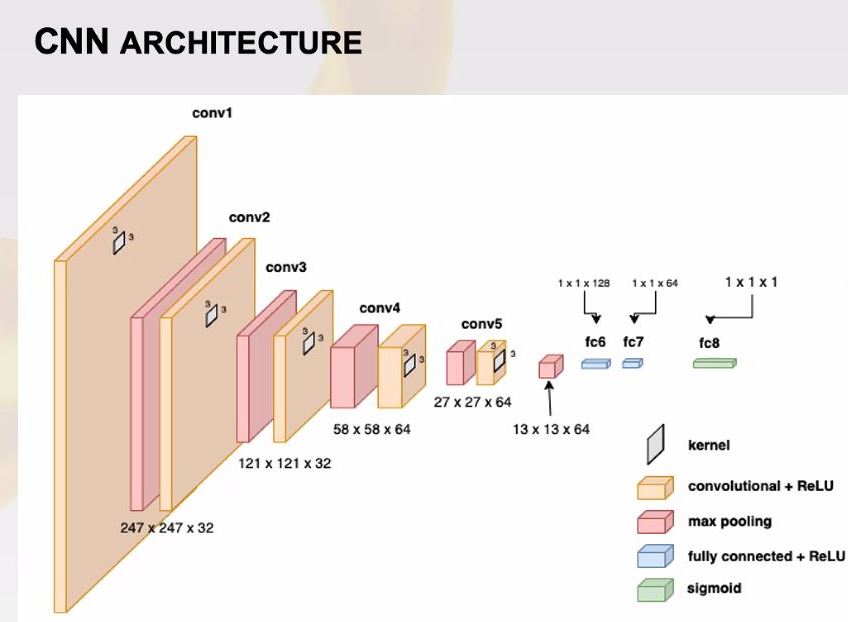
Using a Convolutional neural net, with the following design:
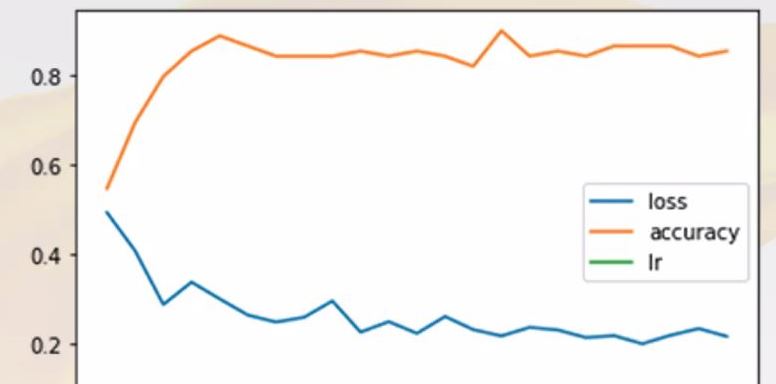
Where they find that their deep learning solution for analysis of thermograms
comes up with an accuracy of 80.77% (Plot of accuracy and loss vs. iterations can be seen here to the right).
A nice demonstration of the usefulness of these techniques, indeed.
2.3.2. Predicting the Intended Action using Internal
Simulation of Perception.
Zahra Gharaee, Department of Electrical Engineering, University of Linköping, Sweden,
talked about ''Predicting the Intended Action using Internal Simulation of Perception''.
This article proposes an architecture, which allows the
recognising and predicting of actions (prediction of intention), evaluated in
experiments using three different datasets of 3D actions.
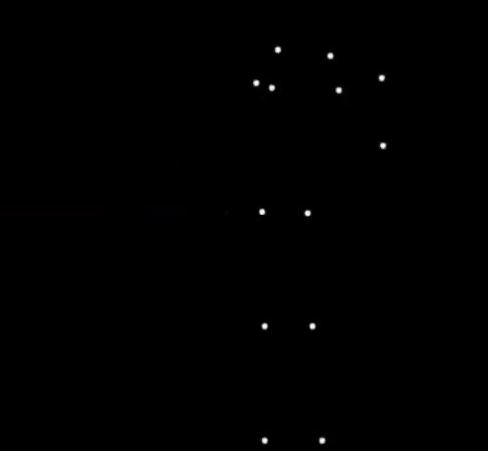
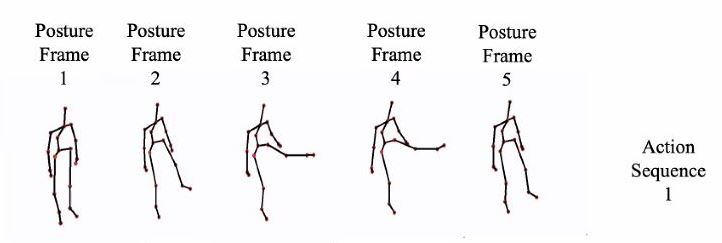
A technique that allow us to address the problem of having limited access to sensory input (e.g. only using a few points
for a body, as below), and still be able to make predictions (when watching a sequence of such inputs).
Indeed, looking at just a lightpattern, humans can tell, whether the figure
is really lifting a heavy box, or if the figure is faking it...
Just by looking at the light patterns...
So, will machine models be able to reach the same level of sophistication?
I.e. will machines models be able to predict action sequences based on
just a few measurements?
Something that comes natural to humans. E.g. when we want to shake someones hand,
we need to be able to predict where their hand is headed to (even if we have only a few visual cues).
Here, the performance of the proposed system is discussed and compared with
similar architecture using self-organizing neural networks.
Interesting stuff, indeed.
2.3.3. GAN-based Intrinsic Exploration for Sample
Efficient Reinforcement Learning.
Doğay Kamar, Faculty of Computer Science and Informatics, Istanbul Technical University, Turkey,
talked about ''GAN-based Intrinsic Exploration for Sample
Efficient Reinforcement Learning''.
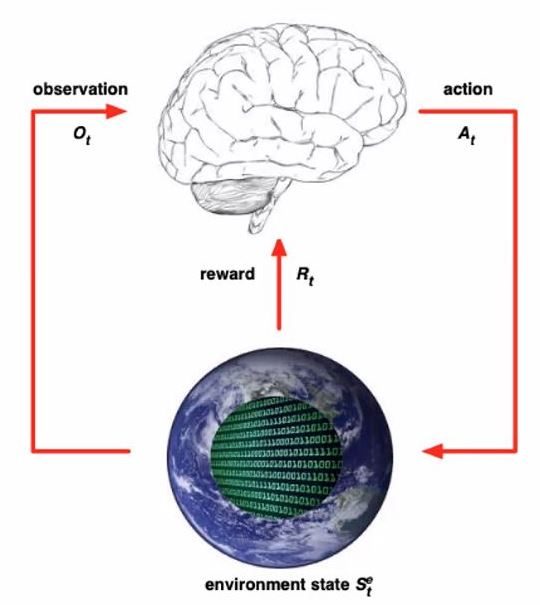
This talk was about the problem of efficient
exploration in reinforcement learning.
Most common exploration
approaches depend on random action selection, however these
approaches do not work well in environments with sparse or no
rewards. We propose a Generative Adversarial Network-based Intrinsic
Reward Module that learns the distribution of the observed
states and sends an intrinsic reward that is computed as high
for states that are out of distribution, in order to lead the agent to
unexplored states.
In other words:
When the GAN generate a state we have seen a lot then the reward is low.
if we haven't seen the scene a lot then the reward is high.
The authors conclude:
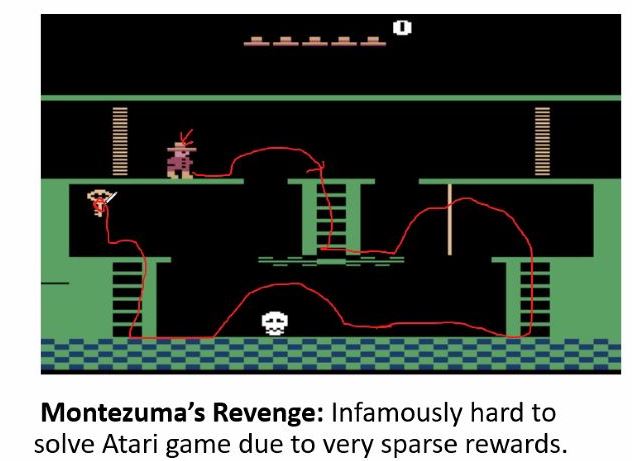
We evaluate our approach in Super Mario Bros
for a no reward setting and in Montezuma's Revenge for a sparse
reward setting and show that our approach is indeed capable of
exploring efficiently.
Interesting!
2.3.4. Recommendation System for Student Academic Progress.
Horea Greblă et al., Department of Computer-Science, Babes-Bolyai University, Romania,
talked about a ''Recommendation System for Student Academic Progress''.
The purpose of this work is to study the possible
approaches to build a recommendation system that could help
students in organizing their work and improving their results.
More specifically, we intend to predict grades of a student for
future exams, based on his/her previous results and the past
grades received by all students from the same series/group.
I.e. based on achieved grades during a bachelor program
(Where Romania uses a 10-point scale
for high schools and academic institutions), it is then possible to build a recommender systemer for ''student academic progress''?
The authors conclude:
We have tried several machine learning methods for predicting future
student grades. The best variant
proved to be the one based on neural networks that leads to a
mean absolute prediction error smaller than 0.5. These results
show the practical applicability of our proposed methodology, and
consequently, we built, based on these, a practical recommendation
system available to students as a web application.
Interesting, indeed!
2.3.5. Knowledge Representation & Reasoning in CRAM.
Keynote. Michael Beetz, University of Bremen, Germany,
talked about ''Knowledge Representation & Reasoning in CRAM. A Cognitive Architecture for Robot
Agents Accomplishing Everyday Manipulation Tasks ''.
Robotic agents that can accomplish manipulation tasks
with the competence of humans have been one of the grand
research challenges for artificial intelligence (AI) and robotics
research for more than 50 years. However, while the fields have made
huge progress over the years, this ultimate goal is still out of
reach.
In order to make further progress it is here suggested that we should:
Endow robots with the capability
to internally emulate and simulate their perception-action loops
based on realistic images and faithful physics simulations.
...
A combination of
learning, representation, and reasoning will equip robots with
an understanding of the relation between their motions and the
physical effects they cause at an unprecedented level of realism,
depth, and breadth, and enable them to (eventually) master human-scale
manipulation tasks.
... Robots with such
manipulation capabilities can help us to better deal with important
societal, humanitarian, and economic challenges of our aging
societies.
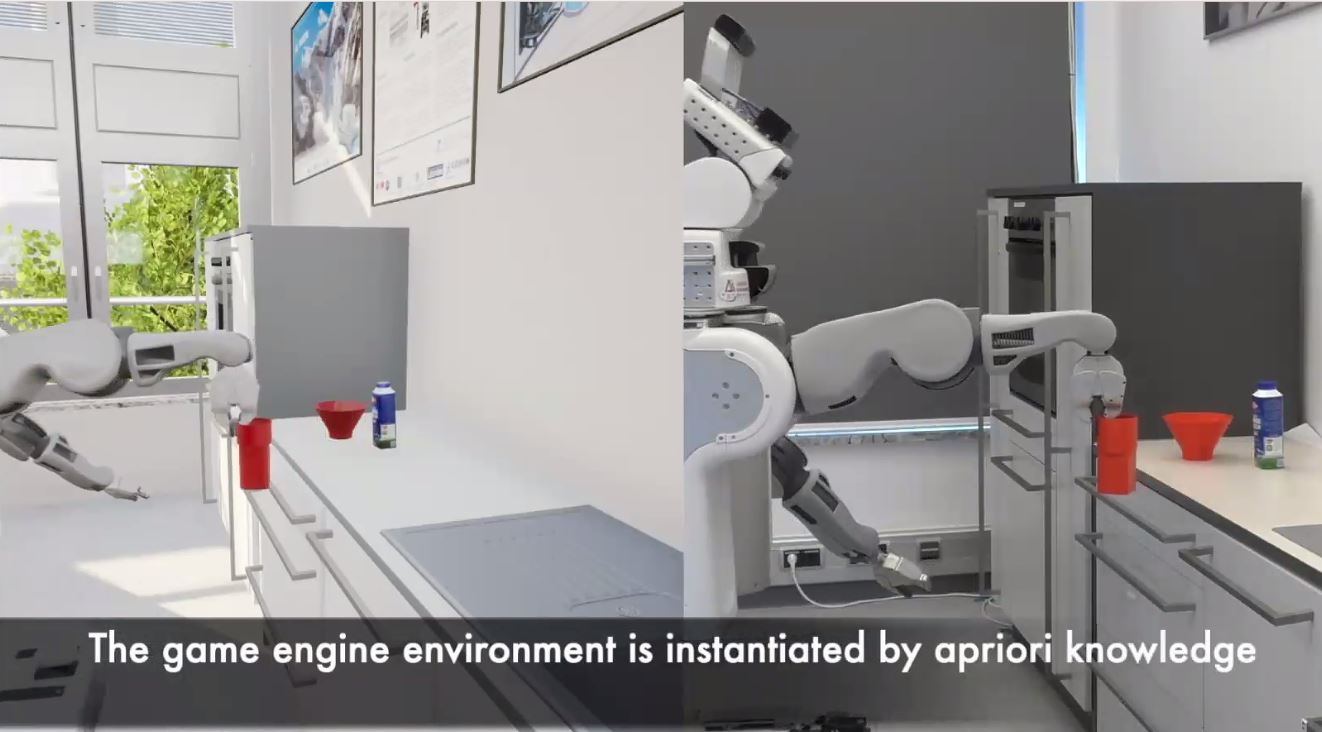
Clearly, it is a good idea to have a virtual simulation capability in your head, which can be used before executing an action in the
real world. Also, if you happen to be a robot.
Amazingly, some of the proposed techniques actually work out in the real world.
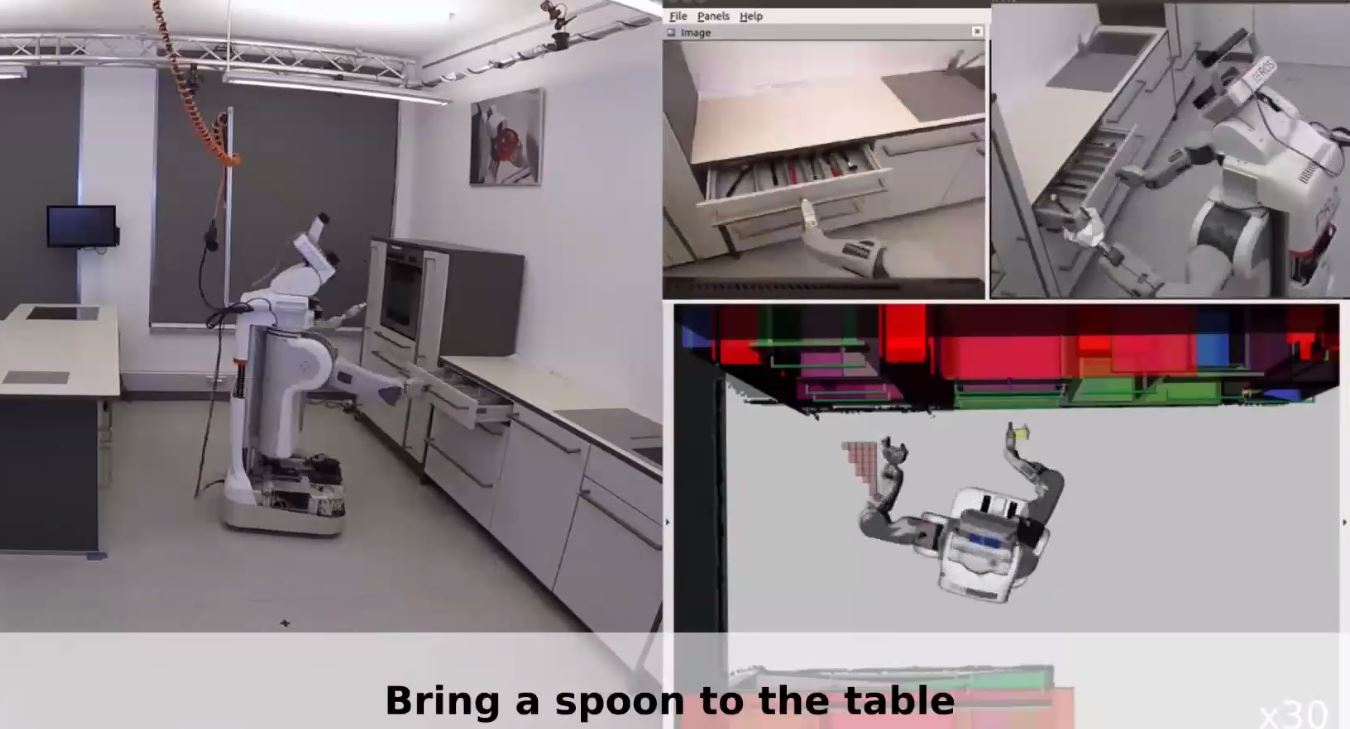
E.g. in a task such as bringing a spoon to a table (in a kitchen setting).
The Ease robots can even manage complex tasks,
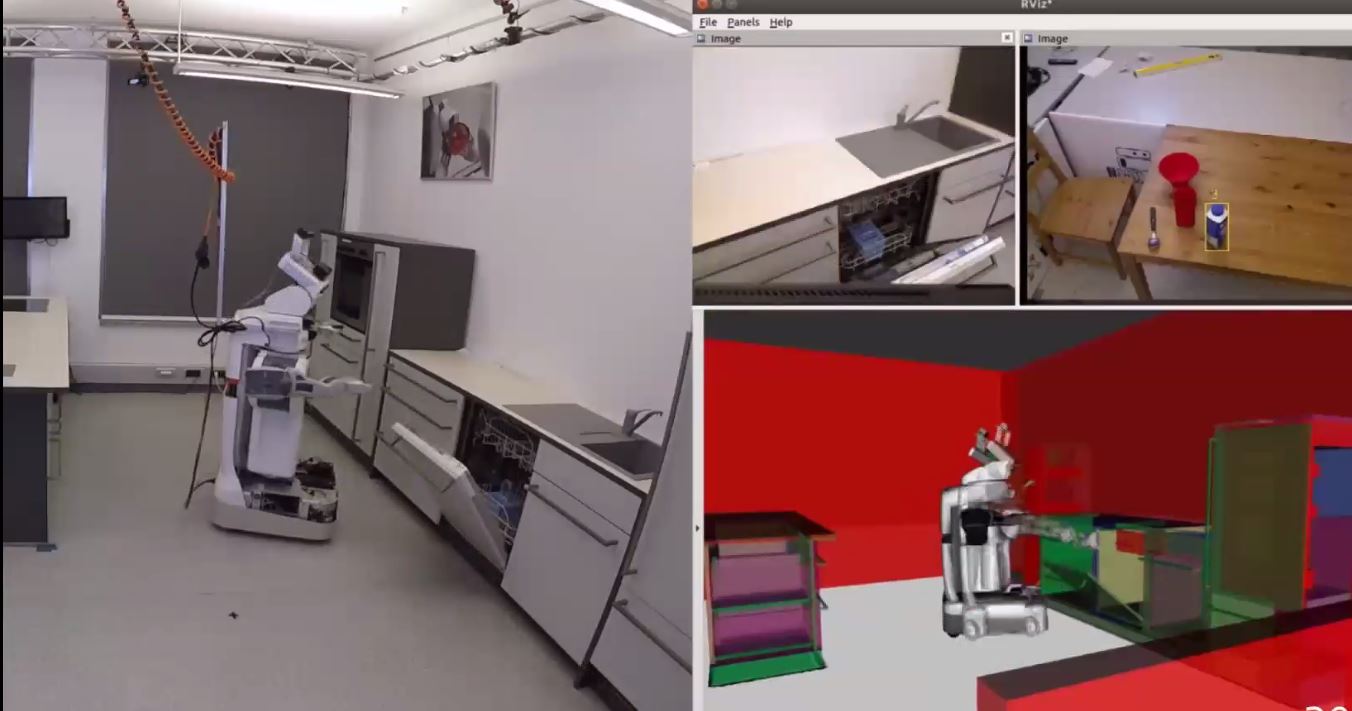
such as grabbing a glass, and putting it on the table, or in the dishwasher.
Putting a glass in the dishwasher is tricky though. And sometimes
the robots grabber gets stuck in the dishwasher... Oh dear.
Indeed, it is a complex world out there.
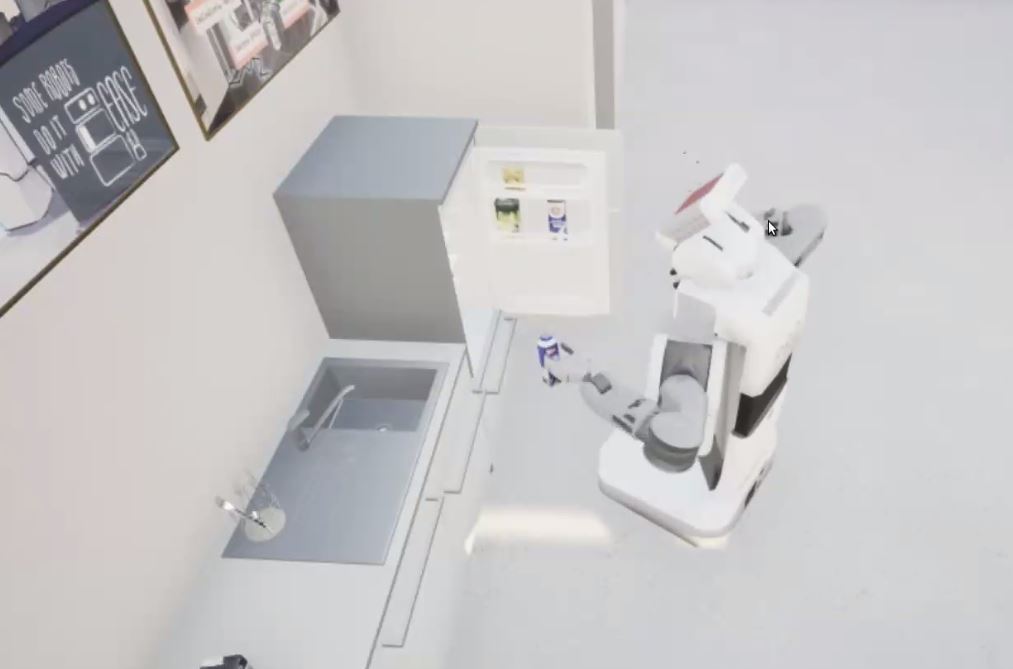
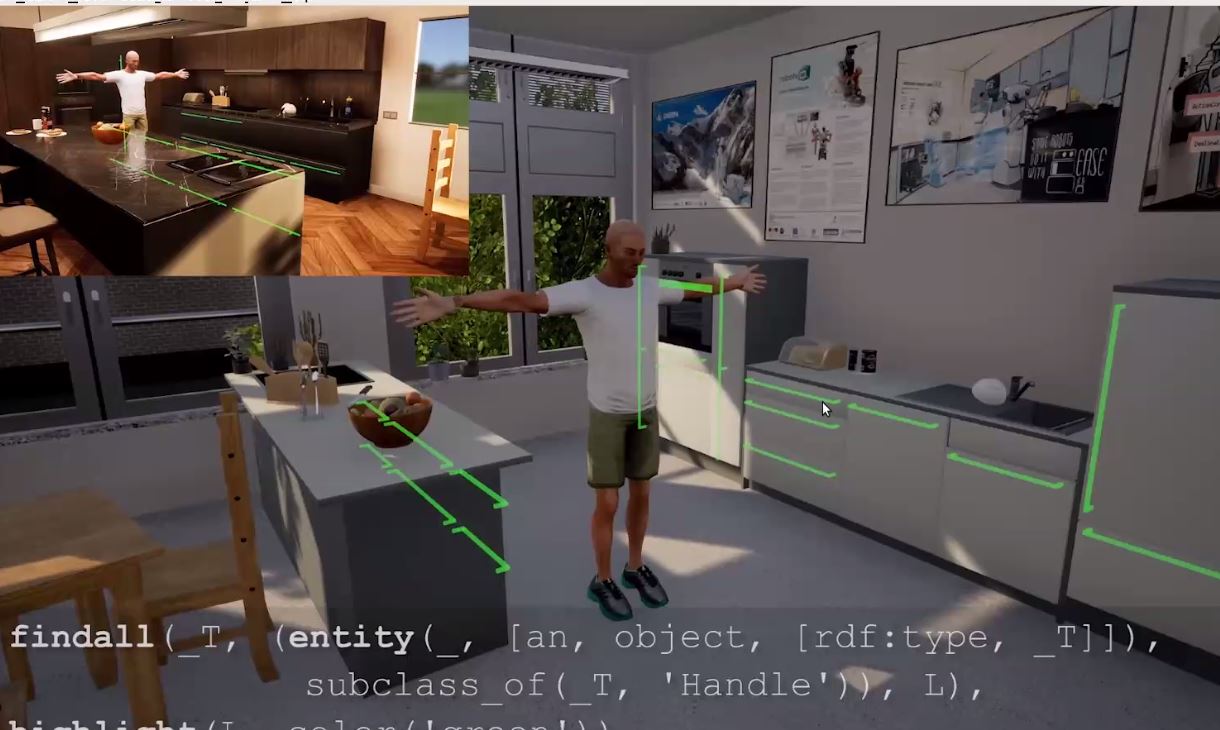
Marked with green, below, all of the things (in the kitchen) that the robot has concluded (in a simulation) that it can grab...
Indeed, humans evolved reasoning capabilities in order to move around in
the physical world (!?), and manipulate that world.
And, sure, in order to move around in the real world you need to learn a lot...
E.g. we know that used glasses should be put in the dishwasher,
and that only clean glasses can be put on the table.
Up next, teaching robots to do the same...
An awesome talk, indeed!
2.3.6. Conclusion.
Certainly, Icaart is a great conference. With many memorable talks.
And, I'm, certainly, looking forward to the ''live'' version in Lisbon next year!
Indeed, all in all, super interesting, and certainly thoughts and material to consider for future classes in Deep Learning...
Many beautiful talks thursday (Where I followed a number of talks in the afternoon).
3.1.1. Daily brain temperature.
Was especially fascinated by Nina Rzechorzek's talk about ''Daily brain temperature rhythms and their clinical value''.
As I must confess that I had never given the temperature of the brain much thought...
Certainly, I had not wondered about what kind of temperatures would be ''healthy'', and what kind of temperatures
would indicate that something is wrong.
Obviously, the temperature must be important, as neural function and network activity might be influenced by temperature...
Interestingly - when it comes to what is healthy, and not so healthy - the precise, exact, brain temperature might not
be as important, as the presence of a daily variation!
That is: The presence of a daily variation is important for survival. More so than a certain temperature!
A lack of this daily variation is an indicator that something is wrong, and will be followed with
a higher mortality in such patients.
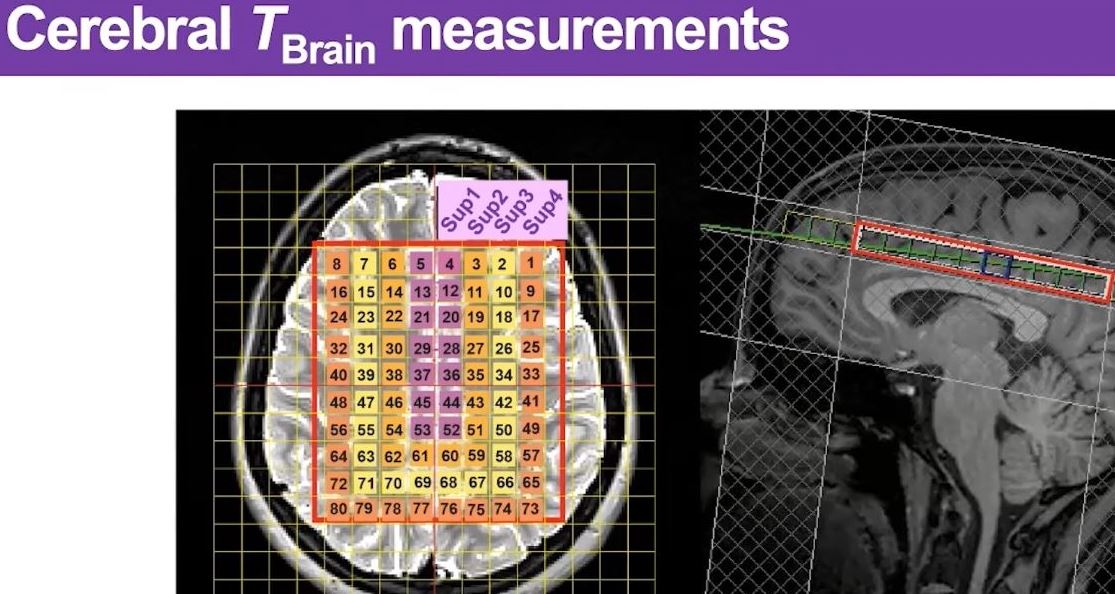
4D maps of ''human brain temperatures'', ''Heatwave'', can found on their labs homepage, here.
Elephants, cats, flies, and even worms sleep. It is a natural part of many animals' lives. New research from Caltech takes a deeper look at sleep in the tiny roundworm Caenorhabditis elegans, or C. elegans, finding three chemicals that collectively work together to induce sleep. The study also shows that these chemicals—small proteins called neuropeptides that regulate neural activity—each control a different sleep behavior, such as the suppression of feeding or movement [1].
Jellyfish don't have brains,
or even anything more than a rudimentary nervous system, but jellyfish apparently do have bedtimes...[2].
As Poe noted: ''Jellyfish might be dreaming, but then who knows what they are dreaming about...''.
Clearly, sleeping is important, and everyone is doing it...
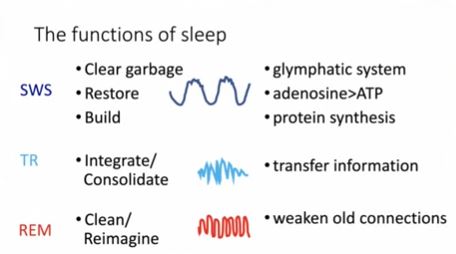
In Poe's word: It is a time for you to throw the ''trash'' out, after a day of being awake.
It is a time for ''renovation'' and ''construction'' and making ''repairs'', in the brain.
Consolidate memories, and clear temporary memory (in REM sleep in order to avoid saturation).
I.e. sleep is a time to :
Clear ''garbage''.
Restore.
(Re)build.
The cycles of sleep are also important. In Poes words: ''It's like a washing-machine, all the elements need to be there... Well timed and coordinated.''.
Indeed, what happens if we dont get enough sleep?
Cranky, short tempered.
Inflexible, hard to handle.
Impulsive and accident prone.
Prone to infections and illness.
Memory not as good.
Less able to abstract.
More anxious/depressed/angry.
We need our sleep!
A beautiful talk!
And the end of two great days. 16 CPD, that is...
4. The Idea of the Brain.
After the super exciting Brain Conference, I dived into the equally exciting brain-book ''The Idea of the Brain'' by Matthew Cobb.
Where we take a journey through the centuries to explore what people have thought about the brain, and how it works.
As many others before him, and after, the great Leibniz, found it difficult to explain mentality in terms of the brain (Mill argument):
Moreover, we must confess that perception, and what depends on it, is inexplicable in terms of mechanical reasons, that is, through shapes and motions. If we imagine that there is a machine whose structure makes it think, sense, and have perceptions, we could conceive it enlarged, keeping the same proportions, so that we could enter into it, as one enters into a mill. Assuming that, when inspecting its interior, we will only find parts that push one another, and we will never find anything to explain a perception. And so, we should seek perception in the simple substance and not in the composite or in the machine [3].
But will we ever really know what the brain is and how it works? Or will we forever be ''ignoramus et ignorabimus'' (''We do not know and we will not know'').
Was Leibniz right, that even if we could see the innermost working of the brain, we would still not (really) ''understand'' how we perceive and know?
The canadian neurosurgeon Wilder Penfield (1891 - 1976) contributed a great deal to our understanding of the localization of brain function:
Penfield stimulated the brain with electrical probes while the patients were conscious on the
operating table (under only local anesthesia), and observed their responses.
In this way he could more accurately target the areas of the brain responsible, reducing the side-effects of the surgery.
This technique also allowed him to create maps of the sensory and motor cortices of the brain
(see cortical homunculus) showing their connections to the various limbs and organs of the body.
These maps are still used today, practically unaltered [4].
Apparently,memories could be evoked by electrical stimulation of very precise areas.
Later, other projects have pressed forward to describe maps and connections in the brain.
Macro-connections between brain regions, meso-connections between neuron types, micro-connections between individual neurons and
nano-connections at synapses.
All giving us a little bit more of the story of what might be going on.
Still, the complexity of it all is (of course) mind-boggling.
In the words of Sophie Scott:
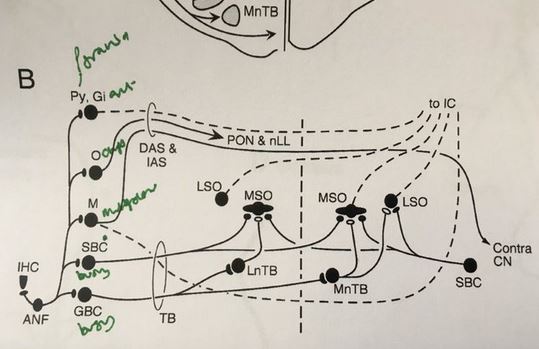
Spent today reading abt subcortical auditory processing. Like this bastard. ONE NEURON AWAY from the cochlea. All hell breaks loose - 8 different cell types, 5 different parallel processing streams, all preserving tonotopy. And that’s JUST THE START. How do we ever hear anything! [5].
fMRI might give us images
of what is going on in the brain. But only very high level images, that might not tell us all that much about what is really going on in the brain (at the level of neurons).
I.e. Nikos Logothetis has esimated that in each pixel (voxel in fMRI jargon)
of an image of the brain there are 5.5 million neurons, between 2.2 and 2.5x10^10 synaspses.
22 km of dendrites and 220 km of axon wiring.
In the words of authors Legrenzi and Umilta:
The idea that ''the brains can be subdivided into a large number of portions (areas) with different functions, which are independent of each other, and that cerebral blood flow can be used to obtain information about mental functions'' may seem a risky business.
...
Variations in blood flow, which have a latency of 5 seconds or more (i.e. it takes at least 5 seconds to get started). Whereas, human thought on the other hand, has a latency of just a few tens of milliseconds [6].
Indeed, it is all somewhat confusing...
In the words of Matthew Cobb:
The cerebellum is a denser structure than the cortex, with many more neurons,
and yet, it is generally not considered to be involved in the processes of consciousness. This enigma highlights
the fact that no one can explain why the activity of one set of neurons produces consciousness, whereas that of another does not.
The american neuroscientist Benjamin Libet
proposed a theory of a ''conscious mental field'' to explain how the mental arises from the physical brain:
Many functions of the cortex are localized, even to a microscopic level in a region of the brain, and yet the conscious experiences related to these areas are integrated and unified [7].
So, this needs to be addressed...
To others, his proposal would take us back to dualism, and away from testable theories...
Well, well...
Currently:
Research suggests that human consciousness is associated with complex, synchronous interactions between multiple cortical networks. In particular, the default mode network (DMN) of the resting brain is thought to be altered by changes in consciousness, including the meditative state [8].
With more (research) to come in the future.
An awesome book, indeed.
5. Conclusion.
Indeed, the end of 3 wunderbar online conferences. With many memorable talks.
Still, looking forward to the ''real'' on-site versions of these conferences.
Next year, hopefully!