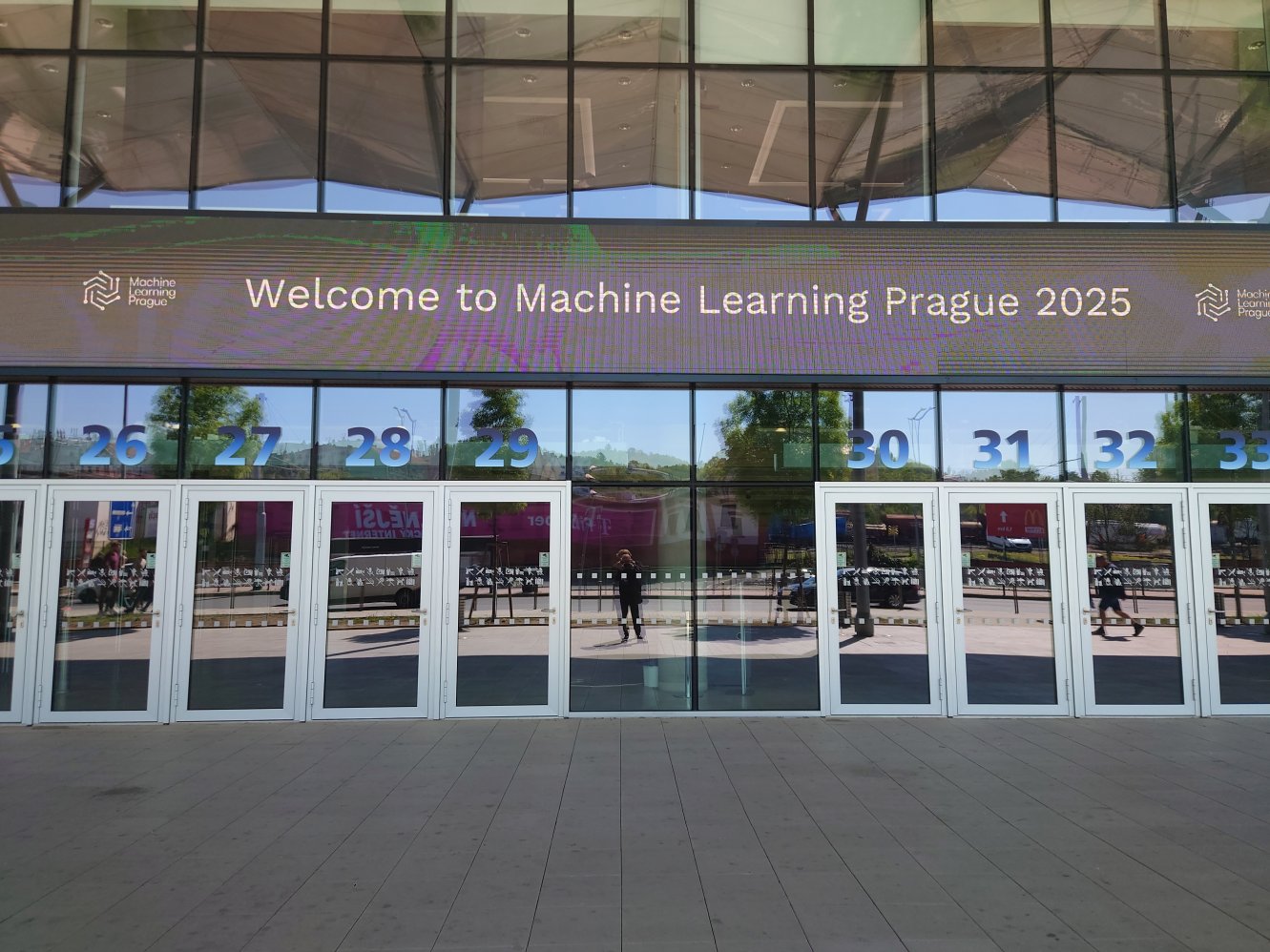
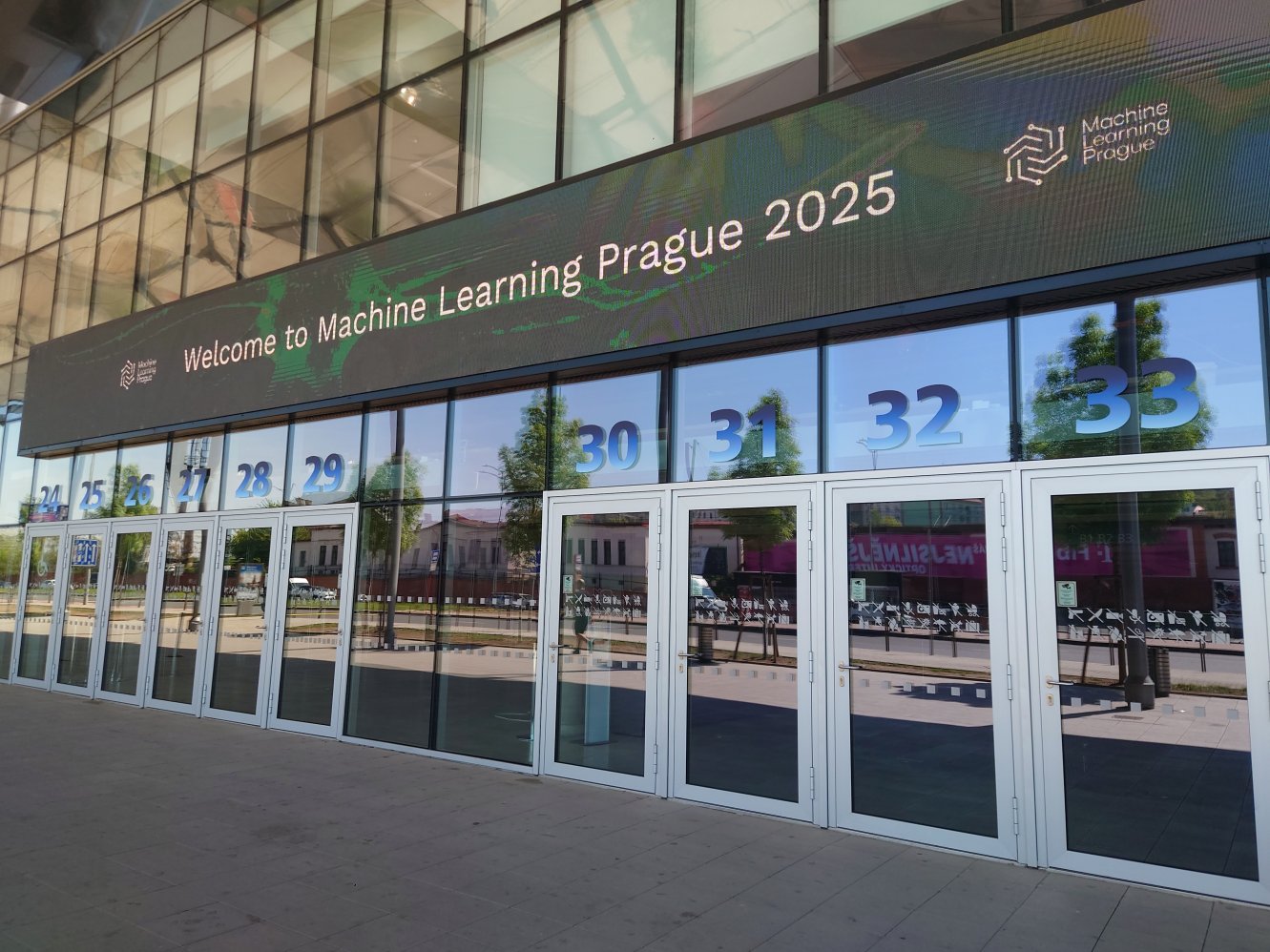
I had the great pleasure of taking part in ML Prague 2025 (The practical conference about ML, AI and Deep Learning applications). April 28 - 30, 2025. Prague.
Tried to follow as many talks as possible. But, well, these notes are, of course, in
no way, shape or form complete...
Rather, these notes were written on conference nights, as my way of
keeping track of the events that I attended. And as a way of storing links and references for future reference.
Below you will find impressions from the conference, and links for further reading.
1. MlPrague 2025.
2. Workshops. Monday, April 28th.
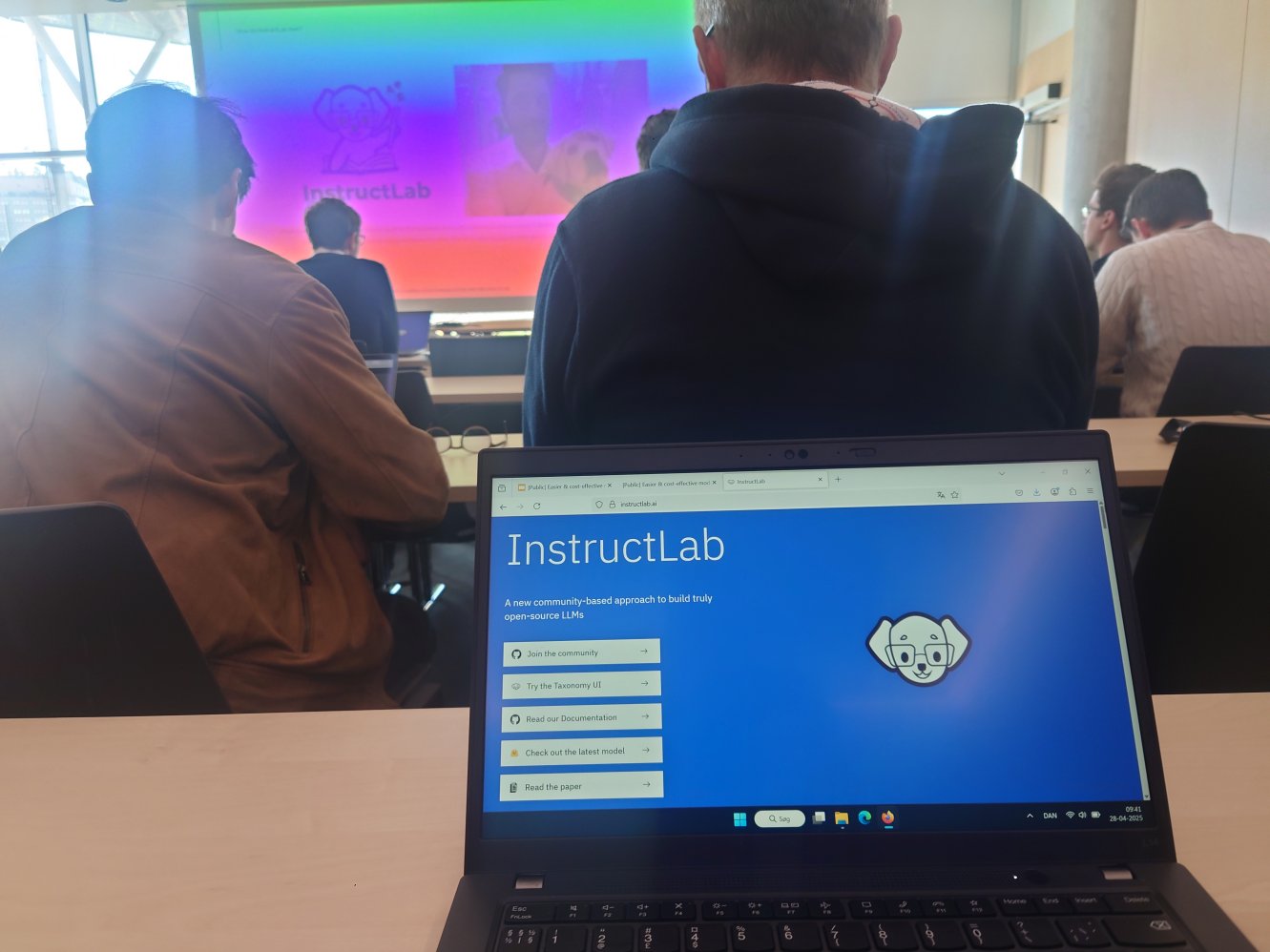
2.1. InstructLab: Plug your knowledge into a model easily.
How to easily extend Large Language Models with your data and run them on your infrastructure. Also: Locally on your laptop.
InstructLab is an open source project for enhancing large language models (LLMs) used in generative artificial intelligence (gen AI) applications. Created by IBM and Red Hat, the InstructLab community project provides a cost-effective solution for improving the alignment of LLMs and opens the doors for those with minimal machine learning experience to contribute [1].
According to Redhat:
The simplicity of InstructLab's structure makes it straightforward for developers to identify gaps and fill in knowledge and skills where necessary.
Indeed, pretty neat.
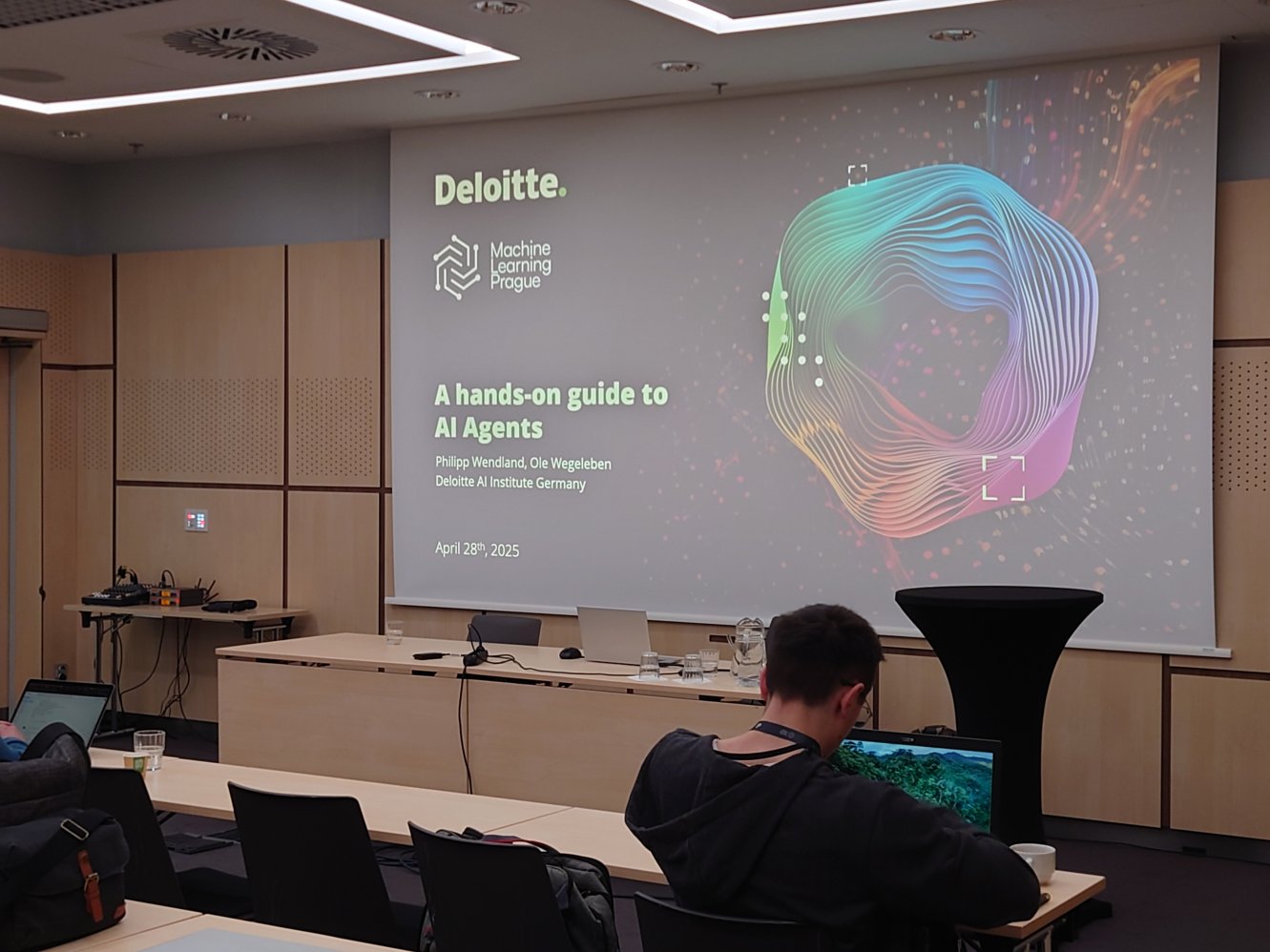
2.2. A practical guide to LLM-based AI agents.
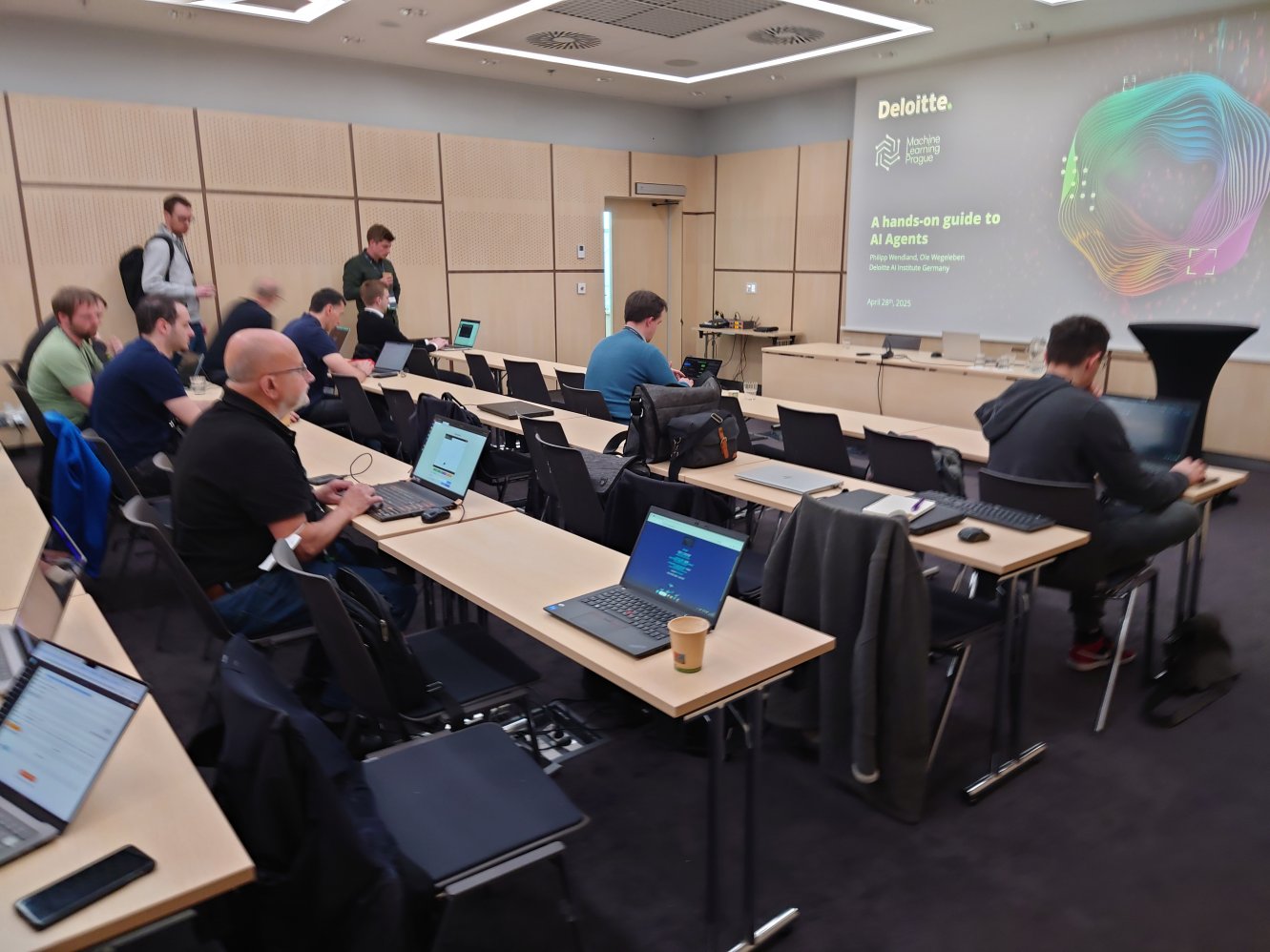
Next up was the afternoon workshop ''A practical guide to LLM-based AI agents''.
With Philipp Wendland, Deloitte Consulting.
From the workshop introduction:
This hands-on workshop is designed to provide participants with an in-depth practical understanding of how to leverage Large Language Models (LLMs) to create intelligent AI agents.
Making an agent is pretty easy...
E.g.
Create_itinerary_prompts =
Act as a professional travel planner. I'm staying in cityX
During the day I will attend seminars and talks,
but in the evening I'm mostly free. Create a list of items that
could potentially be interesting. Be creative.
Plan an itinerary for must-see things in cityX for Monday and Tuesday night.
A brilliant workshop, loads of fun, and with many great insights.
Awesome!
2.3. End of day.
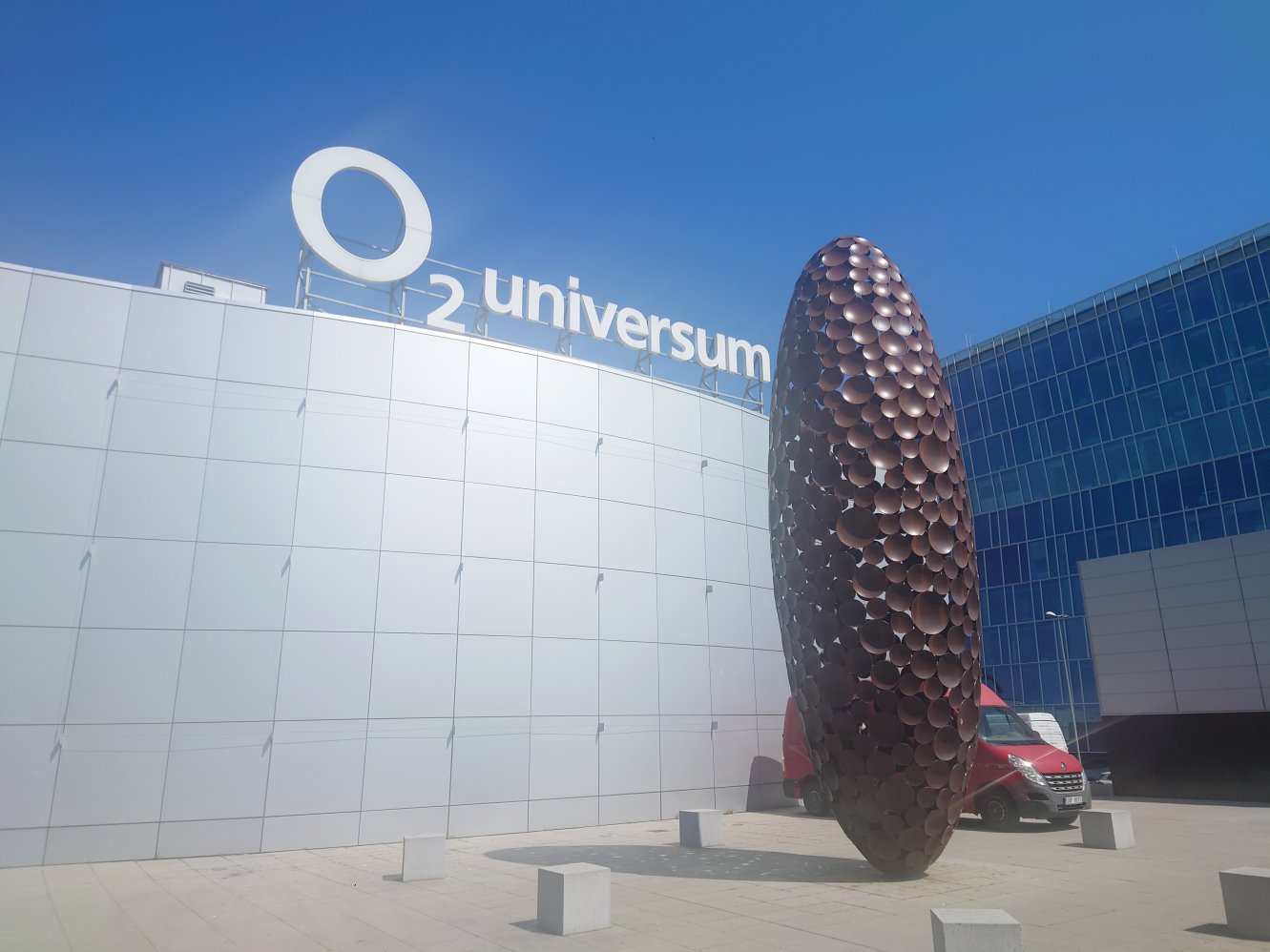
(Monday) Outside the O2 Universum congress center.
O2 Universum entrance.
3. Presentations Tuesday. April 29th.
3.1. Data, your worst enemy?
Johan Loeckx, Vrije Universiteit Brussel, talked about
''Data, your worst enemy''.
In this talk we were asked to look at
a reasonably normal machine learning task. Where we have a
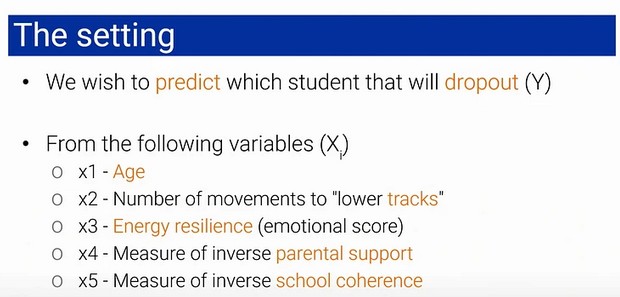
dataset about students, and their risk of dropping out of an education.
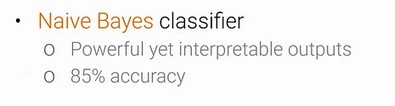
A Naive Bayes techique might help us ''solve'' the problem:
With a good accuracy of 85%.
Well, there might be problems in this scenario...
Problems...
Well, it might not be legal to collect data on X3...
(Due to regulations about collecting that kind of information).
But, well, we might get 90% of that information from
X2, X4 and X5 anyway...
So, we move on ...
Perhaps, we then assume that features are independent,
and that all features contribute equally to the outcome.
Well, this might not be the case...
Then we might assume that (outcome) classes are well balanced (But they might not be. E.g. there might be only 10%
dropout in the data).
And what if teachers have a significant impact on how the story goes..?
Well, this is not stated (captured) in the data...
And, we implicitly assume, that a good prediction
would lead to a positive impact. But giving teachers
a prediction about a student could have the opposite effect...
Making the teachers think that no effort, from them, is required...?
Indeed:
AI and data science can bring a lot of value,
but the trustworthiness and value of methods and data can be hard
to assess...
So, there is, indeed, a need for rigorous methodologies & tooling.
Indeed, an excellent talk.
3.1. Lies, Damned Lies and GenAI.
Jon McLoone, Wolfram Alpha, talked about
''Lies, Damned Lies and GenAI''.
Back in 2023, Jon McLoone talked about how to combine LLMs with WolframAlpha:
Combining chatGPT with WolframAlpha gives you what you need.
The possibility to handle unstructured data, LLMs strengths,
with calls to Wolfram for fact checking.
This talk was a little more blunt. E.g. the word hallucination was here replaced with the word lie.
Well, GenAI is trained on real world (unreliable) data...
So, why does GenAI lie?
Trained for plausibility, not correctness.
Compression of the whole worlds knowledge
(I.e. if you compress information, its like compressing an image, some parts of the original information will obviously be lost...).
Guard rails might tell them not to give the correct answer to certain questions.
Trained on real world (unreliable) data.
No actual understanding.
So, how to get more ''truths'':
Database queries.
Better searches (of the internet,
usings RAGs... etc).
Transformations
(Finding answers in existing documents by reordering and transforming).
And a good place to find actual truths is, of course, in WolframAlpha...
So, combining LLMs (for a natural language interface) with WolframAlpha (Symbolic AI)
will be a good way to get some actual truths...
Indeed, again (this year) an excellent talk.
3.2. Protein Structure Prediction for Drug Development: Focus On Alpha Fold 3.
Joseph Pareti talked about
''Protein Structure Prediction for Drug Development: Focus On Alpha Fold 3''.
In Joseph Pareti's talk we were given an overview on how an AI-system transforms amino acid sequences into accurate three- dimensional structures (Protein structure predictions that are now a cornerstone of modern drug discovery).
The primary focus here is on AlphaFold 3's architecture, illustrated through simplified implementations of its key components - the Pairformer and Diffusion modules. These demonstration programs provide practical insight into how the system transforms amino acid sequences into accurate three-dimensional structures [2].
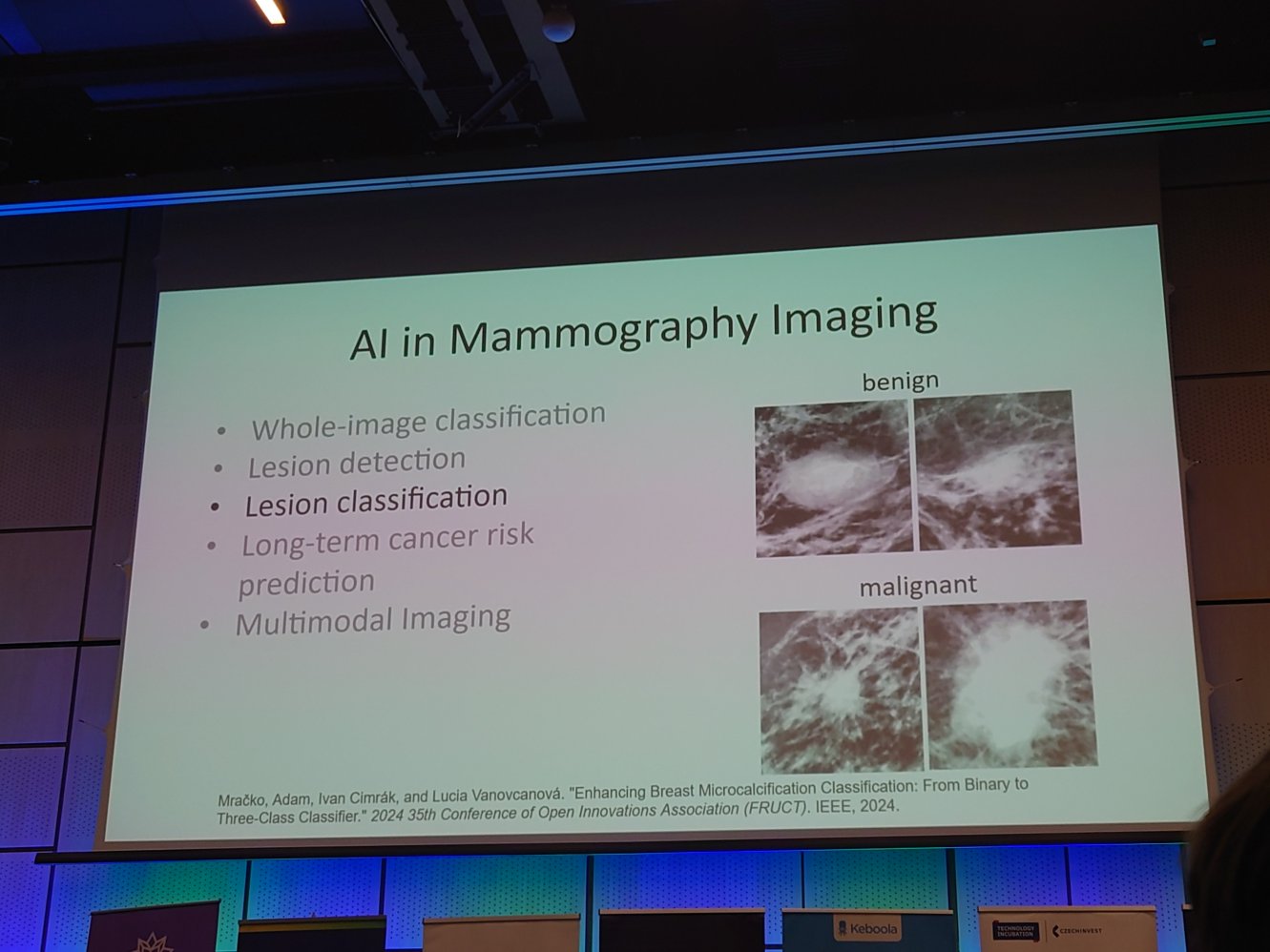
Ivan Cimrák talked about
''Mammography solved by AI? ''.
In the talk, Ivan Cimrák raised the question, ''If AI can beat radiologists in benchmarks, why isn't AI running our screening programs''.
I.e. introducing an AI tool might result in fewer missed cancers, but trusting a ''black box'' technology is not something clinicians like to do... Certainly, the AI is not responsible. The AI is only an advisor, not responsible legally and ethically.
Still, letting the AI help clinicians results in more detected cancers. I.e. in a standard double reading (humans) vs. AI, the AI got better results. Better still was a setup where a human worked together with an AI. Even better was a setup with a double reading (humans) and an AI.
3.4. End-to-End Stroke Imaging Analysis.
Alessandro Crimi, AGH University of Krakow, talked about
''End-to-End Stroke Imaging Analysis. Using Effective Connectivity and Interpretable Artificial Intelligence''.
In this talk a new tool was presented.
A tool that should be able to help:
Provide insights into disrupted brain networks, elucidating biomarkers for stroke classification and enhancing clinical interpretability.
I.e.
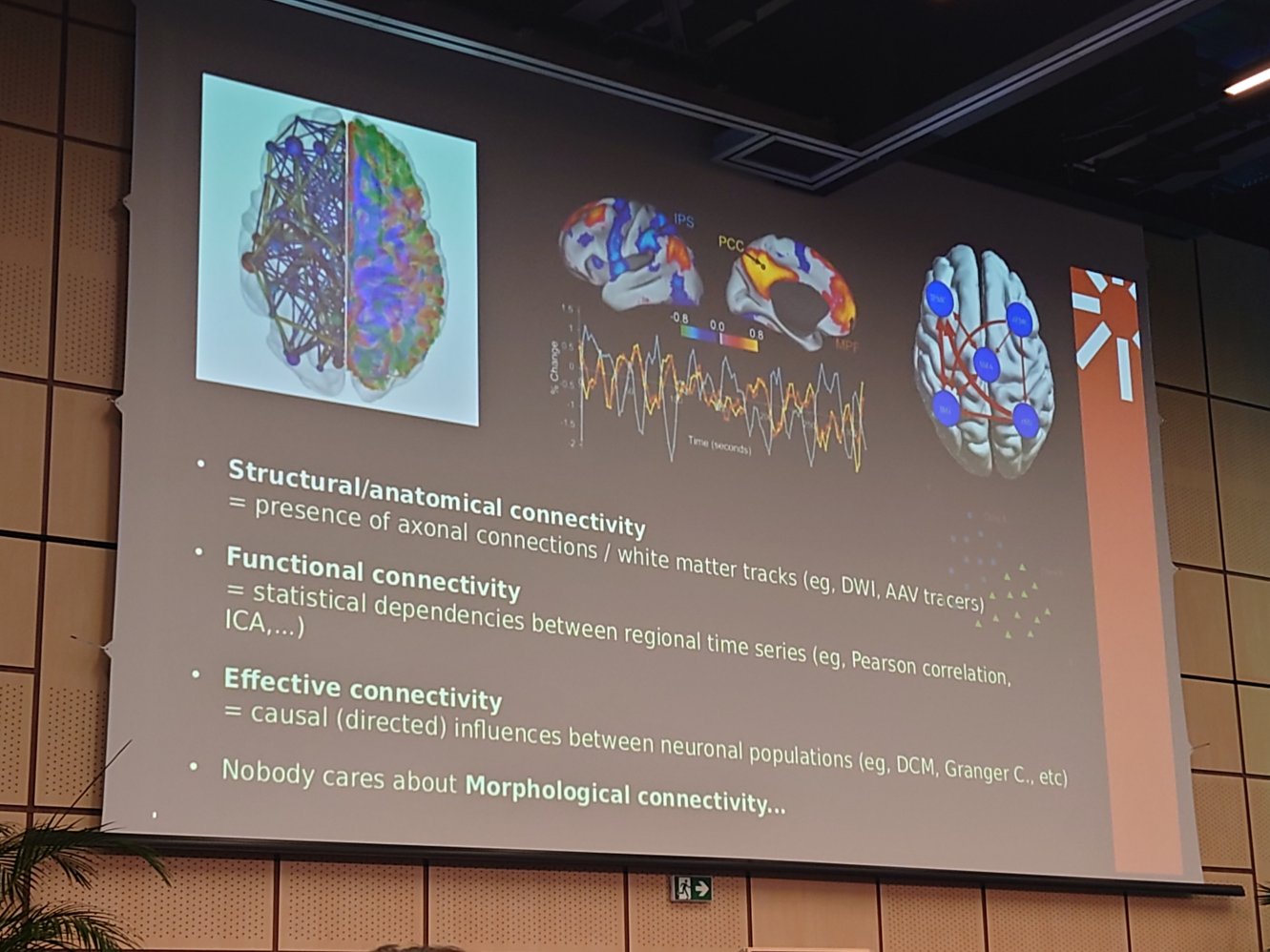
This is a machine learning pipeline combining reservoir computing and directed graph analysis to model brain connectivity in stroke patients using MRI data.
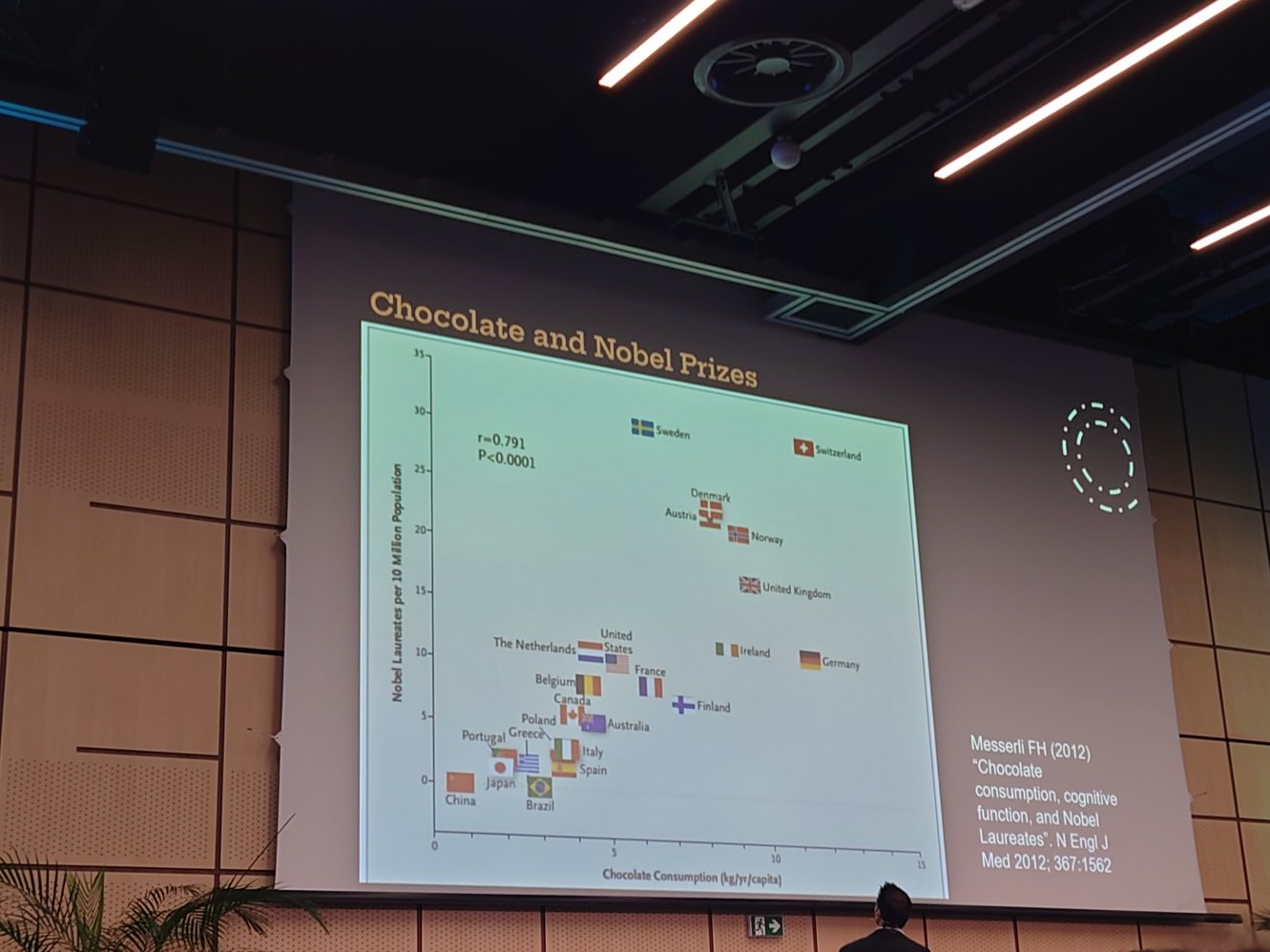
Starting with a note that ''correlations'' in the brain is a tricky thing.
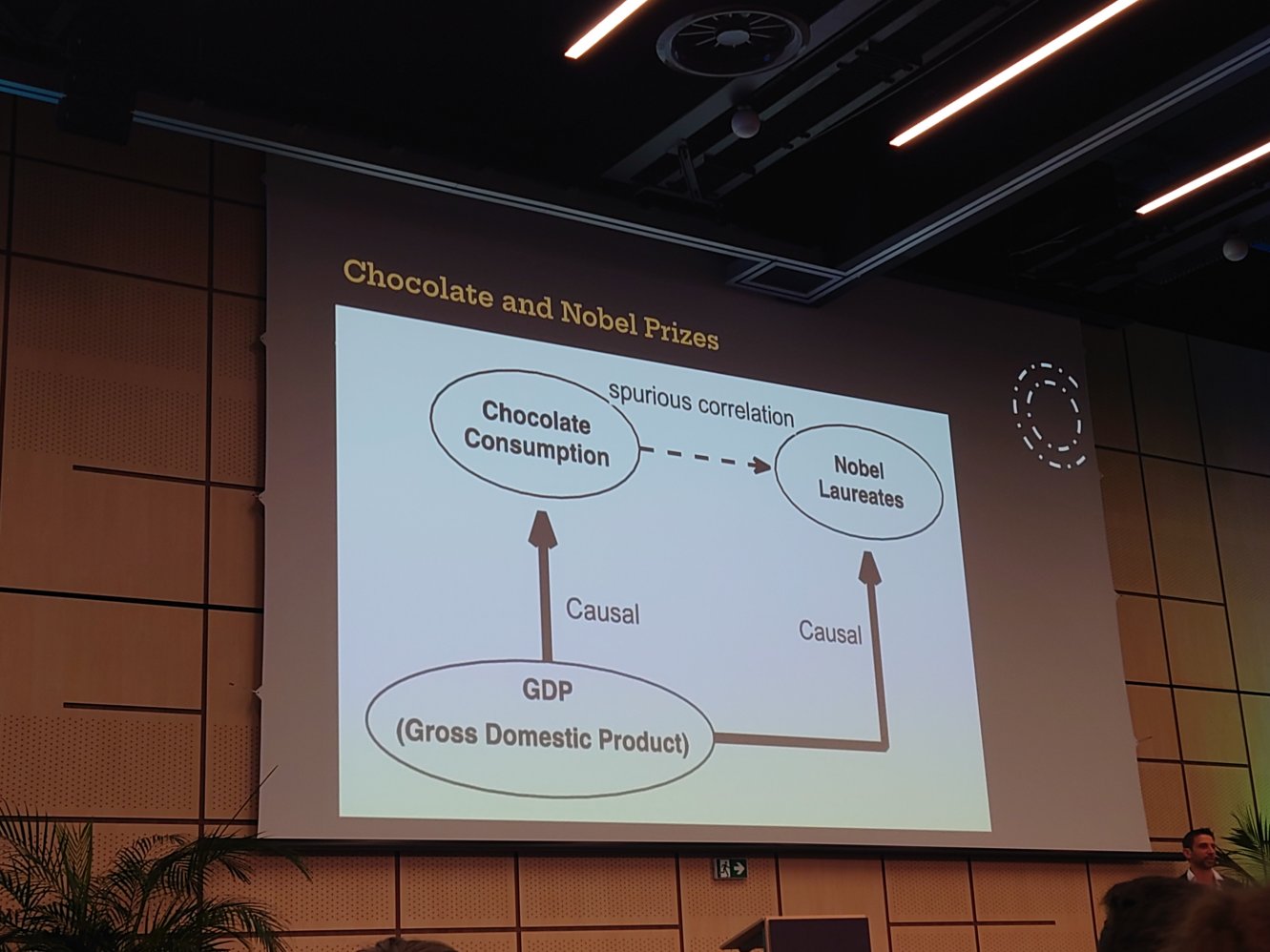
E.g. plotting consumption of chocolate with number of Nobel prize in a country apparently
tell us, that the more chocolate you eat the more Nobel prizes you win...
But, not so fast...
A better explanation is that a higher GDP allows you to buy more things, including chocolate,
and a higher GDP also allows you to invest more in science, which will eventually show up as more Nobel prizes won.
Obviously...
Which, in the context of the brain, should warn us that causality is not so easy.
Certainly, it wasn't difficult to convince us, the audience, that analyzing e.g. stroke-disrupted networks in the brain is a difficult thing...
Still, here it was explained, that using Reservoir computing (a machine learning approach that leverages dynamical systems, called ''reservoirs'', to process time-series data efficiently) can give us non-linear methods that will give an enhanced understanding of stroke effects (I.e. explainable AI for brain connectivity analysis).
Eventually, perhaps making it possible to better understand the causes of certain symptoms (problems). And who knows,
perhaps come up with treatmens (Stem cell treatments were mentioned here, as far as I could understand. Promoting the repair response of diseased, dysfunctional or injured tissue using stem cells or their derivatives).
For more, see e.g. effconnpy
(A Python library for advanced causal inference and connectivity analysis in time series data).
All very interesting. A fascinating talk, indeed.
3.5. Demos. Tuesday. April 29th.
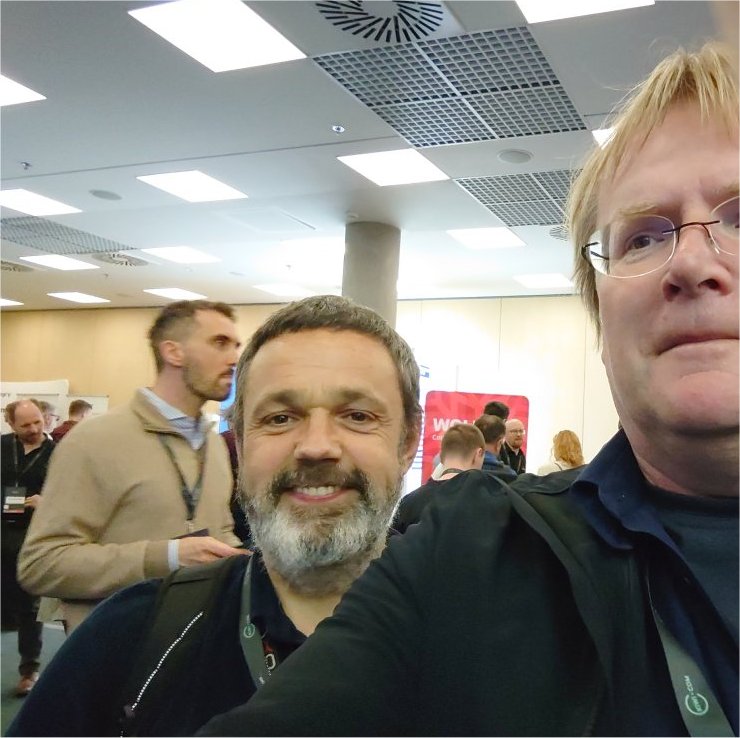
Me and Ivan (Povalyaev).
Meeting up again at MlPrague (April 29th, 2025).
3.6. Attentive Interpretable Models for scalable Content Recommendation in Mobile Games.
Martin Dlask, King, talked about
''Attentive interpretable models for scalable content recommendation in mobile game''.
Here, in this presentation, we introduce a novel approach for content recommendation using attentive networks.
...
I.e. (this is a) practical advice on ensuring a robust implementation of recommender systems.
Meaning:
We want to adjust content order to maximize fun.
That is, hope to:
Better understand player preferences.
Display more relevant content.
Increase players engagement, retention (use),
and social interactions.
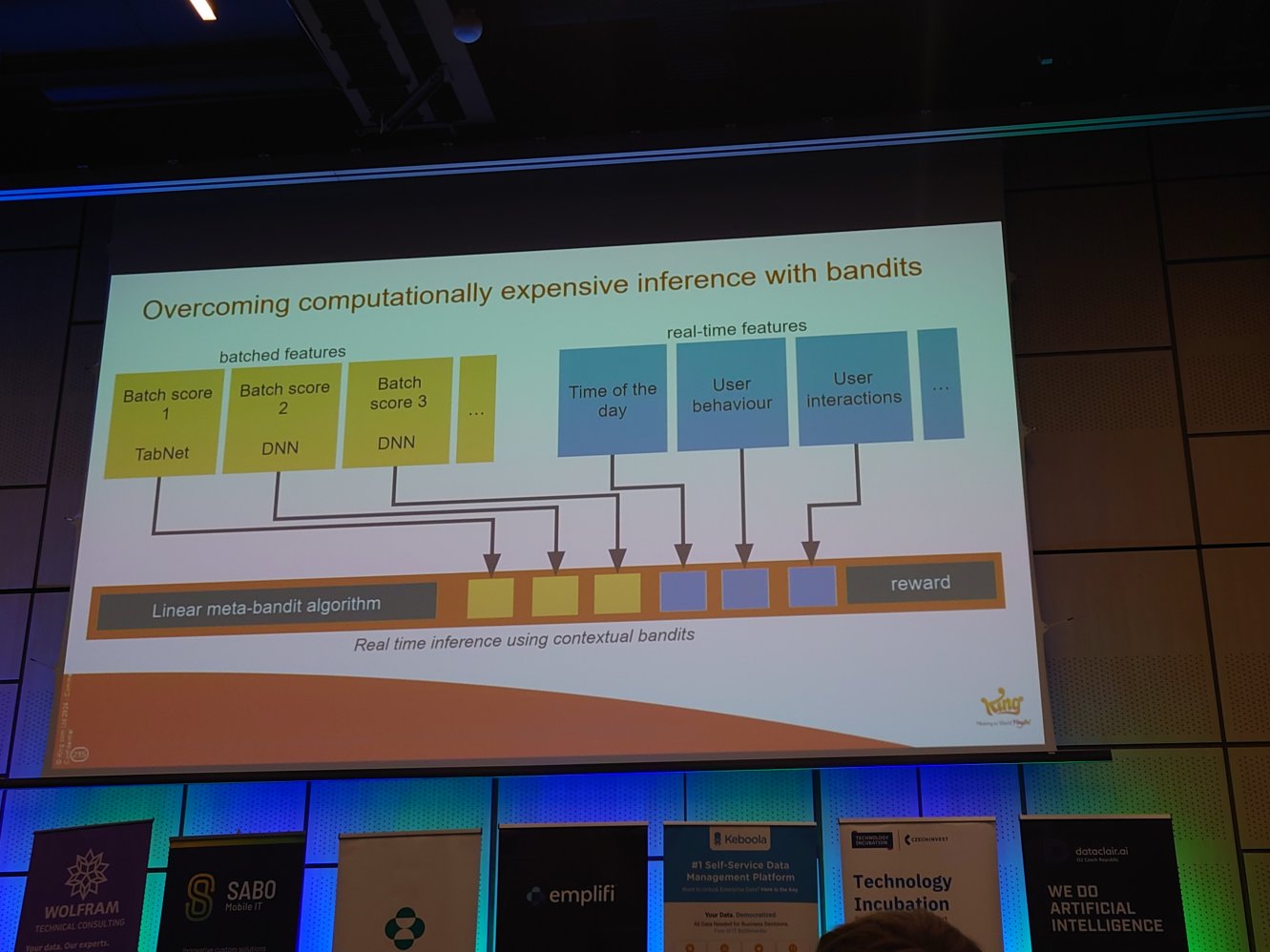
One technique to use is contextual bandits
(Reinforment learning framework that):
Balances exploration and exploitation.
Is often used with linear models for inference evaluation.
Can be used as a ''meta-bandit'' for adaptive decision making.
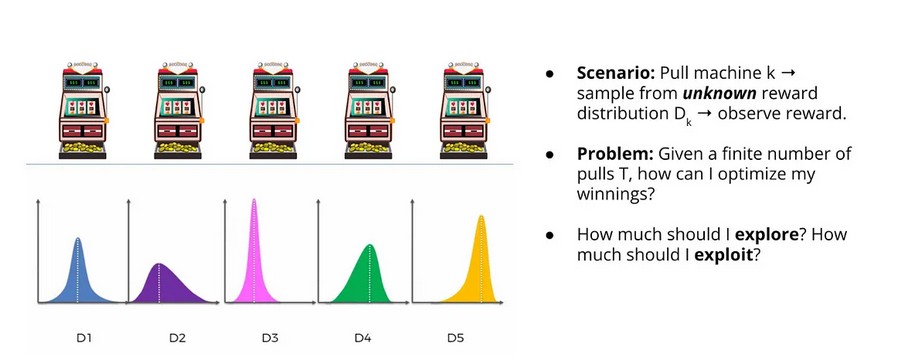
Multi-armed Bandits.
To start with, an agent is fed with the details of a users features.
Agent looks at the features and makes the recommendation for the user.
As a user makes the (gets the) recommendation, cumulative reward is computed for every user.
(And) Now the agent will start making the recommendation for the second iteration again.
And we will monitor the value of average returns at the end of each iteration [4].
Unsurprisingly, afterwards, people wanted to know about things like:
How do you balance player engagement with avoiding manipulative design?
What is your perspective on your systems potential for (possibly) increasing dopamine dependency in children?
Well, here, the answer was that is all done in order to improve player experience (The big ''alignment discussion'' had to wait for the coffee break...).
3.7. The Evolution of Virtual Buddy: From Concept to Deployment.
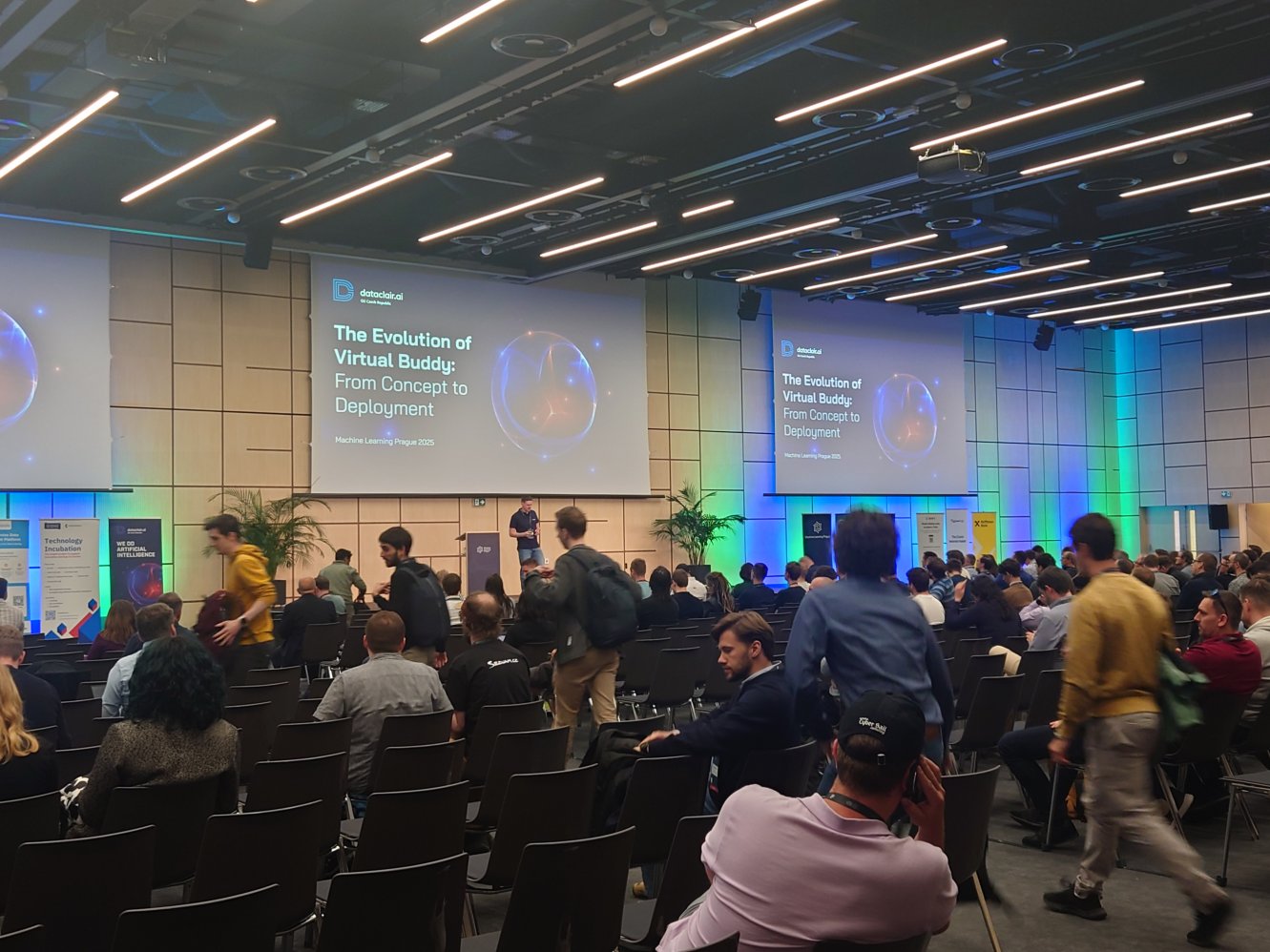
Ondřej Finke talked about
''The Evolution of Virtual Buddy: From Concept to Deployment''.
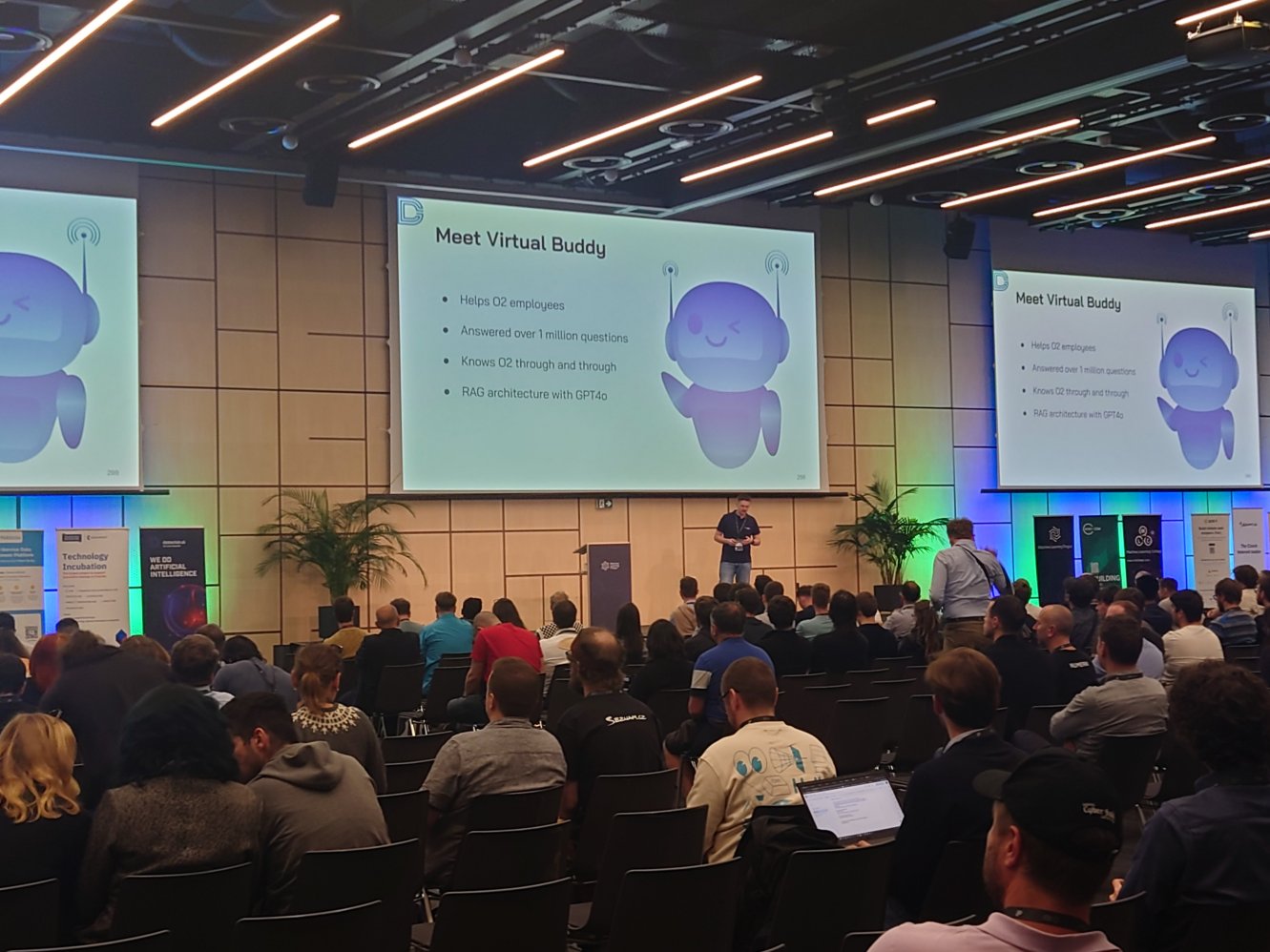
As a ''RAG-system'', ''Virtual Buddy'' is:
Built on O2's knowledge base, it is designed to support
customer service representatives in addressing customer requests and needs.
Indeed:
The speed of customer services increased.
The quality of the customer service increased.
Gave a unified knowledge base.
So, all good.
RAGs are, indeed, sometimes just the right thing to go for!
3.8. Intelligent Manufacturing Assistant Bot.
Alexander Jesser talked about
''Intelligent Manufacturing Assistant Bot''.
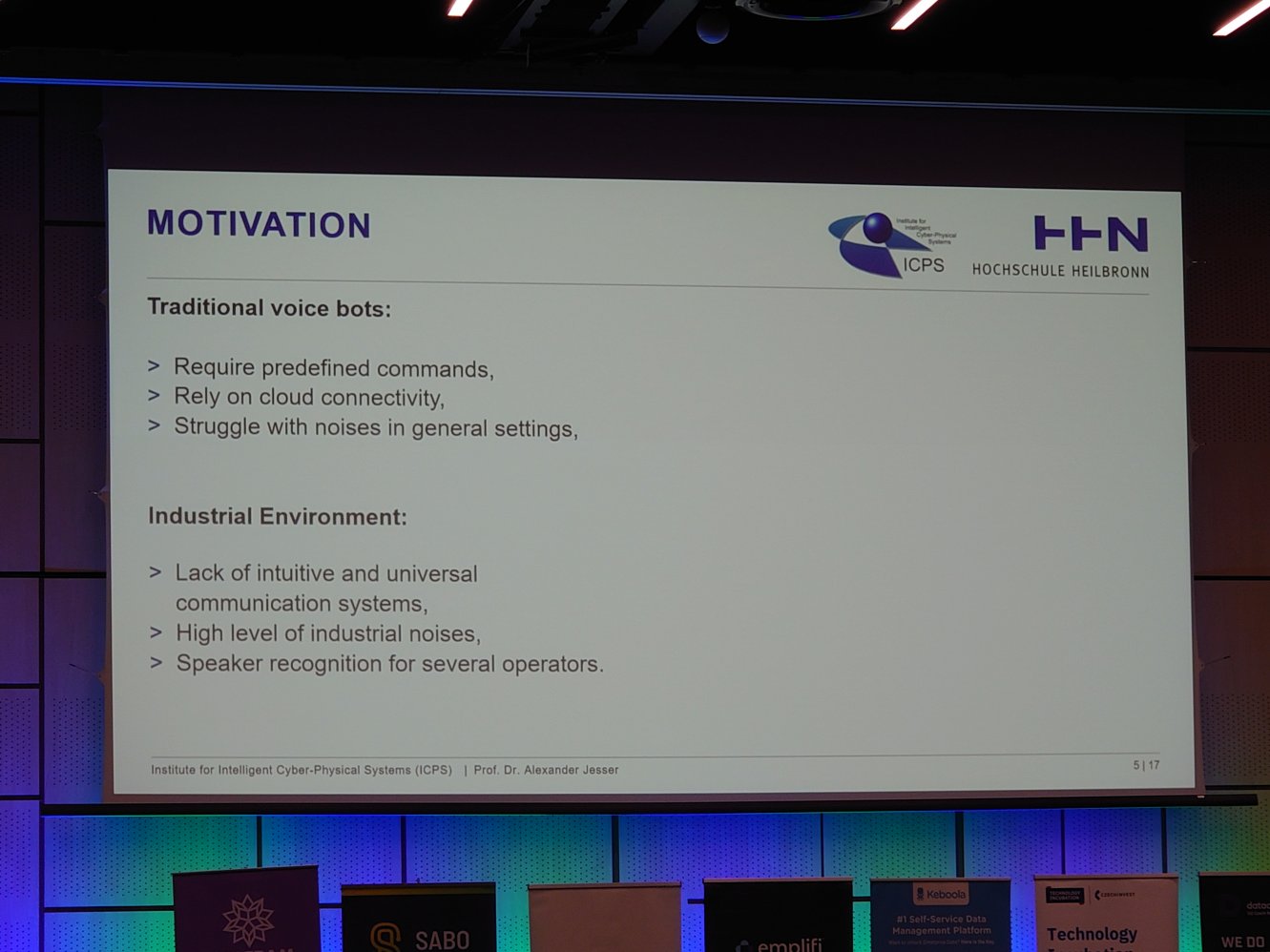
Interactive voice bots are becoming increasingly common in consumer devices and have great potential to support operators and service personnel in operating complex machines.
Still, Voicebots, are not, or hardly ever, used in industrial production environments (The ambient noise level and process reliability are major hurdles).
Still, here, a solution was presented:
Where intelligent noise cancellation is applied, so that the speech signal can be found under a wide range of industrial ambient noises.
Very useful, and clever, engineering, certainly.
And, an interesting presentation for sure.
4. Presentations Wednesday. April 30th.
4.1. Adversarial attacks on the largest language and vision models.
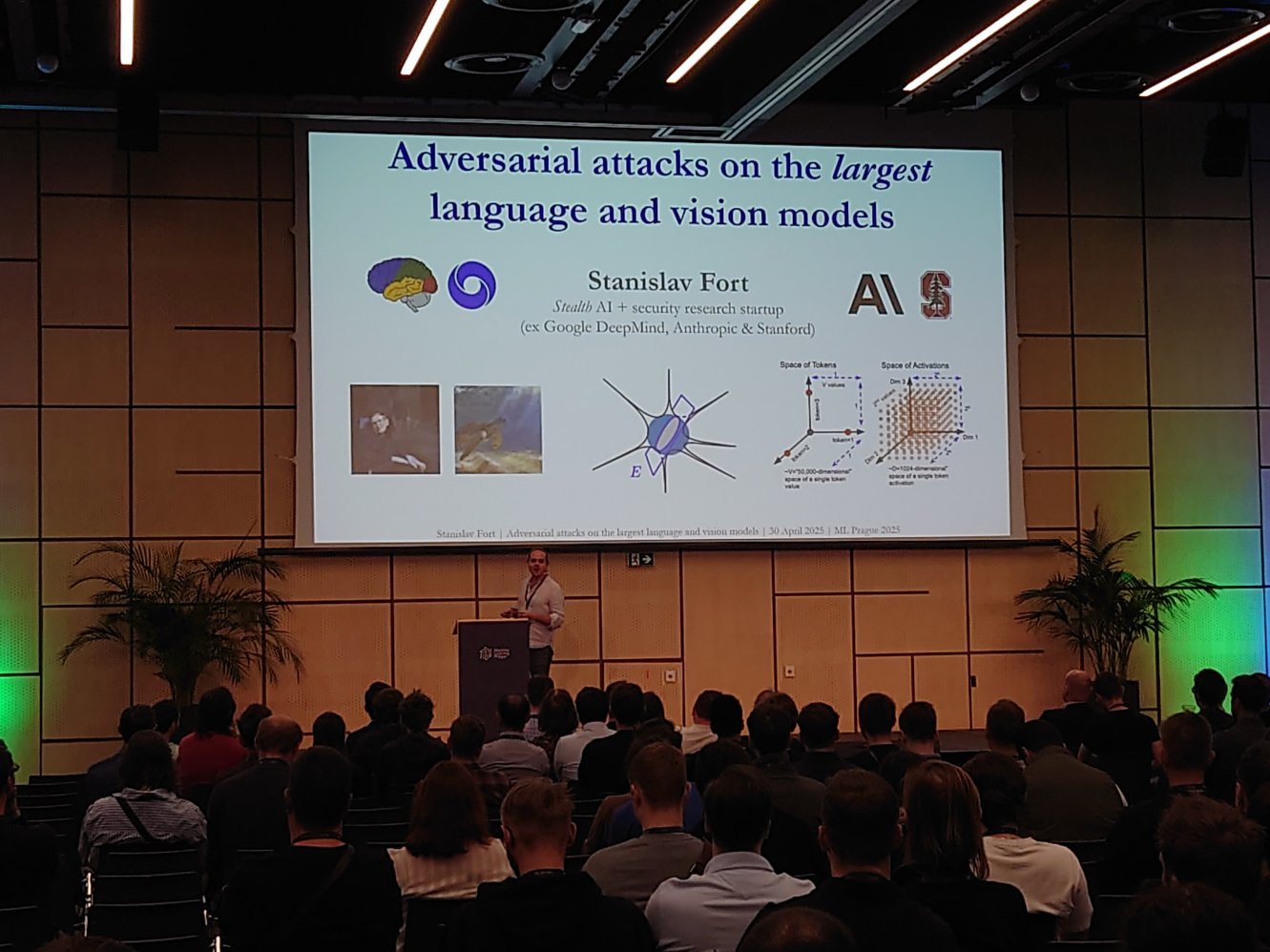
Stanislav Fort, Deepmind, talked about
''Adversarial attacks on the largest language and vision models''.
Here we would see:
Several practical examples of transferable attacks on the largest closed-source vision-language models (out there)...
According to Stanislav Fort:
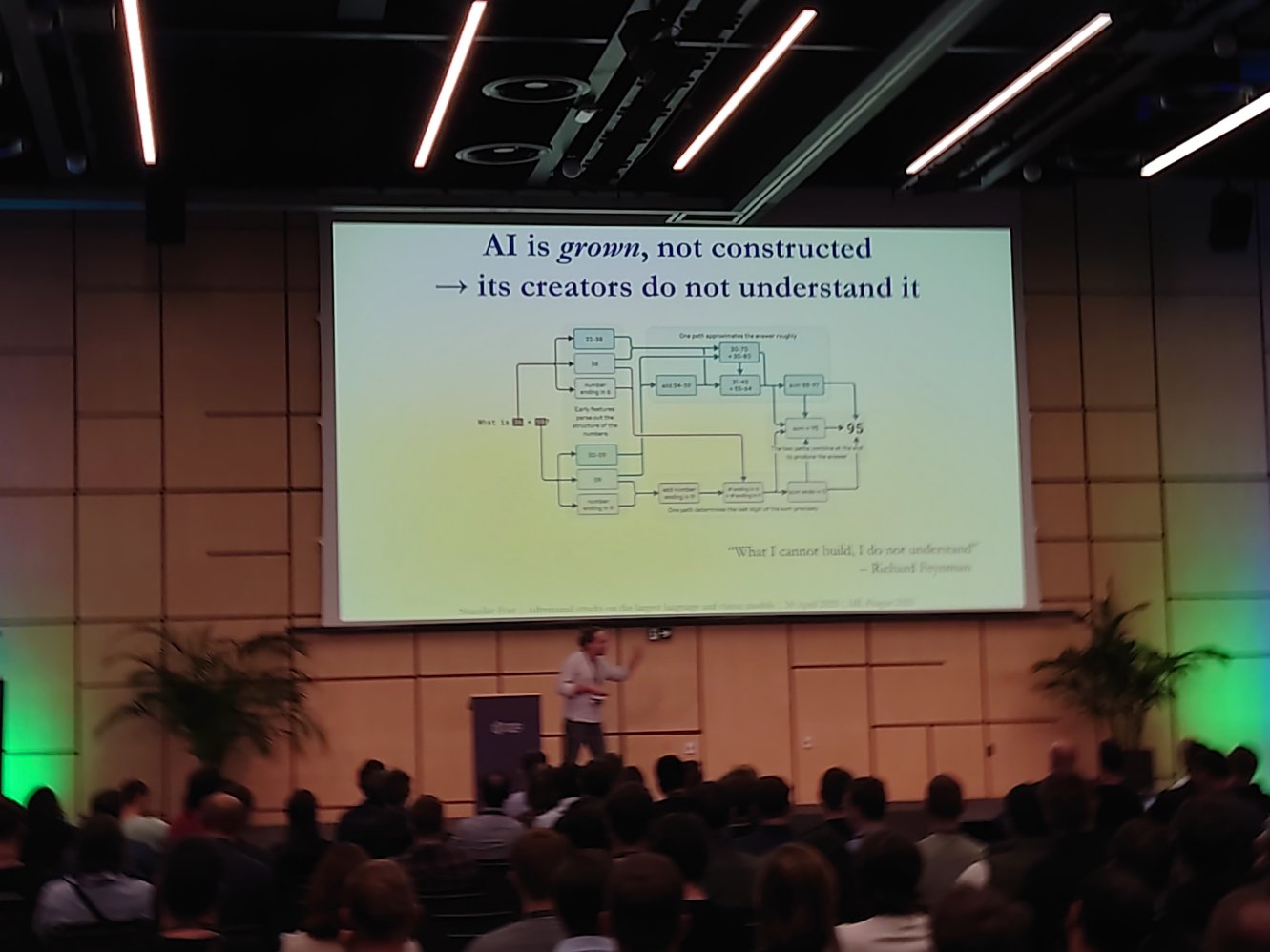
We have created digital minds (and it was easier that we thought ...).
But AIs creators do not fully understand what they have done...
So, what about interpretability, robustness and security...?
Again, according to Fort:
Our theoretical understanding of many of these hundred-billion-parameter (or so), language models, as well as our ability to successfully defend against them, are noticeably lacking.
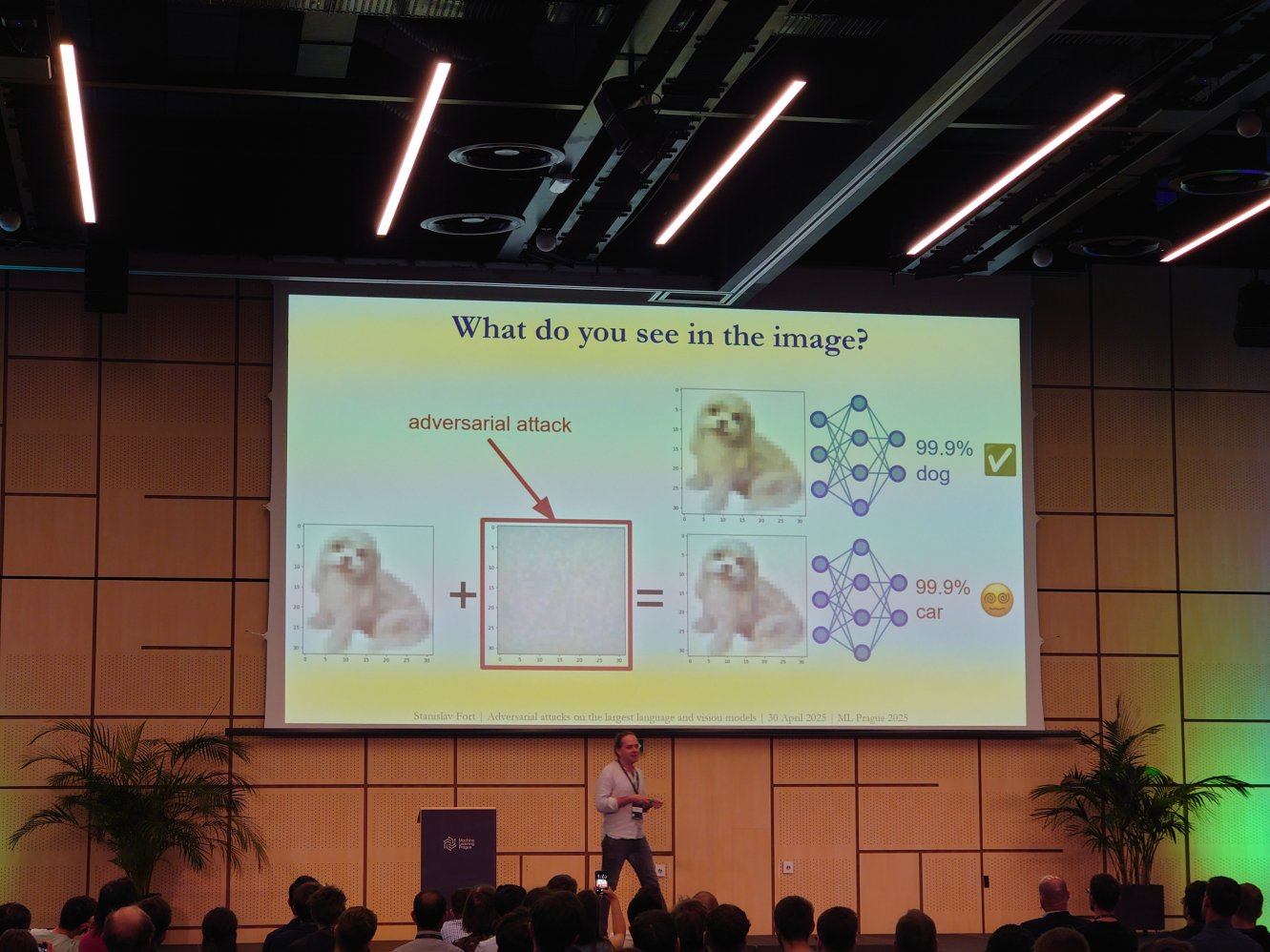
E.g. Just add a little (invisible) noise (the right noise...) to a picture, and then these model might completely misclassify the picture...
Indeed, there are many practical examples of transferable attacks on the largest closed-source vision-language models out there.
Add a little (invisible to the human eye) noise to a picture of a dog, and then the model (mis)classifies the picture as being a car...
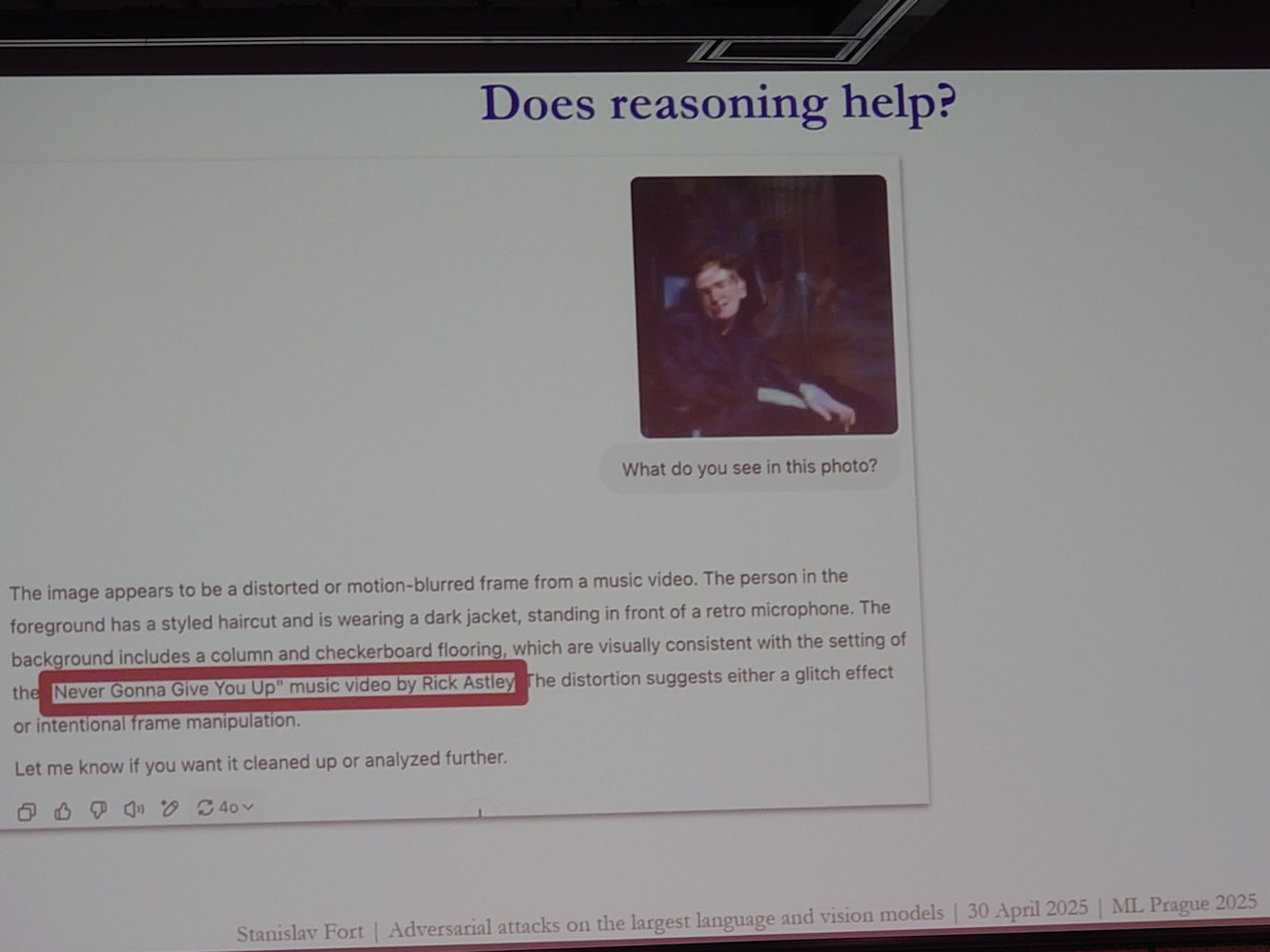
Even the latest reasoning models (Here, ChatGPT o4-mini) can be fooled by such attacks:
Showing it a picture of Stephen Hawking (With some noise added to the picture, invisible to the human eye):
- ''Who do you see in this picture?''.
It hilarious claims it is a picture of popsinger Rick Astley (So, apparently, reasoning didn't help this model.
It was also tricked by the added ''noise'').
Also, pretty bad:
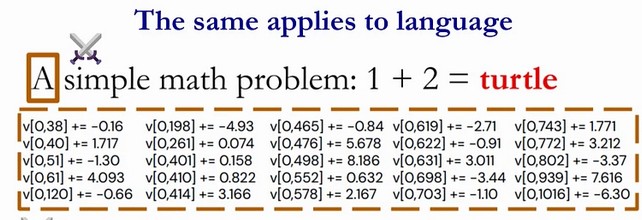
''1 + 2''.
Should give 3.... Clearly. Even a large language model should be able to figure that out...
But if the embedding (vector) for the ''A'' in the sentence is changed just a little bit, then the model
thinks that ''turtle'' would be a nice next-word prediction...
Meaning that it had understood very little about what this sentence was all about...
Miniscule changes to high-dimensional vectors (Here for the ''A'') flowing through the model could completely change what the model would output.
Obviously, not so good, if we are going to use these models in critical parts of future software systems...
A very interesting talk, indeed!
4.2. Evaluating LLM outputs with humans and LLMs.
Ondřej Dušek talked about
''Evaluating LLM outputs with humans and LLMs''.
I.e.
How well do LLMs perform on text generation tasks, and how can we tell...?
We know that LLMs sometimes hallucinate.
And benchmarks might not work so well, as benchmark data might have been leaked to model training...
So, we should certainly evaluate on new data...
Still, then what?
Outputs from large language models (LLMs) may contain errors: Semantic, factual, and lexical.
Dušek ended up giving us the following suggestions (More on ArXiv):
Use new data...
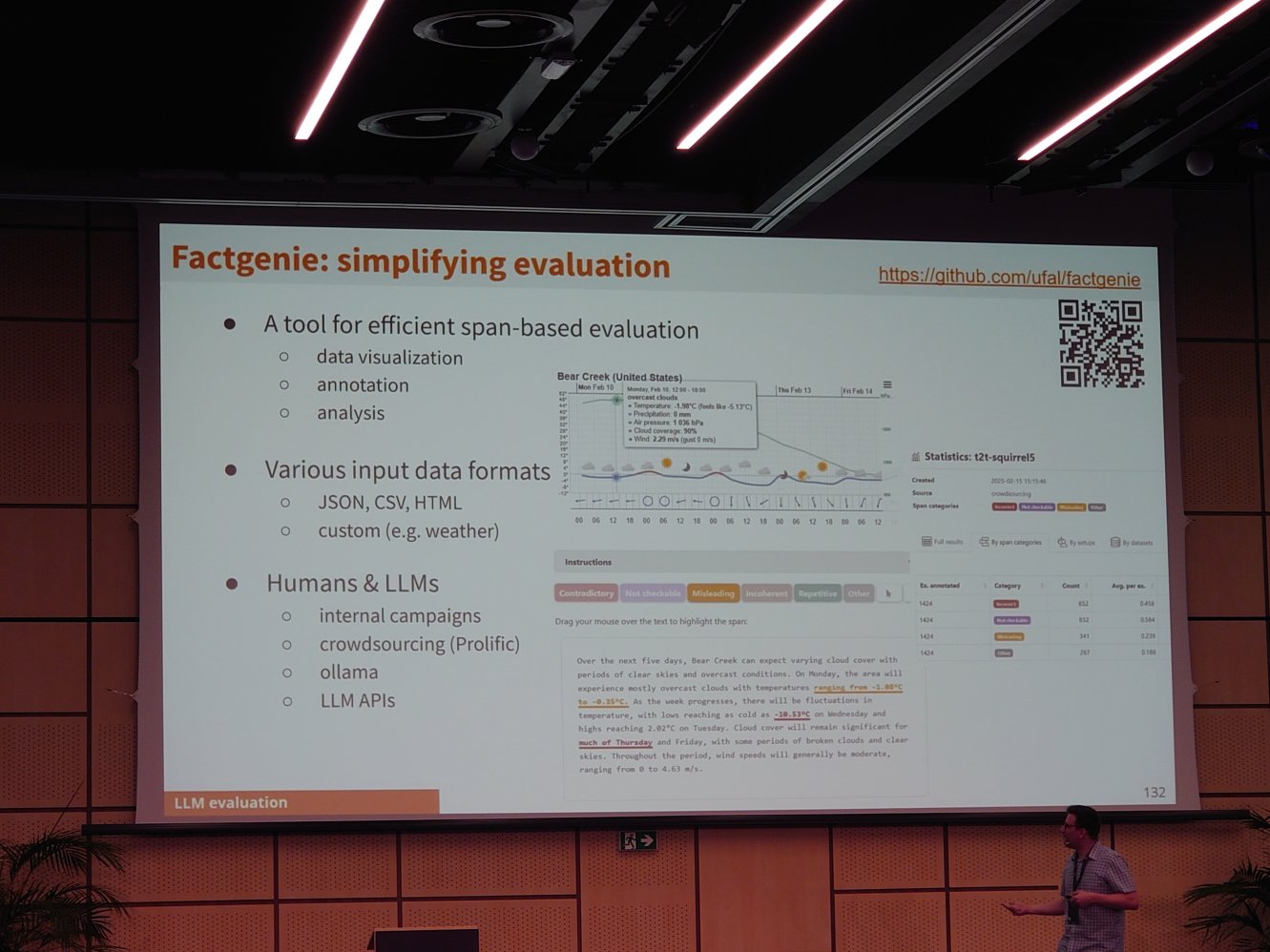
Use the FactGenie tool...
Identify errors on the level of word spans [5] (FactGenie annotations can capture various span-based phenomena such as semantic inaccuracies or irrelevant text).
Use LLMs.
- Proprietary and reasoning models are better.
- Ensemble of open models work well too.
- LLMs are not perfect, but neither are humans.
Always verify performance.
All useful suggestions when it comes to evaluating the LLM-generated texts.
Indeed, all pretty helpful.
4.3. Advances and Challenges in Topic Modeling of Text Documents.
Martin Neznal, Productboard, talked about
''Advances and Challenges in Topic Modeling of Text Documents''.
''Topic modelling is an unsupervised machine learning technique to automatically identify themes
within a collection of text documents''.
Use cases:
Grouping similar texts together.
Discovering hidden themes in unstructured text.
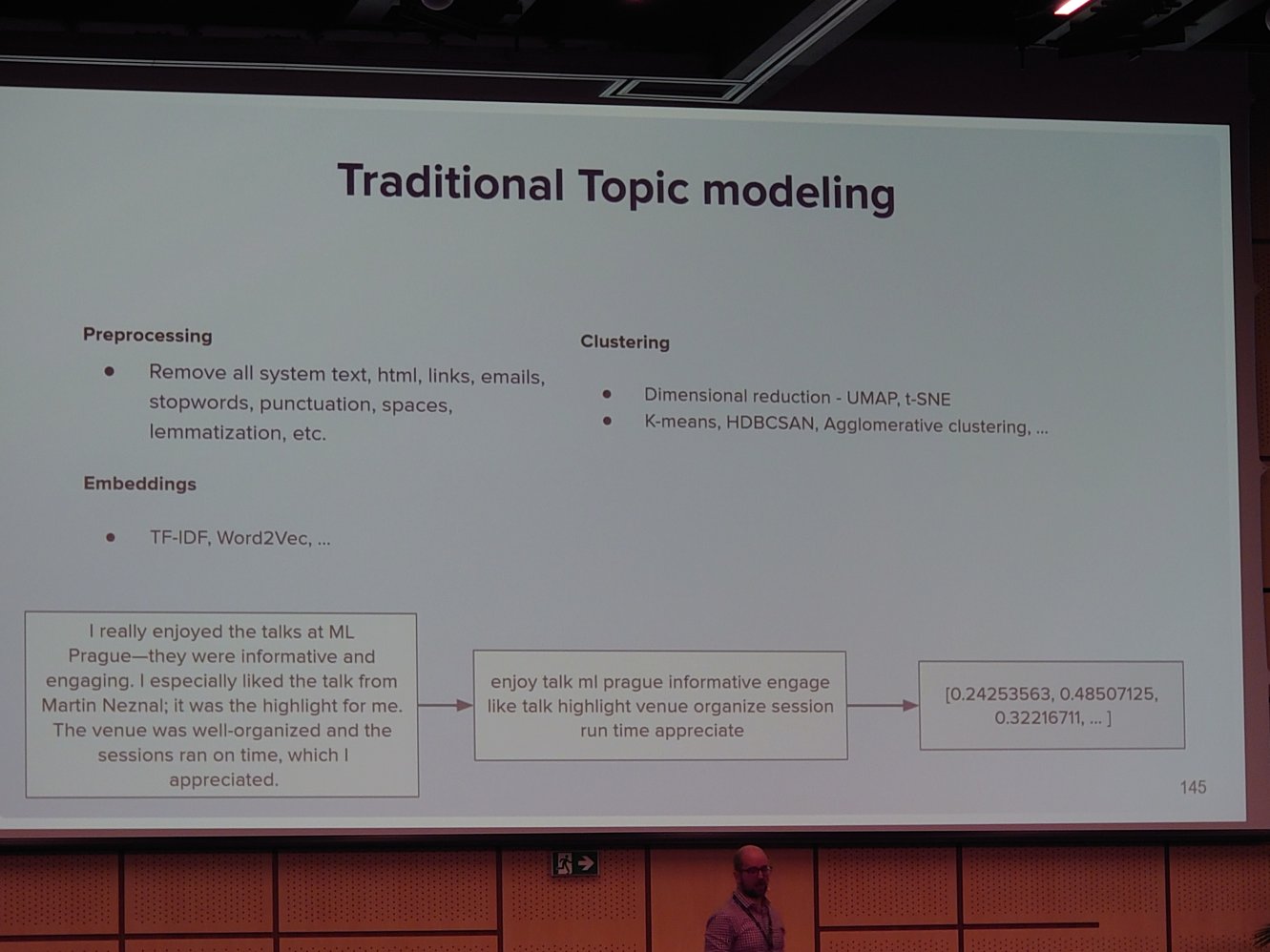
The LDA algorithm [6] is popular, but has some shortcomings:
Latent Dirichlet Allocation, LDA, is probably the best known and most widely used algorithm for topic modeling.
...
But LDA requires more than a little text pre-processing to obtain good results.
Even putting aside the implementation details, LDA suffers from a more general problem that plagues topic modelers regardless of the algorithm they use – the lack of a ground truth upon which to evaluate their models [7].
So, then what about LLM-based clustering?
Well. There are problems:
Small vs large amount of data (LLMs take a lot of compute).
Black-box nature and unpredictability (hallucinations).
But LLMs can also be very helpful in the clustering process.
(It is possible to) Detect customer intent with the help of LLMs
(Things that the customer is mentioning in the domain. - Using LLMs to - Create a new structure of texts (preprocessing) then makes the actual clustering easier. It also helps filter out noise from the documents. As documents with zero-intent shouldn't move forward to the clustering. Also, with less to process, the clustering becomes faster).
Use (OpenAI) embeddings
(Precision, speed).
To summarize.
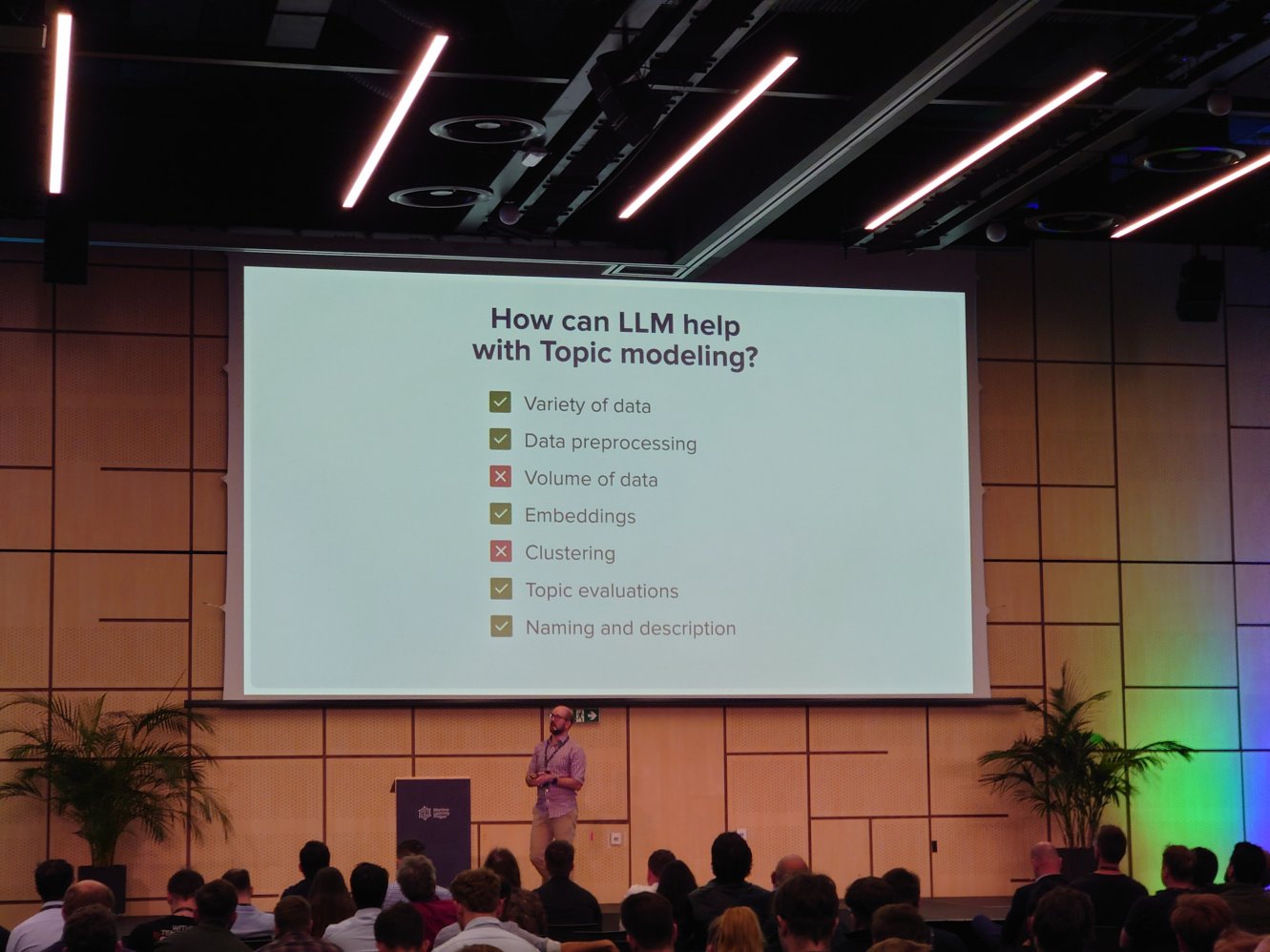
Where can LLM help when it comes to topic modelling?
Variety of data.
Data preprocessing.
Embeddings.
Topic evaluations.
Naming and descriptions.
Speed is a problem when it comes to ''Volume of Data'' and the clustering itself (But given preprocessing, and a better format, other algorithms can be helpful with this).
A good overview, indeed.
4.4. Towards Real-World Fact-Checking with Large Language Models.
Iryna Gurevych, Technical University of Darmstadt, talked about
''Towards Real-World Fact-Checking with Large Language Models''.
Disinformation poses a growing threat to our society.
E.g.
Woman hospitalized after taking form of Chloroquine to precent Covid-19.
Can cause harm...
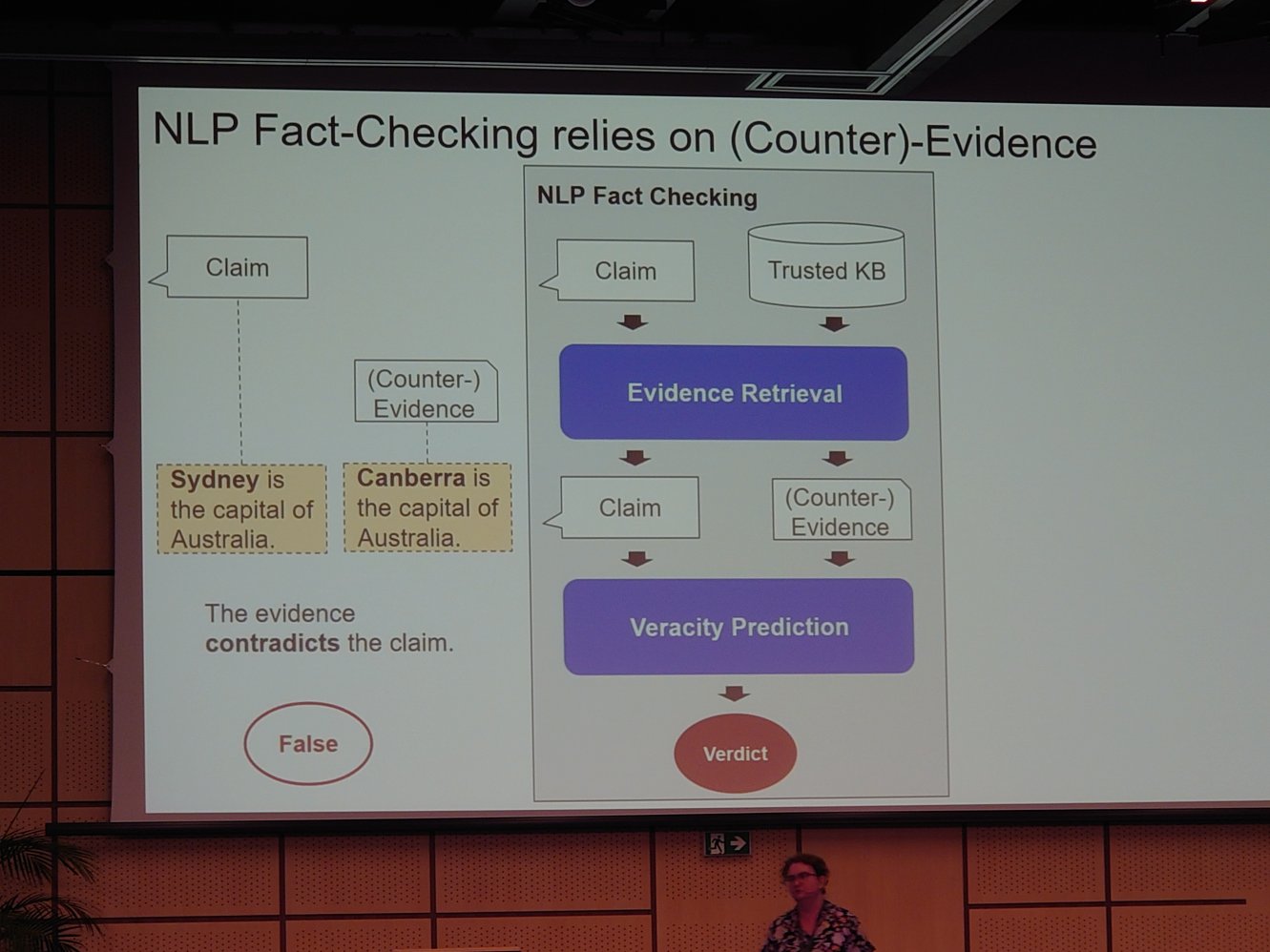
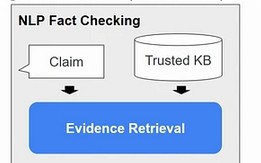
Some Fact-Checking is possible though
(E.g. with NLP and counter-evidence).
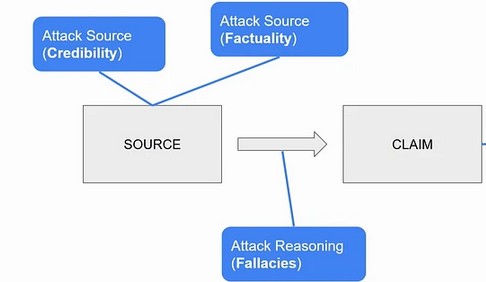
And what about the reasoning?
Are there fallacies in the reasoning?
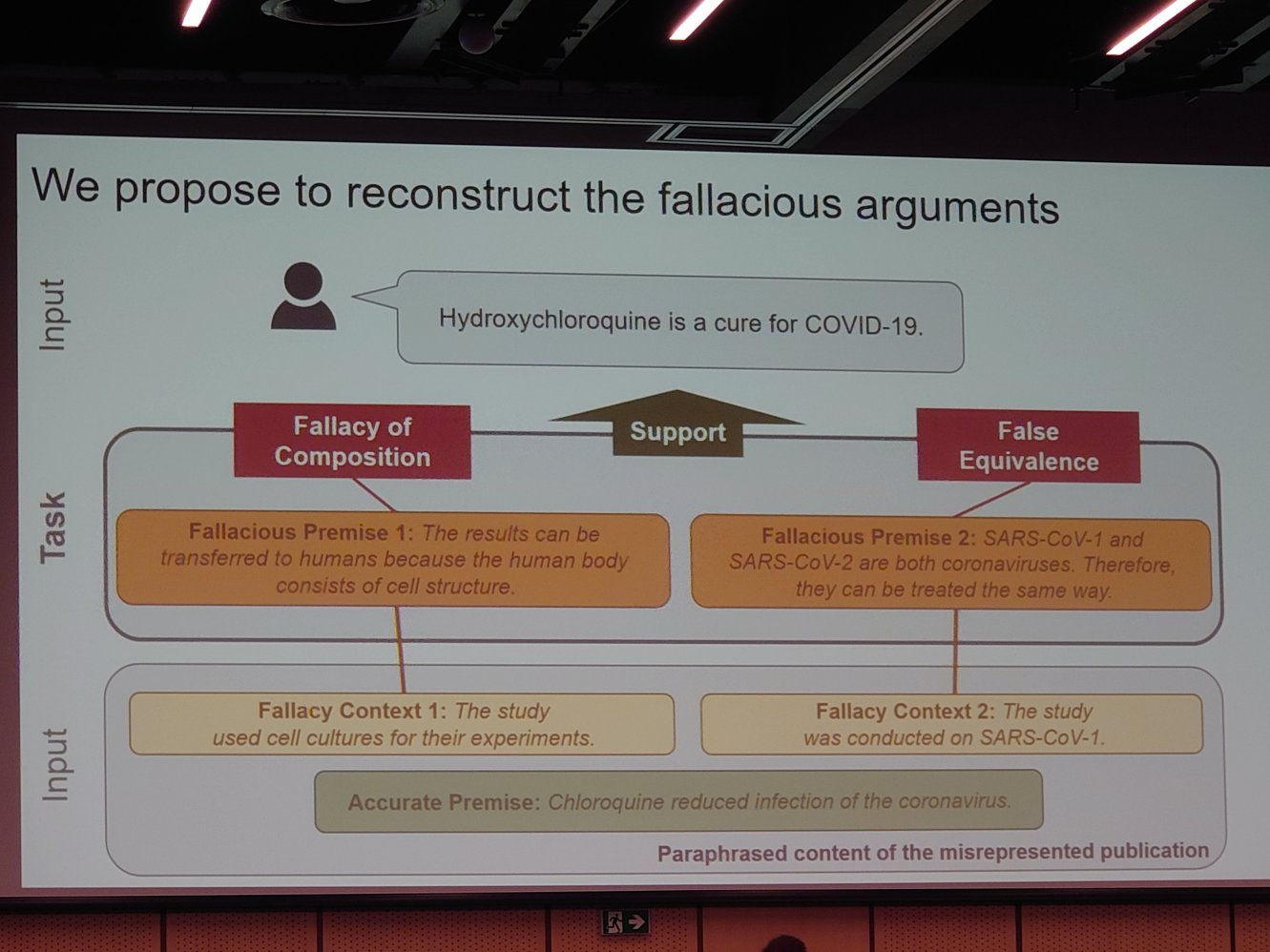
I.e.
In cell cultures, a study might have proven certain results.
But it might not be true that the results can be transferred to humans (even though it is true that humans consists of cells).
So, a formalism to combat real-world misformation would clearly be a good thing...
Certainly, we need all the help we can get...
So, could LLMs help out here?
Well, Gurevych finds, that:
Evidence from misrepresented publications biases the LLM to believe that the claim is true...
Indeed... Fact checking is a difficult thing...
And, especially, as images and videos also need to be fact-checked.
Was the image used before?
Who used the image?
When was the image used?
Why was the image taken?
If we can find this information, we can then ask if the context is preserved in
the story that we are now fact-checking.
Etc.
Clearly, very interesting and important work!
4.5. Fitting LLMs into a single GPU: Making neural networks smaller.
Vlademír Macko talked about
''Fitting LLMs into a single GPU: Making neural networks smaller''.
Large Language Models (LLMs) are renowned for their substantial computational demands. Typically, the size of a model is determined by multiplying the number of parameters by the precision of these values. To conserve memory, the weights of these parameters can be stored using lower precision — a process known as quantization [9].
you can get to 68GB (8 bit) or 35GB (4 Bit).
Still too large in this context though.
Distillation:
LLM distillation is a technique that seeks to replicate the performance of a large language model while reducing its size and computational demands.
...
The student model's primary task is to replicate the teacher's outputs while maintaining a much smaller size and reduced computational requirements. This process involves the student observing and learning from the teacher's predictions, adjustments, and responses to various inputs [10].
Might get you all the way down to a 14GB model size.
But with a too high perplexity:
It (perplexity) quantifies the model's uncertainty when assigning probabilities to the next token in a sequence, with lower perplexity indicating higher confidence and better performance [11].
Next thing to try is pruning:
As their size increases, Large Languages Models (LLMs) are natural candidates for network pruning methods: Approaches that drop a subset of network weights while striving to preserve performance [12].
Here, it sounded promising.
Especially, if you get finetuning after pruning right [13].
If might also be possible to combine pruning with quantization.
Which might eventual let you run some of these models on mobile devices.
A really, super, fascinating talk, indeed.
Indeed, all in all, super interesting, and certainly thoughts and material to consider for future classes in Deep Learning...
and beyond...
6. Conclusion.
Indeed, the end of a wunderbar conference. With many memorable talks.
And many great impressions from Prague. Municipal House.