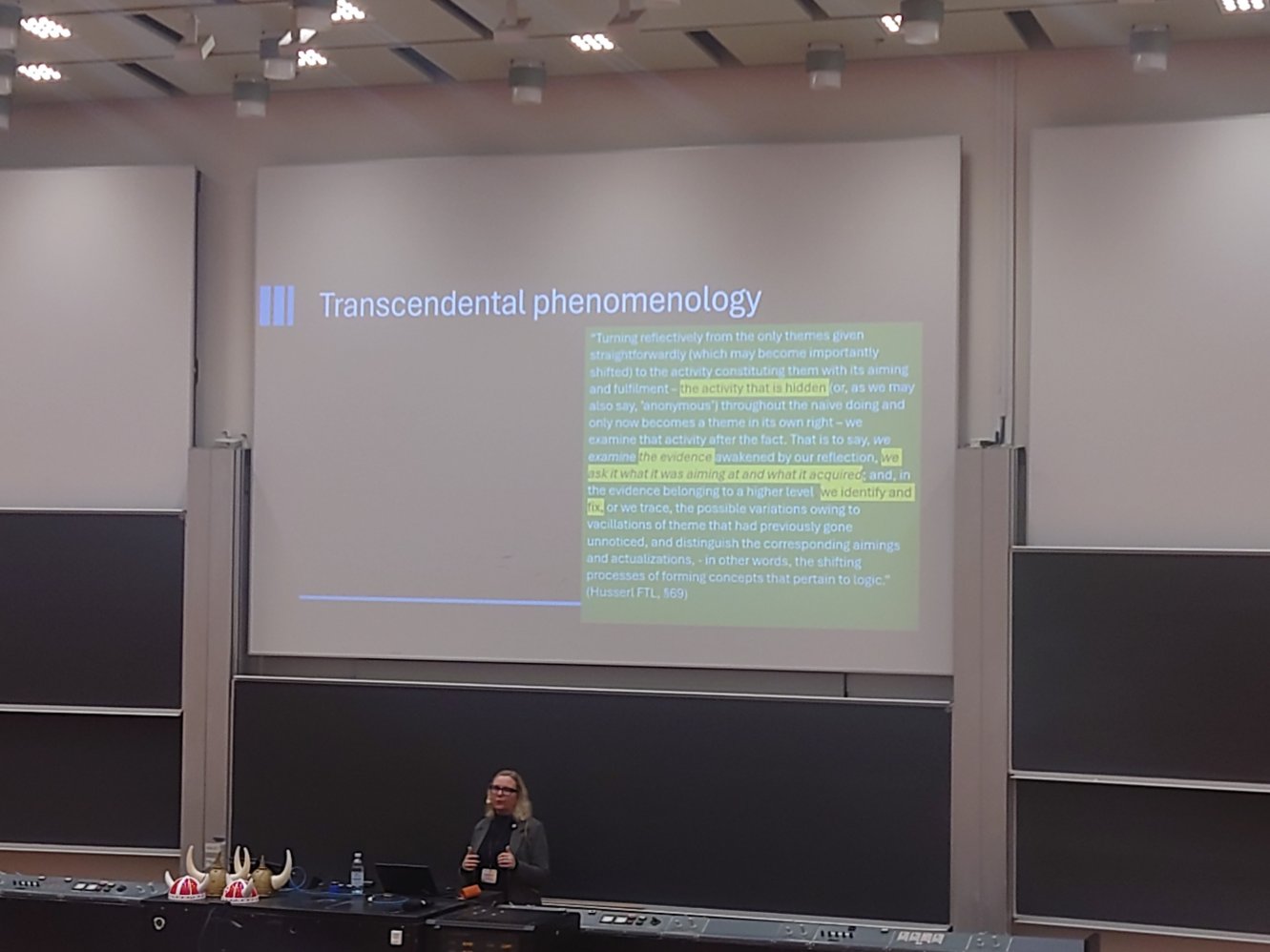
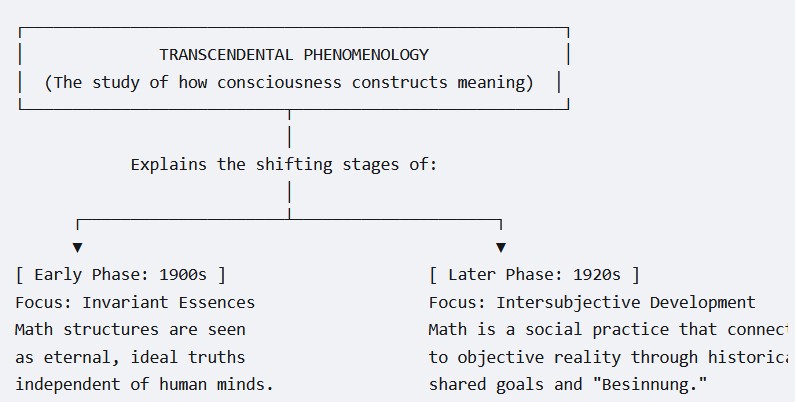
Husserls views on mathematics and logic evolved over time.
From an early ''Platonist'' phase around 1900, where he believed mathematical structures were eternal and independent of human thought, towards the 1920s, where he viewed mathematics more as a social practice that connects to an objective reality.
Transcendental phenomenology is the study of the essential structures that are left in pure consciousness [2].''Transcendental'' means it searches for the hidden rules and conditions within our consciousness that make any kind of knowledge, logic, or objective truth possible in the first place.

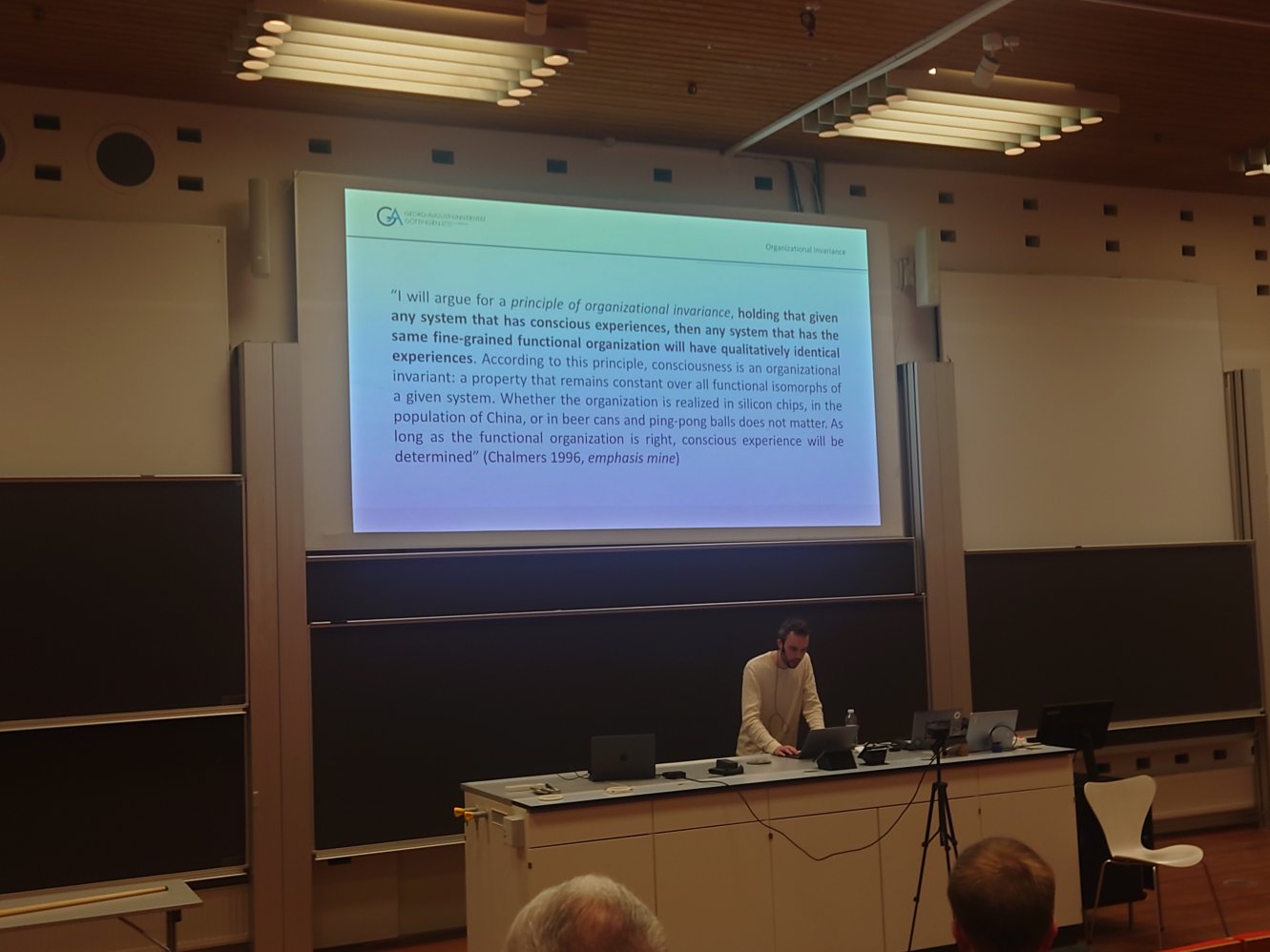
Principle of organizational invariance, holding that given any system that has conscious experiences, then any system that has the same fine-grained functional organization will have qualitatively identical experiences.I.e. David Chalmers argues that consciousness only depends on a system's structure and organization, regardless of whether it is made of brain cells or silicon chips.
...
Whether the organization is realized in silicon chips, in the population of China, or in beer cans and ping-pong balls does not matter. As long as the functional organization is right, conscious experience will be determined.
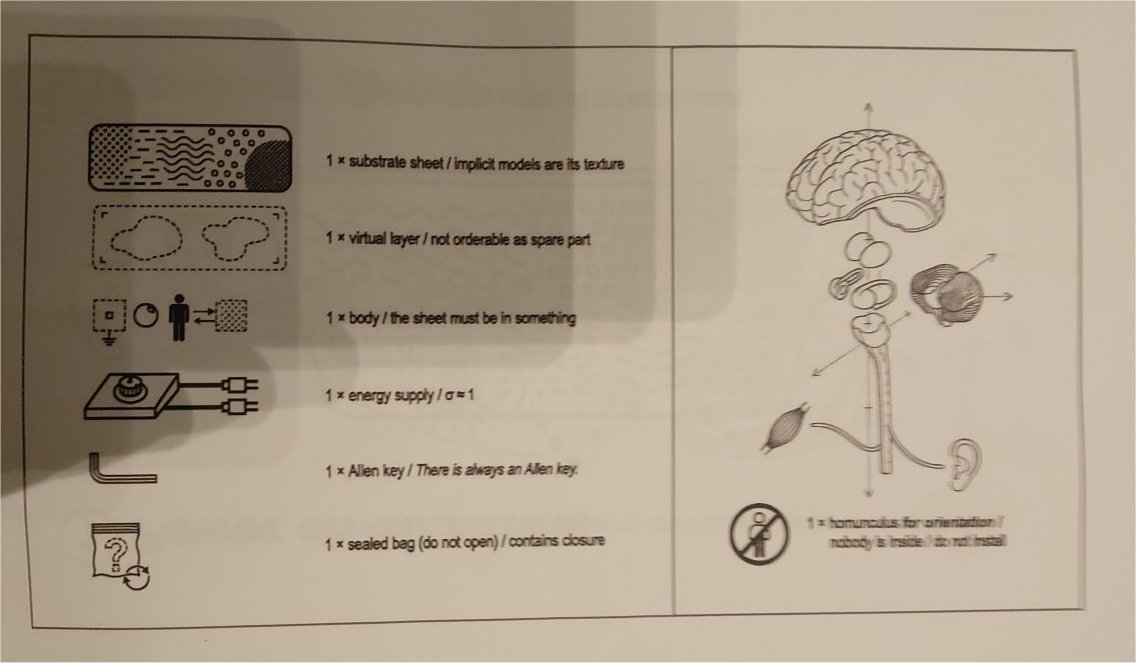
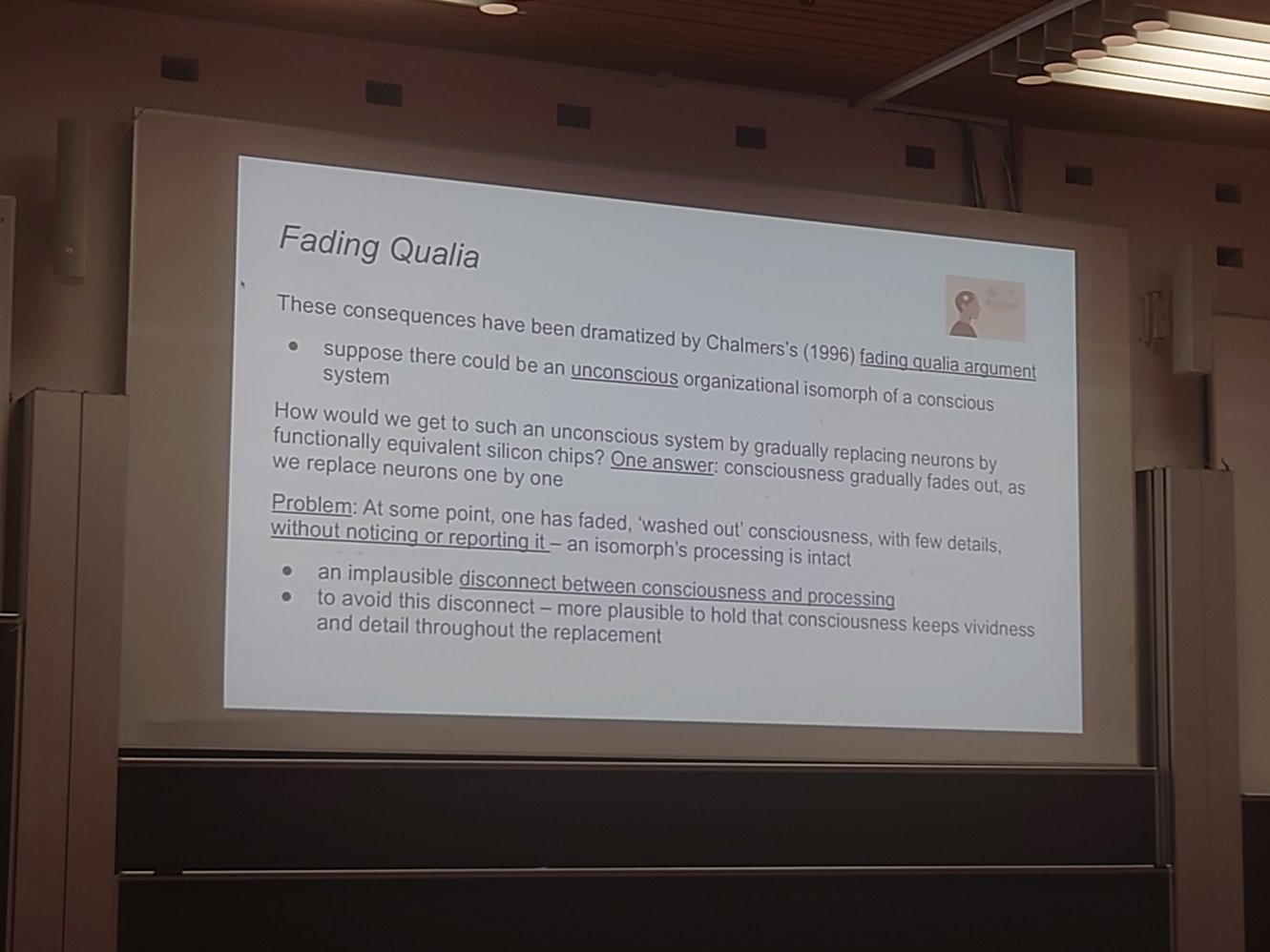
- The Thought Experiment: Imagine replacing the neurons in a conscious brain with silicon chips, one by one, until the whole brain is digital.
- The ''Fading'' Idea: If you believe a robot cannot be conscious, then consciousness must slowly fade away and wash out during this replacement process.
- The Problem: Because the silicon chips work exactly like neurons, the person's brain processing stays completely normal. This means they would have a fading consciousness but would not notice or report it.
- The Conclusion: It is highly unlikely that your conscious experience could disappear without your brain processing noticing it. Therefore, Chalmers argues that consciousness must remain completely vivid throughout the entire replacement.


Testing whether AI has real feelings or subjective experiences is currently impossible.
...
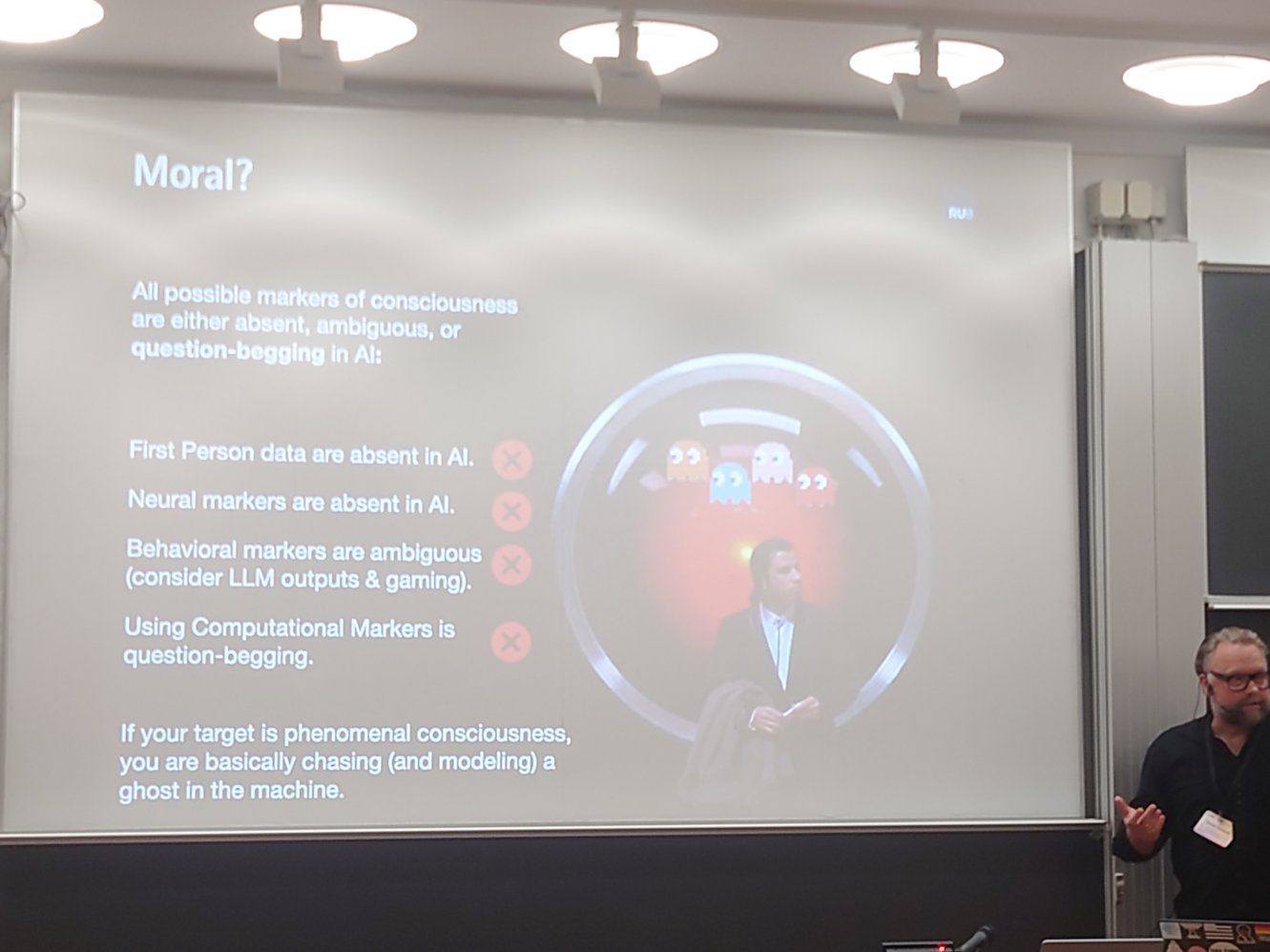
these inner feelings are either hidden from science or completely non-physical.
Because we cannot measure this inner life through behaviors or computer code, researchers trying to build or test conscious AI are chasing an invisible ghost.


- Native Visual Thinking: The AI operates directly within the visual space. It does not need to translate concepts into text tokens to process them.
- Spatial Awareness: The model can perform mental rotations and navigation. It understands how a 3D object looks from different angles and how environments change as a camera moves.
- Internal World Model: Eventually developind an internal model of physics. Including understanding gravity, depth, and object permanence (knowing a ball still exists when it rolls behind a couch).
Human beings are not born with self-awareness, but research suggests it develops by around 18 months of age.
...
there is still no knowledge about how infants actually become self-aware [11].
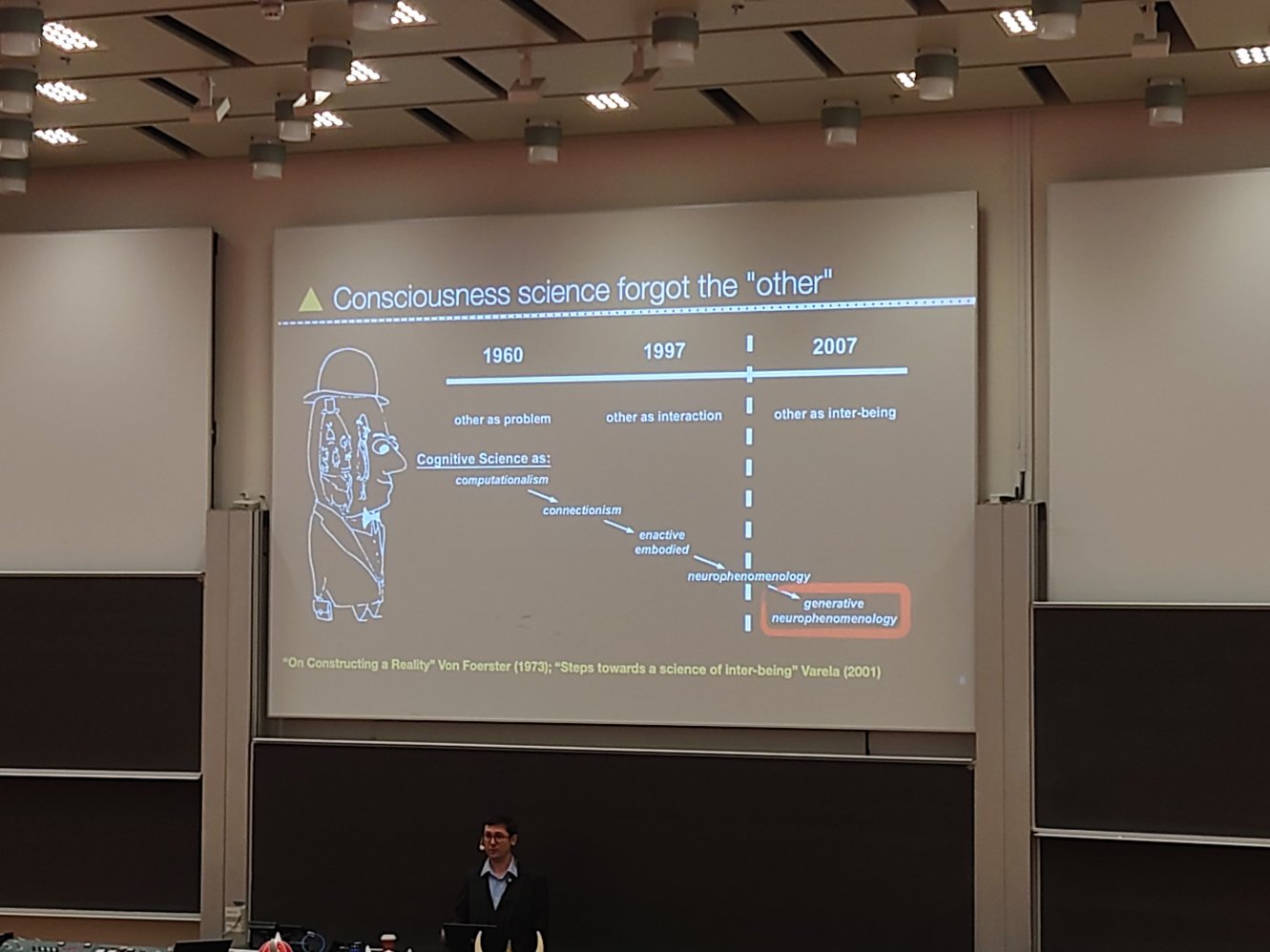
Most consciousness studies only focus on one brain at a single moment, ignoring how our experiences change over time and during social interactions. Here, ''generative neurophenomenology'' looks at how our feelings connect with a) our biology, b) other people, and c) our surroundings.
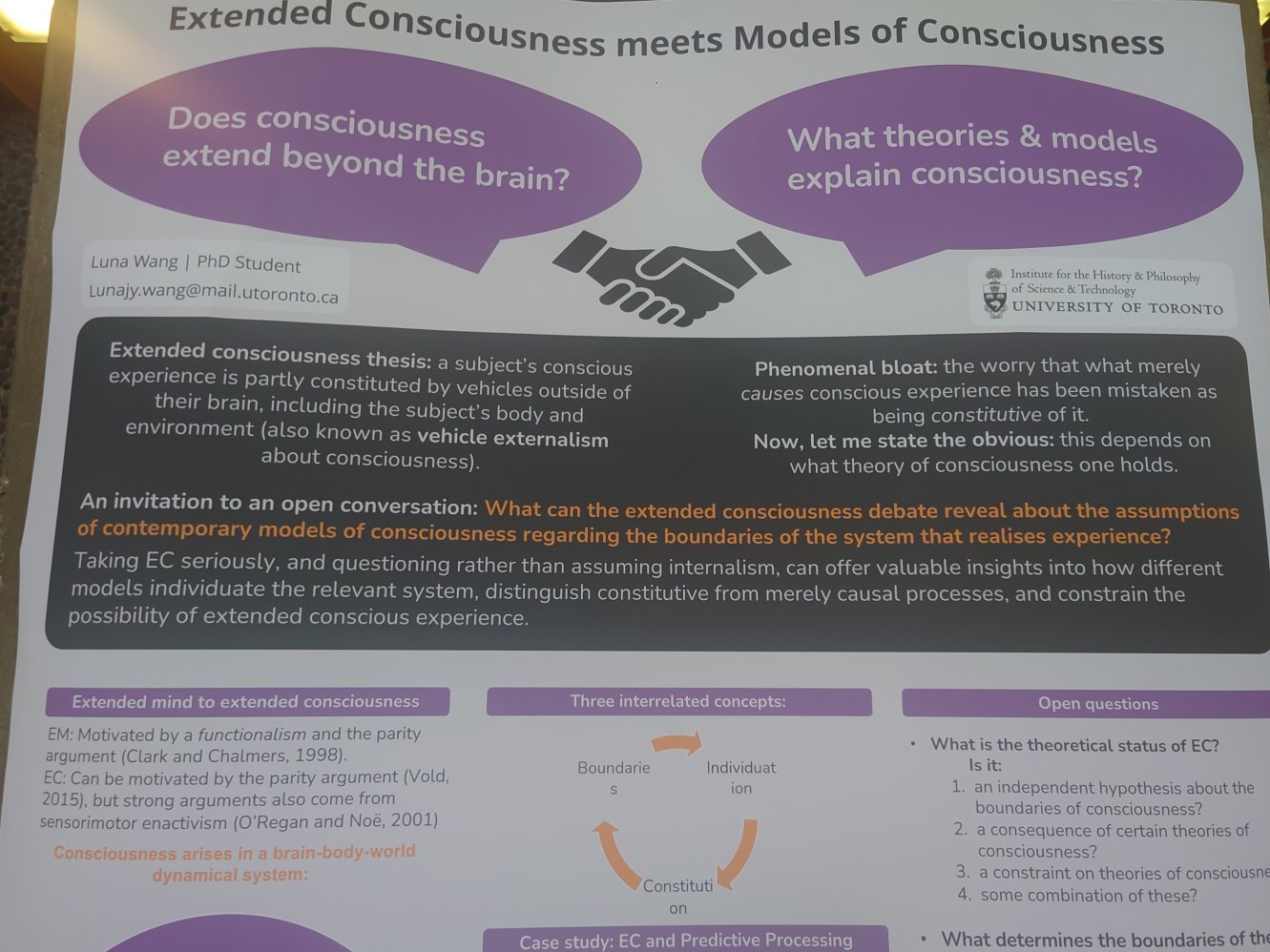
Consciousness does not just happen in the brain. Instead, our mind is actively created through three continuous loops or ''cycles''.In short: Your mind is actively shaped by the cooperation between your brain, your physical body, and the world around you.
- (The Body): The constant loop between your brain and your physical body (like feeling a heartbeat, hunger, or physical comfort).
- (The World): The loop between you and your physical environment (like looking at an object, moving toward it, and touching it).
- (Other People): The loop between you and other humans (like talking, reading body language, and understanding what someone else is feeling).
With the main take-away being that through subjective experiences, social interactions, and objective biological we can better understand how humans experience the world together.
- First-person experience: Subjective, internal conscious experience (thinking, feeling, and sensing).
- Second-person experience (intersubjective/social): One's relationship to the other, capturing social interactions, participatory sense-making, and intersubjectivity.
- Third-person objective data: Classical neurobehavioral and physiological measurements, such as multimodal multi-brain and multi-body interpersonal synchrony.
I.e. human experience is always a) in constant motion, b) it is shaped together with others in the present, and c) is deeply colored by the culture and history we have inherited.
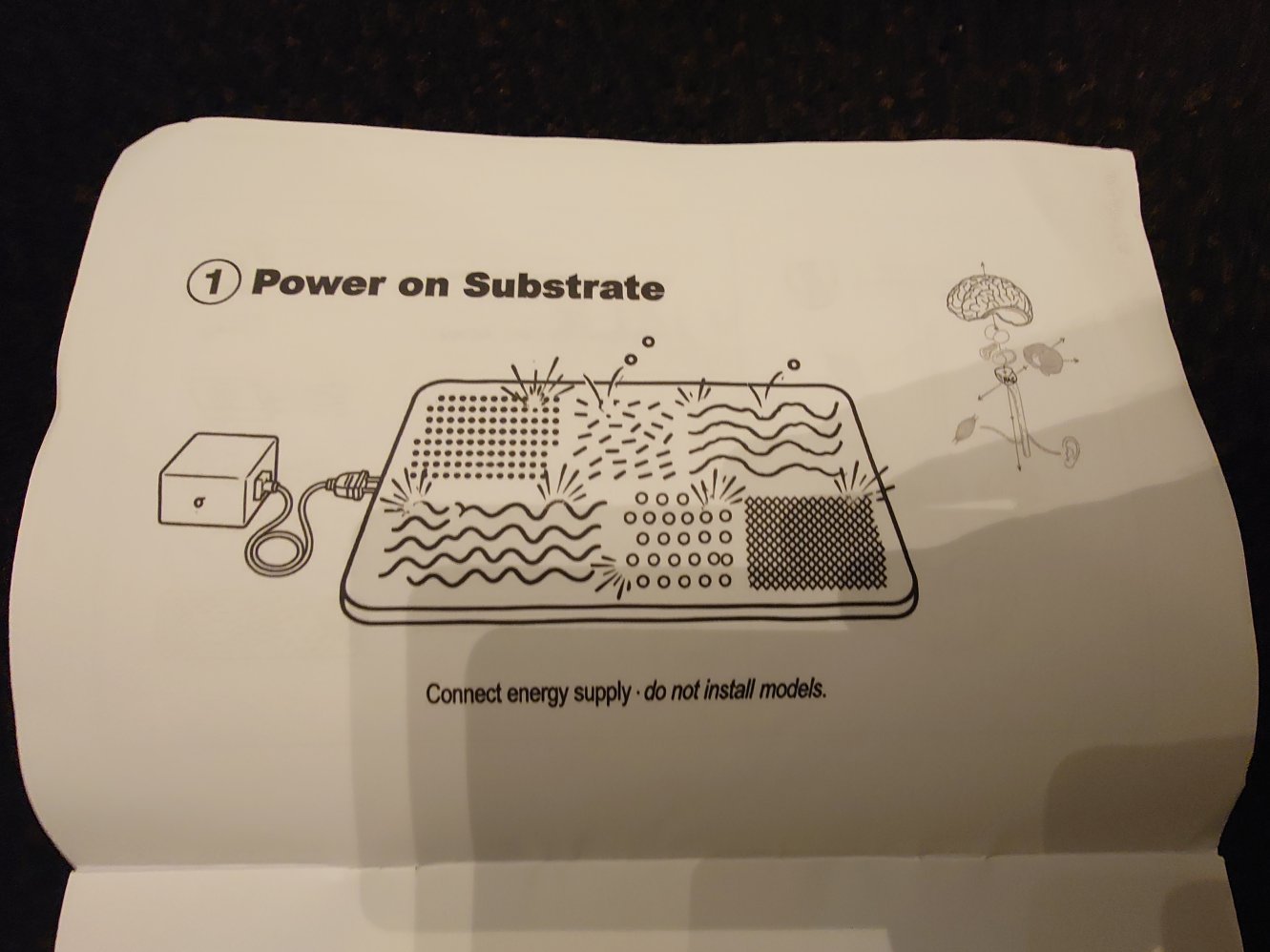
- Your experience of life never stands still; it flows constantly. You cannot understand an experience by just looking at a ''snapshot'' of a single moment, because it is always unfolding over a lifetime.
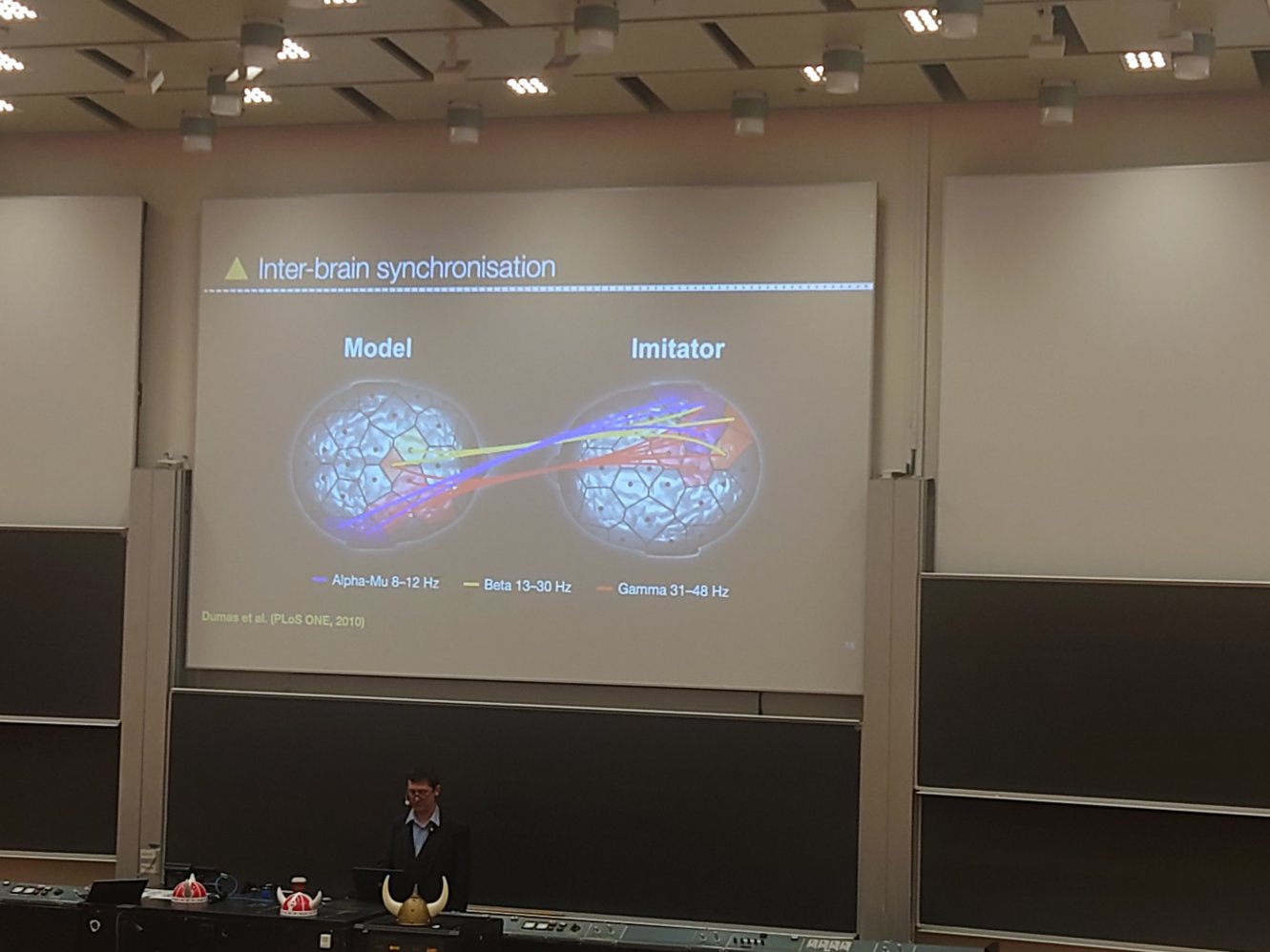
- You do not experience the world in isolation. Other people are actively co-creating and shaping your experience right now in the present moment of interaction.
- Your experiences and ways of understanding the world are inherited from the past. Meaning, culture, language, and everyday practices are passed down (transmitted) across lives and generations.

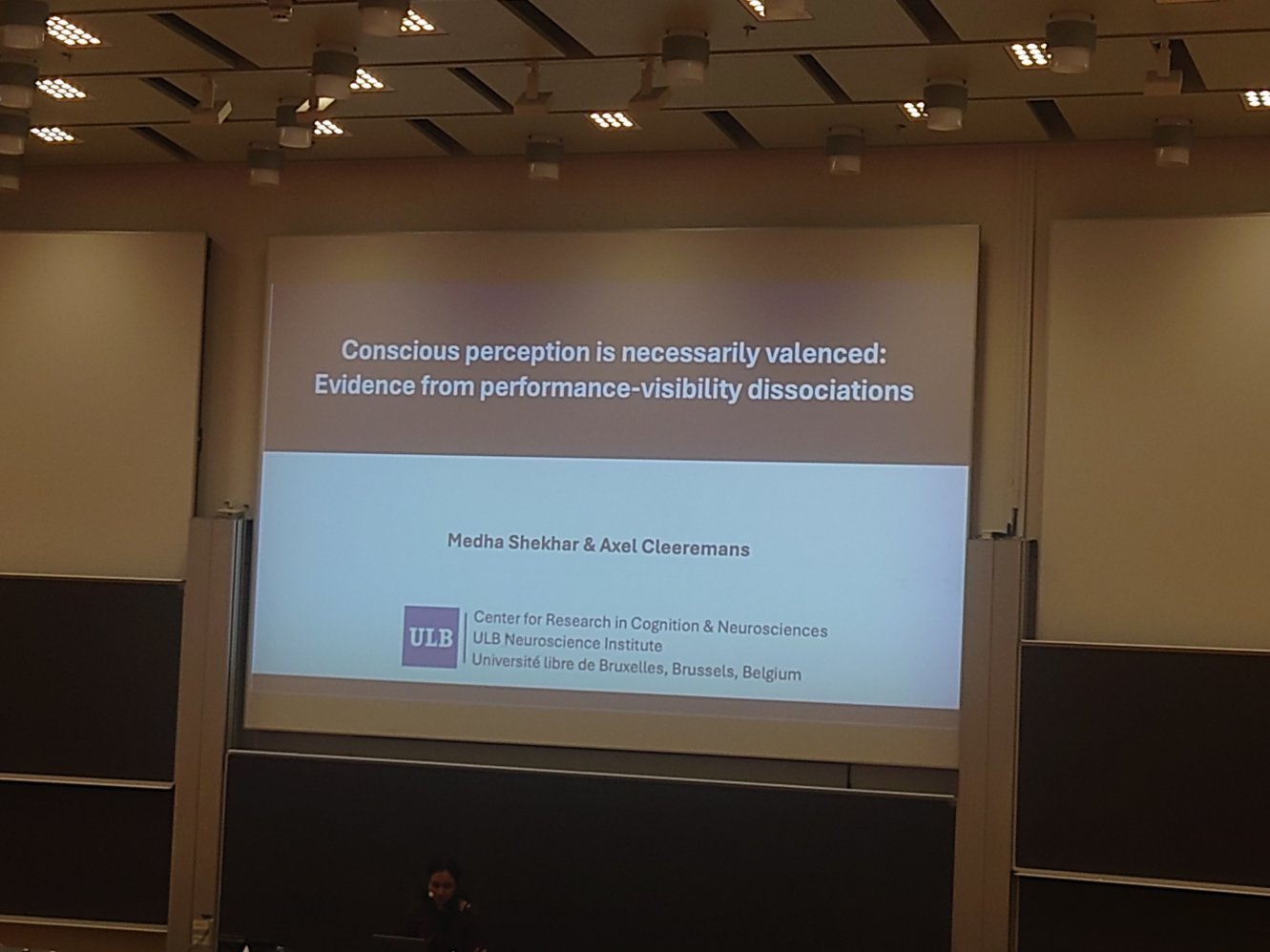
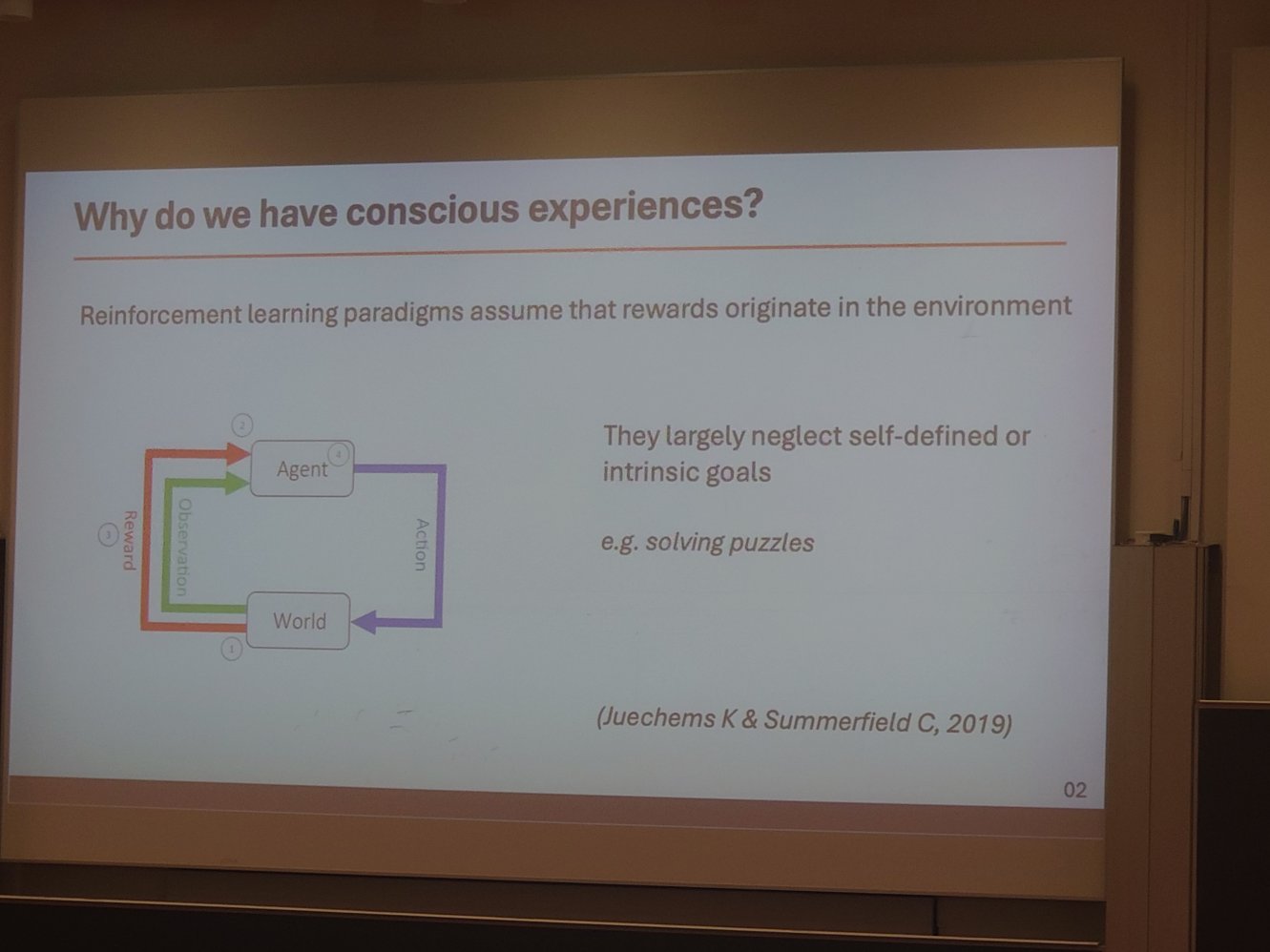
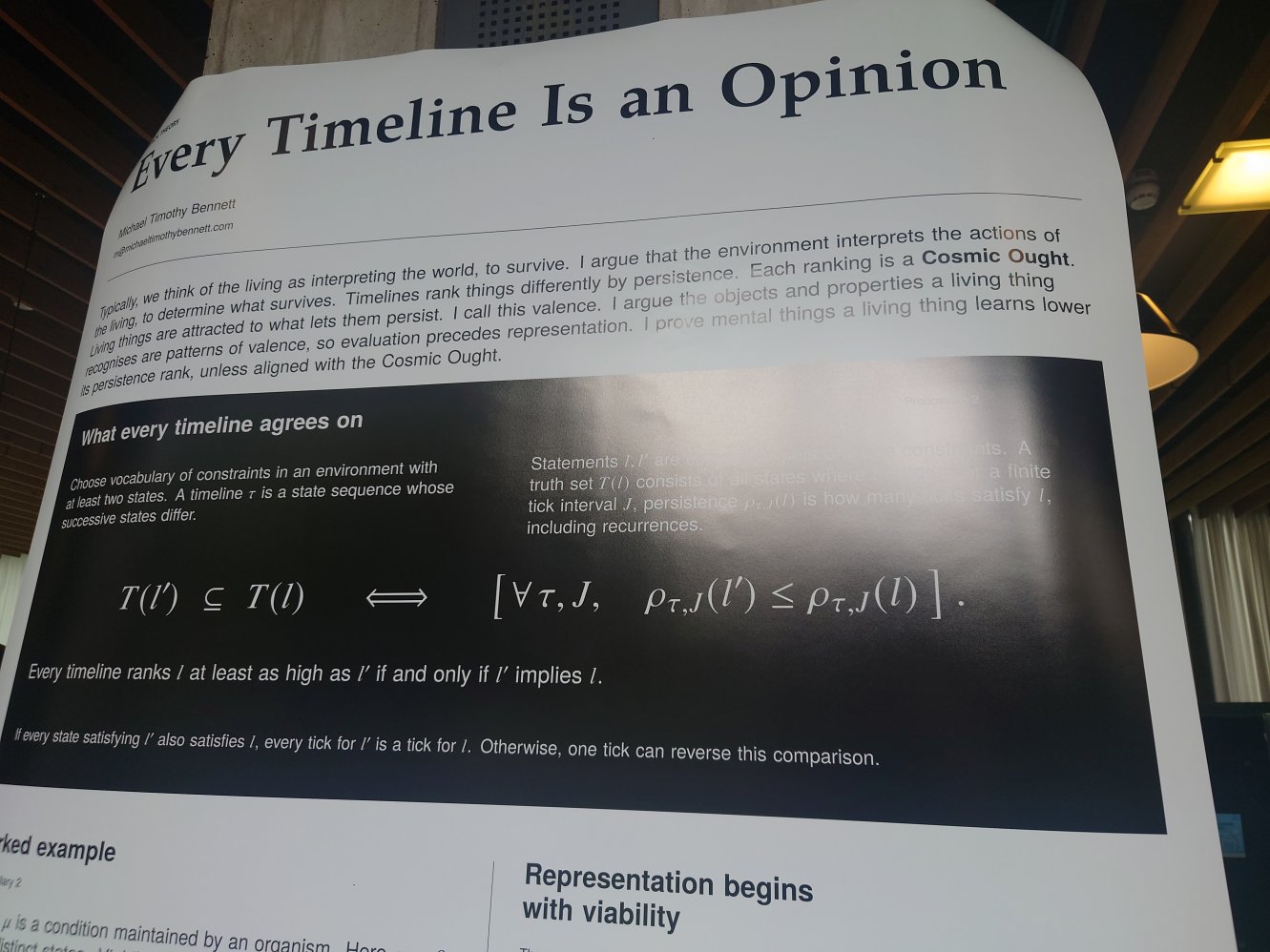
Our minds automatically label conscious experiences as pleasant or unpleasant.For more about consciousness and feelings, see also: ''The Hidden Spring. A journey to the Source of Consciousness'' by Mark Solms [14].
...
That is, brain process automatically gives an emotional value to everything we consciously notice.


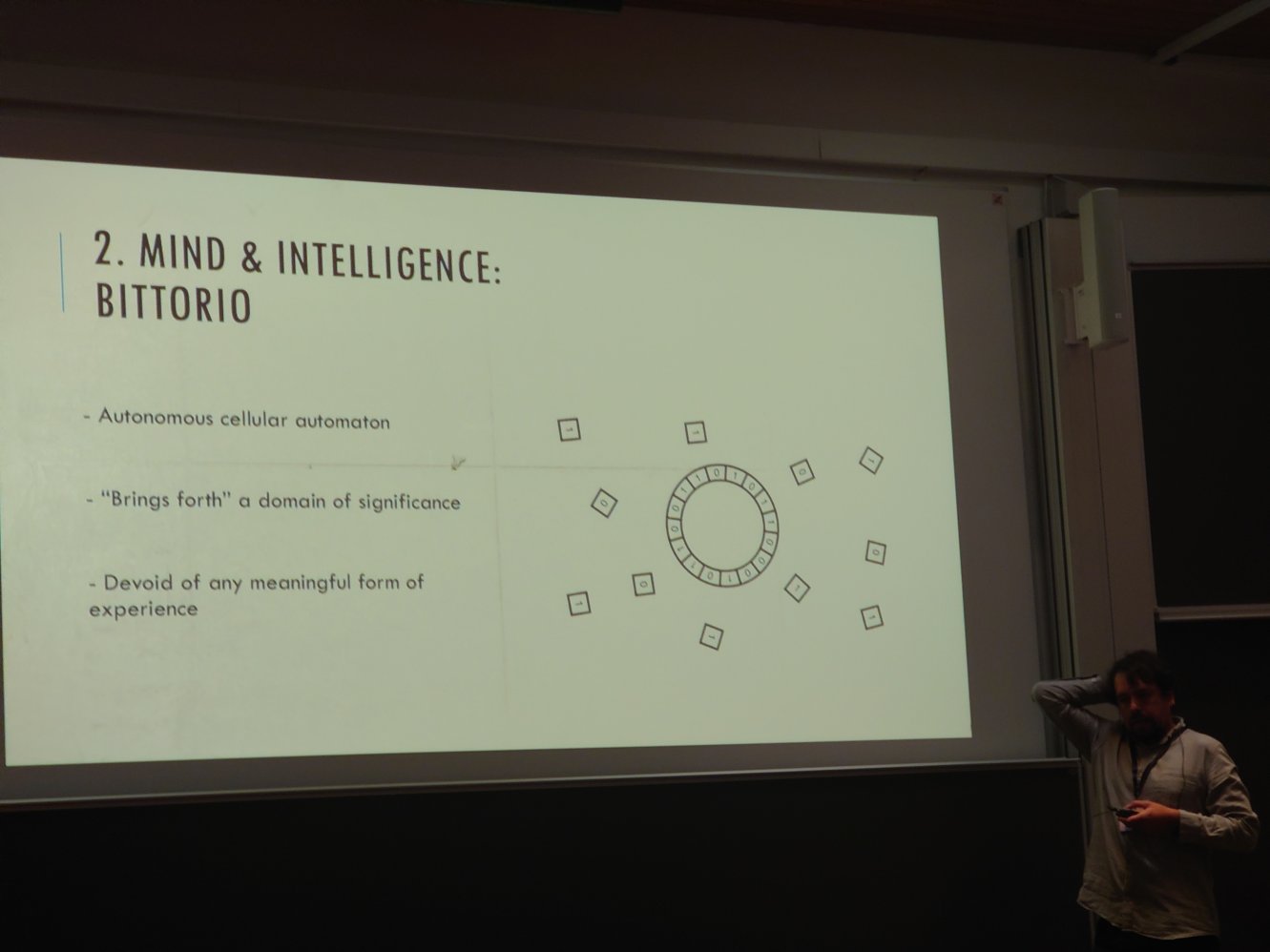
The diagram on the right shows Bittorio, a classic computer-simulated entity (a ring of binary cells) created by philosopher Francisco Varela. It demonstrates how a simple system can interact with its environment and create its own ''meaning''. even though it lacks any real consciousness or inner experience.

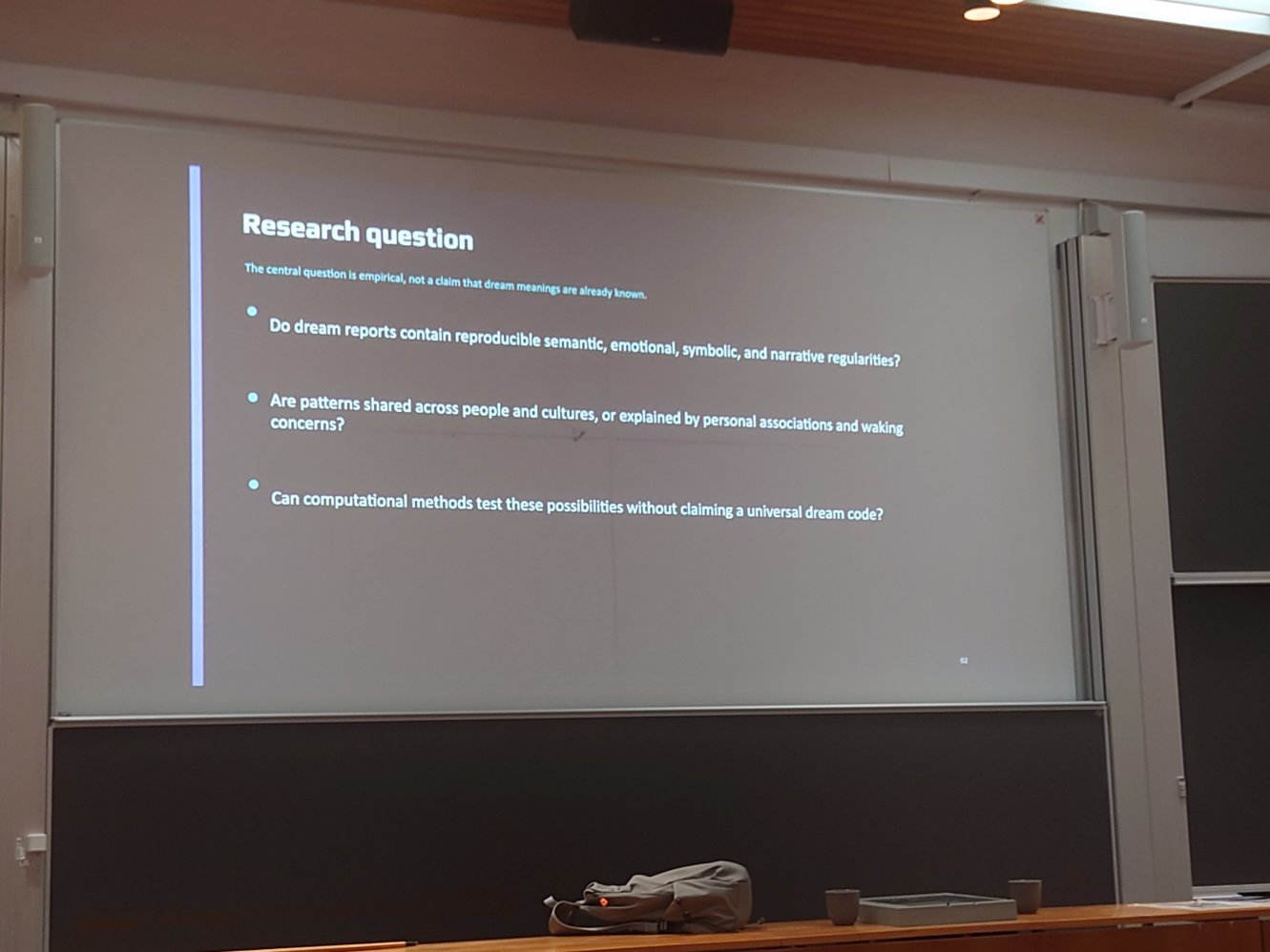
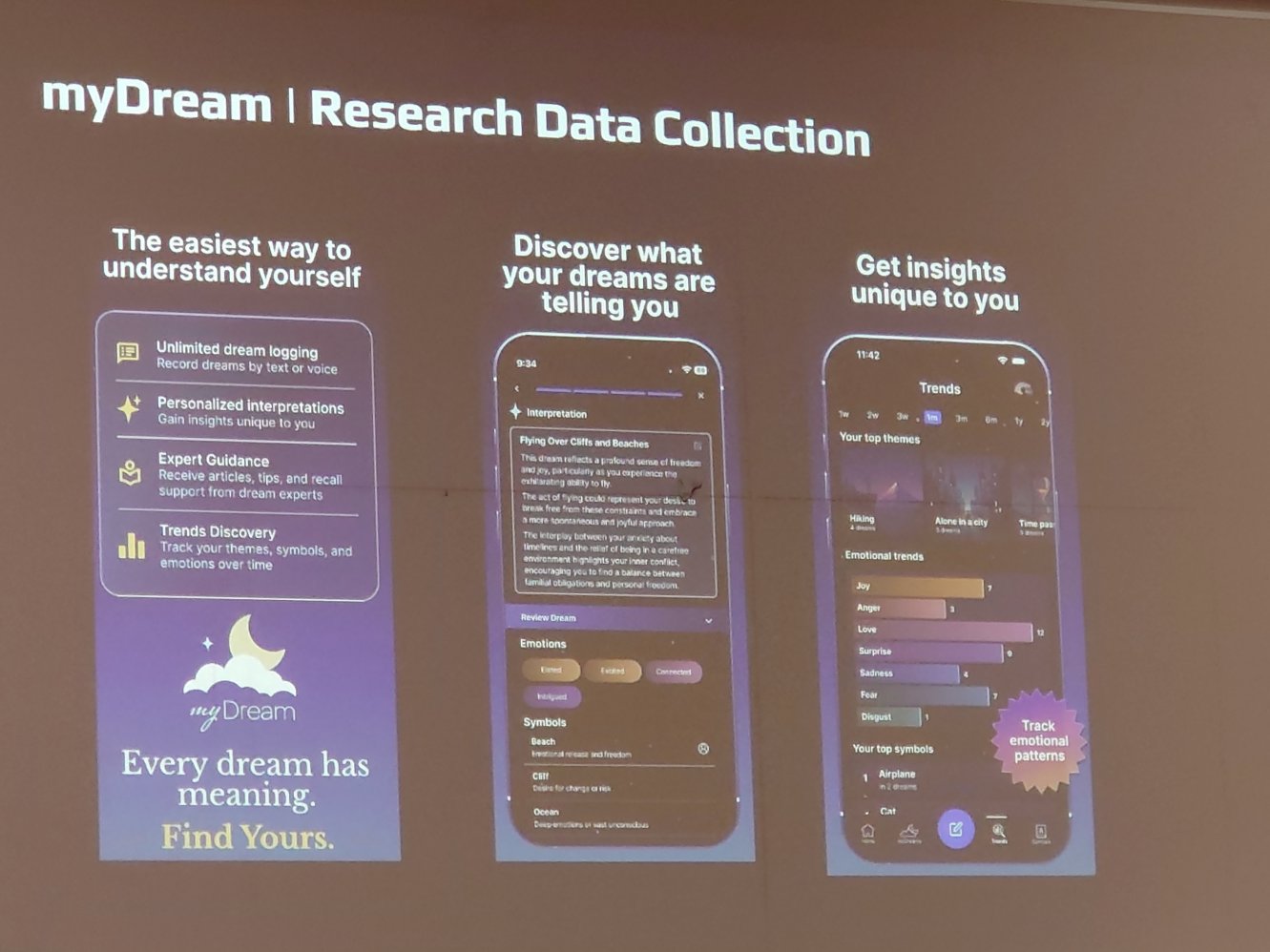
Dream LLMs use artificial intelligence to quickly analyze thousands of written dream reports for hidden patterns and emotions. By turning dreams into searchable data, this tool helps scientists study the human subconscious much faster than traditional psychological methods. Ultimately, it could reveal common mental structures shared by people all over the world.

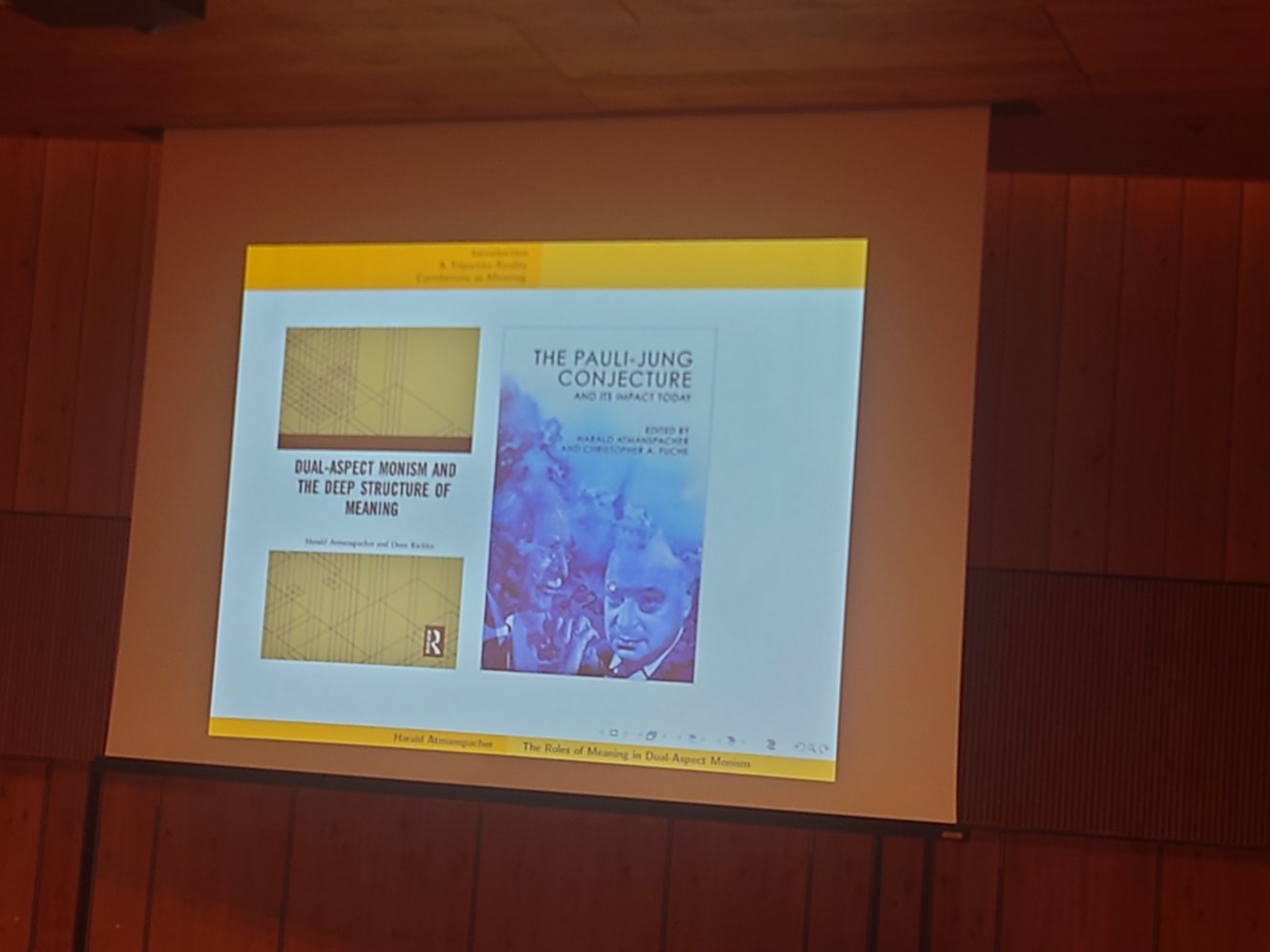
Psychologists make psychology increasingly dependent on physiology and external observation, and tend to think of matter as something much more solid and indubitable than mind. Meanwhile the physicists ... have been making matter less and less material. ... Whoever reads, for example, Professor Eddington's ''Space, Time, and Gravitation'', will see that an old-fashioned materialism can receive no support from modern physics.

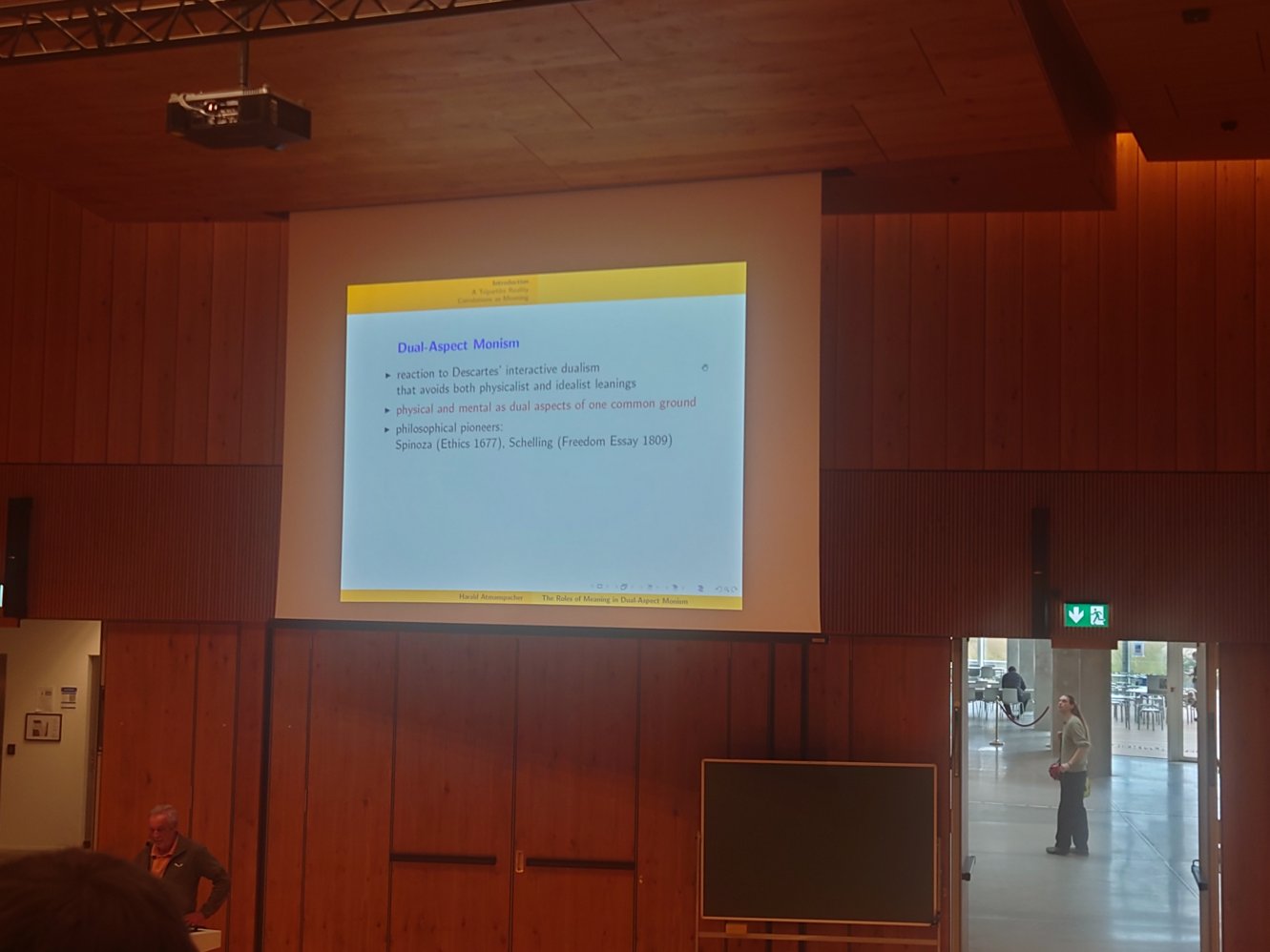
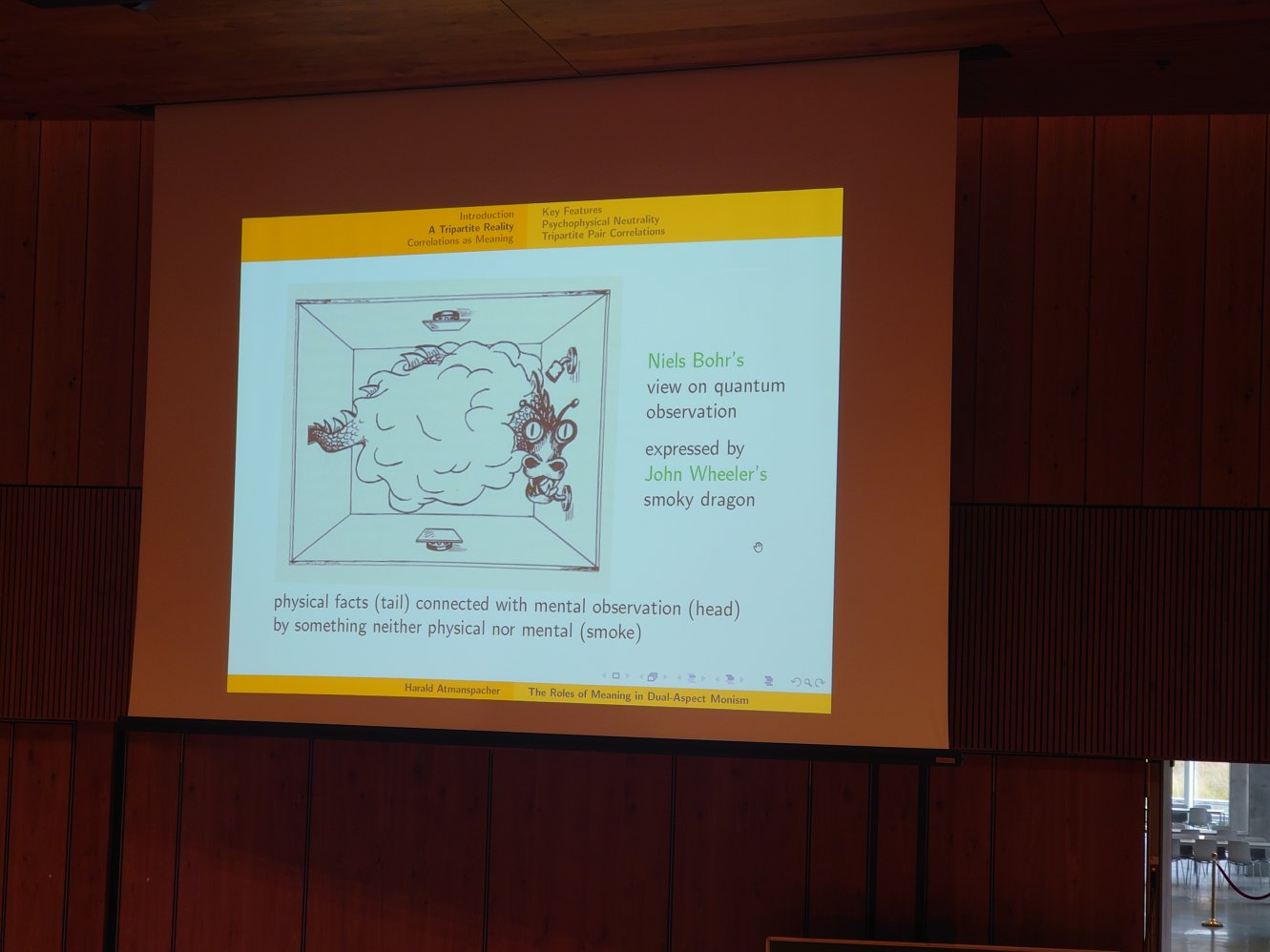
Psychophysically neutral domain without distinctions such as mind-matter, subject-object, self-world, with an entirely unpartitioned base level (unus mundus)
Aerchetypal patterns provide a hierarchy of psychophysically neutral order elements between unus mundus and mental/physical aspects.
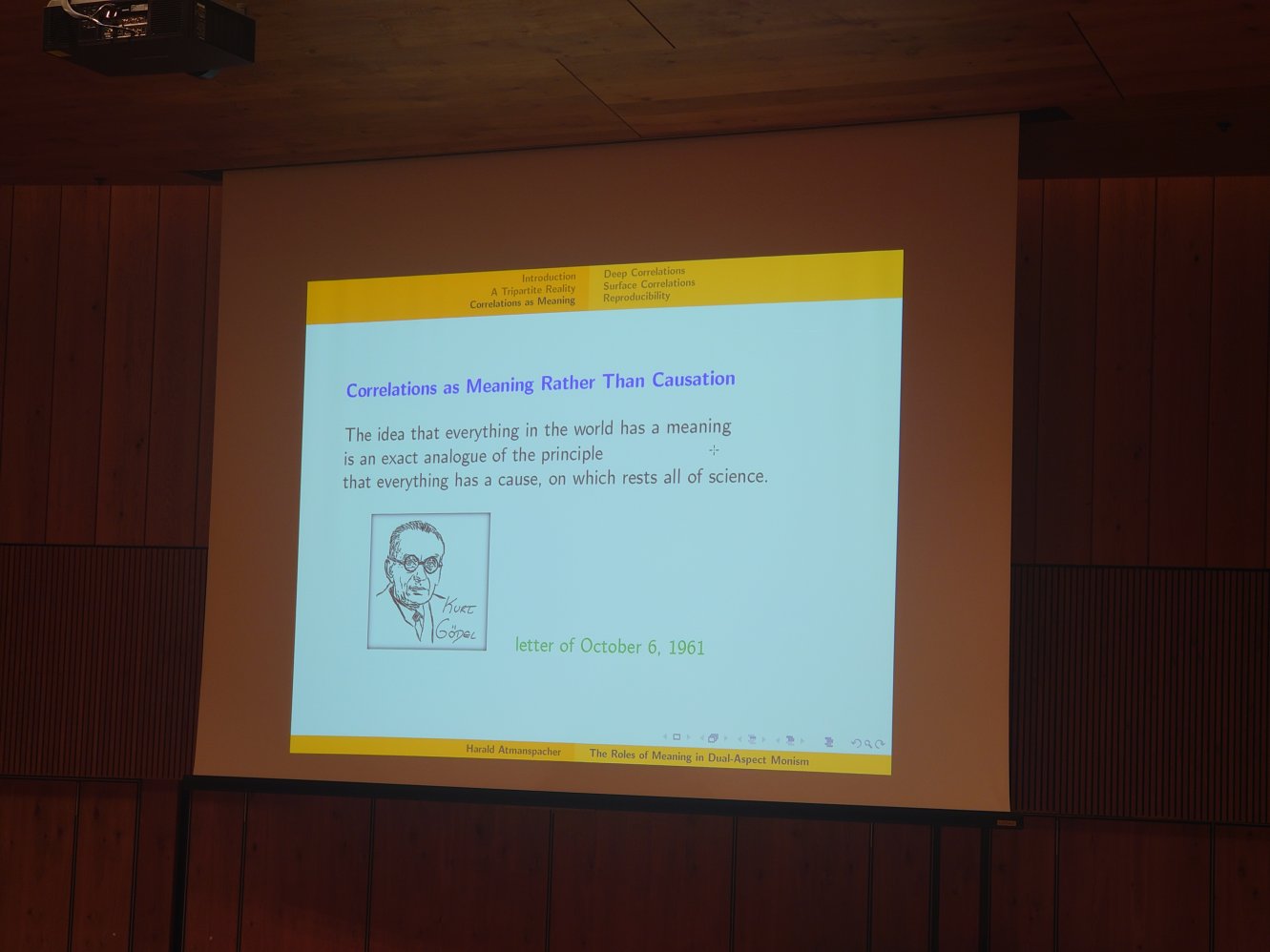
The idea that everything in the world has a meaning is an exact analogue of the principle that everything has a cause, on which rests all of science.By quoting Gödel, Atmanspacher indicates that just as physical science is built on the assumption that everything has a physical cause, a complete science of consciousness must recognize that everything in the universe also holds a relational meaning.
A good third of our psychic life consists in these rapid premonitory perspective views of schemes of thought not yet articulate.I.e. a massive part of our mental life exists in a ''halo'' of consciousness. Where we know exactly what we mean or what we are about to say before we have actually found the words to express it. That wordless understanding is what James refers to as a ''scheme of thought not yet articulate''.
If James’s account rings true, if it chimes with our lived experience, then how could we ever accept the idea that consciousness is reducible to information, to computable bits or pixels? How could the concept of information ever capture or convey something like the aura or halo of a thought, or its familiarity, or the ''fringe of unarticulated affinities'' linking two thoughts, or the afterglow of a thought and its coloring of the thought to come? What sort of hardware, neuronal or silicon-based could do that?Well, indeed, the jury is still out on what consciousness really is...
Damasio pointed out that damage to the cortex has remarkably little effect on consciousness, while small lesions in structures of the upper brainstem that monitor interoceptive signals—information about the body—will shut down consciousness completely. Neurons linked to these structures reach deep into the body, where they gather vital information about how things are going.Still, what is the purpose of ''thinking'', and consciousness in particular?
In Fristons view, the great drive common to all living things, whether at the level of the cell, the organ, or the organism, is to minimize surprise. the ever-present threat to homeostasis and therefore to the systems continued existence. ''How do systems minimise expected surprises, in practice?''. Friston writes. By ''avoid[ing] possible surprises in the future (such as being cold, hungry or dead)''.Which raises the question: Could there be some sort of ''minimal consciousness'' that we all have? Including animals and babies?
This kind of minimal consciousness is part of the phenomenology of both babies and animals. This state, I realized, is as close as we can get, as humans, to experiencing the simple animal sentience that precedes full-blown consciousness.Ok, well, but do all agree that consciousness is a physical thing?
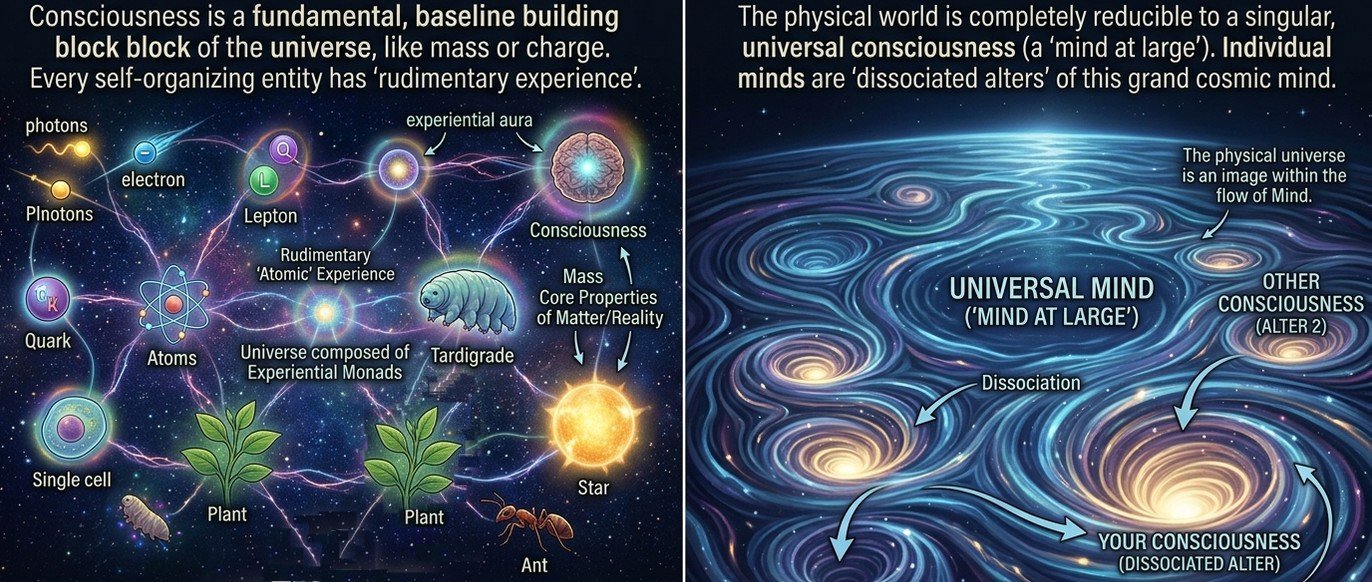
Kastrups [17] argument for rejecting physicalism goes like this: Everything we know about reality we know because of experience, either our personal experience of the world or the collective experience of reality we call science. (He’s not saying there isn’t a real world out there, just that we know it only by way of consciousness). ''Matter is an inference'', Kastrup contends, ''and mind a given''.Again, so what is consciousness really?...
When the self is deprived of time past (memory) and future (anticipation), it melts away. Absorbed in meditation, or in my chores, I could feel my time horizon shrink.An awesome book indeed.