Impressions and Links from
AI & Philosophy, SGAI
and the 2nd
Conversational AI Workshop

Online
AI, Cognition & MachineLearning
Conferences.
Autumn 2021.


The world of work might have changed forever as a result of covid. And, as of now, is not clear what a post-covid world of work will look like...

Clearly, many tasks can be done from home. Working from home gives flexibility. But face-to-face interaction is still required to build relationships. And months and months of remote work diffuses work-life boundaries, and might not be sustainable in the long run?

What about conferences? What will they look like in the future? Well, MlPrague 2021, February 26-28, was my first online conference. Followed in April, 7-9, by Aisb 2021, also online.
Disclaimer

Below, follows impressions from online conferences ''AI & Philosophy'', ''SGAI'' and the ''2nd Conversational AI Workshop''. Tried to follow as much as possible. Still, these notes are, of course, in no way, shape or form complete...
Rather, these notes were written on conference nights, as my way of keeping track of the events that I attended at the conferences. And as a way of storing links and references for future reference.

But enough disclaimers, below, you'll find impressions and links from some of the conference talks and seminars, including links for further reading.

Great stuff indeed.

1. Conversational AI Workshop.

Full program: Schedule.

1.1. Conversational AI.

Keynote. October 20th. Alborz Geramifar, Facebook,
talked about ''Conversational AI Efforts within Facebook AI Applied Research''.

Facebook, NorthStar

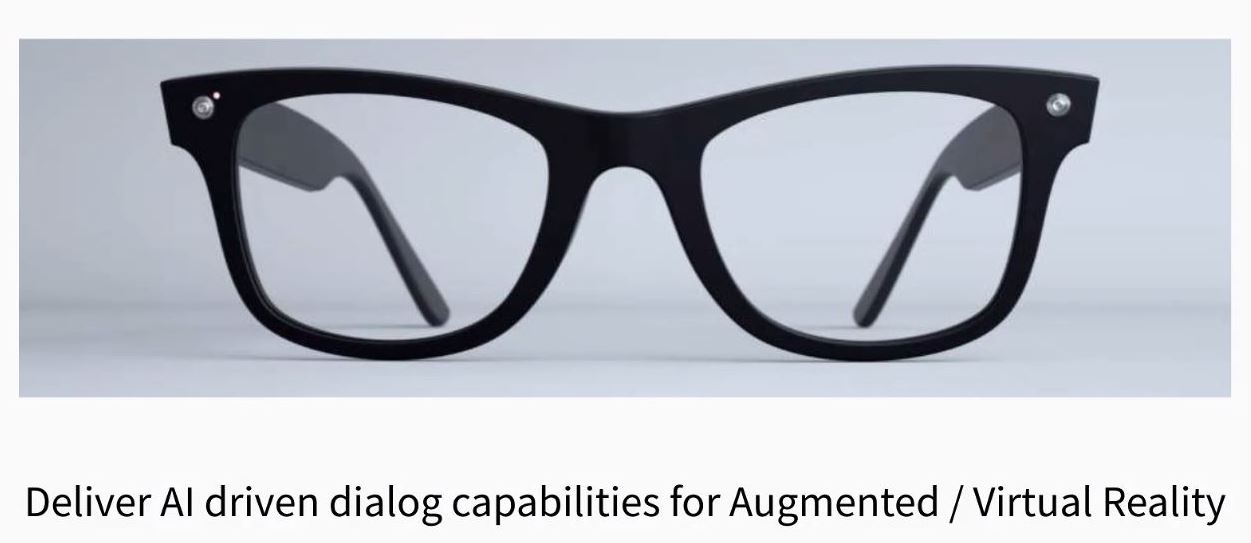
At Facebook it is a northstar goal (well-defined marker to help you navigate through uncertainty) to be able to deliver AI driven dialog capabilities.

And, in this talk, we learned about recent activities under the ''Dialog System Technology Challenge'' umbrella, with the aim of improving AI driven dialog capabilities:

Where the ''Dialog System Technology Challenge'', DSTC, is:
A series of research community challenge tasks for accurately estimating a user's goal in a spoken dialog system.
Now in iteration 9, DSTC9, includes the SIMMC challenge (Facebook assistant).

Where the Facebook SIMMC challenge, see Github:
Aims to lay the foundations for the real-world assistant agents that can handle multimodal inputs, and perform multimodal actions.
I.e.
Next generation virtual assistants are envisioned to handle multimodal inputs (e.g., vision, memories of previous interactions, in addition to the user's utterances), and perform multimodal actions (e.g., displaying a route in addition to generating the system's utterance). See Arxiv.
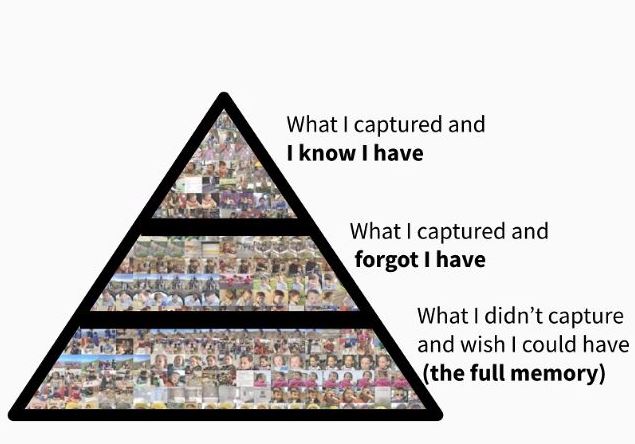
In one interesting example, we learned about a system that could talk about photos stored in the system.
A sort of extended memory:

Memories

Another example introduced us to a virtual shop assistant that could help the user try out clothes that matches the users style, and previous purchases.


The session ended with a Q/A part - With many interesting questions, followed by sensible answers.
E.g.
Question:
''How to best handle un-cooperative users and out-of-domain words/topics using these state-of-the-art methods''?
Answer:
Well, (some) people will always come up with impolite (rude) questions to bots.
(Bot) safety would then mean that the bot should be able to guide the user back to the subject, politely.

But for this to work the bots obviously need to have some kind of understanding
of where the converation is going:
Given a question like ''If I try on this jacket, will it be good for my heart problem...''. A bot system, that doesn't understand anything, will then try to answer the question...
And begin to give you medical advice... Not good.
- More information (previous clicks on webpages, from sensors, information from the face, like raised eyebrows, tone of voice) can then be used to steer the system in the right direction, as it begins to answer the users questions
(See e.g. ''Interacting with Agents'', Icaart 2022).

An interesting session, indeed.


Simon Laub - Teaching AI, Economics-IT, March 2019
Indeed, all in all, super interesting, and certainly thoughts and material to consider for future classes in Deep Learning...

Berlin 2019 - Rise of AI conference


2. Philosophy and Theory of Artificial Intelligence.

Philosophy and Theory of Artificial Intelligence (PT-AI) conference, 2021, online.

Gothenburg, 27-28 September 2021.

Full program: Schedule.

2.1. Monday, September 27th.

2.1.1. Digital Basanos: AI and the Virtue and Violence of Truth-Telling.

In this keynote, Shannon Vallor (Edinburgh U) talked about ''The Digital Basanos: AI and the Virtue and Violence of Truth-Telling''.

In ancient Greece, the basanos or touchstone had multiple meanings: a literal stone that tests the authenticity of gold by revealing its characteristic mark upon striking it, or metaphorically, a moral test of the authenticity of a life or a ruler. It also referred to a method of extracting truthful testimony by means of torture; specifically, of non-Greek slaves. The basanos thus embodies the interweaving of truth-telling with virtue, violence, and power in Western moral, political, and technical thought [1].
According to Vallor: AI is routinely designed to scrape ''truths'' (from human bodies).
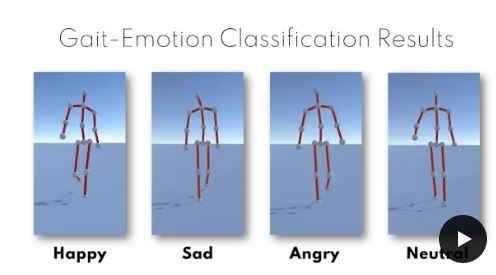
E.g. As an example, Vallor pointed our attention to a May 10th, 2020 article in Wired Magazine, ''This Robot Can Guess How You're Feeling by the Way You Walk''.

Wired: Robot Can Guess How You're Feeling

(Advocate for AI policy & ethics) Tim O'Brien (Substack) wasn't particular impressed, and called it ''Garbage Tech'' on Twitter.
In the article ''Privacy intrusion gets a new look'' O'Brien writes:
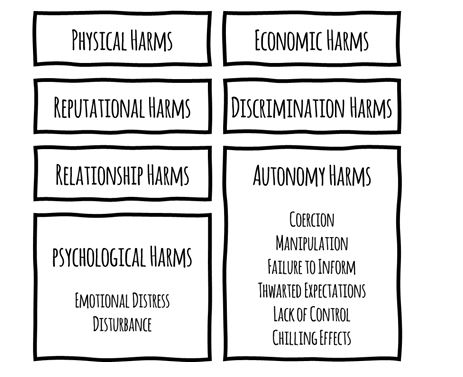
Legal scholars Danielle Citron and Daniel Solove recently introduced a comprehensive framework of privacy harms that better reflects the modern age where our data is routinely taken from us, without our knowledge or consent.
...
Here, autonomy harms get to the heart of invasion of mental privacy and deprivation...
Autonomy harms are fundamentally about the inability to maintain and control the freedom to decide, undue influence, and deprivation of agency.


Danielle Citron and Daniel Solove on Ai privacy harms.
Danielle Citron and Daniel Solove Ai privacy harms

Traditional notions of private spaces involve ''persons, houses, papers, and effects'', including our cars, computers, phones, and anyplace else in which we’re entitled to privacy, but also includes our innermost thoughts & feelings. This is sometimes referred to as ''mental privacy''.
So, according to these definitions, extracting emotional states from a gait would then be an invasion of our ''mental privacy''.

Vallor referred to some of the AI's, that invade our ''mental privacy'', as ''Zombie AI. Indeed, such systems are often being knocked down, in order to: But somehow it keeps coming. Sometimes even with a racial bias, where: In one study it was even claimed that you could identify ''Criminal tendency detection from facial images'' (''Criminal tendency detection from facial images and the gender bias effect'', Hashemi and Hall, [2]).
The article was eventually retracted, as the training data was rife with confounding variables (In the training data the ''criminal'' photos were mugshots in a certain format). So, the authors didn't build a criminal detector, but rather a mugshot detector.

In Phrenology it is assumed that you can measure bumps on the skull to predict mental traits. The central phrenological notion that measuring the contour of the skull can predict personality traits is discredited by empirical research [3].
But what about a study about ''perceived trustworthiness'' of faces in historic European portraits [4]:
Some Twitter users thought that the researchers were conducting phrenology. While the authors of the study thought it was about detecting the facial expressions chosen by the painter or the subject (Finding that perceived trustworthiness in portraits between the years 1500 and 2000 increased, alongside a drop in interpersonal violence, as well as the rise of democratic values [5]).
Prenology

Followed by an article in the Sun, stating that:
Experts have created an algorithm which scans the faces in painted portraits and photographs to discover how trustworthy people look based on their facial muscle contractions, in the image.
The system was then used to rate the trustworthiness of celebrities and politicians [6].
Unsurprisingly, (on Twitter) a lot of people were outraged:
Phrenology mostly. Some real bad science to arrive at the conclusions (algorithm interprets assumptions about people, write up takes assumptions as accurate and moves forward)... [5].
Categorizing face shapes as inherent values as someones character has always been used as a tool to devalue outgroups insulate/uplift ingroups [5].

Logos

2.1.1.2. Philosophical reflections, Logos.

Summing up with some ''philosophical reflections'',
Vallor noted that ''logos'', construction of reasons, is hard.
And that AI can appear to be a shortcut towards this reasoning power.
A power that historical has belonged to the elite. In contrast to the ''oppressed'', who (historically) do not have this reasoning power (And therefore can be lied to...).

In other words, people should be aware of: When they build and install new AI-systems.
Clearly!

2.1.2. Artificial general intelligence and the common sense argument.

Olle Häggström (Chalmers U) talked about '' Artificial general intelligence and the common sense argument''.

In the final pages of On What Matters, Derek Parfit comments:
We live during the hinge of history. If we act wisely in the next few centuries, humanity will survive its most dangerous and decisive period…What now matters most is that we avoid ending human history .. Our descendents could, if necessary, go elsewhere, spreading through this Galaxy.
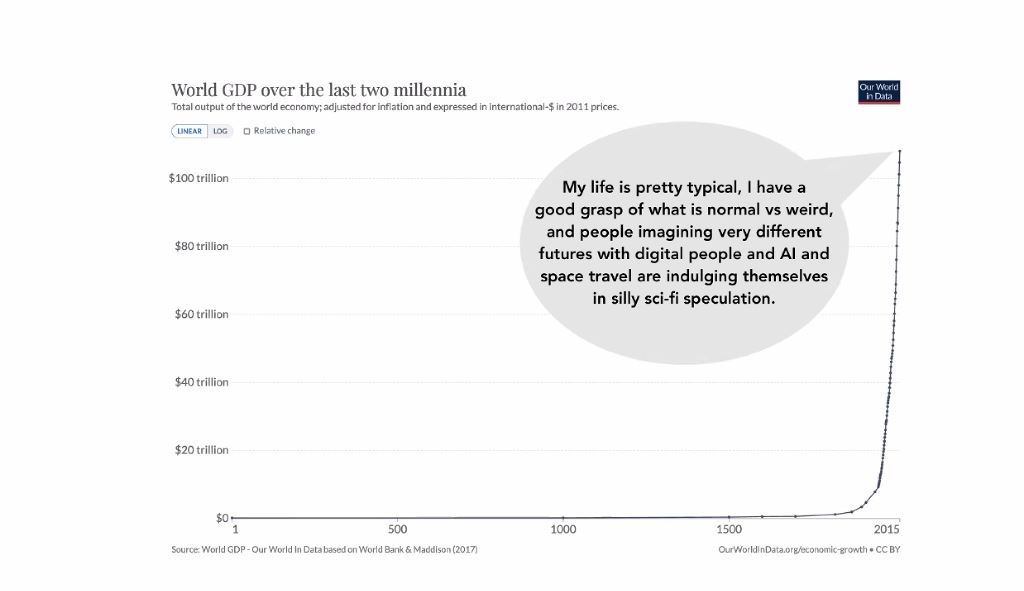
Indeed, these are not normal times:

Thinking about what matters

And (perhaps) the dawn of the (true) AI age.

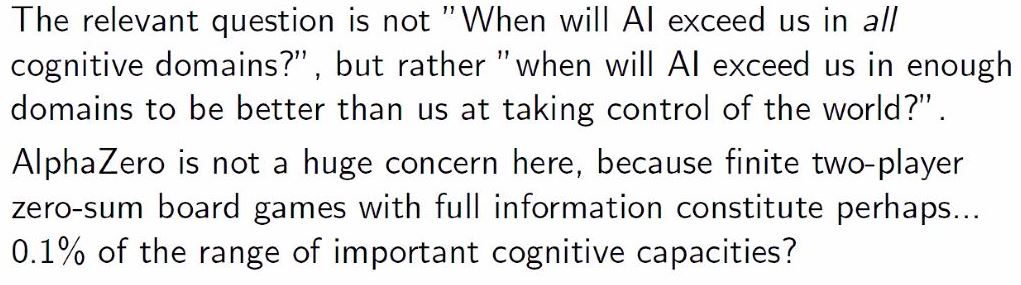
AGI

With Häggströms comment:
On the other hand, text generation constitutes...more like 30%...
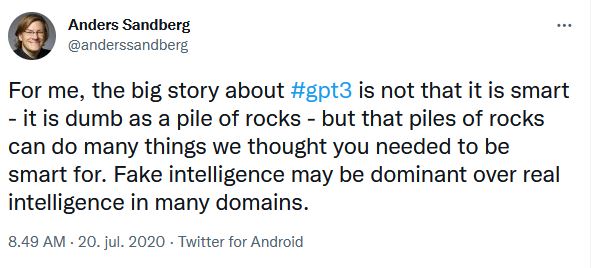
Indeed:

Anders Sandberg

Indeed, an interesting talk, and yes, we live in interesting times...

2.1.3. Ascribing Moral Status to AI Systems.

Leonhard Kerkeling (Ruhr U Bochum) talked about ''Ascribing Moral Status to AI Systems''.

And gave some background to the argumentation that an AI system has ''moral status'', when it has sentience, sapience and moral agency [8], [9]: Interesting, indeed.

For impressions from other online conferences, see e.g. Accs8.

Online Accs8 2022 Impressions

2.1.4. Intelligence beyond the brain.

In this keynote, Michael Levin (Tufts U) talked about ''Intelligence beyond the brain: Basal cognition of life in diverse problem spaces inspiration for AI''.

Levin started by saying that ''all intelligences are collective intelligences''.
  • Genetic network.
  • Cytoskeleton.
  • Neural network.
  • Whole tissue/organ.
  • Whole organism.
  • Group.

And sometimes it is not easy to state precisely where the intelligence is located:
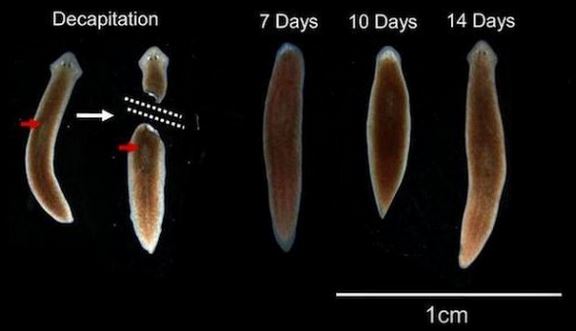
Decapitated worms can regenerate their brains, and the memories stored inside [10].
Decapitated worms can regenerate their brains

Biologists at Tufts University have removed the head and brain of a worm by decapitation, and then watched as it regenerated both its head and brain — and, somewhat miraculously, the memories stored inside. At first glance, this finding would seem to confirm cellular memory.
And inside the brain there is of course an amazing capacity to re-wire:
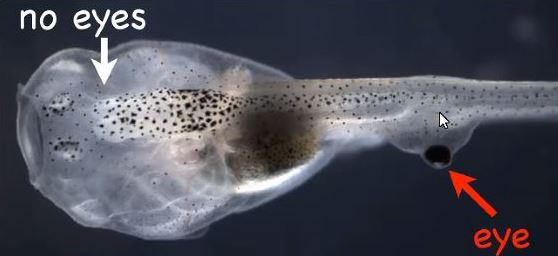
Ectopic eyes performed visual function

''Ectopic eyes performed visual function'', says Blackiston.
''No one would have guessed that eyes on the flank of a tadpole could see, especially when wired only to the spinal cord and not the brain''.
...
The findings suggest a remarkable plasticity in the brains ability to incorporate signals from various body regions into behavioral programs that had evolved with a specific and different body plan [11], [12].
Sometimes, the brain is not even an anatomically stable structure, but can still keep memories...
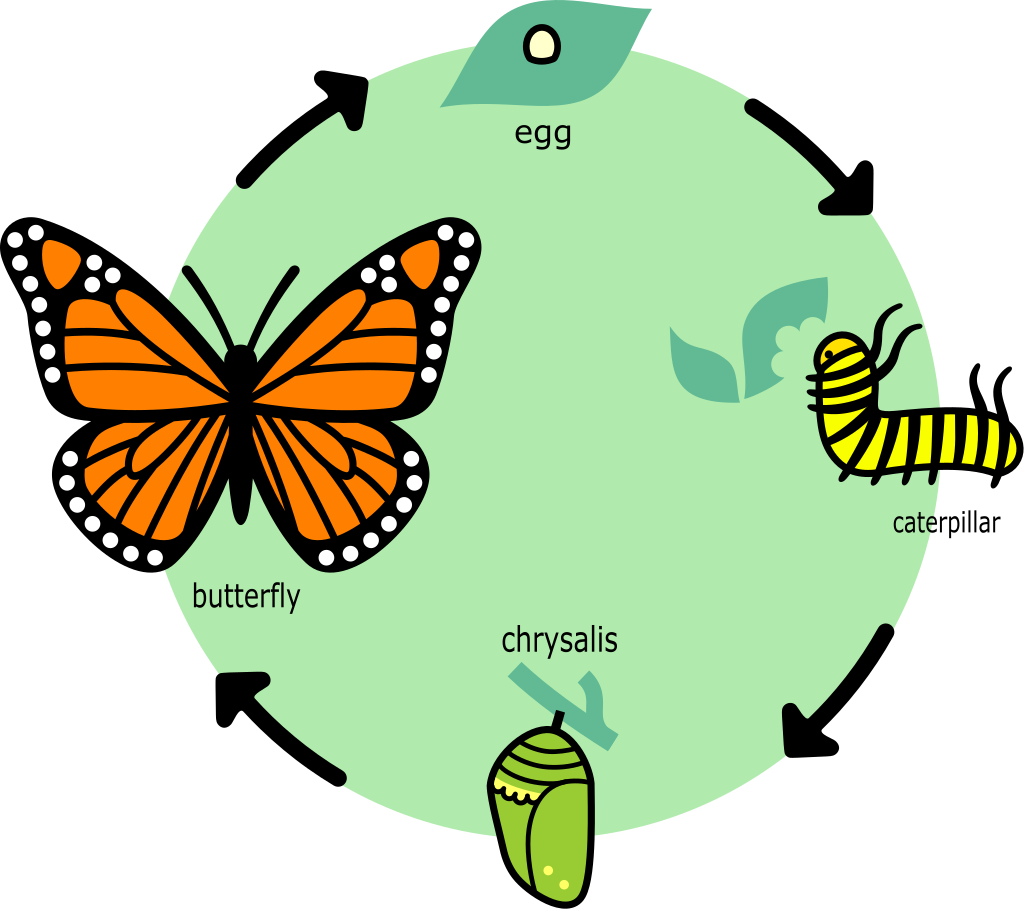
Many animal species regenerate all or part of the brain after severe injury, or remodel their CNS toward a new configuration as part of their life cycle [13].
Caterpillar, butterfly

The current study examines whether larval experience can persist through pupation into adulthood in Lepidoptera, and assesses two possible mechanisms that could underlie such behavior: exposure of emerging adults to chemicals from the larval environment, or associative learning transferred to adulthood via maintenance of intact synaptic connections.
...
The present study, the first to demonstrate conclusively that associative memory survives metamorphosis in Lepidoptera, provokes intriguing new questions about the organization and persistence of the central nervous system during metamorphosis [14].
Indeed, there is lot to ponder here...
Genetics works, for sure, but it is just not a way of doing something that we have a good intuitive understanding of...:
Genetics does not specify hardwired rearrangements: It specifies a system that executes a highlys flexible program that recognize unexpected states, and take corrective action.
Many cells can work together to build a big goal, like an arm, or a leg. And things go wrong (in cancer) when the cells reverse to local goals:
Suggesting that cancer initiation and progression represent a systematic reversion to simpler ancestral phenotypes in response to a stress or insult. This so-called atavism theory... [15].

2.1.4.2. Conclusion.

Still, it is not clear where the overall goals come from. I.e.
What head shape will regenerate - If we mix stem-cells from different species of planaria in a single body.
... How do the cell swarms make decisions on what to make, and when to stop ...?
Experiments, with techniques such as (chimeric) bioengineering, will/might help us move forward. Where chimeric (having parts of different origins) bioengineerings is:
  • A new ''microscope'' with which to observe minds and collective goals emerge from scratch.
  • A sandbox within which to understand the body:mind mapping and active intelligence in diverse spaces.
Moving forward, these synthetic morphology and chimeric techniques:
  • Reveal plasticity and swarm cognition of cell groups.
  • Highlights our ignorance of large-scale outcomes given known subunits.
  • Provide a very rich new space for creation of novel, diverse minds, which must be dealt with by theories of cognition.
  • Establish a (non-linear) continuum of bodies and minds which breaks current notions of machine, organism, robot, evolved/designed etc.
So, interesting times ahead.

Indeed, an awesome talk!

Online Icaart 2022 Impressions

2.1.5. Deception by default.

Andras Kornai (TU Budapest) talked about ''Deception by default''.

On AI safety: The first discussion is in Asimov (1941), who think that lying implies contradictions, and that such contradictions would render a robot dysfunctional.
But avoiding deception is hard, when there is so much misinformation out there:
Are users able to discern authoritative from unreliable information and correct from incorrect information.
This problem is further exacerbated when the search occurs within uncontrolled data collections, such as the web, where information can be unreliable, generally misleading, too technical, and can lead to unfounded escalations [15].
Generally:
  • Successful deception depends on not saying noticeable untruths. Since the deceiver aims at sucess, the ''no overt lie'' condition, which is the one we are investigating here, is largely baked into the problem.
  • More often than not, deception works best with those who actually (knowingly or unknowingly) want to reach the same conclusion aimed at.
Obviously, the road towards deception is easiest in areas, where there is a lot of ignorance, and where following a few simple ''rules'' is enough, for the deceiver, to get away with the deception.
I.e. know that many/most people operates under rules like:
  • Sensory input has the highest priority/value.
  • If A causes B, and B is bad, A is bad.
  • If A causes B, and B is good, A is good.
  • etc.
To lie or to mislead?

Well, well...
if an AGI is really intelligent, then of course it will also be able to deceive...

2.1.6. Robot rights, grounded.

Guido Loehr (TU Eindhoven) talked about ''Robot rights, grounded''.

It is often stated that humans should have the right to:
  • Vote.
  • Not to be sold.
  • Own property.
  • A dignified life.
  • A fair trial.
  • Marry and have a family.
  • Assemble.
  • Privacy.
  • Work.
  • Asylum.
But, talking about ''robot rights'' quickly becomes pretty tricky:
  • Absurd: Robots have the right to a fair trial or choose their religion.
  • Impractical: Who wants to build robots you can't sell.
  • Besides, it is all pretty unrealistic,
    robots will most likely remain unconscious for a long time to come...
  • And, well, a cynical observation: Most people do not have this kind of protection.
So, what about robots with attitudes then:
  • Know their boundaries..
  • Push back if they don't agree...
  • Say no..
  • Respond to correction and feedback.
Well, well - we will see...
Still, certainly, a great talk!


For impressions from other online conferences, see e.g. Accs8.


Accs8 India - Online

2.2. Tuesday, September 28th.

2.2.1. Responsible AI: From principles to action.

Virginia Dignum (Umeå U) talked about ''Responsible AI: From principles to action''.

The talk began with good overview of what ''Responsible AI'' is all about, and how it fits into the broader picture of AI.

Followed with a very clear outline of what ''AI can'', and ''cannot do''
(Under the following headlines):
   What AI systems cannot do (yet).            What AI systems can do (well).       
       
   Common sense reasoning.    Identify patterns in data.
   Understand context.       - Images.
   Understand meaning.       -Text.
   Learning from a few examples.       -Video.
   Learning general concepts.    Extrapolate those data to new data.
   Combining learning and reasoning.    Take actions based on those data

A good clarification that nicely helped set the stage for how to move forward with ''Responsible AI''.

2.2.2. Cognitive Architectures based on natural info-computation.

Gordana Dodig Crnkovic (Chalmers U) talked about ''Cognitive Architectures based on natural info-computation''.

''And how about the entire Universe, can it be considered to be a computer?
Yes, it certainly can, it is constantly computing its future state from its current state, it's constantly computing its own time-evolution! And, as I believe that Tom Toffoli pointed out, actual computers, like your PC, just hitch a ride on this universal computation...[16].
Chaitin 2006.
Computations everywhere, e.g. pre-neural biocomputation: Levin Computations

Indeed, engineered cognitive systems can still learn a lot from living agents, even from the simple ones, like unicellular organisms. Learning a lot from nature

Leading to some open questions of cognitive architectures and natural info-computation: Indeed, a good overview, and all super exciting.

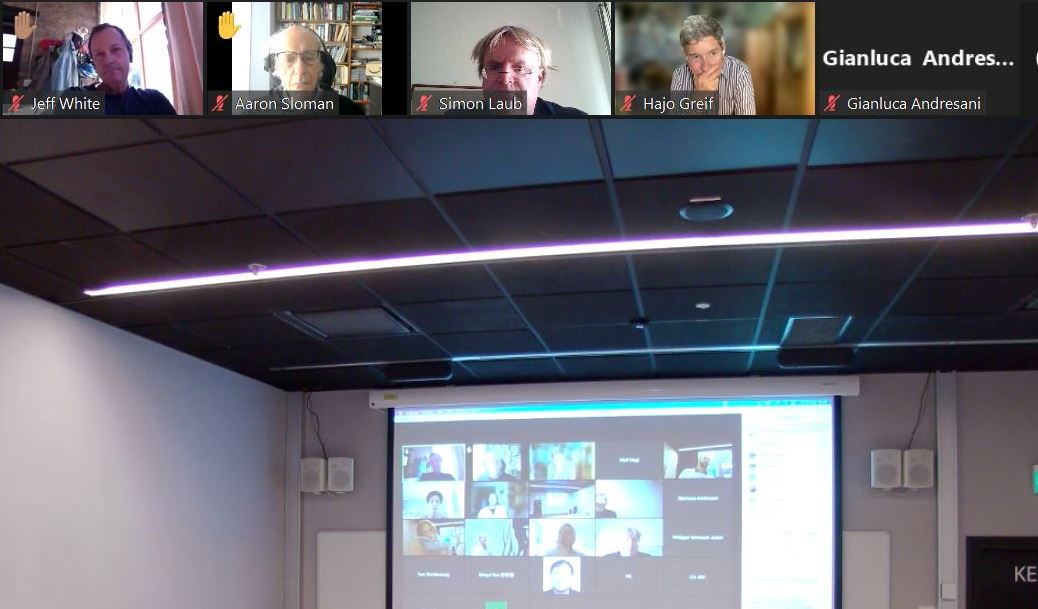
Zoom conference call, Gordana Dodig Crnkovic talk. Jeff White, Aaron Sloman, Hajo Greif.

2.2.3. Autonomy of attention.

Kaisa Kärki (Helsinki U) talked about ''Autonomy of attention''.

What attention does:
Where an agents...
  • ''Autonomy choice'' is the agents actual manifestations of agency that are autonomous.
  • ''Autonomy ability'' is the agent's capability to make autonomous choices.
  • ''Autonomy right'' is a collective agreement that protects the agent's possibility for autonomous decision-making.
Logically, ''An agents self-governance is not just threatened by biases and other automatic processes, but also by its own reward-seeking behaviours. So, a truly self-governing agent can also control its own reward seeking behavior''.

According to Kärki: An agents mind is ''mindwandering'', when its thoughts are uncontrolled.
And an agents mind is occupied with ''rumination'', when thoughts are task-unrelated with a negative affective content (Where rumination lacks ''freedom of attention'', as the content of the rumination is something that grabs the attention of the agents mind).

Kärki lists a number of pathologies of attention, e.g.:

Attention becomes less free in environments where there are many ''freedom-deficits'', e.g.:
Automatic processes. Agentive processes. Autonomous processes.
Nudging. Nudging Attention capital deficit.
Salience. Inducing reward-seeking behavior. Constant disruption.

Kärki concludes, awareness of:
Agency of attention, autonomy of attention and freedom of attention are necessary when developing attention rights.
Clearly a very important subject in this day and age,
and a great talk, indeed!

Chatbot Presentation Eaaa. Gpt-3, 2021.

2.2.4. Is it likely that you are living in a computer simulation?

Ralf Stapelfeldt (FU Hagen) talked about ''Is it likely that you are living in a computer simulation''.

In the Simulation Argument, Bostrom claimed that it is likely that we live in a computer simulation!

According to Stapelfeldt, we should take a closer look at (at least) 10 background assumptions in Bostroms claim: And realize that if just one of these 10 background assumptions does not hold...
then it is actually more likely that we do not live in a computer simulation...

Well, at least according to Stapelfeldt!
(Obviously) an interesting discussion with the audience followed!

E.g. Jeff White gave us a link to a (relatively) recent article:
''Simulation, self-extinction, and philosophy in the service of human civilization''.
See also, Anna Strassers Memory slices (From PT AI 2021).

2.2.5. AI Risk Skepticism.

Roman Yampolskiy (U Louisville) talked about ''AI Risk Skepticism''.

According to Yampolskiy, it should be obvious that most ''AI experts'' are not ''AI safety experts'':
An expert in knowledge representation, pattern recognition, computer vision or neural networks, is not necessarily an expert in all other areas of artificial intelligence.
...
(Just as) a software developer is not necessarily a cyber security expert...
...
(And) many AI risks skeptics are actually not that qualified to talk about ''AI safety'' research.
Indeed, according to Yampolskiy, many commentators on ''AI safety'' seem to be completely unaware of (much of) the literature on ''AI risk''...

(And) equally bad, many AI researchers, tech ceo's and tech corporations
might not be as objective as they claim to be...
People in industry might not be the best to come up with additional (new) regulations, or be able to make reviews of limitations that might go against their own interests (Remember: Many tobacco company representatives assured the public that cigarettes were safe...)
Indeed, some risk skepticists are eager to point out that there really isn't that much to worry about. As (smaller) AI problems are manageable, and (according to these skeptics):
  • Super intelligence is impossible.
  • (Computer) self-improvement is impossible.
  • AI can't be conscious.
  • AI is just a tool.
  • We can always just turn it off.
  • We can re-program AIs, if we don't like what they do.
  • AIs don't have a body so they can't hurt us.
  • Super intelligence would probably not be catastrophic.
  • An AI can't generate novel plans.
Besides (still, according to risk skepticists, who are convinced that there really isn't that much to worry about):
  • Let the smarter beings win.
  • Malevolent AI is not worse than malevolent humans...
(As these risk skepticists are) convinced that:
  • AI safety researchers are Non-Coders.
  • Majority of AI researchers are not worried...
  • Risks should not be talked about. Keep it quiet.
  • Safety work just creates an overhead, that slows down research.
Yampolskiy concludes:
  • Skepticism in general is, of course, frequently desirable to protect against flawed theories!
  • 100 % proof is unlikely in many domains, so a precautionary principle should be used to protect against existential risks.
  • A capable AI researcher not concerned with safety is very dangerous.
  • Education is suggested as a desirable path forward by both skeptics and non-skeptics. So all sides agree on the importance of education.
Ai Safety Risks

2.2.6. A Philosopher's Reactions to GPT-3.

David Papineau (KCL, U London) talked about ''A Philosopher's Reactions to GPT-3''.


GPT-3. Philosopher AI.

GPT-3.
Philosopher AI.

For examples of GPT-3 chats, see my experiments here.
Where these chat examples were used in my November 17th, 2021, ''Tech Wednesday'' (afternoon), Eaaa, presentation of ''Delphi'', ''Philosopher AI'' and other chatbots (see here).

Indeed, GPT-3 is basicly just doing one thing. It is predicting the next words.
So, according to Papineau, the really interesting thing then becomes: ''What are we humans doing...''.
How do we, humans, generate sentences...?

According to Papineau that probably depends (a lot) on what we have been trained on. And thought about before.
Which is why some people are more interesting to hear (from) than others...

But, sure, hook up GPT-3 to some sensors... and an image recognition system... on a robot platform (Capra would be loads of fun...), then it could move around and comment on the things it sees....

Ok, sure, GPT-3 is not good at following arguments, and staying on the issues... But well, many people are not good at that either. Drunk people can (certainly) ramble on from whatever comes into their brains...

And, sure, GPT-3 really don't know what it is talking about, it can't assess sentences for truth...
It just comes up with the next words...no matter whether these words makes sense or not...

Still, human kids start out pretty much like that as well.
But then we send them to school! Where we teach them history, critical thinking, math ...
And, eventually, they stay away from many of the pitfalls that GPT-3 so easily falls into...

So, we ''just'' need to teach GPT-3 more about ''meaning'':
(Where) there is no great magic to meaning...
Meaning is (just) having some structure in your head,
which then means you act appropriately.
Meaning directs behaviour.
Still, describing precisely what human meaning and models of the world is, is still a little bit tricky though:
Cognitive scientists often describe the mind as constructing and using models of aspects of the environment, but it is not obvious what makes something a model as opposed to a mere representation [17].
Clearly, GPT-3 is thought-provoking, in all sorts of ways.

An awesome talk, indeed.

OpenAi. Gpt-3, 2021.

More language models:

3. SGAI 2021.

British Computer Society's Specialist Group on Artificial Intelligence (SGAI).
Conference website & schedule.

3.1. Presentations Wednesday December 15th, 2021.

3.1.1. Extended Category Learning with Spiking Nets.

Chris Huyck (Middlesex University, UK) talked about ''Extended Category Learning with Spiking Nets and Spike Timing Dependent Plasticity''.


The talk can be found here:
Extended Category Learning with Spiking Nets and Spike timing Dependent Plasticity with Carlos Samey [18].
In ''Learning Categories with Spiking Nets and Spike Timing Dependent Plasticity'', Chris Huyck writes:
Deep nets gain their strength from these connections, which are trained to reflect a mapping from known inputs to known outputs. These connectionist systems are typically inspired by the brain, and are thus called neural networks.
...
Simulated biological neural networks, on the other hand, attempt to reproduce the behaviour of brains, or parts of brains [19].
One of the problems with work in deep nets is that it is computationally expensive, while actual biological nets are known to be relatively computationally inexpensive. A human brain uses less power than a light bulb. Consequently, there is an increasing interest in spiking nets for machine learning [19].
One of the key differences between the brain and networks described in this paper and deep nets is that the brain is highly recurrent. Feed forward nets, even the simple systems described in this paper, are capable of learning sophisticated categorisers. On the other hand recurrence is not well understood, and modelling it is difficult [19].
On (what to do) Neurons, NEST and PyNN:
  • We generally write neural systems in NEST and PyNN.
  • NEST is a biological neuron simulator. There are others like Neuron, and Brian, and we used to use our own CANT model.
    We switched to using NEST because no one would ever use my CANT model...
  • I did some work with the Human Brain Project, and NEST was somewhat standard.
  • We also do stuff with SpiNNaker (a neuromorphic system), so we write our code in PyNN, python middleware. We can then run it with little change in SpiNNaker or NEST [20].
Notice:
  • Perhaps more importantly, the brain does not solve particular problems in isolation. The neurons talk to each other and are firing all the time.
  • The machine learning community seems focused on feed forward topologies.
  • The actual time matters, and provides the system with a lot of information. If a neuron spikes at 20ms, 35ms, and 42 ms, it's different than one that spikes at 20ms, 28ms, and 42 ms.
Exciting work!

3.1.2. End-to-end Model Based Reinforcement Learning.

Per-Arne Andersen (University of Agder, Norway) talked about ''End-to-end Model Based Reinforcement Learning''.


Why ''Model Based Reinforcement Learning''?
  • Sequential decision making fits well with nature.
  • Industry applications.
  • Medical applications.
  • Autonomous applications.
  • Games.
Then, why ''focus on games''?
  • Cheap compared to many industry applications.
  • It is possible to optimize for efficiency.
  • it is trivial to adapt the game problem/objective.
Reinforcement learning can be quite demanding in terms of hardware resources though...

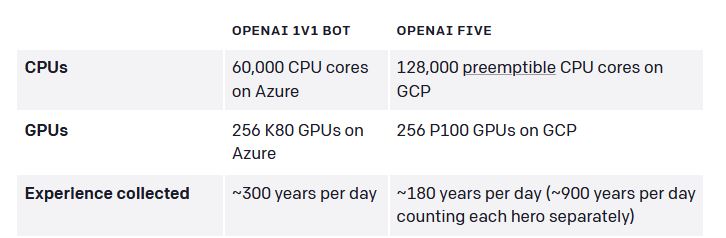
E.g. on OpenAi-Five one reads:
OpenAI Five plays 180 years worth of games against itself every day, learning via self-play. It trains using a scaled-up version of Proximal Policy Optimization running on 256 GPUs and 128,000 CPU cores — a larger-scale version of the system we built to play the much-simpler solo variant of the game last year [21].
OpenAi Five. March 2022.

RL researchers (including ourselves) have generally believed that long time horizons would require fundamentally new advances, such as hierarchical reinforcement learning. Our results suggest that we haven’t been giving today’s algorithms enough credit — at least when they’re run at sufficient scale and with a reasonable way of exploring [21].
So, what to do, if you don't have 800 GPU and millions of dollars to train your models?

Well, maybe this presentation pointed to a way forward:
  • A new algrithm for model-based RL that uses state-space models to learn a dynamical model.
  • Improves significantly from prior work in terms of raw performance.
  • Can learn to represent game environments fairly accurately.
Interesting, indeed.

More on Per-Arne Andersen's homepage Oracle and DVAE.

Dreams and Pong with Reinforcement Learning. March 2022.

        Github overview. March 2022.

3.2. Presentations Thursday December 16th, 2021.

3.2.1. AI as a Game Changer for Sustainable Marine Environments.

Oliver Zielinski (German Research Center for Artificial Intelligence) talked about ''AI as a Game Changer for Sustainable Marine Environments''.

Obviously, the extent of plastic pollution varies from city to city (around the world).
But, by ''using drones and machine learning it is possible to get quantitative results and characterization of dominant pollution classes for floating plasting and other litter'':

Combining local remote sensing (drones + bridges), satellite-based information and AI-enhanced digital twin providing automated analysis for decision support and near real-time guidance for clean-up activities.
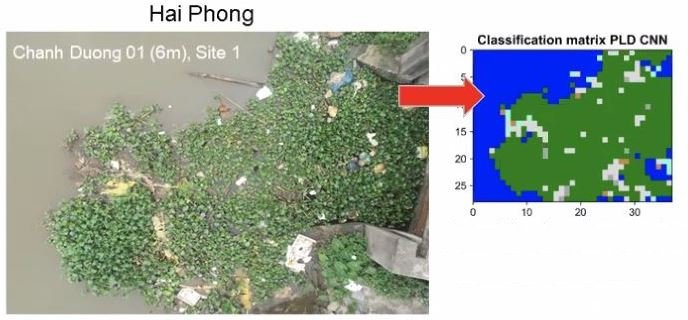
Example from Vietnam: Drone survey (Hau Duong, Hai Phong):
Immolized waste trapped in floating vegetation or accumulated at the shore
Immolized waste trapped in floating vegetation or accumulated at the shore. Located using drone video and ML techniques.

Clearly, important work, that fits right into the UN ''2020 Agenda for Sustainable Development'':
We are determined to protect the planet from degradation, including through sustainable consumption and production, sustainably managing its natural resources and taking urgent action on climate change [22].
The talk is available on Youtube.
(See also: Slides and videos from SGAI Events).

4. Conclusion.

Indeed, the end of 3 wunderbar online conferences. With many memorable talks.

Still, looking forward to the ''real'' on-site versions of these conferences.
Next year, hopefully!